DIY Home Maintenance Limits: When to Call a Professional (Guide)

“An ounce of prevention is worth a pound of cure.” This timeless advice from Benjamin Franklin remains the gold standard for anyone managing an older property. In my 17 years as a facilities technician, I have seen how small, ignored symptoms transform into catastrophic failures that compromise a building’s integrity.
The Foundation of Home Health: Building Science Diagnostics
Building science is the study of how heat, air, and moisture move through a structure and affect its materials. Understanding these physical relationships allows a homeowner to see the house as a single, integrated system rather than a collection of separate parts.

When I first began maintaining legacy properties, I viewed every leak or draft as an isolated incident. I soon realized that a damp basement in the summer might actually be caused by poor attic ventilation, a phenomenon known as the stack effect. By applying building science, we can track how pressure differences and temperature gradients move energy and water through walls and floors. This systematic approach is the core of preventative home care, shifting the focus from reactive “firefighting” to long-term structural protection.
Establishing a Baseline with Systemic Property Assessments
A systemic assessment is the process of documenting the current physical state of every major household system to identify deviations from normal operation. This baseline allows you to recognize subtle changes in performance before a total mechanical failure occurs.
I recommend starting with a thorough walkthrough using a standard home maintenance checklist. You are looking for “baseline symptoms” like the specific sound of your furnace cycle or the exact time it takes for hot water to reach the furthest tap. During my years in facility management, I learned that the most expensive repairs often started as a change in sound or a slight increase in utility costs. Recording these metrics annually provides a roadmap for future maintenance.
Essential Tools for Residential Diagnostics
Diagnostic tools are specialized instruments used to measure physical properties like moisture, temperature, and electrical flow that are invisible to the naked eye. These tools remove the guesswork from home maintenance and provide objective data for decision-making.
In my kit, I always prioritize accuracy over convenience. For a homeowner looking to master residential diagnostics, the following tools are indispensable:
- Moisture Meter: Measures the moisture content percentage in lumber and drywall to detect hidden leaks.
- Infrared (Thermal) Camera: Visualizes temperature differentials to find missing insulation or overheating electrical components.
- Digital Multimeter: Tests circuit amperages and voltage to ensure electrical systems are operating within safe parameters.
- Water Pressure Gauge: Measures the PSI (pounds per square inch) of the plumbing system to prevent pipe bursts.
- Laser Level: Checks the grading slope of the soil around the foundation to ensure proper drainage.
Why Moisture Control Matters Most: Tracking Hidden Leaks
Moisture control is the practice of managing liquid water and water vapor to prevent mold growth, wood rot, and foundation damage. It is the most critical aspect of maintaining an older home because water is the primary agent of structural decay.
During my 17 years of experience, I have found that most water damage is not caused by floods, but by capillary action. This is the process where water is “sucked” into porous materials like brick or wood, even moving upward against gravity. When moisture content in framing lumber exceeds 19%, the risk of wood-decay fungi increases significantly. Keeping a home dry requires a constant battle against hydrostatic pressure, which is the force exerted by standing water against your foundation walls.
Identifying Drainage Pathways and Foundation Risks
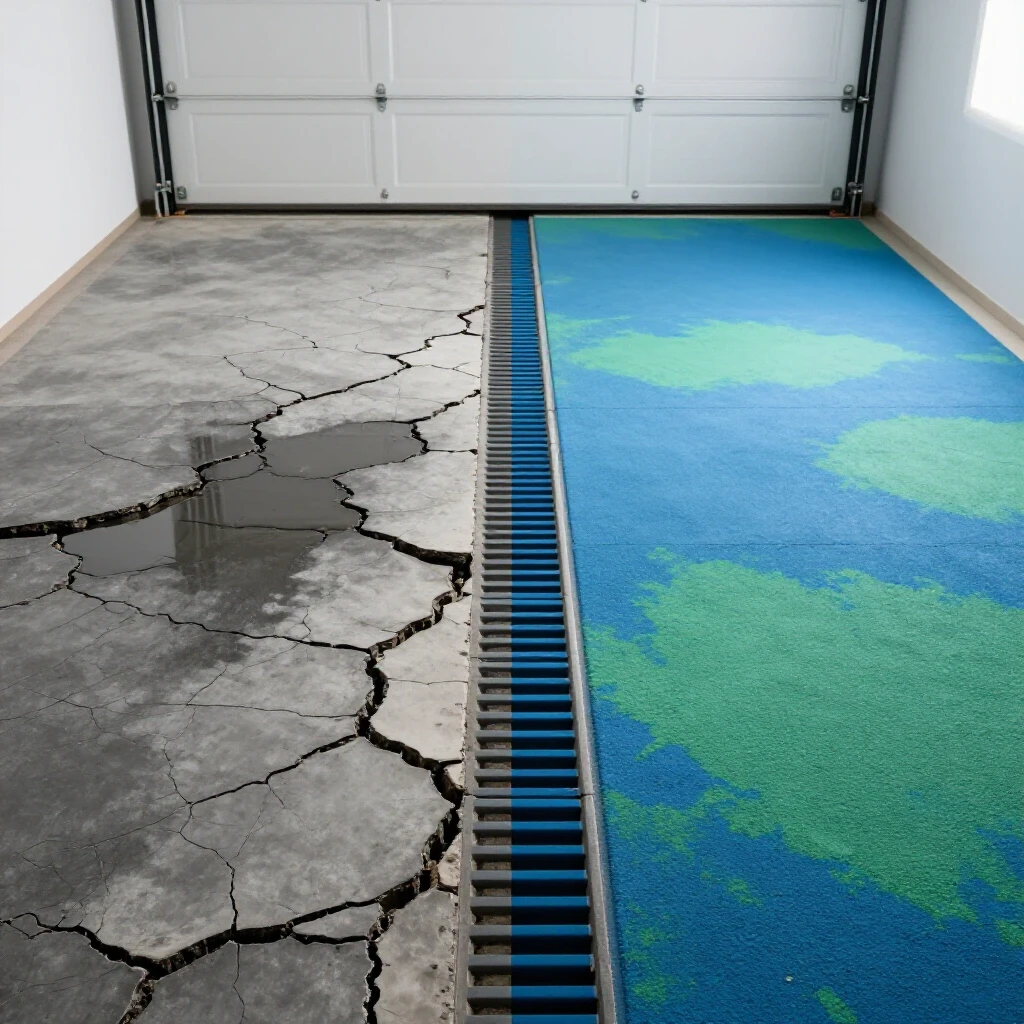
Drainage pathways are the intentional routes designed to move rainwater away from a building’s foundation and structural envelope. If these pathways are blocked or improperly sloped, water will inevitably find its way into the basement or crawlspace.
I once spent weeks tracking a “mysterious” basement leak in a 1920s bungalow. The root cause was not a plumbing failure, but a flower bed that had been built up over the years, reversing the grading slope. For effective structural protection, the ground should drop at least 1 inch per foot for the first 6 feet away from the house. If the slope is neutral or negative, water will pool against the foundation, increasing the pressure and forcing its way through microscopic cracks.
Symptom-to-Root-Cause Diagnostic Tree
| Symptom | Potential Root Cause | Diagnostic Test | Professional Transition Point |
|---|---|---|---|
| Efflorescence (white powder) on basement walls | Hydrostatic pressure from poor exterior drainage | Check grading slope; use moisture meter on masonry | If wall shows signs of bowing or horizontal cracking |
| Slow drains in multiple fixtures | Main sewer line blockage or venting issue | Visual inspection of roof vents; bucket test | If a plunger or manual snake fails to clear the line |
| Peeling paint near window frames | Bulk water intrusion or high interior humidity | Thermal camera scan during rain; hygrometer check | If structural headers or studs show rot |
| Flickering lights when appliances start | Circuit overload or loose neutral wire | Multimeter voltage drop test | Any sign of scorched outlets or burning smells |
Evaluating Thermal Performance: Air Leaks and Insulation
Thermal performance refers to how effectively a home’s envelope resists the transfer of heat, measured by the R-value of its materials. A well-performing home stays comfortable with minimal mechanical intervention, reducing the strain on HVAC systems.
One of the biggest lessons I learned is that insulation is useless if air is moving through it. I often saw homeowners add layers of fiberglass to an attic while ignoring the “thermal bridging” happening through the wooden ceiling joists. Air leaks at the top and bottom of the house create a vacuum that pulls cold air in through every crack. This is why sealing the “envelope” is often more effective than simply increasing the R-value of the insulation.
Managing the Stack Effect in Older Properties
The stack effect is a building science principle where warm air rises and escapes through the top of a house, creating a pressure imbalance that pulls cold air in at the bottom. This cycle accelerates heat loss and can pull moisture and soil gases into the living space.
To diagnose this, I look for “dirty” insulation in the attic, which acts as a filter for air escaping the house. By sealing penetrations for pipes and wires with fire-rated foam, you can break the cycle. This reduces the workload on your HVAC system, preventing the premature mechanical failures that come from constant cycling.
Plumbing and Mechanical Systems: Early Warning Signs
Mechanical systems are the active components of a home, including plumbing, heating, and cooling, that require energy or pressure to function. These systems have finite lifespans and require regular calibration to operate safely.
In my facility logs, I tracked water pressure levels religiously. Most residential plumbing is designed for a maximum of 80 PSI. If your pressure is higher, you are stressing every joint and valve in the house. I have seen countless DIY repairs fail because the homeowner replaced a faucet but didn’t realize the high system pressure was the real culprit. Installing a pressure-reducing valve is a standard preventive home care step that can save thousands in future plumbing repair guides.
HVAC Efficiency and Safety Sequences
HVAC efficiency is the ratio of heating or cooling output to the energy consumed, often measured by SEER or AFUE ratings. Maintaining this efficiency requires more than just changing filters; it requires monitoring the safety sequences that prevent dangerous conditions.
- Flame Sensor Cleaning: A dirty sensor can cause a furnace to shut down repeatedly, causing wear on the igniter.
- Condensate Line Clearing: A blocked line can back up water into the furnace electronics or cause mold in the ductwork.
- Temperature Differential: A healthy AC system should show a 15 to 20-degree difference between the return air and the supply air.
Electrical Systems: Recognizing the Boundaries of Safety
Electrical resistance is the opposition to the flow of electric current, which generates heat as a byproduct. In older homes, outdated wiring or loose connections can increase resistance to dangerous levels.
The Consumer Product Safety Commission (CPSC) warns that electrical failures are a leading cause of home fires. My rule of thumb is simple: you can replace a light fixture or a switch, but you should never modify the circuit logic or the service panel yourself. If you notice a circuit breaker tripping frequently, it is not a “bad breaker”—it is a safety device doing its job. Diagnosing the cause requires understanding circuit amperages and the total load on the system.
DIY vs. Professional Scope Limits
| Task | DIY Diagnostic Limit | Professional Requirement |
|---|---|---|
| Plumbing | Clearing minor clogs; replacing washers | Main line repairs; gas line modifications |
| Electrical | Testing outlets; replacing switches | Panel upgrades; running new circuits |
| HVAC | Filter changes; cleaning coils | Refrigerant handling; heat exchanger inspection |
| Structural | Monitoring cracks; improving grading | Foundation underpinning; load-bearing wall removal |
Building a Multi-Year Prevention Program
A multi-year prevention program is a structured schedule of inspections and minor repairs designed to extend the life of a property’s major systems. It moves the homeowner from a state of anxiety to a state of informed control.
I recommend breaking your maintenance into seasonal blocks. In the spring, focus on the exterior envelope and drainage. In the fall, prioritize the heating system and weatherization. By spreading the work out, you avoid the “maintenance fatigue” that leads to shortcuts.
Preventative Maintenance Schedule by System
- Quarterly: Test GFCIs, check smoke detector batteries, and inspect HVAC filters.
- Bi-Annually: Flush the water heater to remove sediment; clean gutters and downspouts.
- Annually: Inspect the roof for damaged shingles; check the foundation for new cracks; test the sump pump.
- Every 5 Years: Deep-clean dryer vents; reseal exterior wood trim; inspect attic insulation levels.
Average Repair Cost Progression Over Time
Data from the building industry shows that the cost of a repair increases exponentially the longer it is deferred. A $10 tube of caulk applied to a window frame today can prevent a $1,500 window replacement in five years. If that leak reaches the structural framing, the cost can jump to $5,000 or more for mold remediation and wood replacement. This is why I emphasize the “limits” of DIY: the goal isn’t just to fix things yourself, but to know exactly when to act so the fix remains simple and affordable.
Conclusion: Taking the Next Steps in Home Mastery
Mastering the care of an older home is a journey of observation and incremental action. By focusing on building science and early diagnostics, you can protect your investment and your peace of mind. Start by purchasing a high-quality moisture meter and a water pressure gauge. Spend a weekend documenting your home’s “normal” state. When you understand how your house breathes and moves water, you stop fearing the unknown and start managing your property like a professional.
FAQ: Professional Insights for Older Home Maintenance
What is the most common sign of a hidden water leak in an older home? The most reliable sign is a sudden, unexplained spike in your water bill or the sound of water running when all fixtures are off. Physically, look for “cupping” in hardwood floors or soft spots in the drywall. A moisture meter can confirm if the area has a moisture content above 15%, which indicates an active leak.
How do I know if a crack in my foundation is serious? Vertical cracks are often the result of minor settling and can usually be monitored. However, horizontal cracks or cracks wider than 1/4 inch often indicate significant hydrostatic pressure or structural shifting. If you can fit a nickel into the crack, or if the wall is bulging inward, you must consult a structural engineer immediately.
Why is my basement damp even when it hasn’t rained? This is often caused by high humidity and the “dew point” effect. When warm, moist air hits the cool foundation walls, it condenses into liquid water. This can be mistaken for a leak. Improving air circulation and using a dehumidifier to keep basement humidity below 50% will usually solve this issue.
When should I replace my water heater instead of repairing it? If the tank itself is leaking, it must be replaced immediately. However, if the issue is a lack of hot water or a popping sound, it may just be sediment buildup or a failed heating element. If the unit is over 10-12 years old, replacement is generally more cost-effective than multiple repairs.
Can I increase my attic insulation myself? Yes, but you must seal air leaks first. If you blow in insulation over open gaps around chimneys or plumbing stacks, you may trap moisture in the attic, leading to roof rot or ice dams. Always ensure your soffit vents are clear to maintain proper airflow.
What is the “stack effect,” and why does it matter for my utility bills? The stack effect is the movement of air in and out of buildings. In winter, warm air rises and escapes through the attic, while cold air is pulled in through the basement. This makes your furnace work harder. Sealing the “top” and “bottom” of your home is the most effective way to stop this and lower your bills.
How often should I have my electrical panel inspected? For homes older than 30 years, a professional electrical audit every 5 to 10 years is recommended. Look for signs of “over-fusing” (where a breaker is too large for the wire) or evidence of heat damage on the bus bars, which are critical safety risks.
Is a thermal camera worth the investment for a homeowner? For owners of legacy properties, yes. It is the only way to “see” through walls to find missing insulation, cold air drafts, or overheating electrical junctions. It can save thousands by pinpointing the exact location of a problem before you start cutting into drywall.
(This article was written by one of our staff writers, Daniel Whitaker. Visit our Meet the Team page to learn more about the author and their expertise.)