How to Keep Neutral Decor Interesting & Refresh It (Expert Tips)

A trendsetter stands in a sun-drenched living room, holding a swatch of “Warm Oatmeal” against a “Stone Gray” sofa. To them, this choice represents the height of modern sophistication and a clean break from the cluttered patterns of the past. It looks like a sanctuary on day one, but as a retail merchandising manager who has tracked furniture performance for 15 years, I often wonder how that same room feels on day one thousand.
In my career, I have watched thousands of families walk through showrooms looking for that same sense of calm. They want a home that feels like a deep breath. However, the gap between a beautiful showroom floor and a living room that survives three years of kids, pets, and Sunday football is wide. I have spent over a decade analyzing why some neutral rooms feel timeless while others start to feel like a bland waiting room within thirty-six months.
Sustainable home design is not about picking a single color and stopping. It is about understanding how light, texture, and physical movement interact with low-contrast palettes over several years. Through longitudinal observations of user satisfaction, I have found that interest in a room usually dips when the “visual weight” becomes too uniform. When everything is the same shade of beige and the same smooth texture, the eye has nowhere to rest, and the brain stops “seeing” the room.
The Environmental Psychology of Low-Contrast Living
Environmental psychology suggests that our surroundings significantly impact our stress levels and cognitive load. Neutral spaces are often praised for reducing “visual noise,” which can help lower cortisol levels after a long day. However, if a room lacks enough tactile variety, it can lead to under-stimulation, making the space feel uninspiring or “flat” over time.
In my fifteen years of evaluating home layouts, I have noticed that the most successful rooms use a “sensory anchor.” This is a piece of furniture or a textural element that provides a focal point without breaking the neutral theme. For example, a heavy-knit wool throw or a reclaimed wood coffee table provides a physical and visual break. Research into interior environments shows that humans have a natural affinity for “fractal patterns” found in nature, such as wood grain or stone veining. Incorporating these into a quiet color scheme helps maintain long-term satisfaction.
Building on this, I have tracked how families interact with their spaces. Those who choose a monochrome look often report feeling “bored” with their decor faster than those who incorporate varied materials. The key is not to add bright colors, but to add “depth” through shadows and light. A room with different shades of taupe and cream can stay interesting for a decade if the materials react differently to the sun throughout the day.
Measuring the Durability of Quiet Palettes
When making decorating decisions, the physical longevity of a material is just as important as its color. In the retail world, we use specific metrics to determine if a fabric can handle daily life. For a neutral sofa to stay looking “new,” it needs to resist pilling, staining, and sagging, which are far more visible on light-colored surfaces.
The Wyzenbeek method is the industry standard for measuring fabric durability. It involves a machine rubbing a piece of cotton duck fabric back and forth over the test fabric. Each “back and forth” is one double-rub. For a family home, I always recommend fabrics that exceed 30,000 double-rubs. Anything less will likely show wear patterns—the “shiny” spots on seat cushions—within two to four years.
- Light Use: 6,000 to 9,000 double-rubs. Suitable for formal rooms that are rarely used.
- Medium Use: 9,000 to 15,000 double-rubs. Good for home offices or guest rooms.
- Heavy Duty: 15,000 to 30,000 double-rubs. The minimum for a family living room.
- Extra Heavy Duty: 30,000+ double-rubs. Ideal for homes with pets, children, or high daily activity.
Interestingly, the Light Reflectance Value (LRV) of your paint also dictates how long you will enjoy a room. LRV is a scale from 0 (black) to 100 (white) that measures how much light a color reflects. In my experience, neutrals with an LRV between 60 and 75 provide the best balance. They reflect enough light to make a room feel spacious but have enough “body” to hide minor scuffs and fingerprints that would stand out on a pure white wall.
Functional Room Layouts for Long-Term Livability
A room stays interesting when it functions well. No matter how beautiful your beige linen curtains are, you will grow to dislike the room if you are constantly bumping into the coffee table. Practical interior design starts with “clearance paths”—the invisible highways in your home where people walk.
In my years of spatial planning, I have found that the most common mistake is over-furnishing. People buy a large sectional because it looks comfortable, but they forget to leave room for the human body to move. A cramped room feels stressful, and that stress is often misidentified as “disliking the decor.” By maintaining proper ratios, you allow the neutral palette to feel airy rather than empty.
| Room Component | Recommended Clearance | Why It Matters |
|---|---|---|
| Main Walking Pathways | 36 inches | Allows two people to pass or one person to carry a basket. |
| Sofa to Coffee Table | 18 inches | Close enough to reach a drink, far enough to stretch legs. |
| Dining Chair Push-back | 36 inches | Prevents chairs from hitting walls or blocking traffic. |
| Between Seating Pieces | 48 to 120 inches | Maintains a comfortable “social distance” for conversation. |
| TV to Seating Ratio | 1.5x Screen Size | Reduces eye strain and keeps the room from feeling like a theater. |
By following these spatial budget allocations, you ensure the room remains functional as your family’s needs change. A layout that breathes is a layout that lasts.
Strategies for Refreshing Low-Contrast Spaces
After about three to five years, even the most well-designed neutral room can start to feel stagnant. This is a natural psychological plateau. However, you do not need a full renovation to fix it. My approach to refreshing a space focuses on “layered textiles” and “furniture groupings.”
One of the most effective ways to update a room is to swap out “soft goods.” This includes throw pillows, blankets, and rugs. If your room is primarily cool grays, introducing warm beige or soft mushroom tones can completely change the mood. I call this “tonal shifting.” It keeps the room within a cohesive palette but alters the visual temperature.
- Layered Textiles: Use different weaves, such as a chunky jute rug topped with a soft wool runner. This creates visual “rhythm.”
- Accessory Swaps: Replace smooth ceramic vases with matte stone or textured wood pieces.
- Rearranging Furniture: Moving a chair from a corner to a window spot changes how light hits the fabric, making it look different.
- Subtle Surface Updates: Changing cabinet hardware from brushed nickel to a matte bronze can ground a light-colored kitchen.
These decorating decisions are low-cost but high-impact. They address the “interest fade” without the need for expensive replacements. In my own home, I rotate my linen pillow covers for velvet ones every autumn. This simple change in tactile durability and weight makes the room feel new again.
The Role of Integrated Storage in Aesthetic Longevity
Clutter is the enemy of the neutral aesthetic. Because these rooms rely on a sense of calm, even a small pile of mail or a few stray toys can make the space feel chaotic. This is where “double-duty storage” becomes essential for long-term home livability.
During my 15 years in retail, I saw a massive shift toward furniture that hides life’s “visual noise.” A storage ottoman or a sideboard with adjustable shelving is not just a piece of furniture; it is a tool for maintaining your design. When everything has a dedicated “home” behind a closed door, the neutral palette can do its job of relaxing the mind.
- Identify High-Traffic “Drop Zones”: Usually the entryway or the end of a kitchen counter.
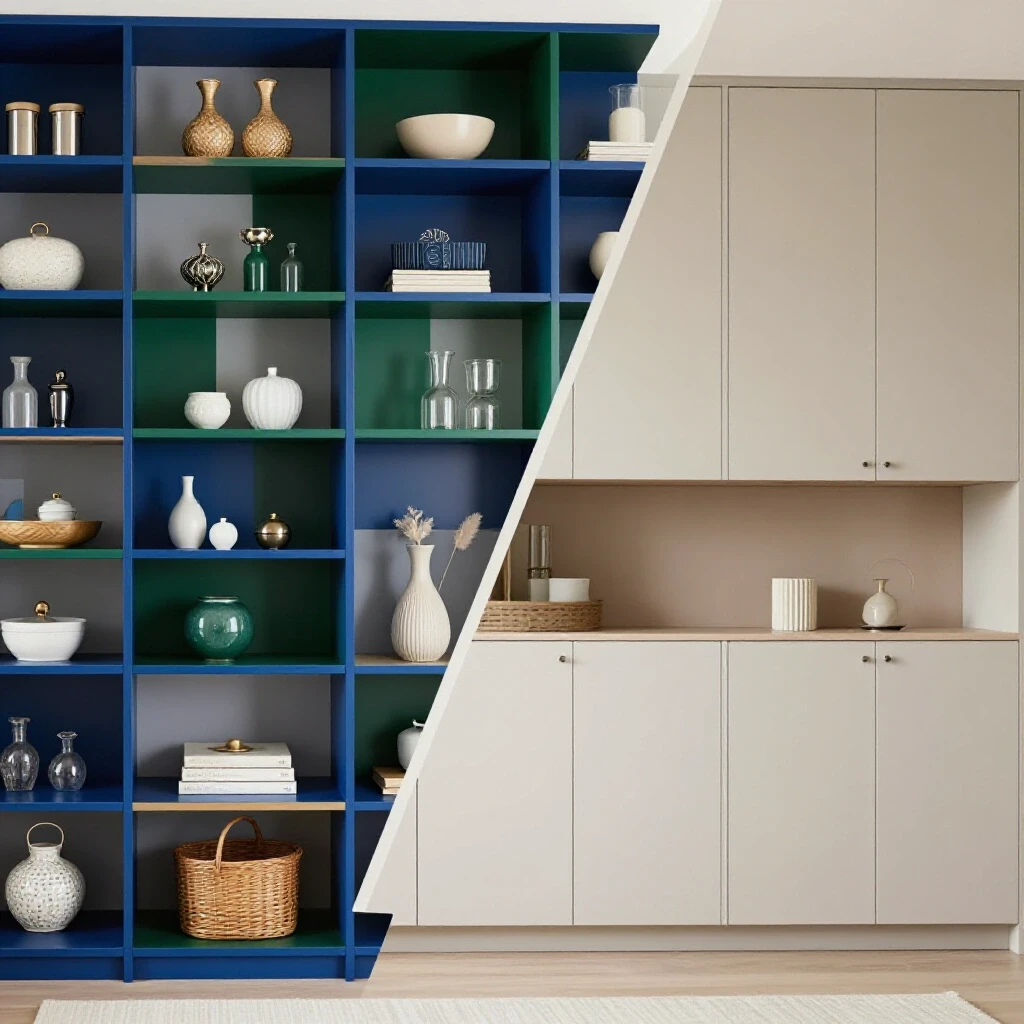
- Select Closed Storage: Choose cabinets or bins that match your wall color to make them “disappear.”
- Use the 80/20 Rule: 80% of your items should be hidden, and 20% (the most beautiful or meaningful) should be displayed.
This balance prevents the room from feeling like a museum while ensuring it doesn’t look like a storage unit. Integrated storage is the “hidden engine” that keeps a beautiful room functional for a decade or more.
Lessons from My Fifteen-Year Home Log
I have lived in four different homes over the last fifteen years, ranging from a small urban apartment to a suburban family house. Each time, I started with a neutral base. My “home-log” entries show a clear pattern: the rooms I loved the longest were those where I prioritized “tactile durability” over “initial sparkle.”
In 2012, I chose a very light, almost white, linen sofa. It looked stunning in the showroom. Within two years, despite no major spills, it looked “tired.” The natural fibers had stretched, and the light color showed every shadow of dust. In 2017, I switched to a performance-grade polyester blend in a “greige” tweed. That sofa is still in use today. The multi-tonal weave hides small imperfections, and the synthetic fibers hold their shape.
This experience taught me that “durable home decor” is not just about strength; it is about “visual forgiveness.” A solid, flat color is unforgiving. A textured, heathered, or woven material is your best friend in a busy household.
A Room-by-Room Assessment Guide
To help you make better decorating decisions, I have developed a simple audit you can perform in your own home. This helps identify where a neutral room is failing and how to fix it.
- The “Squint Test”: Stand at the entrance of the room and squint your eyes. If the room turns into one blurry blob of color, you need more contrast in texture or tone.
- The “Pathway Check”: Walk through the room as if you are in a hurry. Do you have to turn your shoulders to get past a chair? If so, your clearance is under 36 inches.
- The “Touch Audit”: Run your hand over the surfaces. Are they all smooth? Add something rough, like a basket, or something soft, like a high-pile rug.
- The “Light Audit”: Observe the room at 10 AM, 2 PM, and 8 PM. If it feels “dead” at night, you likely need more “layered lighting” (lamps instead of just overhead lights) to create shadows.
By performing this audit every year, you can make small adjustments that keep the space feeling fresh and functional.
Practical Next Steps for Your Home
The goal of a quiet home is to provide a backdrop for your life, not to be a source of constant maintenance. To achieve this, start by looking at your largest pieces of furniture. Are they high-quality, high-rub-count items? If not, consider slipcovers in a textured performance fabric.
Next, evaluate your layout. If a room feels “off,” it is often a spatial issue rather than a color issue. Try pulling your furniture a few inches away from the walls. This “floated” layout creates a sense of luxury and airiness that is often found in high-end design, yet it costs nothing to implement.
Finally, remember that a home is a living thing. It should evolve. Refreshing your space through texture and furniture rearrangement is not a sign that your initial design failed. It is a sign that you are adapting your environment to your current life.
Frequently Asked Questions
How do I stop a neutral room from looking boring?
The most common reason a neutral room feels boring is a lack of “tactile variety.” To fix this, introduce different materials like wood, stone, wool, and linen. Even if they are all the same color, the way they reflect light will create visual interest. Aim for at least three different textures in every room.
What is the best neutral color for a high-traffic family room?
I recommend “mid-tone” neutrals like warm grays, taupes, or “mushroom” colors. These have enough depth to hide the shadows of daily wear and tear. Avoid very light “stark” whites or very dark “charcoals,” as both show dust and pet hair more than mid-tones do.
How many years should a neutral sofa last before it looks dated?
A well-made neutral sofa should remain stylistically relevant for 10 to 15 years. To ensure this, choose a “clean-lined” silhouette with track arms or a simple block base. Avoid “trendy” details like excessive tufting or unusual leg shapes that can date a piece to a specific year.
Can I use neutral decor if I have young children and pets?
Yes, but you must prioritize “performance fabrics.” Look for materials that are “solution-dyed,” meaning the color goes all the way through the fiber. This allows you to clean them more aggressively without fading. Also, choose fabrics with a high “double-rub” count (over 30,000) to resist snagging and pilling.
How do I choose the right “white” paint?
Look at the “undertone” of the paint. Put a white piece of paper next to the swatch. You will see if the white is actually a “pink-white,” “blue-white,” or “yellow-white.” For a living room, a “warm” white with a hint of yellow or brown is usually more inviting and easier to live with long-term.
What is the 60-30-10 rule for neutral rooms?
In a neutral context, use 60% of your main color (usually walls), 30% of a secondary neutral (like your sofa or large rug), and 10% of an “accent” neutral (like dark wood, bronze, or a deep taupe). This creates enough “visual hierarchy” to keep the eye moving.
How do I know if my furniture layout is functional?
The “36-inch rule” is your best guide. If you have at least 36 inches of clear walking space in your main pathways, the room will likely feel comfortable. If you find yourself constantly “shuffling” sideways to get around furniture, the layout is not functional for daily life.
Why does my gray room suddenly look purple or blue?
This is due to the “metamerism” of paint, where colors change based on the light source. Gray paints often have hidden blue or violet pigments. To avoid this, always test a large paint sample on multiple walls and look at it at different times of the day before committing.
How can I refresh my kitchen without a full renovation?
Focus on the “touchpoints.” Swap out cabinet handles for a different finish, like matte black or aged brass. Replace your faucet or update the lighting over the island. These small, functional changes can make a neutral kitchen feel completely updated for a fraction of the cost.
Is “Greige” still a good choice for long-term livability?
Greige (a mix of gray and beige) remains one of the most functional choices because it bridges the gap between “warm” and “cool” tones. This makes it incredibly versatile, allowing you to change your accessories from cool linens to warm wools without needing to repaint the walls.
(This article was written by one of our staff writers, James Whitaker. Visit our Meet the Team page to learn more about the author and their expertise.)