How to Fix a Cluttered Living Room Layout (Step-by-Step Guide)

The Hidden Cost of a Crowded Floor Plan: My Journey Through Four Relocations
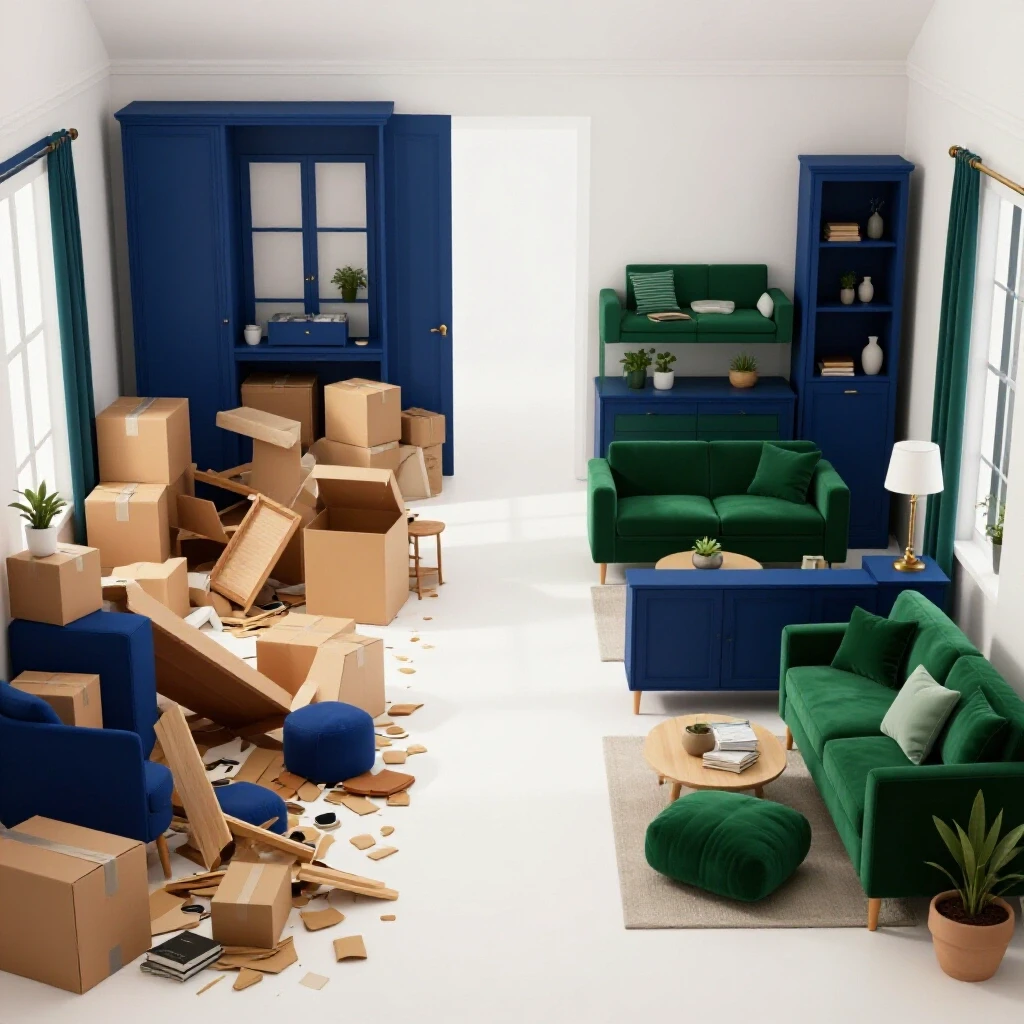
Moving into a new home often feels like trying to solve a puzzle where the pieces have changed shape overnight. I have moved my family four times over the last 19 years, and each time, the living room presented the biggest challenge. In our second move, we transitioned from a wide suburban house to a narrow city row home. I remember standing among a sea of boxes, staring at a massive sectional sofa that simply would not fit the new room’s proportions. It was a moment of high stress that many of you are likely feeling right now.
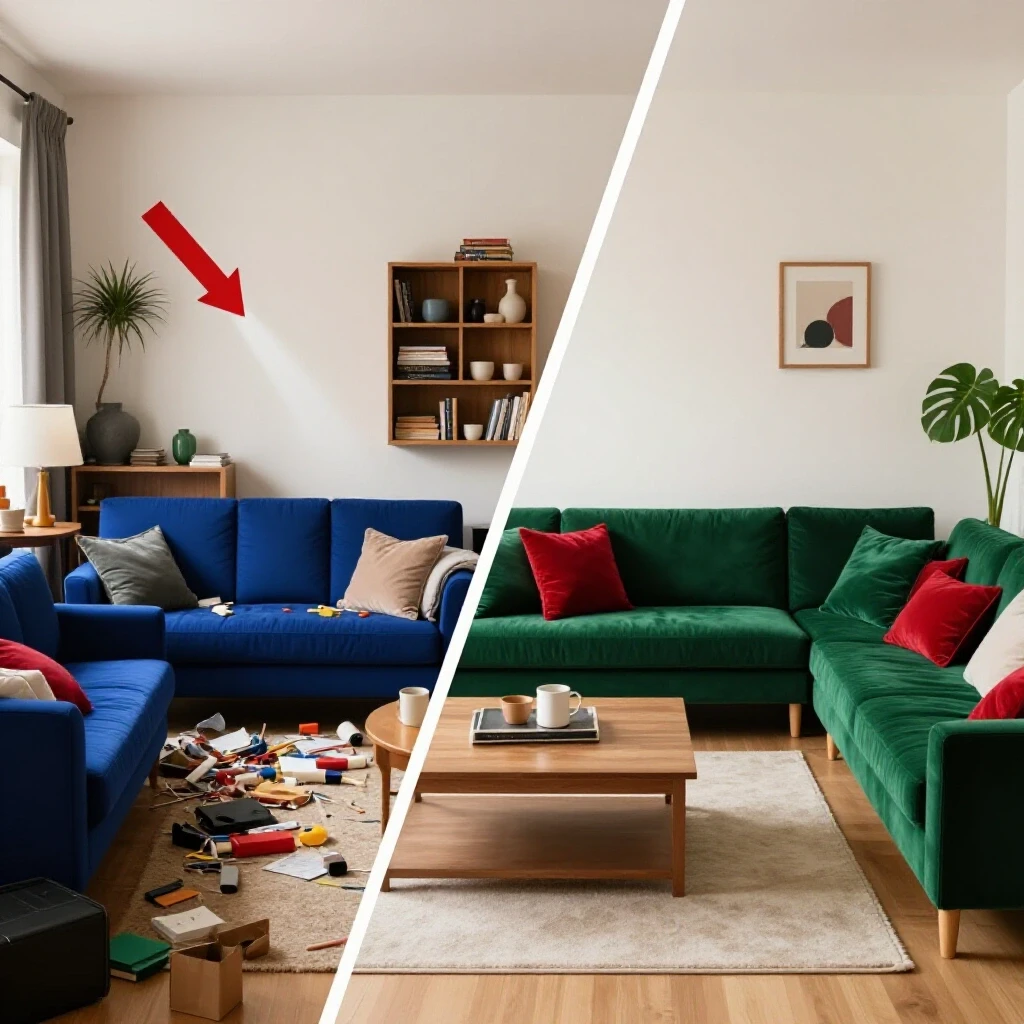
That experience taught me that a home transition is more than just moving boxes. It is about spatial layout adaptation—the process of making your old life fit into a new architectural reality. When we ignore the physical limits of a room, we end up with a cluttered environment that creates daily friction. This guide focuses on how I learned to analyze floor plans, adjust furniture scales, and create functional zones that actually support a busy family life.
Understanding Spatial Layout Adaptation in a New Environment
Spatial layout adaptation involves analyzing how physical objects interact with the architectural footprint of a room. It focuses on maximizing utility while minimizing visual noise to ensure a home feels functional rather than storage-heavy during the first weeks of a transition. This process is the foundation of a successful home transition planning strategy.
When you move, you aren’t just changing your address; you are changing your daily patterns. If your sofa blocks the natural path to the kitchen, you will feel a micro-stress every time you walk by it. By understanding the “why” behind layout choices, you can stop fighting against your floor plan and start working with it. This requires a shift from “where does this fit?” to “how will we move through this space?”
The Importance of Structural Scale and Visual Weight
Structural scale refers to the size of your furniture relative to the dimensions of the room, while visual weight is how “heavy” an object looks in a space. A dark, bulky bookshelf has more visual weight than a glass-topped coffee table of the same size. Balancing these two elements is essential when you are managing a small room furniture layout.
In our third move, I realized that our heavy wooden coffee table made our new, smaller living room feel like a storage unit. By swapping it for a lighter, more open piece, the room suddenly felt larger, even though the floor space used was nearly the same. This taught me that clutter isn’t always about having too many items; sometimes, it is about having items that are too “heavy” for the room’s scale.
Why Blind Furniture Placement Fails and How to Draft a Blueprint
A spatial layout blueprint is a scaled diagram used to predict how furniture will fit into a new room before physical lifting begins. This proactive mapping prevents the “trial and error” fatigue that often leads to permanent clutter and restricted movement. It is a vital part of any home moving checklist.
Most movers make the mistake of placing the largest piece of furniture against the longest wall without measuring first. This often results in blocked outlets, covered vents, or awkward gaps. My “test” for every new living room involves a measuring tape and a roll of painter’s tape. Before a single heavy chair is moved, I mark the floor to see if the clearances remain functional.
The 30-Inch Rule for Traffic Circulation
Traffic circulation refers to the clear paths residents take to move between rooms or seating areas. Maintaining a minimum of 30 to 36 inches in these zones prevents a sense of being trapped and improves the overall flow of a living space. This is a non-negotiable metric for any functional home.
In my experience, anything less than 30 inches feels like a squeeze for an adult. If you have children or pets, you should aim for closer to 40 inches in high-traffic areas. When I mapped out our current living room, I discovered that moving the armchair just four inches to the left opened up the entire path to the balcony, instantly making the room feel more intentional and less crowded.
Spatial Blueprint Compatibility Matrix
| Furniture Item | Recommended Clearance | Common Conflict | Adaptation Strategy |
|---|---|---|---|
| Sofa/Sectional | 36 inches for main paths | Blocks entryways | Pull 6 inches away from wall |
| Coffee Table | 14–18 inches from sofa | Limits legroom | Use a smaller nesting table |
| Media Console | 36 inches from seating | Glare from windows | Angle away from direct light |
| Armchair | 30 inches of walk-space | Blocks “flow” to next room | Place in a corner at 45 degrees |
Strategies for Adapting Existing Furniture to Awkward Layouts
Furniture adaptation is the creative repositioning or repurposing of items to suit a room’s unique geometry. This often involves shifting visual weight or using multi-functional pieces to solve challenges like narrow walls or off-center focal points. It is a key skill for anyone using a new home adjustment guide.
When we moved into a home with an off-center fireplace, I struggled to make the room feel balanced. The existing furniture layout felt lopsided. I eventually learned to use “zoning” to create two distinct areas: one for watching television and a smaller nook for reading. This prevented the furniture from feeling like it was all huddled in one corner of the room.
Managing Scale in Small or Narrow Rooms
Scale is the relationship between the size of an object and the space it occupies. In narrow rooms, long furniture can create a “bowling alley” effect. To break this up, I recommend using rounder shapes—like a circular rug or an oval ottoman—to soften the hard lines of a rectangular room.
- Avoid the “Wall Hugger” Habit: Pulling furniture even three inches away from the wall creates an illusion of depth.
- Use Vertical Space: If floor space is tight, move storage to the walls with floating shelves.
- Prioritize Multi-function: An ottoman that doubles as a coffee table reduces the number of physical legs on the floor, which reduces visual clutter.
Step-by-Step Unpacking and Layout Execution
A step-by-step unpacking plan ensures that the most essential areas of the home become functional first. This systematic approach reduces the “box-blindness” that occurs when you live among half-empty containers for too long. It helps establish a sense of order during a chaotic transition.
During our most recent move, I followed a strict 72-hour rule for the living room. Within the first three days, we focused only on the “primary seating zone.” We didn’t worry about pictures or decor. We just needed a place to sit together that wasn’t a folding chair. This small win provided a psychological anchor for the family.
First-Month Spatial Adjustment Timeline
- Days 1–3: Establish the primary seating zone and clear 36-inch walkways.
- Days 4–10: Unpack “active” storage (media, books, daily-use items) and test the flow.
- Days 11–21: Evaluate lighting and adjust furniture that feels “in the way” during daily routines.
- Days 22–30: Finalize decor and “passive” storage (items used less frequently).
Optimizing Awkward Spaces and Functional Zoning
Functional zoning is the practice of dividing a single room into different areas based on the activities that happen there. By defining where we “rest,” “play,” or “work,” we can prevent the entire living room from becoming a catch-all for clutter. This is particularly helpful for families with changing needs.
In our fourth home, the living room had a strange alcove under the stairs. Initially, it just collected random boxes. By defining it as a “homework station,” we gave that awkward space a purpose. This stopped the main coffee table from being covered in papers and crayons, which effectively fixed the clutter issue in the center of the room.
Creating Visual Boundaries Without Walls
You don’t need a renovation to define a zone. You can use rugs, lighting, and furniture placement to signal where one area ends and another begins. A large area rug can “anchor” a seating group, making it feel like a distinct island in a larger room.
- Rugs as Anchors: Ensure all front legs of the furniture sit on the rug to unify the zone.
- Lighting Levels: Use a floor lamp to designate a reading nook separate from the main overhead light.
- Furniture Backs: The back of a sofa can act as a “soft wall” to separate a living area from a dining area.
Setting Up Room Systems for Long-Term Maintenance
Room systems are the organized methods used to keep a space functional after the initial move-in. This includes designated spots for incoming mail, toy bins that fit the room’s aesthetic, and “reset” routines that happen at the end of each day. Systems prevent the slow creep of disorganized items.
I have found that the most successful systems are the ones that require the least effort. If a toy bin is behind a closed door, the toys will stay on the floor. If the bin is open and near the play area, the room stays cleaner. We implemented a “five-minute reset” every evening where we return the living room to its base layout. This simple routine has been more effective than any expensive storage solution.
Essential Measurements for Room Systems
- Shelving Depth: 12 inches is standard for books; 15–18 inches is better for bins and baskets.
- Media Height: The center of a TV screen should be at eye level when seated (usually 42 inches from the floor).
- Side Table Height: Should be within 2 inches of the sofa arm height for easy access.
Neighborhood Integration and Building Community
Neighborhood community building is the social aspect of relocation that involves connecting with people in your new area. A well-organized living room plays a role here, as it provides a comfortable space to host new neighbors and build relationships. It is the final step in feeling truly at home.
When we moved across the country, we felt like outsiders for months. I realized that until we invited someone over, our house didn’t feel like a home. By focusing on a “hosting-ready” layout—one that had enough open space for people to stand and talk—we felt more confident opening our doors. The living room became the bridge between our private lives and our new community.
Tips for Socially-Focused Layouts
- Face-to-Face Seating: Arrange chairs so they face the sofa, encouraging conversation rather than just TV watching.
- Clear Entryways: Ensure the path from the front door to the seating area is wide and unobstructed.
- Accessible Surfaces: Make sure every seat has a place to put down a drink or a snack.
Recommended Tools for Space Planning and Relocation
To manage these transitions effectively, I rely on a few specific resources. These tools help visualize the space and keep the logistics organized.
- Digital Floor Plan Apps: Tools like MagicPlan or Floorplanner allow you to scan a room with your phone and drop in virtual furniture.
- Painter’s Tape: The most underrated tool for home moving. Tape out the footprint of your furniture on the floor to see the real-world scale.
- Moving Inventory Trackers: Apps like Sortly help you know exactly which box contains your living room essentials, so you aren’t digging through 20 boxes to find a remote.
- Graph Paper and Templates: For those who prefer tactile planning, a 1/4-inch scale drawing is a classic for a reason.
Final Steps for a Smooth Transition
As you settle into your new space, remember that layout adaptation is an iterative process. You likely won’t get it right on the first day. It takes living in the room to see where the light falls and where the family naturally congregates.
Start by clearing the main paths. Focus on the 30-inch clearance rule. Once you can move through the room without bumping into a box or a chair, the stress levels will naturally drop. From there, you can refine your zones and build the routines that make a house feel like a home.
Frequently Asked Questions
How do I know if my furniture is too big for the new living room? Measure the room and subtract 36 inches for a walkway. If the width of your sofa takes up more than two-thirds of the remaining space, it may be too large for the scale of the room. Use painter’s tape to mark the sofa’s footprint on the floor to see if it feels overwhelming.
What is the best way to handle a long, narrow living room? Avoid lining all furniture up against one long wall. Instead, create two distinct “zones.” For example, place the main seating area at one end and a small desk or reading nook at the other. Use a round coffee table to break up the long, straight lines of the room.
How much space should I leave between a coffee table and a sofa? The standard ergonomic guideline is 14 to 18 inches. This is close enough to reach a drink but far enough to allow you to sit down and stretch your legs comfortably.
How can I make a cluttered room feel open without getting rid of my things? Focus on “visual weight.” Swap dark, heavy curtains for light, sheer ones. Use furniture with legs (so you can see the floor underneath) rather than pieces that sit flat on the carpet. Raising your gaze with vertical shelving also helps the room feel taller and more open.
When should I start planning the layout of my new home? Ideally, you should start as soon as you have the floor plan and measurements, usually 2–4 weeks before the move. This allows you to decide which pieces of furniture to bring and which ones might be better to sell or donate.
What are the most common layout mistakes movers make? The most common errors are blocking natural light sources, ignoring traffic flow (the 30-inch rule), and placing the television too high. Another mistake is “furniture huddling,” where all items are pushed into one corner, leaving the rest of the room feeling empty and unbalanced.
How do I zone a room if I have an open-concept floor plan? Use area rugs to define the boundaries of the living area. You can also use the back of a sofa or a low console table to create a “half-wall” that separates the living space from the dining or kitchen area.
How long does it typically take to feel “settled” in a new layout? Research on housing adaptation suggests it takes about 30 to 90 days to fully adjust to a new environment. Use the first month to test the layout and don’t be afraid to move things around if the initial plan isn’t working for your daily routine.
What is the “30-inch rule”? This is a standard measurement for walkways. To ensure a room feels comfortable and accessible, you should maintain at least 30 inches of clear floor space in areas where people need to walk. For main thoroughfares, 36 inches is preferred.
How do I balance a room with an off-center focal point, like a fireplace? Instead of trying to force symmetry, aim for “asymmetrical balance.” Place a larger piece of furniture (like a sofa) on one side and a group of smaller items (like two armchairs and a lamp) on the other. This creates a balanced visual weight without needing everything to be perfectly centered.
(This article was written by one of our staff writers, Kevin Thompson. Visit our Meet the Team page to learn more about the author and their expertise.)