How to Install Cabinet Drawer Slides for Smooth Operation (Guide)

Improving the efficiency of your kitchen or workspace often starts with small, functional changes that reduce daily friction. When a heavy drawer sticks or grinds, it wastes your physical energy and slows down your workflow. By upgrading to modern, high-quality tracking hardware, you create a more streamlined environment that supports better home organization. My 12 years in facilities management have taught me that small mechanical failures, if ignored, lead to larger structural damage over time.
In my first home, I spent months fighting a kitchen drawer that held my heavy cast-iron pans. One Saturday, the entire track buckled, spilling the contents and gouging the floor. That mistake taught me the importance of matching hardware load ratings to actual usage. This guide focuses on the practical steps to replace failing tracks with durable, ball-bearing versions that can handle the weight of modern life. We will focus on safety, precision, and the technical specs required for a reliable result.
Assessing Hardware Types and Load Requirements
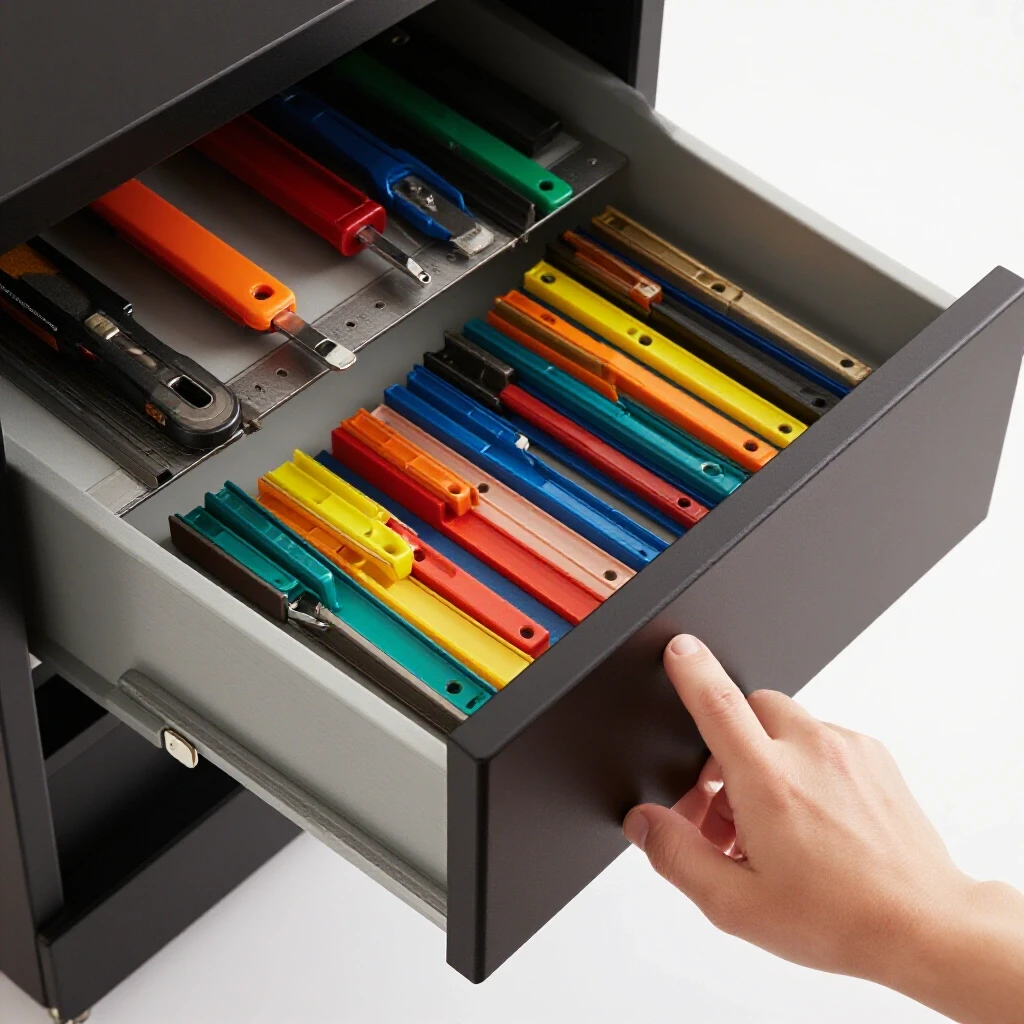
Choosing the correct replacement hardware is the foundation of a successful weekend DIY project. You must identify if your cabinets use side-mount, under-mount, or center-mount tracks before purchasing materials. This section explains how to measure your existing setup and select a weight rating that prevents future sagging or mechanical failure under heavy loads.
Before you buy anything, measure the depth of your cabinet box. Most standard kitchen cabinets are 24 inches deep, but the drawer box itself might only be 20 or 22 inches. You need a track that matches the length of the drawer box. If you pick a track that is too long, the drawer won’t close. If it is too short, you lose valuable extension space.
I recommend ball-bearing tracks over the older plastic roller versions. Ball bearings provide a more stable movement and can often support between 75 and 100 pounds. For a “full extension” upgrade, the track allows the drawer to pull out completely past the face of the cabinet. This makes it much easier to reach items at the very back.
Table 1: DIY vs. Professional Cost and Time Analysis
| Factor | DIY Approach | Professional Service |
|---|---|---|
| Material Cost | $15 – $40 per pair | $15 – $40 (plus markup) |
| Labor Cost | $0 | $75 – $150 per hour |
| Time Investment | 2 – 4 hours | 1 hour (plus scheduling) |
| Risk Level | Low (with proper tools) | Minimal |
| Tool Investment | $30 – $60 | N/A |
Essential Tool Inventory and Safety Protocol
A successful hardware upgrade depends on having the right diagnostic and installation tools ready before you start. Using the wrong screwdriver or a dull drill bit can strip screws and damage the cabinet’s wood grain. This section outlines the necessary gear and the safety steps you should take to protect your hands and eyes during the process.
Safety is often overlooked in small indoor projects. Always wear impact-resistant safety glasses when drilling into cabinetry. Small wood shards or metal burrs from screws can easily fly toward your face. I also suggest using a headlamp or a dedicated work light. Cabinet interiors are dark, and shadows make it difficult to see your alignment marks.
Table 2: Essential vs. Optional Tool Matrix
| Tool Name | Purpose | Necessity |
|---|---|---|
| Power Drill | Driving screws and pre-drilling holes | Essential |
| Torpedo Level | Ensuring the tracks are perfectly horizontal | Essential |
| Measuring Tape | Checking cabinet depth and drawer width | Essential |
| Self-Centering Bit | Drilling holes exactly in the center of the bracket | Optional (Highly Recommended) |
| Drawer Slide Jig | Holding the hardware in place during mounting | Optional |
| Wood Filler | Repairing old, stripped screw holes | Essential |
- Power Drill/Driver: A cordless 12V or 18V drill is ideal for tight spaces.
- Self-Centering Drill Bit: This tool, often called a Vix bit, ensures your pilot hole is dead-center in the hardware hole.
- Combination Square: This helps you mark a straight line inside the cabinet for the track to follow.
- Safety Glasses: Protects against wood dust and metal fragments.
- Clamps: Useful for holding the track in place if you are working alone.
Removing Old Hardware and Preparing the Substrate
Removing worn-out rails requires a gentle touch to avoid splintering the cabinet stiles or the drawer box. You must assess the condition of the wood and determine if old screw holes need to be filled and reinforced. This stage ensures the new hardware has a clean, flat surface for a secure and long-lasting attachment.
When I worked on a set of 1970s-era cabinets, I found that the old wood was extremely brittle. If you just drive a new screw into an old hole, it will likely pull out within a week. I use a “plug and redrill” method. I dip a wooden toothpick or a small dowel in wood glue, tap it into the old hole, and let it dry. Once I trim it flush, I have a fresh surface for the new screw.
Check the interior walls of the cabinet for “squareness.” In many older homes, the walls might be slightly bowed. If the distance between the two tracks is not consistent from front to back, the drawer will bind. You may need to use thin plastic or wood shims to ensure the tracks stay parallel.
Step-by-Step Installation and Alignment Strategy
Precise alignment is the difference between a drawer that glides and one that gets stuck halfway. This phase involves marking your centerlines, mounting the cabinet member first, and then attaching the drawer member. Following a systematic approach prevents the common mistake of mounting one side higher than the other, which causes uneven wear.
First, mark a level line on both inside walls of the cabinet. I usually measure up from the cabinet floor to ensure the drawer clears the bottom frame. Use a torpedo level to verify the line is horizontal. If your cabinet isn’t level, your drawer won’t be either. Align the bottom of the track with your mark and set it back about 1/16 of an inch from the front edge of the cabinet.
Next, attach the matching piece to the drawer box. Most pros recommend centering the track on the side of the drawer. Measure the height of the drawer box, find the center, and draw a line from front to back. Align the track and secure it with screws. Always pre-drill your holes to prevent the thin plywood of the drawer box from splitting.
Project Difficulty Rating Scale
- Skill Level: Intermediate (requires basic drill proficiency and measuring accuracy).
- Physical Effort: Low to Moderate (requires kneeling and reaching into tight spaces).
- Time Estimate: 1 hour for the first drawer, 30 minutes for each additional drawer.
- Code Compliance: Ensure the installation does not obstruct any electrical outlets or plumbing shut-off valves located inside the cabinet.
Troubleshooting Binding and Misalignment
Even with careful measurements, you might find that the drawer doesn’t slide as expected on the first try. Binding usually occurs because the cabinet is out of square or the tracks are not perfectly parallel. This section covers how to diagnose these issues and make the small adjustments necessary for a functional result.
If the drawer is hard to push in or pull out, the tracks are likely too tight against the drawer box. This happens if the cabinet opening is slightly narrower than the combined width of the drawer and the hardware. You can sometimes gain 1/32 of an inch by slightly loosening the mounting screws and shifting the track.
Interestingly, if the drawer slides open on its own, the cabinet is tilted forward. You will need to adjust the rear of the tracks slightly upward to compensate. Most modern ball-bearing slides have “slotted” holes that allow for small vertical or horizontal movements. Use these slots for your initial screws, then use the round holes for permanent “locking” screws once the movement is smooth.
Final Testing and Long-Term Maintenance
Once the hardware is installed, a series of load tests ensures the system can handle daily use without failing. Proper maintenance, including cleaning the tracks and checking for loose screws, will keep the mechanism working for years. This final stage transitions the project from a weekend task to a permanent home improvement.
I always test the drawer by filling it with about 50% of its intended weight. Open and close it ten times. Listen for any clicking or grinding sounds, which indicate the ball bearings are struggling or the track is rubbing. If it sounds quiet and feels consistent, you have succeeded.
For maintenance, avoid using thick greases that attract dust and hair. A dry silicone spray is usually the best choice for ball-bearing tracks. Once a year, I take a screwdriver and check the mounting screws. The vibration of daily use can slowly loosen them, especially in particle-board cabinets.
Key Takeaways for Success
- Measure Twice: Confirm the “clearance” (the gap between the drawer and cabinet wall) is exactly what the manufacturer requires (usually 1/2 inch on each side).
- Use Jigs: If you are doing more than two drawers, a commercial jig will save you hours of measuring and reduce errors.
- Pilot Holes: Never skip pre-drilling; it prevents the wood from cracking and ensures the screw goes in straight.
- Check Square: Use a framing square to ensure your drawer box hasn’t warped over time.
FAQ: Common Questions on Cabinet Hardware Upgrades
How do I know what size of hardware to buy? Measure the length of the drawer box itself, not including the decorative front face. Common sizes are 12, 14, 16, 18, 20, and 22 inches. Always buy the size that is equal to or slightly shorter than your drawer box depth.
What is the difference between 3/4 extension and full extension? A 3/4 extension track allows the drawer to open most of the way, but the back few inches remain inside the cabinet. A full extension track uses a telescoping mechanism so the entire drawer box clears the cabinet face, giving you total access to the back.
My drawer is wider than the opening. Can I still use side-mount tracks? No. Side-mount tracks require a specific amount of clearance, usually 1/2 inch on each side (1 inch total). If your drawer is too wide, you may need to look at under-mount hardware or plane down the sides of the drawer box, though the latter is a much more difficult task.
Do I need to lubricate new tracks? Most high-quality ball-bearing tracks come pre-lubricated from the factory. You should not need to add anything initially. If they become stiff after a few years, clean them with a damp cloth and apply a small amount of dry silicone spray.
What should I do if the cabinet wood is too soft to hold screws? If the wood is crumbling or soft, you can use “system screws” (also known as Euro screws) which have a wider thread and better grip. Alternatively, you can reinforce the area with a small piece of solid wood glued to the interior of the cabinet.
Can I replace a center-mount track with side-mount tracks? Yes, but it requires more work. You will need to ensure you have the required 1/2 inch side clearance. You will also need to remove the old center rail and potentially add “cleats” (support boards) to the inside of the cabinet if there are no side walls to screw into.
Why does my drawer “creep” open after I close it? This is usually a leveling issue. If the back of the track is lower than the front, gravity will pull the drawer open. Use a level to ensure the tracks are either perfectly flat or slightly lower at the back.
Are soft-close tracks worth the extra cost? For kitchens and bathrooms, yes. They prevent the drawer from slamming, which protects the joinery of the drawer box and keeps the contents from shifting. They also add a premium feel to your cabinetry for a relatively low investment.
What is the “load rating” and why does it matter? The load rating is the maximum weight the tracks can support when fully extended. Standard tracks are usually rated for 75 lbs. For heavy pot drawers or tool storage, look for heavy-duty tracks rated for 100 or 150 lbs.
How do I handle “face-frame” vs. “frameless” cabinets? Face-frame cabinets have a wooden border around the opening. You will likely need “rear mounting brackets” to support the back of the track. Frameless cabinets (common in modern designs) allow you to screw the tracks directly into the side walls.
(This article was written by one of our staff writers, Robert Callahan. Visit our Meet the Team page to learn more about the author and their expertise.)