How to Install Garage Shelving That Holds Heavy Loads (Step-by-Step)

Leaving a lasting impression on your home often begins with the foundation of organization. I remember spending my first Saturday in my second home tripping over boxes of holiday decor and half-empty paint cans. My garage was a chaotic mess, and as a facilities manager, I knew that vertical space was the only answer. I decided to build a custom wall-mounted system that could handle the heavy lifting of my lifestyle. This project taught me that while anyone can drive a screw into a wall, ensuring that the structure remains stable under a full load is where the real skill lies.
Planning Your Garage Organization Project
Before you pick up a drill, you must evaluate your space and understand the structural limits of your garage walls. This phase involves identifying stud locations, measuring the available footprint, and determining what items you intend to store. Proper planning prevents the common frustration of a shelf that is too shallow for your storage bins or too weak for your tools.
In my experience, the biggest mistake is guessing where the studs are. Most residential garages use standard 16-inch or 24-inch on-center spacing for wall studs. I always use a high-quality deep-scan stud finder to map the entire wall before I even buy my lumber. This ensures I don’t hit electrical lines or plumbing pipes that often hide behind the drywall in modern homes.
| Project Phase | Estimated Active Hours | Effort Level (1-10) | Focus Area |
|---|---|---|---|
| Planning & Measuring | 1.5 Hours | 3 | Stud Mapping & Layout |
| Material Procurement | 2 Hours | 4 | Lumber & Hardware Selection |
| Bracket Installation | 3 Hours | 7 | Leveling & Anchoring |
| Decking & Finishing | 2 Hours | 5 | Cutting & Securing Surfaces |
| Stability Testing | 1 Hour | 4 | Weight Verification |
Building code compliant DIY projects require a level of precision that many online tutorials overlook. For instance, the International Residential Code (IRC) doesn’t specifically dictate how many shelves you can have, but it does govern how you attach things to the structure. You are essentially adding a “dead load” to your walls. If you don’t anchor directly into the center of the vertical studs, you risk a catastrophic failure that could damage your property or cause injury.
Essential Tool Inventory for Secure Mounting
Having the right tools is the difference between a weekend DIY project and a month-long headache. You need equipment that can handle the density of wall studs and the torque required for heavy-duty lag screws. This list focuses on tools that provide accuracy and safety, ensuring your brackets are level and your anchors are deep.
- Impact Driver: This is superior to a standard drill for driving long lag screws into seasoned wood studs. It provides bursts of rotational force that prevent the screw head from stripping.
- Four-Foot Level: A small torpedo level is not enough for a long run of shelving. A longer level ensures that your entire storage run is perfectly horizontal across multiple studs.
- Deep-Scan Stud Finder: Look for a model that can detect both wood and metal studs while also alerting you to live AC wiring.
- Chalk Line or Laser Level: These help you maintain a consistent height across the entire length of the wall, which is vital for weight distribution.
- Drill Bit Set with Countersink: Pre-drilling pilot holes is mandatory. It prevents the wood studs from splitting, which would significantly reduce their holding power.
- Safety Gear (PPE): This includes ANSI-rated safety glasses, hearing protection for the impact driver, and a dust mask if you are cutting lumber.
Interestingly, many people skip the pilot hole because they want to save time. In my facilities maintenance career, I have seen dozens of failed anchors because the installer forced a large screw into a small space, causing the wood to crack. A cracked stud has almost no withdrawal strength. Always choose a drill bit that is slightly smaller than the shank of your screw to ensure the threads have plenty of material to bite into.
Selecting Materials for Maximum Weight Capacity
The materials you choose will dictate the longevity and safety of your storage system. While metal brackets are convenient, custom-built wooden supports offer a level of rigidity that is hard to match with budget-friendly retail options. You must balance the cost of materials with the required load tolerances of the items you plan to store.
For my own project, I opted for kiln-dried 2×4 lumber for the structural frames and 3/4-inch CDX plywood for the decking. I avoid using particle board or MDF in a garage environment. Garages are subject to temperature swings and humidity, which cause composite materials like MDF to swell and lose structural integrity over time.
| Material Type | Pros | Cons | Best Use Case |
|---|---|---|---|
| 2×4 Pine/Fir | High strength, low cost | Can warp if not selected carefully | Main structural frames |
| 3/4″ Plywood | Resists sagging, durable | More expensive than OSB | Shelf decking for heavy bins |
| Lag Screws (3″) | Massive holding power | Requires pre-drilling | Anchoring brackets to studs |
| Construction Adhesive | Adds shear strength | Permanent, hard to remove | Reinforcing wood-to-wood joints |
When shopping for lumber, I spend extra time “sighting” the boards. I hold one end up to my eye and look down the length to ensure the board isn’t bowed, twisted, or cupped. Using a warped board for your main supports will make leveling nearly impossible and will put uneven stress on your wall anchors.
Step-by-Step Installation Phases
Executing a safe home repair involves a logical progression from the ground up. You cannot rush the anchoring process, as the entire system relies on the connection between the bracket and the wall stud. This phase requires focus and a steady hand to ensure every fastener is seated correctly.
Phase 1: Mapping and Marking
Start by finding the highest point of your garage floor. Garage floors are often sloped for drainage, so you cannot measure up from the floor at every point. Use your level to establish a “level line” across the wall at your desired shelf height. Mark every stud along this line using your stud finder. I prefer to mark both edges of the stud so I can find the exact center for my screws.
Phase 2: Pre-Drilling and Bracket Mounting
Once your marks are set, hold your first bracket in place. Use a small bit to drill a pilot hole through the bracket and into the center of the stud. Building code compliant DIY practices suggest a pilot hole depth of at least 2 inches for a 3-inch lag screw. Drive the first screw in but do not tighten it completely. This allows you to make minor adjustments to ensure the bracket is plumb (perfectly vertical) before driving the remaining fasteners.
Phase 3: Framing the Shelf Deck
Building on the brackets, I construct a rectangular frame using 2x4s. I use 3-inch wood screws and a bead of wood glue at every joint. This creates a rigid “box” that resists twisting. Interestingly, adding a middle support (or joist) every 24 inches inside this frame prevents the plywood decking from sagging under the weight of heavy storage bins.
Phase 4: Securing the Decking
Lay your 3/4-inch plywood over the frame. I recommend using 1-5/8 inch deck screws to secure the plywood every 8 to 10 inches. This integrates the plywood into the frame, creating a composite structure that is much stronger than the individual components. As a result, the shelf acts as a single unit, distributing weight evenly across all the wall-mounted brackets.
Verifying Capacity Through Incremental Loading
Once the construction is finished, you must verify that the system can handle the intended weight. This is the most critical step for anyone worried about making mistakes that require calling an expensive professional. A controlled test ensures that if a failure occurs, it happens under your supervision rather than in the middle of the night.
I start by checking the manufacturer specs for my fasteners. A standard 1/4-inch lag screw driven 2 inches into a wood stud has a “pull-out” strength of several hundred pounds, but this assumes the screw is centered. To test my work, I use a method of incremental loading. I start by placing light items on the shelf and checking for any visible gaps between the wall and the brackets.
Next, I gradually add heavier items, such as bins filled with books or small tools. I use a tape measure to check for “deflection” or sagging in the middle of the shelf. A well-built 2×4 and plywood shelf should show almost zero deflection with 100 pounds of weight. If I see the shelf bowing more than 1/8 of an inch, I know I need to add another support bracket or reduce the load. This step-by-step home upgrade is only complete once you have confirmed the structure is rock solid.
Troubleshooting Common Installation Hurdles
Even with careful planning, you might encounter unexpected issues behind your garage walls. DIY home improvement often involves problem-solving on the fly. One common issue is finding a “soft” stud where the screw doesn’t seem to bite. This usually means you missed the center or the stud is poor quality.
If a screw spins without tightening, do not leave it. Remove the screw, angle it slightly toward the center of the stud, or move the bracket an inch higher or lower. Another challenge is dealing with uneven drywall. If the wall has a significant bulge, your brackets won’t sit flush. In these cases, I use thin wood shims between the bracket and the wall to ensure the bracket remains perfectly plumb.
Tool maintenance is also part of troubleshooting. If your impact driver is struggling, check your battery level. Lithium-ion batteries lose torque as they deplete. I always keep a fresh battery on the charger to ensure I have maximum power for those final, crucial lag screws.
Maintenance and Long-Term Safety Checks
Safe home repairs don’t end when the tools are put away. Because garages experience vibration from overhead doors and temperature changes, fasteners can occasionally loosen over time. I make it a habit to perform a quick visual inspection of my shelving every six months.
- Check for any new gaps between the brackets and the drywall.
- Look for signs of “crushing” where the screw heads meet the wood.
- Ensure that no moisture is seeping from the wall onto the wooden supports.
- Verify that the plywood decking remains flat and hasn’t developed a permanent “set” or sag.
If you notice any of these issues, it is time to unload the shelf and tighten the fasteners or add reinforcement. Taking these small steps prevents the need for major repairs later. It also gives you peace of mind knowing that your weekend DIY projects are built to last a lifetime.
FAQs for Secure Garage Storage Projects
How do I know if my garage wall can support heavy shelving? Most residential garage walls are load-bearing or at least framed with standard 2×4 studs. If the wall is finished with drywall, you must use a stud finder to locate the solid wood. If the wall is open-frame, you can see the studs directly. Avoid mounting heavy loads to thin wood paneling or directly into drywall without hitting a stud.
What size lag screws should I use for wall-mounted brackets? For standard 2×4 wall studs covered by 1/2-inch drywall, I recommend using 5/16-inch diameter lag screws that are at least 3 inches long. This ensures that about 2.5 inches of the screw is embedded directly into the structural wood of the stud, providing maximum shear and withdrawal strength.
Can I use nails instead of screws for the wall brackets? No. Nails have excellent shear strength (resisting sliding down), but they have very poor withdrawal strength (resisting being pulled out of the wall). As the weight on the shelf pushes down and out, nails can slowly pull away from the stud. Always use rated screws or lag bolts for wall attachments.
How much weight can a DIY wood shelf actually hold? A shelf built with 2×4 framing and 3/4-inch plywood, anchored into studs every 16 inches, can typically hold 50 to 100 pounds per linear foot if built correctly. However, your specific capacity depends on the quality of your wood and how accurately you hit the center of the studs.
Why is pre-drilling so important for this project? Pre-drilling removes a small amount of wood to make room for the screw’s shank. Without a pilot hole, the large lag screw acts like a wedge, forcing the wood fibers apart and causing the stud to split. A split stud loses its ability to grip the threads of the screw, leading to a weak connection.
What should I do if my garage wall has metal studs? Metal studs require different fasteners, such as heavy-duty toggle bolts or specialized self-tapping metal screws. However, metal studs are much thinner than wood and may not support the same heavy loads. If you have metal studs, consider a freestanding shelving unit or consult a structural guide for metal-frame anchoring.
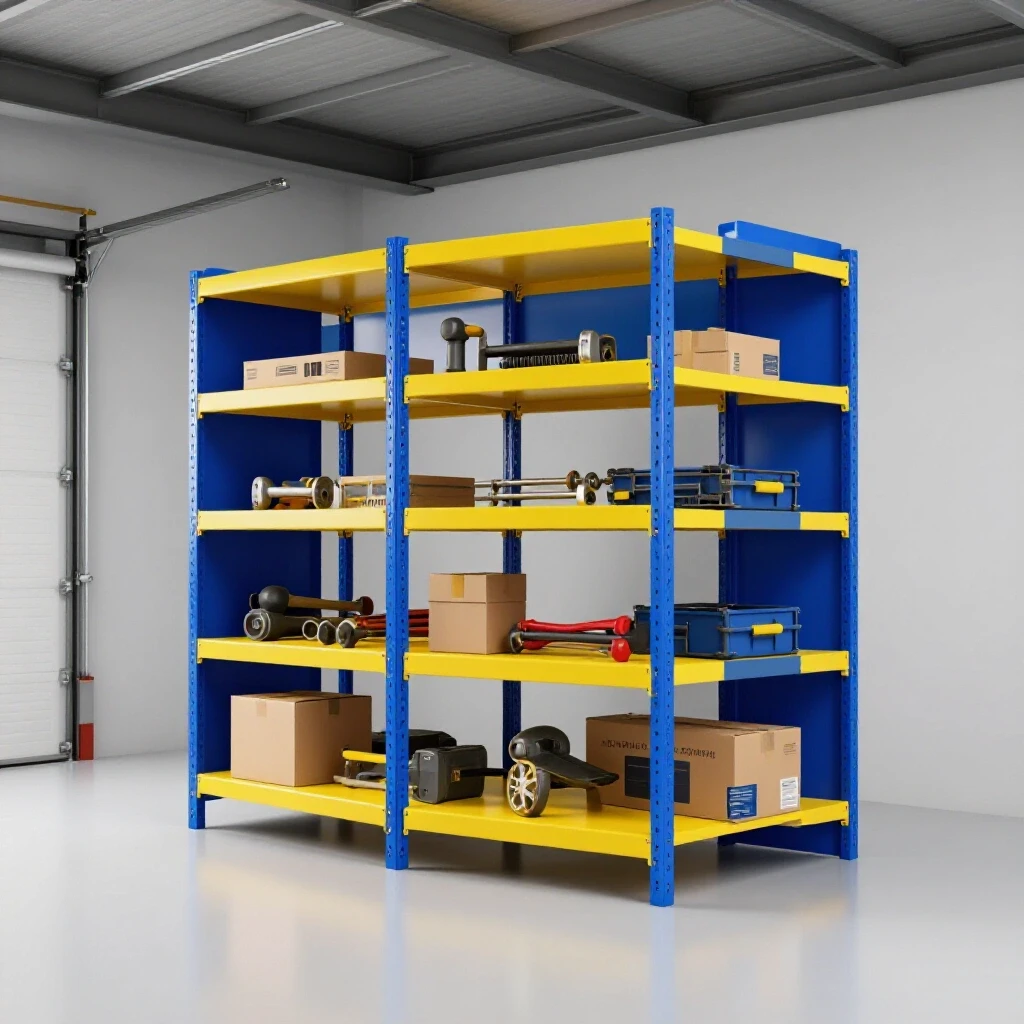
Is it better to build shelving or buy a pre-made metal rack? Custom-built wood shelving allows you to maximize every inch of your specific garage layout and is often more rigid. Pre-made racks are faster to install but may not fit your space perfectly and often have lower weight limits than a 2×4 framed system.
How do I ensure the shelf is level across a long wall? Use a laser level or a long four-foot professional level. Mark a reference line at one end, then extend that line across the wall. Do not rely on your ceiling or floor for reference, as these are rarely perfectly level in a garage environment.
How deep should my garage shelves be? For most homeowners, a depth of 16 to 24 inches is ideal. Anything deeper than 24 inches becomes difficult to reach the back of, and it puts significantly more leverage (and stress) on the wall anchors. If you need deeper storage, consider adding vertical support legs that go down to the floor.
Can I mount shelves over electrical outlets? You should never block access to an electrical outlet or a junction box. If your shelving run passes over an outlet, cut an access hole in the back of the shelf or the support frame so the outlet remains usable and visible for safety.
(This article was written by one of our staff writers, Robert Callahan. Visit our Meet the Team page to learn more about the author and their expertise.)