Kitchen Backsplash Cost Breakdown: DIY vs Pro Installation (Guide)

Walking into your kitchen at 6:00 AM to brew coffee should feel like a moment of peace, but for many homeowners, it becomes a reminder of unfinished business. That narrow strip of wall between your countertop and cabinets is more than just a functional barrier against grease; it is a significant visual anchor for your home’s value. When I tackled my first kitchen update a decade ago, I viewed the wall tiling as a minor weekend task. I quickly learned that without a rigorous cost breakdown guide, even a small surface area can lead to a 20% budget overrun. My spreadsheet, which I thought was comprehensive, failed to account for wall preparation and specialized adhesive.
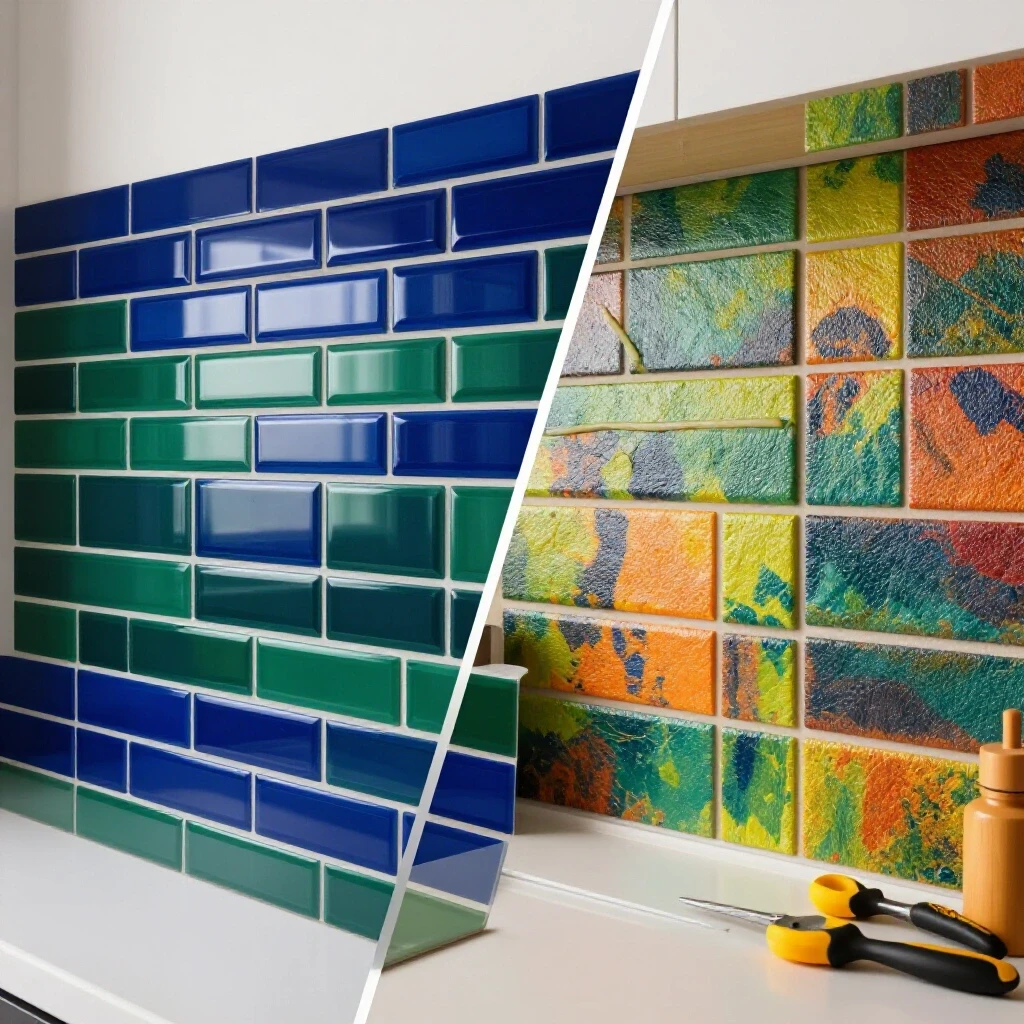
Today, as a financial planner, I look at these projects through a lens of risk management and return on investment. I have tracked every cent of my own renovations and helped clients navigate the financial pitfalls of home improvement. The goal is never just to finish the project; it is to finish it without dipping into emergency funds or over-leveraging your home’s equity. By analyzing the delta between doing the work yourself and hiring a professional, we can establish a realistic remodeling expense tracker that protects your financial health while enhancing your living space.
Establishing a Financial Framework for Vertical Kitchen Renovations
A financial framework is a structured plan that defines the total capital allocation, including a safety margin for unexpected variables. It serves as a boundary to prevent emotional spending and ensures that the project remains within the localized market value of the property.
Before you buy a single box of tile, you must perform a financial health check. I recommend a “cost-to-income” ratio analysis. For a secondary aesthetic update like a kitchen wall, the total expenditure should ideally not exceed 1% to 2% of your home’s current market value. If your home is worth $400,000, spending $8,000 on a backsplash might lead to “over-improvement,” where you cannot recoup the costs upon resale.
In my personal ledger from a 2019 project, I used a tiered budget model. This model allocates funds into three buckets: core materials, labor (or tool acquisition for DIY), and a 20% contingency buffer. This buffer is non-negotiable. In the world of home renovation budget planning, the “hidden” issues—like uneven drywall or electrical outlet shifts—usually consume this 20% before the first tile is even set.
Material Estimating: Beyond the Price of Tile
Material forecasting is the process of quantifying every physical component required for a project, from the primary decorative elements to the invisible adhesives and sealants. It requires a line-item audit to ensure that “small” items do not aggregate into a large, unbudgeted expense.
Most homeowners make the mistake of only calculating the square footage of the tile. In reality, the tile itself often represents only 40% to 60% of the total material cost. When I consult with clients, I emphasize the “waste factor.” You must purchase 10% to 15% more material than your square footage suggests to account for cuts, breakages, and future repairs.
- Primary Surface Material: This varies wildly by type (ceramic, glass, stone).
- Setting Materials: Thin-set mortar or mastic, which can vary based on the tile’s weight.
- Grout and Sealant: Often overlooked, but high-performance grout can be expensive.
- Edge Treatments: Bullnose tiles or metal trim strips (Schluter bars) often cost more per linear foot than the field tile costs per square foot.
| Item Category | Estimated % of Material Budget | Personal Project Actuals (2021) |
|---|---|---|
| Field Tile | 55% | $450.00 |
| Edge Trim/Bullnose | 15% | $125.00 |
| Setting Materials | 10% | $85.00 |
| Grout/Sealant | 10% | $75.00 |
| Waste Factor (15%) | 10% | $90.00 |
The Pro vs. DIY Labor Calculation
Labor-material splits refer to the ratio of the cost of professional installation versus the cost of raw goods. In professional contracting, labor typically accounts for 60% to 70% of the total quote, reflecting the expertise, insurance, and speed of the installer.
When deciding between hiring a pro or doing it yourself, you must calculate your “sweat equity valuation.” This is a personal finance concept where you assign a dollar value to your own time. If a professional quotes you $1,500 for labor and the project takes them two days, but it would take you four days of your own time, you are effectively “paying” yourself for those four days. If your professional hourly rate is $50 and you spend 32 hours on the project, your “internal cost” is $1,600.
Interestingly, the U.S. Bureau of Labor Statistics shows that specialty trade contractors have seen steady wage increases over the last three years. This makes the DIY route more attractive for those with the skill set, but the financial risk of a “DIY fail” is high. If you botch the installation and a professional has to tear it out and start over, your cost vs value home improvement ratio plummets. You are then paying for the materials twice and the labor at a premium.
Hidden Costs and Contingency Planning
Contingency planning involves setting aside a specific percentage of the total budget (usually 10-30%) to cover “unknown-unknowns.” These are issues that cannot be seen until the project begins, such as plumbing leaks behind walls or outdated electrical wiring.
In my second personal renovation, I hit a major snag that wasn’t in my initial remodeling expense tracker. When we removed the old backsplash, we found that the drywall was severely water-damaged near the sink. Repairing the substrate and adding a waterproof membrane added $300 to the budget and a full day to the timeline.
- Substrate Preparation: Removing old tile often destroys the drywall. Budget for new backer board.
- Electrical Adjustments: If your new tile is thicker than the old one, you will need outlet extenders.
- Permit Fees: While rare for a simple backsplash, if you move outlets, some municipalities require a minor electrical permit.
- Tool Acquisition: For DIYers, the cost of a wet saw rental or purchase can be a significant line item.
Regional Labor Rate Indexing and Market Realities
Regional labor indexing is the practice of adjusting national average cost data to reflect the specific economic conditions of your local area. Factors include the local cost of living, contractor availability, and regional demand for home improvement services.
Data from Remodeling Magazine’s Cost vs. Value reports suggests that project costs can vary by as much as 30% depending on your ZIP code. In high-demand urban areas, a “minimum trip fee” for a tile setter might be $500 before they even lay the first tile. For a small kitchen wall, this makes the cost per square foot look astronomical.
- Northeast/West Coast: Expect a 1.2x to 1.5x multiplier on national labor averages.
- Midwest/South: Generally aligns closer to national averages, but rural areas may face “travel fees” from specialized contractors.
- Metro vs. Rural: Contractors in metropolitan areas often have higher overhead (insurance, parking, fuel), which is passed on to the homeowner.
Market Value and Long-Term ROI
Return on Investment (ROI) in home improvement is the percentage of the project cost that is recovered through an increase in the home’s resale value. Lifestyle value, conversely, is the non-monetary benefit of enjoying a more beautiful or functional space.
A kitchen wall update is generally considered a “high-impact, low-cost” project. While you rarely get a 100% return on your investment in terms of immediate equity, it significantly impacts “marketability.” In my experience analyzing housing market cost reports, homes with updated kitchens sell 15% faster than those with dated finishes.
From a financial planning for homeowners perspective, you should view this project as a “maintenance plus” expense. You are maintaining the integrity of the walls while adding aesthetic value. If you plan to stay in the home for more than five years, the “lifestyle value” amortizes the cost over sixty months, making even a $2,000 project feel like a modest $33 per month investment in your environment.
Actionable Budgeting Tools and Tracking Methods
To keep your project on track, you need more than a general idea of costs. You need a granular tracking system. I recommend using a dedicated spreadsheet or specialized financial tracking software to monitor every receipt.
- The Bidding Template: When hiring a pro, use a standardized form. Ask for a breakdown of labor, materials, and “miscellaneous fees.” This allows for an apples-to-apples comparison between quotes.
- The Receipt Log: Use an app to scan every receipt. Small trips to the hardware store for “one more bag of grout” are the primary cause of budget leakage.
- The “Change Order” Buffer: If you are using a contractor, insist on a written change-order process. Any cost increase must be signed off by you before the work is performed.
- Material Price Indexes: Check online wholesalers to verify the “fair market price” of your chosen tile. Don’t pay a 20% markup to a contractor if you can source the material yourself for less (though some contractors won’t warranty owner-supplied materials).
Case Study: The “Simple” Subway Tile Project
In 2018, I helped a client plan a 30-square-foot wall update. They were choosing between a $1,200 professional quote and a $400 DIY estimate. We built a detailed ledger to compare the two.
- Professional Quote: $1,200 (Includes all materials, labor, and a 1-year warranty).
- DIY Estimate: $400 (Tile, grout, and basic tools).
- The Reality: The DIY project ended up costing $750. The client had to buy a tile saw ($150), ruined several boxes of tile due to improper cuts ($120), and spent $80 on a specialized cleaner after a grouting error.
The “savings” for doing it themselves was only $450, but it took them three weekends to finish. When we calculated their sweat equity, they had “paid” themselves less than $10 an hour. This case study highlights why a cost breakdown guide must include the “cost of learning.”
Conclusion: Next Steps for the Prudent Planner
Achieving a successful kitchen wall renovation requires a balance of financial discipline and realistic expectations. You are not just buying tile; you are investing in a fixed asset. Start by defining your “hard cap” budget—the absolute maximum you are willing to spend without tapping into high-interest debt.
Next, gather at least three professional quotes, even if you plan to do the work yourself. These quotes provide a “market reality check” for what the project is truly worth in your area. Finally, build your spreadsheet with the 20% contingency built-in. If you finish the project and that 20% is still in your bank account, you haven’t “saved” money; you have successfully managed a financial risk.
Frequently Asked Questions
How much does it typically cost to update a kitchen wall surface per square foot?
On average, homeowners spend between $15 and $40 per square foot for professional installation. For a DIY project, the cost can drop to $5 to $15 per square foot, depending on the material choice. High-end materials like marble or intricate mosaics can push these numbers significantly higher.
Is it always cheaper to do the installation myself?
Not necessarily. While you save on labor fees, you must account for tool purchases (wet saws, spacers, floats) and the cost of potential mistakes. If you have to replace ruined materials or eventually hire a pro to fix a poor DIY job, the total cost can exceed the original professional quote.
What is a “change order,” and why does it matter for my budget?
A change order is a written agreement to alter the original scope of work. In kitchen renovations, this often happens when a contractor discovers a problem behind the wall. Without a strict change-order process, costs can spiral out of control without your explicit approval.
How does a backsplash affect my home’s resale value?
While it may not provide a dollar-for-dollar increase in home value, an updated kitchen wall is a high-yield “marketability” improvement. It often serves as a focal point in real estate photos, helping your home stand out in a crowded market and potentially leading to faster, higher offers.
What are the most common hidden costs in this type of project?
The most frequent hidden costs include wall repair (drywall or backer board), electrical box extensions, specialized edge trims, and the “waste factor” of material. Many homeowners also forget to budget for professional-grade sealants which protect the grout from kitchen stains.
Should I buy my own materials if I am hiring a professional?
Some contractors allow this, but many add a markup to materials to cover the time spent sourcing and transporting them. If you buy your own, you are responsible for ensuring the correct quantities and quality. Be aware that most pros will not warranty materials they did not provide.
How much of a contingency buffer should I actually set aside?
For a kitchen wall project, I recommend a 20% buffer. While this might seem high for a small area, the costs of fixing electrical issues or plumbing leaks discovered during demolition are fixed costs that don’t scale down just because the project area is small.
How do I calculate my “sweat equity” for a DIY project?
Take the total amount you would save on labor and divide it by the number of hours you expect the project to take. If the resulting “hourly wage” is significantly lower than what you earn in your professional life, or if the project takes away from necessary rest or family time, it may be more financially prudent to hire a pro.
Does the type of tile affect the labor cost?
Yes. Smaller tiles (like mosaics) or very large format tiles often require more time and precision to install, leading to higher labor quotes. Intricate patterns like herringbone or chevron also command a premium because they require more complex cuts and layout planning.
What tools are essential for a DIY kitchen wall update?
At a minimum, you will need a tile cutter or wet saw, a notched trowel, a rubber grout float, spacers, a level, and buckets for mixing. Buying these tools can add $100 to $300 to your budget, though renting a wet saw can be a more cost-effective option for a one-time project.
(This article was written by one of our staff writers, Steven Fletcher. Visit our Meet the Team page to learn more about the author and their expertise.)