How to Maintain a Kitchen Vent Hood Effectively (Step-by-Step Guide)

Have you ever stood in your brand-new kitchen, heart full of pride, only to realize that the simple act of searing a steak has filled your entire living room with a lingering, greasy haze? This is the moment many first-time homeowners realize that the beautiful metal box above their stove is more than just a design choice. It is a vital tool for keeping your home’s air breathable and your furniture clean.
When I bought my first home in 2010, I spent weeks obsessing over the color of the granite countertops. I barely gave a second thought to the ventilation system. I assumed that if it turned on and made a whirring noise, it was doing its job. Fourteen years and three houses later, my personal maintenance logs tell a different story. I have learned that the relationship between your cooking habits and your home’s air quality is one of the most overlooked aspects of property management.
Transitioning from a rental to your own home means you are now the Chief Operations Officer of your indoor environment. According to U.S. Census Bureau housing surveys, kitchen upgrades remain the top priority for new buyers. However, many of these owners focus on the “sizzle” of new appliances while ignoring the “steam” they produce. My experience as a real estate analyst has shown me that neglecting the way your kitchen breathes can lead to sticky cabinets, yellowed paint, and a sense of overwhelm that contributes to homeowner burnout.
The Financial Reality of Maintaining Kitchen Air Systems
Maintaining kitchen air systems involves setting aside specific funds and time to ensure your stove’s exhaust unit operates efficiently without draining your bank account through unexpected repairs.
When you buy a home, the “1% rule” is a standard benchmark. This suggests you should set aside 1% of your home’s purchase price every year for maintenance. If you bought a home for $350,000, that is $3,500 a year. In my first year of homeownership, I failed to budget for small things like replacement filters or specialized degreasers. I thought these were “later problems.”
Interestingly, my logs show that proactive care for your extraction unit costs less than $50 a year. If you ignore it, the grease buildup can migrate to your cabinetry. Refinishing grease-damaged cabinets can cost thousands. As a result, I now view my monthly filter check as a way to protect my home’s resale value.
DIY vs. Professional Upkeep Costs
| Task | DIY Annual Cost | Professional Service Cost | Time Investment |
|---|---|---|---|
| Filter Degreasing | $10 (Soap/Water) | $125 – $200 | 30 Minutes |
| Exterior Vent Cleaning | $15 (Brushes) | $150 – $300 | 1 Hour |
| Surface Polishing | $5 (Microfiber) | Included in cleaning | 15 Minutes |
| Total Annual | $30 | $275 – $500 | ~2 Hours |
Building on this data, the return on investment for DIY care is massive. For a young professional balancing a career, spending two hours a year to save $400 is a smart financial move. It also builds a sense of agency over your property.
Integrating Aesthetics with Functional Design
Integrating aesthetics involves selecting a ventilation unit that matches the visual flow of your kitchen cabinetry and countertops while still providing enough power to clear the air.
In my second home, we did a minor kitchen refresh. We wanted a “minimalist” look, so we chose a sleek, low-profile unit. It looked beautiful against our white subway tile. However, we quickly realized that because it didn’t extend far enough over the front burners, it missed half the steam from our pasta pots.
This taught me that style must follow function. When you are house-hunting, look at how the hood is mounted. Does it blend in with the cabinets, or is it a focal point? A wood-covered hood can provide a warm, custom look, but it requires more exterior dusting than a stainless steel one.
- Under-cabinet units: These are budget-friendly and save space in smaller kitchens.
- Wall-mounted chimneys: These create a professional look and act as a design centerpiece.
- Island hoods: These are more expensive to install but essential for open-concept floor plans.
As you plan your kitchen’s look, remember that the goal is harmony. A massive professional-style hood might look out of place in a small starter home. Conversely, a tiny plastic fan will feel inadequate in a kitchen with a large gas range.
Establishing a Sustainable Maintenance Log
A maintenance log is a digital or physical record where you track the dates, costs, and methods used to care for your home’s various systems over time.
I started my first log in a simple spiral notebook. Today, I use a basic spreadsheet. Tracking when you last cleaned your grease filters is the best way to avoid the “sticky cabinet” syndrome. HUD reports often highlight that homes with documented maintenance histories sell faster and for higher prices. It proves to a buyer that you cared for the hidden parts of the house.
In my 14 years of tracking, I noticed a pattern. If I cook three nights a week, my filters need a deep soak every 60 days. If I am in a phase of heavy meal prepping, that drops to 30 days.
- Month 1: Check filter for light grease.
- Month 3: Deep soak in hot water and baking soda.
- Month 6: Inspect the exterior vent flap to ensure it opens and closes freely.
- Year 1: Wipe down the interior housing to remove dust and oil.
By breaking these tasks into small steps, you move beyond the initial overwhelm. You aren’t “fixing a kitchen,” you are just spending 15 minutes on a Tuesday maintaining an asset.
Improving Lifestyle Through Better Air Quality
Better air quality in the kitchen refers to the reduction of airborne grease particles, moisture, and cooking odors that can impact your comfort and health.
One of the biggest surprises of homeownership was how much “house smell” bothered me. In an apartment, you just live with it. In your own home, you realize that the smell of Tuesday’s fish shouldn’t still be there on Thursday.
Effective ventilation does more than just clear smoke. It removes excess moisture. High humidity in a kitchen can lead to peeling wallpaper or warped cabinet doors. During my evaluation of mid-century homes, I often see “ghosting” on ceilings—dark streaks caused by dust sticking to unvented cooking vapors. This is entirely preventable with a consistent habit of turning on your fan before you start the stove.
Appliance Lifespan and Replacement Benchmarks
| System Component | Expected Lifespan | Warning Signs of Aging | Replacement Cost |
|---|---|---|---|
| Mesh Filters | 3 – 5 Years | Tearing, permanent clogs | $20 – $50 |
| Charcoal Filters | 3 – 6 Months | Lingering odors | $15 – $30 |
| Fan Motor | 10 – 15 Years | Excessive noise, slow start | $100 – $300 |
| Entire Unit | 15+ Years | Physical damage, outdated style | $200 – $1,500 |
As a first-time owner, knowing these lifespans helps you plan your five-year equity goals. If your unit is already 12 years old, you can start tucking away $20 a month now so the replacement cost doesn’t feel like an emergency later.
Managing Homeowner Fatigue and Decision Paralysis
Homeowner fatigue is the emotional exhaustion that comes from the endless list of tasks and decisions required to keep a property in good condition.
The first year of owning a home is the hardest. You are likely balancing a career, perhaps a young family, and a mortgage that feels much heavier than rent ever did. It is easy to look at a dirty vent hood and think, “I’ll do it next month.”
To fight this, I recommend the “one-room-per-month” focus. In January, focus on the kitchen. This includes the fridge coils, the dishwasher filter, and the stove’s ventilation. When you limit your focus, the anxiety of owning a whole house starts to fade.
I once ignored a rattling fan for six months because I was too tired to look up how to fix it. When I finally spent ten minutes looking at it, I found a loose screw. Tightening it took thirty seconds. The relief I felt was far greater than the effort required. This is the reality of homeownership: the tasks are usually smaller than the fear we have of them.
Practical Steps for New Homeowners
If you have recently closed on your home, or are about to, here is a simple action plan to get your kitchen ventilation under control without the stress.
- Identify your system: Is it ducted (blows air outside) or recirculating (filters air and blows it back in)? Recirculating units need charcoal filters replaced every few months.
- Locate the filters: Most pop out with a simple latch. If they feel sticky, they need a bath.
- Set a calendar alert: Don’t rely on your memory. Set a recurring reminder on your phone for every three months.
- Buy a degreaser: A simple bottle of dish soap works, but a dedicated citrus-based degreaser makes the job much faster.
By taking these steps, you are not just cleaning; you are practicing property preservation. You are ensuring that the kitchen you worked so hard to buy stays as beautiful and functional as it was on move-in day.
FAQ
How do I know if my kitchen fan is actually working? A simple way to check is the “paper towel test.” Turn the fan on to its highest setting and hold a single sheet of paper towel up to the filters. If the suction holds the paper in place, the air is moving correctly. If the paper falls, your filters are likely clogged with grease, or there may be an obstruction in the ductwork.
Can I put my grease filters in the dishwasher? In many cases, yes. Most aluminum or stainless steel mesh filters are dishwasher safe. However, be aware that some dishwasher detergents can discolor aluminum. If you want to keep them looking shiny, a soak in a sink with hot water and degreasing dish soap is often the safer, gentler choice.
What is the difference between a ducted and a ductless system? A ducted system moves air from your kitchen through a pipe and releases it outside the house. This is generally more effective at removing heat and moisture. A ductless, or recirculating, system pulls air through a charcoal filter to remove odors and then pushes the air back into the kitchen. These require more frequent filter changes to remain effective.
Why does my kitchen still smell like food hours after I finish cooking? This usually happens because the ventilation wasn’t turned on early enough or left on long enough. I recommend turning the fan on five minutes before you start cooking to establish an airflow pattern and leaving it on for ten minutes after you finish to clear the remaining particles.
How much should I expect to spend on a new ventilation unit? For a standard first home, a reliable under-cabinet unit typically costs between $150 and $400. If you are looking for a designer chimney hood, prices usually range from $500 to $1,500. Installation costs can vary, but keeping the same footprint as your old unit will save you money on labor.
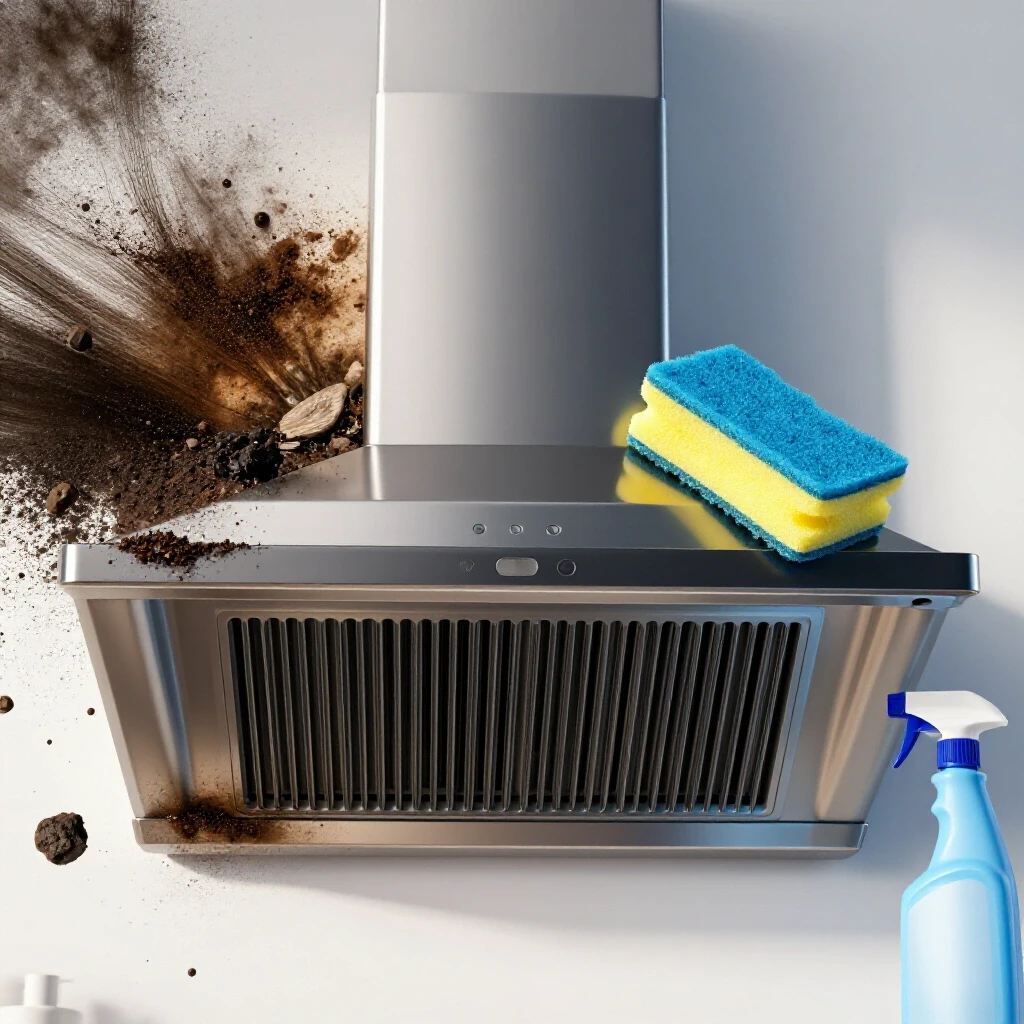
Do I really need to clean the top of the hood? Yes. Grease and dust combine to form a sticky film on the exterior surfaces. If left too long, this film can harden and become very difficult to remove without scratching the finish. Wiping the top with a microfiber cloth once a month prevents this buildup.
Is it normal for the fan to be very loud? While all fans make some noise, excessive vibrating or grinding sounds are not normal. This often points to a loose mounting screw or a fan blade that has become unbalanced due to heavy grease buildup. Cleaning the blades can often restore a quieter operation.
How does kitchen ventilation affect my home’s resale value? While a vent hood itself might not add thousands to your appraisal, the damage it prevents does. A kitchen with clean, non-greasy cabinets and a fresh smell is much more appealing to buyers. It signals that the home has been meticulously maintained, which builds buyer confidence.
What tools do I need for basic DIY maintenance? You don’t need a professional toolkit. A bottle of degreasing soap, a soft-bristled brush (like an old dish brush), a microfiber cloth, and a screwdriver for minor adjustments are all you need to handle 90% of your kitchen’s air quality needs.
Are smart vent hoods worth the extra cost? Some modern units can sync with your stove to turn on automatically. For a busy homeowner, this “set it and forget it” feature can be helpful. However, the core technology remains the same. If you are on a tight budget, a standard manual unit is perfectly sufficient as long as you remember to use it.
(This article was written by one of our staff writers, Michael Morrison. Visit our Meet the Team page to learn more about the author and their expertise.)