How to Fix Noisy Loose Floorboards (Step-by-Step Solution)

Have you ever found yourself tiptoeing across your own hallway at night, only to be betrayed by a sharp, rhythmic groan from the floorboards beneath your feet? This common household annoyance is rarely just a quirk of an aging home; it is a physical signal that the mechanical bond between your flooring and the structure below has been compromised. In my 17 years as a facilities technician, I have learned that these sounds are the house’s way of talking to you, usually complaining about friction, moisture, or fastener failure.
Understanding the Mechanics of Wood Floor Movement
Wood flooring movement occurs when the physical connection between the walking surface and the subfloor or joists becomes loose. This gap allows materials to rub against each other under the weight of a footstep, creating friction that translates into audible sound.
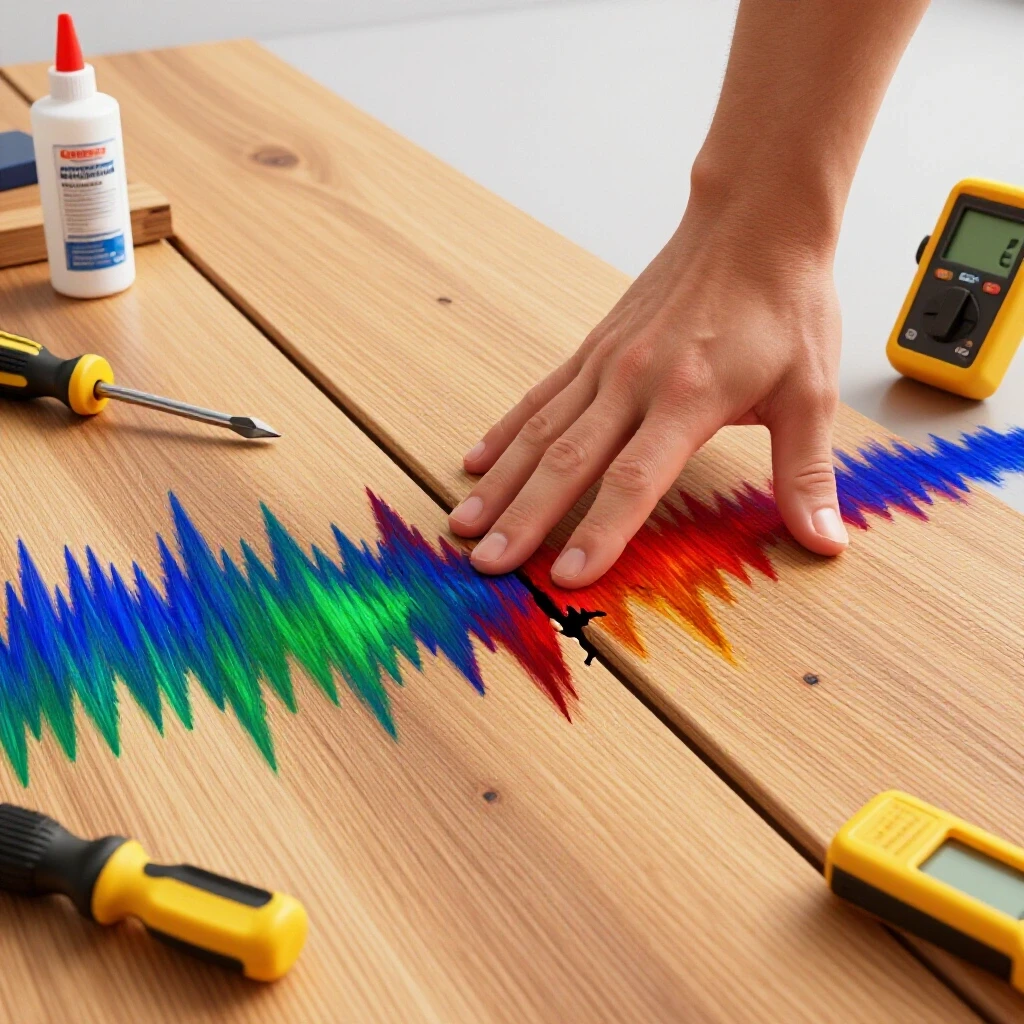
Building science tells us that wood is a hygroscopic material, meaning it constantly gains or loses moisture to remain in equilibrium with its environment. When I inspect older properties, I often find that the “voice” of the floor changes with the seasons. During the summer, high humidity causes wood cells to swell, often wedging boards tightly together. In the winter, as indoor heating dries the air, the wood shrinks. This shrinkage pulls the wood away from its fasteners, creating the tiny voids necessary for movement and noise.
Another key concept is subfloor deflection. This refers to the amount a floor system bends or “gives” when weight is applied. If the joists are undersized or the subfloor is too thin, the entire assembly flexes. Over decades, this repetitive flexing can pull nails out of the joists, a process known as fastener withdrawal. Once a nail loses its “bite” in the wood, it becomes a source of friction every time the board moves up and down against the metal shank.
The Role of Relative Humidity and Wood Equilibrium
Relative humidity (RH) is a measure of how much water vapor is in the air compared to the maximum it could hold at that temperature. For residential interiors, maintaining an RH between 35% and 55% is critical for preventing excessive wood movement.
When the RH drops below 30% in the winter, the moisture content of the wood can fall below 6%. This causes significant contraction. Conversely, if a basement or crawlspace is damp, the underside of the floorboards may absorb more moisture than the top side. This imbalance leads to “cupping,” where the edges of the boards rise, further stressing the fasteners and increasing the likelihood of vocal floor sections.
Essential Tools for Residential Floor Diagnostics
Diagnosing the root cause of floor movement requires a systematic approach and specific tools designed to measure what the naked eye cannot see. Relying on guesswork often leads to temporary fixes that fail when the seasons change.
In my diagnostic kit, I prioritize tools that allow for non-invasive testing. Before pulling up any trim or drilling holes, I want to know the environment the wood is living in. This helps determine if the issue is a simple mechanical failure or a systemic moisture problem that needs to be addressed first.
- Pinless Moisture Meter: This device uses electromagnetic signals to measure the moisture content of wood without leaving holes. I look for a reading between 6% and 9% for most interior flooring.
- Borescope Camera: A thin, flexible camera that can be inserted through a small hole (like a removed floor register) to see the condition of the subfloor and joists.
- Digital Hygrometer: This stays in the room for 24 to 48 hours to track the ambient temperature and relative humidity.
- Stud Finder with Deep Scan: This is essential for locating the exact center of the floor joists so that any corrective fasteners hit their mark.
- Dead Blow Hammer: I use this to tap across the floor surface. A “hollow” sound often indicates a gap between the finish floor and the subfloor.
Symptom-to-Root-Cause Diagnostic Tree
| Symptom | Likely Physical Cause | Diagnostic Step |
|---|---|---|
| Sharp, high-pitched “chirp” | Nail rubbing against floorboard | Use a stud finder to locate fasteners. |
| Deep, dull “thud” or groan | Subfloor rubbing against joist | Check for subfloor deflection from below. |
| Squeak near a wall | Friction against baseboard | Check for expansion gap under trim. |
| Multiple boards moving at once | Moisture-related cupping | Measure moisture content with a meter. |
| Squeak only in winter | Seasonal wood shrinkage | Monitor indoor relative humidity levels. |
What Lies Beneath the Planks: A Technician’s Perspective
Opening a floor section in a legacy property often reveals a history of previous repairs and original construction methods. Understanding what constitutes a “normal” subfloor assembly is the first step in identifying a failure.
In many older homes I have maintained, I found that the original builders used “cleat” or “staple” fasteners that were sufficient for the time but lacked the holding power of modern ring-shank nails or screws. Underneath the finish floor, you will typically find a subfloor made of diagonal 1×6 boards or, in more modern updates, sheets of plywood or OSB (Oriented Strand Board).
Interestingly, what I often find causing the most noise isn’t just a loose board, but the debris and materials trapped in the gaps. Building science highlights “interfacial friction” as a major noise producer. This happens when dust, old construction adhesive that has become brittle, or even abandoned wiring clips create a high-friction point between two moving wooden members.
- Fastener Fatigue: Over 50 years, a nail can rust slightly or the wood fibers around it can compress, leaving the nail loose in its hole.
- Subfloor Gaps: If the subfloor panels were installed without a 1/8-inch gap between them, they may rub against each other as the house settles.
- Drying Shims: I have frequently found old cedar shims that were used to level the floor. As they dry out and shrink, they fall out of place, leaving the floorboard unsupported.
Identifying Moisture Failures and Environmental Stressors
Moisture is the primary enemy of structural wood stability. When I investigate a noisy floor, I always start by looking for signs of water intrusion or poor humidity control that could be warping the material.
If the moisture content of your floorboards varies by more than 2% from the top of the board to the bottom, the wood will physically deform. This deformation creates “voids” or air pockets. When you step on a warped board, you are essentially “clapping” the wood against the subfloor. This is why addressing a noisy floor without checking the basement or crawlspace humidity is often a waste of time.
Building science professionals use the term “capillary action” to describe how moisture can travel upward through porous materials. In a home with a damp crawlspace, moisture can migrate through the subfloor and into the hardwood. This causes the wood to expand beyond its original footprint, leading to “buckling” or “heaving.”
Moisture Content Safety Thresholds
- Normal Range: 6% to 10% (depending on geographic region).
- Warning Zone: 12% to 15% (indicates poor humidity control or minor leaks).
- Danger Zone: Above 16% (high risk for mold growth and structural fiber breakdown).
Step-by-Step Execution for Silencing Vocal Floors
Once you have identified the source of the movement, the repair must be systematic. The goal is to eliminate movement by either filling the void or mechanically pulling the layers together.
I always recommend starting with the least invasive method. For example, if the noise is caused by friction between two floorboards, a dry lubricant like powdered graphite or talcum powder can be worked into the cracks. This reduces the coefficient of friction and may silence the floor without a single screw. However, if the subfloor is lifting off the joist, mechanical intervention is required.
If you have access from below (a basement or crawlspace), the repair is much simpler. You can use specialized “subfloor screws” that pull the subfloor down to the joist, or you can drive a small wooden shim coated in wood glue into the gap between the joist and the subfloor. Be careful not to drive the shim too hard, or you will lift the floor and create a new squeak elsewhere.
DIY vs. Professional Scope Limits
| Task | DIY Feasibility | Risk Level |
|---|---|---|
| Lubricating board joints | High | Low |
| Adding shims from below | High | Low |
| Driving breakaway screws from above | Medium | Moderate (surface damage) |
| Replacing sections of subfloor | Low | High (structural/utility risk) |
| Leveling joists | Low | High (structural) |
Systematic Repair Sequence from Above
When you cannot access the floor from below, you must work from the finished surface. This requires precision to avoid damaging the aesthetics of the home while ensuring a permanent mechanical fix.
- Locate the Joist: Use a deep-scan stud finder to mark the center of the joist where the movement is occurring. Joists are typically spaced 16 inches or 24 inches apart on center.
- Pre-drill Pilot Holes: To prevent splitting the hardwood, always drill a pilot hole that is slightly smaller than the shank of the screw you are using.
- Use Breakaway Screws: There are specialized kits designed for this. These screws have a “weak point” below the head. Once the screw pulls the floor tight, the head snaps off below the surface of the wood.
- Fill and Finish: Use a high-quality wood filler that matches your floor color to hide the small hole left by the screw.
- Test the Load: Walk over the area several times to ensure the movement has stopped and that no new friction points have been created.
Preventive Maintenance for Long-Term Floor Stability
Preventing future issues is a matter of controlling the environment and monitoring the home’s “vital signs.” In my 17 years of facility care, the homes with the fewest floor issues were those where the owners maintained consistent indoor climates.
Building a preventive maintenance schedule is the best way to avoid the sudden appearance of vocal floorboards. This involves seasonal checks of your HVAC system’s humidification settings and ensuring that your home’s envelope is sealed against external moisture.
- Seasonal Humidity Tuning: In the fall, check your furnace humidifier. Ensure the water panel is clean and the humidistat is set to roughly 35-40%.
- Crawlspace Inspections: Once a year, check your crawlspace for standing water or fallen insulation, which can trap moisture against the subfloor.
- Fastener Checks: If you notice a single board beginning to move, address it immediately. One loose fastener puts more stress on the surrounding nails, leading to a “zipper effect” of failures.
Average Repair Cost Progression Over Time
| Timeframe | Issue | Estimated Cost (DIY) | Estimated Cost (Pro) |
|---|---|---|---|
| Month 1 | Single squeak (minor friction) | $10 (Lubricant) | $150 (Service call) |
| Year 1 | Multiple loose boards (fastener withdrawal) | $50 (Screw kit) | $400 – $600 |
| Year 5+ | Warped boards/Subfloor damage (moisture) | $200+ (Tools/Materials) | $1,500 – $3,000+ |
Building a Multi-Year Prevention Program
A long-term strategy for property care involves moving from “reactive” repairs to “proactive” management. By tracking the conditions that lead to floor movement, you can intervene before the wood sustains permanent damage.
I recommend keeping a “Facility Log” for your home. Note when certain areas start to make noise and what the weather was like at the time. Over two or three years, you will see patterns. For instance, if the floor only groans when the outdoor temperature drops below freezing, you know your indoor air is too dry, and you need to increase your humidification.
Building science isn’t just for skyscrapers; it applies to every joint and fastener in your home. Understanding how your house breathes and moves allows you to maintain it with the precision of a technician rather than the guesswork of a frustrated homeowner.
Actionable Diagnostic Checklist
- [ ] Check indoor relative humidity (Target: 35-55%).
- [ ] Walk the floor and mark noise locations with blue painter’s tape.
- [ ] Inspect the subfloor from the basement for “daylight” gaps between joists and wood.
- [ ] Test the moisture content of noisy boards (Target: 6-9%).
- [ ] Verify that perimeter expansion gaps (under baseboards) are not blocked by debris.
- [ ] Check that heavy furniture is not causing localized subfloor deflection.
Conclusion
Addressing the groans and shifts of your flooring is a fundamental part of maintaining a legacy property. By understanding the building science of wood movement—specifically the roles of hygroscopy and mechanical friction—you can diagnose issues early. Start with environmental controls, move to non-invasive lubrication, and only then proceed to mechanical fasteners. This systematic approach ensures that your home remains a stable, quiet environment for decades to come.
FAQ: Frequently Asked Questions
Why does my floor only make noise in the winter? In the winter, indoor heating lowers the relative humidity, causing wood floorboards and subfloors to shrink. This shrinkage creates small gaps between the wood and the fasteners (nails or staples). When you walk on the boards, they move along the fastener shank, creating a squeaking or chirping sound that disappears in the summer when the wood swells back up.
Is a noisy floorboard a sign of structural failure? Usually, no. In most cases, it is a localized mechanical failure of the fasteners or a result of seasonal wood movement. However, if the noise is accompanied by a significant “dip” or “sag” in the floor, or if the groaning is deep and rhythmic, it may indicate undersized joists or subfloor deflection that should be inspected for safety.
Can I use WD-40 or oil to stop the squeaks? No. Never use oil-based lubricants on wood floors. Oil can stain the wood, attract dust which increases friction over time, and interfere with future refinishing efforts. Instead, use dry lubricants like powdered graphite, talcum powder, or specialized floor lubricants designed for wood.
How do I find the joists if I have carpet over my wood floor? You can use a high-quality stud finder in “deep scan” mode, or you can use a thin bit of wire (like a straightened coat hanger). Push the wire through the carpet and padding to feel for the solid resistance of a joist. There are also specialized “squeak-no-more” kits that allow you to drive screws through carpet without snagging the fibers.
What is the best screw to use for fixing loose floorboards? For repairs from above, use a “breakaway” screw specifically designed for flooring. These screws have a section of the shank that is unthreaded, allowing it to pull the board tight to the joist, and a head that snaps off below the wood surface. For repairs from below, a standard 2-inch wood screw with a partial thread is often sufficient.
Does a humidifier really help with floor noise? Yes. By keeping the relative humidity between 35% and 55%, you minimize the expansion and contraction cycles of the wood. This keeps the fasteners tight and prevents the wood from warping or cupping, which are the primary drivers of floor noise.
Should I glue my floorboards together to stop movement? No. Wood needs to be able to move slightly with the seasons. If you glue the boards together, the natural expansion and contraction will eventually cause the wood to crack or split because it has no room to “breathe.” Repairs should focus on securing the floor to the subfloor or joist, not to adjacent boards.
What should I do if I find old wiring under my floorboards? If you are using a borescope and see wiring, ensure that any screws you drive are placed well away from those areas. In older homes, wiring was often run through holes in the center of the joists. Always use a stud finder with AC electrical detection to identify “hot” zones before drilling or fastening.
(This article was written by one of our staff writers, Daniel Whitaker. Visit our Meet the Team page to learn more about the author and their expertise.)