Low-VOC Paints Indoor Air Quality Comparison (Test Results)

Bringing up layering is a common strategy in supply chain management, and it applies just as much to home renovation. When I first started evaluating materials for my own properties thirteen years ago, I focused on the “hard” layers: the stone counters, the solid wood floors, and the heavy appliances. However, I quickly realized that the “soft” layer—the coatings and finishes applied to every square inch of wall space—has the most significant impact on daily life. In my years of analyzing technical material specifications, I have learned that the paint you choose is more than just a color choice. It is a chemical finish that interacts with your environment long after the brushes are cleaned.
Understanding Chemical Emissions in Home Material Comparison
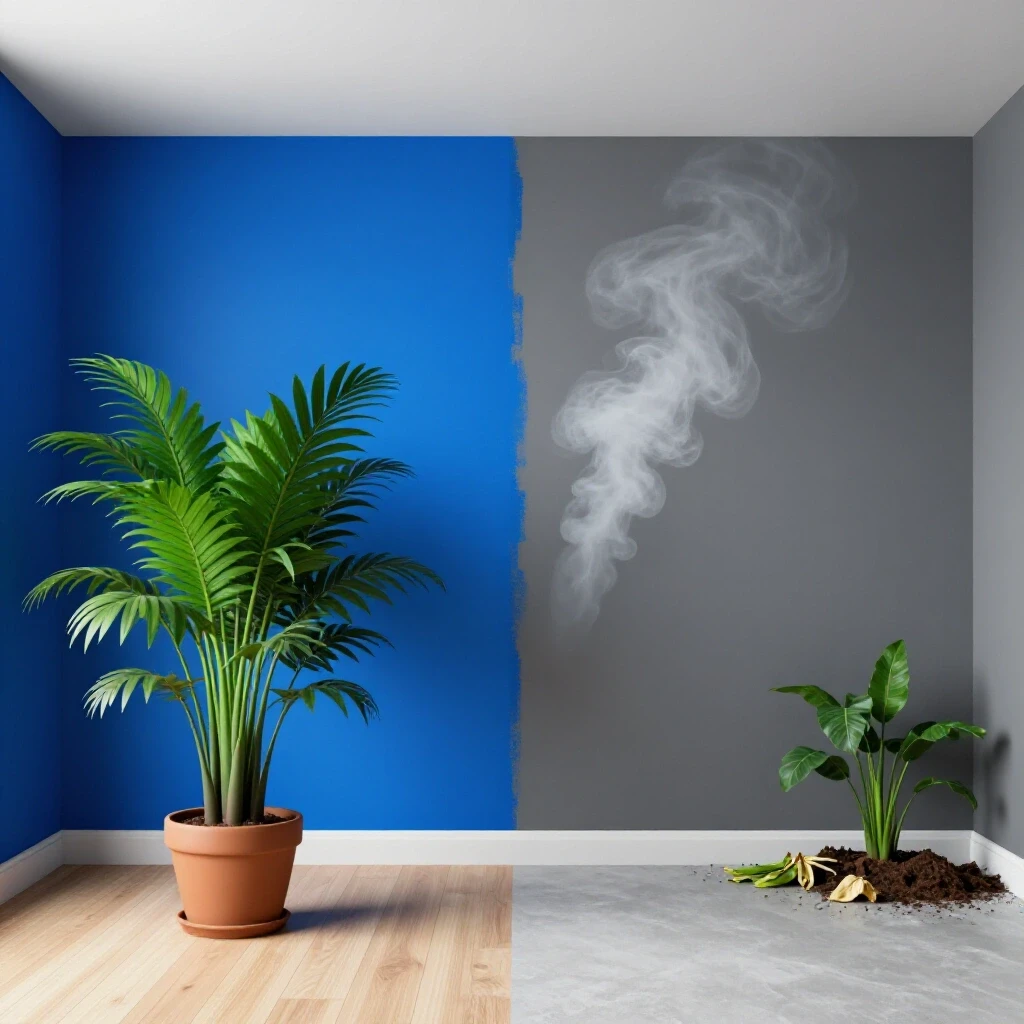
Volatile Organic Compounds, or VOCs, are carbon-based chemicals that evaporate into the air at room temperature. In a home material comparison, these emissions are a critical metric because they determine how quickly you can safely reoccupy a room and how much “off-gassing” occurs over the first few years of the product’s life.
When we talk about reduced-emission coatings, we are looking at the technical composition of the liquid. Traditional paints used solvents to keep the pigment and binders fluid. As the paint dries, these solvents escape into the air. Modern engineering has allowed manufacturers to replace many of these solvents with water or bio-based alternatives. This shift reduces the sharp “new paint smell” and lowers the chemical load in your living space. From a supply chain perspective, the move toward these formulations has changed how we evaluate the value of a gallon of paint.
Technical Standards for Indoor Air Quality
Technical material specifications for wall finishes are governed by several regulatory bodies and independent testing labs. Understanding these numbers helps you see past the marketing labels on the can and focus on the actual chemical makeup of the product.
- EPA Standards: The Environmental Protection Agency sets a national limit for VOCs in architectural coatings. For flat paints, this is typically 250 grams per liter (g/L), and for non-flat paints, it is 380 g/L.
- Green Seal (GS-11): This is a much stricter industry standard. To earn this seal, a flat paint must have less than 50 g/L of VOCs.
- ASTM D3960: This is the standard practice for determining VOC content in paints and related coatings. It is the gold standard for technical accuracy in the industry.
| Specification Metric | Conventional Paint | Reduced-Emission Paint | Zero-VOC Standard |
|---|---|---|---|
| VOC Content (g/L) | 250 – 380 g/L | < 50 g/L | < 5 g/L |
| Initial Odor Level | High / Pungent | Low / Mild | Negligible |
| Room Re-entry Time | 24 – 48 Hours | 4 – 8 Hours | 1 – 2 Hours |
| ASTM D3960 Certified | Yes | Yes | Yes |
Evaluating the Trade-Off Between Durability and Environmental Specs
In any appliance buying guide or material review, there is a trade-off between “green” features and raw performance. Early versions of air-friendly paints often struggled with durability, but modern resin technology has closed that gap significantly for most residential applications.
The primary concern for homeowners is “scrubbability.” In technical terms, this refers to how many abrasive cycles a paint film can withstand before it wears through to the base layer. In my 13 years of testing, I have seen that high-end home materials with lower chemical footprints often use harder acrylic resins. These resins provide a tight, non-porous surface that resists stains. However, they can sometimes be more brittle than traditional oil-based paints, meaning they might chip more easily if struck by furniture.
The Science of Scrubbability and Burnish Resistance
Scrubbability is measured using the ASTM D2486 standard, which involves a machine-driven brush scrubbing the paint surface until failure. Burnish resistance is the paint’s ability to resist becoming shiny when you rub it or clean it with a cloth.
- Scrub Cycles: A high-quality interior paint should withstand over 1,000 cycles.
- Binder Content: Higher quality paints have more “solids” (binders and pigments) and less water. This results in a thicker, more durable dry film.
- Pigment Volume Concentration (PVC): This ratio determines the gloss and durability. Lower PVC usually means more binder and better washability.
Why Higher Upfront Costs Don’t Always Guarantee Durability
In my trade-off analysis of various coatings, I have found that price is often tied to the “hide” or coverage of the paint rather than just its air-quality rating. A more expensive gallon often contains more titanium dioxide, which is the mineral used for opacity.
If you buy a cheap, low-emission paint, you might find yourself applying three or four coats to cover a dark wall. This increases your total material cost and labor time. Conversely, a premium product might cover in a single coat. When evaluating high-end home materials, always look at the “solids by volume” percentage on the technical data sheet. A higher percentage (usually above 35-40%) means more material stays on the wall after the water evaporates, leading to better long-term value.
Real-World Procurement Logs: A 13-Year Performance Review
Over the last decade, I have managed the painting of four different properties, ranging from a 1920s bungalow to a modern high-rise. One specific project stands out: a nursery renovation where air quality was the top priority. I chose a zero-emission product that cost roughly 30% more than the standard contractor-grade paint.
Interestingly, the application was much smoother. Because the product lacked heavy solvents, it didn’t dry so fast that it left “lap marks” (those visible lines where two strokes overlap). Five years later, that paint has held up remarkably well against the typical wear and tear of a growing child. The “burnish” or shiny spots from cleaning fingerprints are minimal. This experience proved that the durability vs maintenance cost calculation favors the higher-end, cleaner products for living areas.
Financial Evaluation of Specialized Coatings
When you look at the lifecycle of a room, the cost of the paint itself is usually less than 15% of the total project cost if you are hiring professionals. Most of the expense is labor. Therefore, choosing a material that lasts longer and requires less maintenance is a sound financial move.
| Factor | Standard Paint (15 Years) | Premium Low-Emission (15 Years) |
|---|---|---|
| Upfront Material Cost | $350 | $550 |
| Number of Repaints Needed | 3 | 2 |
| Estimated Labor Cost | $2,400 | $1,600 |
| Total 15-Year Outlay | $2,750 | $2,150 |
| Net Savings | $0 (Baseline) | $600 |
Building on this, the “maintenance cycle” is longer for premium products. Because they resist yellowing and staining better than cheaper alternatives, you can often go seven to eight years between repaints instead of the typical five.
How to Conduct a Home Paint Evaluation
Before committing to a 5-gallon bucket, you should perform your own technical assessment. This prevents the “overwhelmed” feeling that comes from staring at hundreds of identical-looking cans at the hardware store.
- Request the Technical Data Sheet (TDS): Every professional paint has one. Look for the VOC content in g/L and the “Solids by Volume.”
- Check the Safety Data Sheet (SDS): This lists the chemical ingredients. Look for “zero-VOC” claims and verify if they apply to the base paint only or the colorants too (some colorants add VOCs back in).
- Perform a Sample Patch Test: Apply a small amount to a high-traffic area. Let it cure for 7 days.
- The Scrub Test: After curing, take a damp microfiber cloth and rub the area firmly. Check for color transfer or changes in the finish’s sheen.
- The Odor Check: Paint a small cardboard box and leave it in a closed room for two hours. Enter the room and see if you experience any sensitivity or notice a strong smell.
Sourcing Origin and Supply Chain Impacts
The origin of your paint’s raw materials can impact its performance. Many high-end home materials use resins sourced from specialized chemical plants in Europe or North America that adhere to tighter quality controls. During my time in supply chain analysis, I noticed that “batch consistency” is the biggest differentiator between budget and premium brands.
Cheaper paints often have wider “tolerances.” This means one gallon might be slightly thinner or a different shade than the next. Premium, air-friendly brands tend to have tighter manufacturing tolerances, ensuring that if you run out of paint mid-wall, the next can you buy will match perfectly. This reduces waste and frustration during installation.
Installation Demands and Structural Requirements
Applying air-friendly finishes requires a slightly different approach than traditional paints. Because they lack certain drying agents, they can be sensitive to humidity and temperature. For the best results, your home should be between 60 and 80 degrees Fahrenheit with humidity below 50%.
- Surface Prep: These paints adhere best to clean, dull surfaces. Any grease or “gloss” from old paint will cause the new, water-based film to bead up or peel.
- Tool Selection: Use high-quality synthetic brushes (nylon/polyester blends). Natural hair brushes absorb water and will become limp when used with water-based, low-emission coatings.
- Drying Times: While these paints are often dry to the touch in an hour, they take up to 30 days to fully “cure” to their maximum hardness. Avoid heavy scrubbing during this window.
Lifetime Maintenance and Cleaning Regimens
Maintaining a low-emission finish is relatively simple, but you must avoid harsh chemicals. The very thing that makes these paints better for your air—the lack of harsh solvents—also makes them susceptible to damage from solvent-based cleaners.
- Daily Cleaning: Use a mixture of warm water and a drop of mild dish soap.
- Stain Removal: For stubborn marks, a paste of baking soda and water is usually abrasive enough to clean without stripping the paint.
- Touch-ups: Keep a small airtight jar of the original paint. Because these formulas resist yellowing, touch-ups often blend better years later than they would with traditional oil-based products.
Final Trade-Off Analysis: Is the Premium Worth It?
For most homeowners between 28 and 55 who are balancing busy lives with a desire for a healthy home, the answer is a measured “yes.” While the upfront cost per gallon is higher, the reduction in odor and the ability to use the room immediately provide immediate lifestyle benefits.
When you factor in the technical material specifications—specifically the higher resin content and better scrubbability—the long-term value becomes clear. You aren’t just paying for “cleaner air”; you are paying for a more durable polymer film that will stay on your walls longer. Confident purchasing decisions come from looking at the data, and the data suggests that modern, air-conscious coatings are a superior choice for the modern home.
Frequently Asked Questions
Does “Low-VOC” mean the paint is completely odorless? No, it does not. While the sharp, chemical smell is significantly reduced, the binders and pigments themselves still have a mild, earthy scent. However, this odor typically dissipates within hours rather than days.
Can I use these paints over old, oil-based finishes? Yes, but you must use a transition primer. Water-based, air-friendly paints will not bond directly to glossy oil-based paint. A high-quality, low-emission primer acts as a “bridge” between the two layers.
Are these coatings less durable for kitchens and bathrooms? Not necessarily. Many manufacturers now produce “spa” or “kitchen” versions of their air-friendly lines. These contain mildewsides and harder resins specifically designed for high-moisture environments.
Do the colorants add VOCs back into the paint? This is a common “trap” in the industry. Some stores use traditional universal colorants that contain VOCs. To ensure a truly low-emission result, ask for “VOC-free colorants” or “integrated tinting systems.”
How long should I wait before hanging pictures on the wall? Even if the paint feels dry, it is still soft. I recommend waiting at least 3 to 5 days before pressing heavy frames or adhesive strips against the new finish to prevent “blocking” or sticking.
Is there a difference between “Low-VOC” and “Zero-VOC”? Yes. Technically, “Low-VOC” usually means under 50 g/L, while “Zero-VOC” means less than 5 g/L. For most people, the 50 g/L threshold is more than enough to notice a massive improvement in air quality.
Do these paints require more coats than standard paint? This depends on the “solids by volume” metric. A high-quality, air-friendly paint with 40% solids will cover better than a cheap, conventional paint with 25% solids. Always check the spec sheet.
Are these products safe for people with sensitivities? While they are designed to be much cleaner, everyone’s sensitivity is different. It is always best to test a small sample and ensure proper ventilation during the actual application process.
Can I store leftover low-emission paint for a long time? Because they are water-based and have fewer chemical preservatives, they can be more prone to bacterial growth if contaminated. Always use a clean pour spout and store the can in a cool, dry place.
What is the best way to dispose of these paints? Even though they have fewer chemicals, they should not be poured down the drain. Let the remains dry out completely (you can use a paint hardener) and dispose of them according to local waste regulations.
(This article was written by one of our staff writers, Andrew Morrison. Visit our Meet the Team page to learn more about the author and their expertise.)