How to Prevent Material Storage Damage in Renovations (Guide)

A clean and organized job site is about more than just avoiding trips and falls. When you protect your building supplies from dampness and dust, you are actually protecting your family’s future health. Mold spores can begin to grow on damp drywall or porous wood in as little as 24 to 48 hours, leading to poor indoor air quality long after the project ends. By keeping your renovation materials dry and clean, you ensure that your new kitchen or bathroom is a healthy environment from day one.
Protecting Your Investment Through Better Supply Oversight
Protecting your investment means creating a plan to keep your building materials safe from the moment they arrive until they are installed. This involves finding a dry, level, and secure spot to keep items like wood, cabinets, and flooring. Proper oversight prevents expensive waste and keeps your project moving forward without the need for reordering ruined goods.
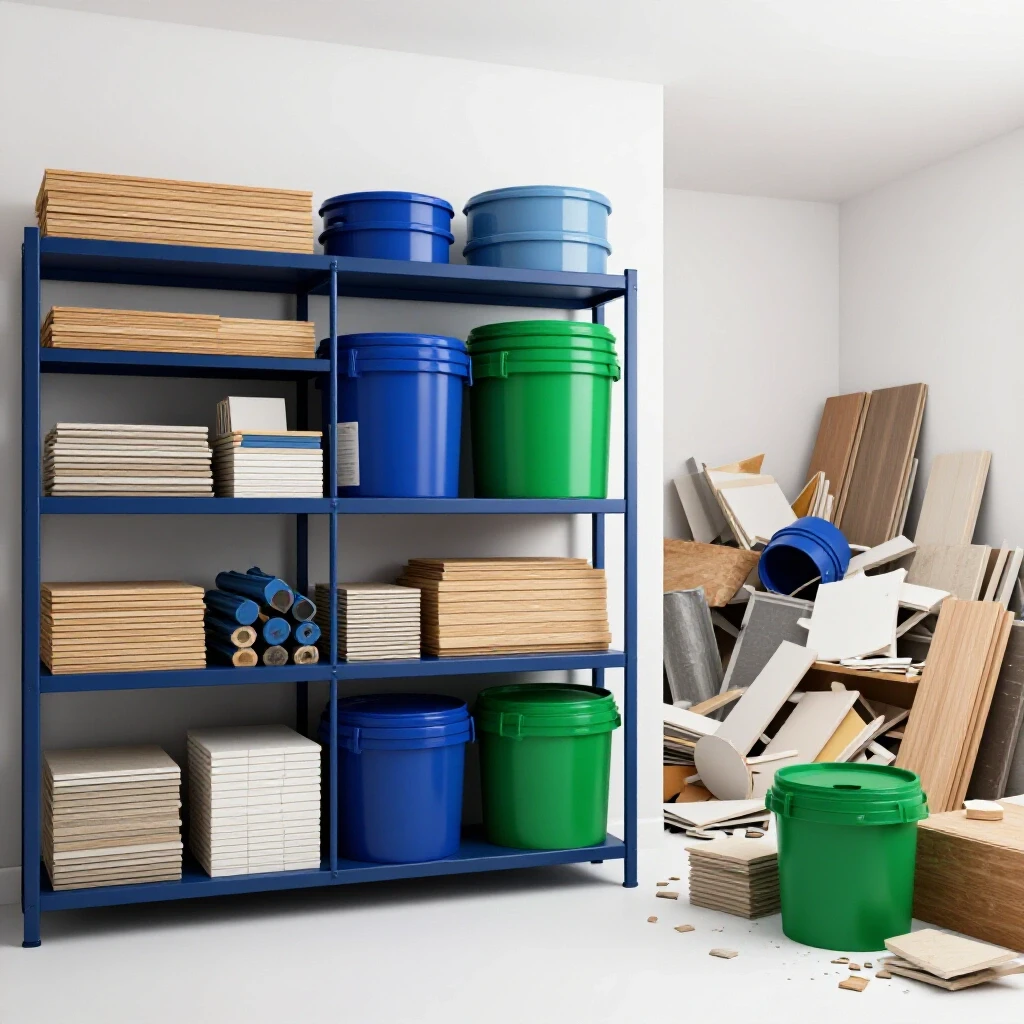
In my 18 years as a project coordinator, I have seen thousands of dollars literally rot away because a homeowner didn’t have a plan for where to put the delivery truck’s cargo. During my first full-home renovation of a 1920s bungalow, I made the mistake of storing my tongue-and-groove oak flooring in a basement that felt dry but had high humidity. Within two weeks, the wood had absorbed so much moisture that it began to “cup” or curve. I had to wait a full month with a dehumidifier running just to get the wood stable enough to install.
Residential renovation planning must include a specific “staging area.” This is a designated zone that is out of the way of foot traffic but close enough to the work area to be efficient. If you are doing a kitchen remodel, your garage might seem like a good spot, but is it climate-controlled? Standard cabinetry is often made of medium-density fiberboard (MDF) or plywood, both of which swell when exposed to moisture. Using RSMeans data, we know that material waste in a typical remodel is factored at about 5% to 10%. However, poor site management can easily push that number to 20%, effectively eating your entire contingency fund before the first nail is driven.
Why Environmental Factors Ruin Quality Building Supplies
Environmental factors include things like humidity, temperature changes, and sunlight that can change the physical state of your materials. High humidity causes wood to expand, while very dry air can cause it to shrink or crack. Understanding these factors helps you choose the right spot to keep your supplies so they stay in perfect condition for installation.
Humidity is the silent enemy of the home remodeling planner. Most interior finish materials are designed to live in a “conditioned” space, meaning an area where the temperature is between 60 and 80 degrees Fahrenheit and the humidity is between 30% and 50%. If your contractor wants to store your expensive custom vanities in an unfinished crawlspace or an open carport, you should speak up immediately.
- Hardwood Flooring: Needs to acclimate to the room where it will be installed for at least 72 hours.
- Drywall: Must be kept flat and off the ground to prevent moisture wicking and sagging.
- Paint and Adhesives: These can separate or lose their bonding strength if they freeze or get too hot.
- Fine Trim and Molding: Can warp or “banana” if not supported evenly along their entire length.
I remember a project where a homeowner bought beautiful reclaimed wood beams for a ceiling detail. They were left outside under a “waterproof” tarp. Unfortunately, the tarp trapped ground moisture underneath it, creating a greenhouse effect. By the time the crew was ready to install them, the beams had grown a layer of white fuzzy mold. We had to hire a specialist to treat the wood, which added three days to the schedule and $1,200 to the bill.
Construction Sequencing and Delivery Timing
Construction sequencing is the order in which different tasks are performed during a remodel. Delivery timing ensures that materials show up exactly when they are needed, rather than sitting around the job site for weeks. Proper sequencing keeps the site clear and reduces the chance of items getting stepped on, knocked over, or ruined by weather.
One of the best home remodeling tips I can give is to follow the “Just-in-Time” delivery method. You don’t want your kitchen appliances sitting in the middle of the living room while the plumber is still doing the rough-in work. Rough-in refers to the phase where pipes and wires are installed behind the walls before the drywall goes up. If the appliances arrive too early, they will get covered in drywall dust, which can get into the electronics and cause problems later.
Table 1: Ideal Material Delivery Schedule
| Material Type | Best Time to Deliver | Storage Requirement |
|---|---|---|
| Framing Lumber | 1-2 days before framing starts | Elevated on blocks, covered if outdoors |
| Windows/Doors | Once framing is complete | Inside the house, standing upright |
| Drywall | After electrical/plumbing inspection | Inside, flat on the floor, dry environment |
| Hardwood/Tile | 1 week before installation | Inside the specific room (acclimation) |
| Cabinets | After walls are painted | Inside, climate-controlled, away from walls |
| Appliances | The day of or day before installation | Inside, in original packaging |
By managing your construction sequencing, you reduce the time your supplies are at risk. I always tell my clients to look at the “critical path.” This is the sequence of tasks that determines the project finish date. If your tile is delayed, it might not seem like a big deal, but if that tile needs to be under the vanity, your plumber can’t finish, and your move-in date slides back.
Contractor Management and Site Standards
Contractor management involves setting clear expectations with your hired help about how they should treat the materials you paid for. Site standards are the rules for cleanliness and organization that everyone on the job must follow. Good management ensures that your crew respects the supplies and keeps the workspace safe and efficient.
When you are interviewing contractors, ask them how they handle “site logistics.” A pro will have a clear answer. They should mention things like “floor protection” and “dust barriers.” If they seem dismissive of material care, that is a red flag. In your contract, you can specify that the contractor is responsible for the safe handling of all owner-provided materials.
I once worked with a subcontractor who was great at tiling but terrible at tidiness. He left a bag of thin-set mortar open near an open window. It rained overnight, the wind blew the rain in, and the entire bag turned into a solid rock. While the cost of one bag of mortar is small, the time spent driving to the store to get a replacement cost us two hours of labor. These small “micro-losses” add up.
- Daily Clean-up: Require the crew to sweep and organize the staging area every afternoon.
- Protection: Use “Ram Board” or heavy cardboard to protect newly installed floors.
- Sign-off: Inspect every delivery for damage as soon as it arrives and before the driver leaves.
Estimating the Real Cost of Damaged Supplies
Estimating the real cost involves looking beyond the price tag of a ruined item and including the cost of labor to replace it and the impact on the schedule. Using resources like RSMeans helps you understand the market value of materials and labor. This data allows you to create a realistic budget that accounts for potential setbacks.
Many homeowners forget that if a bathtub arrives cracked and they don’t notice it until installation day, they aren’t just paying for a new tub. They are paying for the plumber to wait around, the cost of returning the item, and potentially the cost of rushing a new one to the site. RSMeans construction estimating resources show that labor often accounts for 50% or more of a project’s total cost. If your materials aren’t ready or are ruined, you are still paying for that labor time.
Table 2: Cost Impact of Material Replacement (Example: Custom Cabinetry)
| Item | Original Cost | Replacement Cost | Labor Delay Cost | Total Impact |
|---|---|---|---|---|
| Sink Base Cabinet | $450 | $450 | $300 (2 men, 3 hours) | $750 |
| Shipping (Rush) | N/A | $150 | N/A | $150 |
| Total | $450 | $600 | $300 | $900 |
As shown above, a “simple” mistake can double the cost of a single item. This is why I recommend a contingency fund of 15% to 25% depending on the age of the home. Older homes often have “hidden structural surprises” like outdated wiring or rot that only appear once you open the walls. If you have already spent your extra cash on replacing ruined flooring, you won’t have the money to fix the electrical issues found during the structural inspection checklists.
Avoiding Common Storage Mistakes in Kitchen and Bath Remodels
Avoiding common mistakes means learning from the errors of others to keep your remodel on track. This section focuses on specific traps like improper stacking, poor ventilation, and ignoring manufacturer instructions. By following best practices, you can prevent the most frequent causes of material degradation.
Kitchen and bathroom projects are especially sensitive because they involve so many different types of finishes. You have heavy items like stone countertops and delicate items like glass tile. One common mistake is leaning heavy items against a wall. Over time, the weight can cause the items to bow or even damage the wall they are leaning on.
Another issue is “outgassing.” Some new materials, like certain carpets or cabinets, release chemicals when they are first unpacked. If you store these in a small, unventilated room, the smell can become overwhelming. Always try to unbox these items in a garage or a room with the windows open a few days before they are installed.
- Don’t Stack Too High: Heavy boxes of tile can crush the boxes at the bottom.
- Avoid Direct Sunlight: UV rays can fade wood finishes or “yellow” certain plastics and paints.
- Check for Pests: Mice love to nest in insulation or chew through the cardboard boxes holding your light fixtures.
Using Technology to Track Your Renovation Materials
Technology can help you stay organized by keeping all your orders, delivery dates, and photos in one place. Digital tools like scheduling apps and spreadsheets allow you to see the “big picture” of your project at a glance. Using these tools reduces stress and makes it easier to communicate with your contractor.
In the modern world, you don’t have to rely on a paper notebook. There are several tools that can help you manage your residential renovation planning. I personally use a mix of simple and professional tools to keep my projects on track.
- Trello or Asana: Great for creating “cards” for each material order. You can attach receipts, photos of the items when they arrive, and notes about where they are stored.
- CompanyCam: A favorite for contractors, but useful for homeowners too. It allows you to take photos that are automatically pinned to a GPS location and timestamped. This is perfect for documenting the condition of materials upon delivery.
- Moisture Meters: For about $30, you can buy a hand-held meter. This is a must-have if you are installing wood floors or drywall. It tells you exactly how much moisture is in the material so you know if it is safe to install.
- Google Sheets: Use this for your budget and delivery log. Include columns for “Date Ordered,” “Expected Delivery,” “Actual Delivery,” and “Storage Location.”
Final Steps for a Successful Renovation Outcome
The final steps of a renovation involve a thorough walkthrough and a “punch-list” to fix any small issues. This is the time to ensure that all materials were installed correctly and that nothing was damaged during the final push. A successful outcome is one where the project is finished to your standards and within a reasonable version of your budget.
As you near the end of your project, the site often becomes chaotic. This is when the most damage happens. Tradespeople are rushing to finish, and they might accidentally bump into a newly installed door or scratch a countertop. Keep your storage area organized until the very last day.
Once the work is “substantially complete,” perform a post-occupancy evaluation. Walk through each room and look at the finishes. Did the wood floors stay flat? Do the cabinet doors hang straight? If you see issues, they might be related to how the materials were handled weeks earlier. Address these with your contractor before you make the final payment.
- Lien Waivers: Before the final payment, ensure your contractor provides lien waivers from all suppliers. This proves that the materials you worked so hard to protect have actually been paid for.
- Extra Materials: Always keep a box of tile, a few planks of flooring, and a small can of every paint color. Store these in a dry, labeled spot for future repairs.
FAQ
How do I know if my drywall is too wet to install? Drywall should have a moisture content of less than 1% when measured with a moisture meter. If it feels soft, looks discolored, or has a musty smell, it has likely absorbed too much water. Installing wet drywall can lead to mold growth behind your walls and cause paint to peel or bubble later.
Can I store my kitchen cabinets in the garage? It is not recommended unless the garage is fully finished and climate-controlled. Most garages experience large swings in temperature and humidity. These changes can cause the wood to warp or the finish to crack. If you must use the garage, keep the cabinets in their boxes, off the concrete floor, and use a dehumidifier.
What is “acclimation” and why does it matter for flooring? Acclimation is the process of letting wood flooring adjust to the moisture levels of the room where it will be installed. Wood is like a sponge; it expands and contracts based on the air around it. If you install it straight from a cold truck, it will likely expand and “buckle” once your home’s heating or cooling system turns on.
How should I handle a delivery that arrives damaged? You should inspect every delivery immediately. If you see crushed boxes or broken items, take photos and note the damage on the delivery slip before signing it. Tell the driver you are “accepting with exceptions” or, if the damage is severe, refuse the delivery entirely and contact the supplier immediately.
Does sunlight really damage building materials? Yes. Intense UV rays can “sun-bleach” wood flooring, fade the color of some tiles, and cause certain types of plastic piping (like PEX) to become brittle. Always store sensitive materials away from windows or cover them with an opaque, breathable cloth.
What is a “dried-in” house? A house is “dried-in” when the roof, exterior walls, windows, and doors are all installed, making the interior weather-tight. This is the stage where it becomes safe to bring in sensitive interior materials like drywall, insulation, and cabinetry.
How high off the ground should I store lumber? Lumber should be stored at least 6 to 12 inches off the ground on “stickers” or level blocks. This prevents the wood from soaking up moisture from the soil or concrete and allows air to circulate around the entire stack, keeping the wood stable.
What is a “contingency fund” and how much do I need? A contingency fund is extra money set aside for unexpected costs. For a standard remodel, 15% of the total project cost is a good baseline. For older homes (50+ years), I recommend 20% to 25% because you are more likely to find hidden issues like rot or old plumbing that needs replacing.
How can I protect my new floors during the rest of the remodel? Use a professional-grade floor protector like Ram Board. Avoid using thin plastic sheets, as they can trap moisture and are easily torn. Tape the edges of the protector down with “painter’s tape” that won’t leave a sticky residue on your new finish.
Why shouldn’t I use em dashes in my project notes? While this is a specific writing rule for this guide, in a broader sense, using clear and standard formatting in your project notes ensures that anyone reading them—like a contractor or a partner—understands exactly what you mean without confusion. Clarity is your best friend during a renovation.
(This article was written by one of our staff writers, David Langford. Visit our Meet the Team page to learn more about the author and their expertise.)