Home Renovation Fixture Costs and Common Regrets (Expert Guide)

As the leaves turn and the air grows crisp, many homeowners move their focus from outdoor landscaping to the interior of their homes. This seasonal shift often marks the beginning of the heavy planning phase for winter and spring renovations. In my eighteen years of coordinating residential projects, I have seen how these transitions spark a desire for change. However, the excitement of choosing new hardware and lighting can quickly turn into a source of financial stress if not managed with a data-driven approach.
The Foundation of Residential Renovation Planning for Finishes
Residential renovation planning is the process of defining every physical component and labor requirement before a single hammer swings. It involves creating a detailed roadmap that aligns your aesthetic desires with the structural and financial realities of your property.
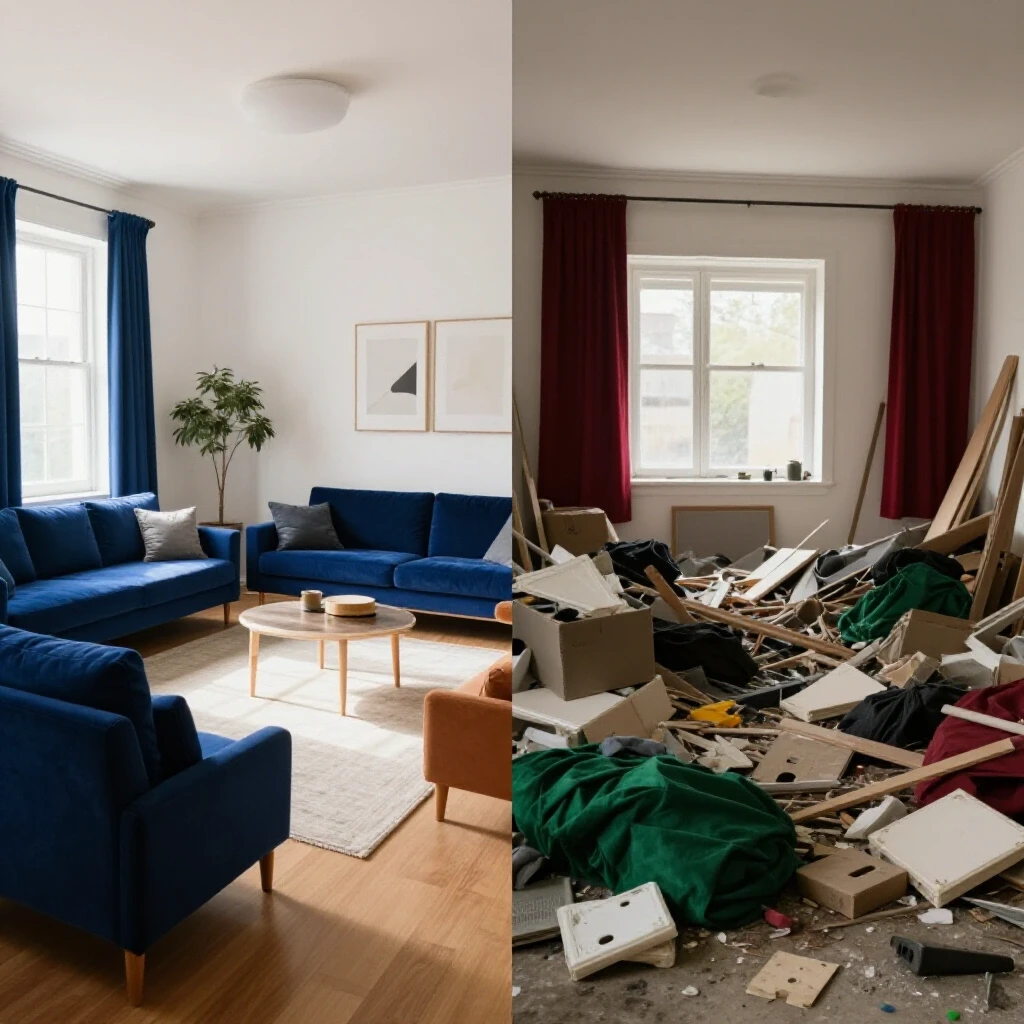
When you start a kitchen or bathroom remodel, the items you touch every day—the faucets, handles, and showerheads—often consume a significant portion of the budget. According to RSMeans construction data, finishing fixtures can account for 15% to 25% of a total room remodel cost. In my own first home renovation, I underestimated how quickly these costs add up. I focused on the “big” items like cabinets but ignored the fact that high-end faucets require specific valves that cost nearly as much as the fixture itself.
To avoid budget creep, you must categorize your finishes early. A common mistake is using a “placeholder” figure in your initial estimate. If you budget $500 for a kitchen faucet but later fall in love with a professional-grade pull-down model, you have already created a deficit. I recommend using a tiered estimation approach based on verified market data rather than best-case scenarios.
| Fixture Tier | Average Cost % of Room Budget | Typical Durability Expectation | Replacement Difficulty |
|---|---|---|---|
| Builder Grade | 5-10% | 5-7 Years | Low |
| Mid-Range | 15-20% | 12-15 Years | Moderate |
| Luxury/Custom | 25%+ | 20+ Years | High |
Why Construction Sequencing Matters for Interior Selections
Construction sequencing is the logical order of operations for a build, ensuring that each phase supports the next without causing rework. It moves from demolition and structural work to “rough-in” utilities before finally reaching the “finish” phase where fixtures are installed.
One of my biggest professional lessons involved a bathroom project where the homeowner purchased a heavy, stone pedestal sink halfway through the project. Because we had already closed the walls, we had to tear out new drywall to add structural blocking. Blocking is the extra wood support inside a wall that holds heavy items. If your sequencing is off, you will pay your contractor twice for the same wall.
The “rough-in” phase is where the most expensive mistakes happen. This is when pipes and wires are positioned behind the walls. If you haven’t selected your specific shower system or lighting layout, the plumber and electrician will guess based on standard heights. If your chosen fixture requires a non-standard connection, you will face a change order fee to move those lines later.
- Finalize all fixture specifications before the framing inspection.
- Provide your contractor with “spec sheets” for every item you buy.
- Ensure the “rough-in” valves match the “trim” kits you plan to use.
- Verify that your electrical panel can handle the load of new high-wattage lighting.
Navigating the Contractor Management Guide for Finish Materials
A contractor management guide is a set of rules and communication standards used to oversee a builder’s work and ensure they follow the project scope. It defines who is responsible for buying materials, how they are stored, and what happens if they arrive damaged.
Contractor disputes often arise over “owner-supplied” fixtures. Homeowners frequently think they are saving money by buying their own lights or faucets. However, if a faucet you bought online leaks, the contractor will charge you labor to remove it and reinstall a new one. They only warranty the labor for items they provide. In my coordination career, I have seen projects stall for weeks because a homeowner-ordered sink arrived cracked and the replacement was backordered.
When vetting a contractor, ask how they handle “allowances.” An allowance is a set amount of money in the contract for items like tile or faucets. If the allowance is $1,000 but the items you want cost $2,000, you are responsible for the difference. Always ensure these allowances are based on real-world prices from local suppliers, not just low-ball numbers used to make a bid look cheaper.
- Ask for a written policy on owner-supplied material delays.
- Verify if the contractor charges a “markup” on materials they pick up for you.
- Establish a clear delivery schedule to avoid cluttering the job site.
- Confirm who is responsible for inspecting fixtures upon delivery.
Hidden Structural Surprises and Finish Installations
Hidden structural surprises are unforeseen issues like mold, rot, or outdated wiring found after removing old fixtures or walls. These issues must be resolved before any new finishes can be installed, often requiring an immediate shift in budget allocation.
During a kitchen remodel on a 1940s bungalow, I planned to install a heavy copper farmhouse sink. When we pulled out the old cabinet, we found that the floor joists underneath had been notched out by a previous plumber, weakening the floor. The “simple” sink upgrade turned into a structural repair project. If I hadn’t set aside a 20% contingency fund, the project would have stopped entirely.
Older homes often have “outdated wiring” that cannot support modern LED dimmers or high-end appliances. If you buy a beautiful chandelier but your home has ungrounded wiring, an electrician cannot legally install it without upgrading the circuit. This is why a structural inspection checklist is vital before you commit to expensive finishes.
- Check for water damage around old sink bases and toilets.
- Verify the integrity of floor joists under heavy appliances.
- Inspect the “thermal envelope” or insulation levels behind bathroom walls.
- Test existing shut-off valves to see if they actually stop the water flow.
Managing the Kitchen Remodel Budget During the Finish Phase
A kitchen remodel budget is a detailed financial plan that breaks down costs by category, including labor, cabinetry, appliances, and fixtures. It serves as a guardrail to prevent overspending on “wants” at the expense of “needs.”
One of my personal regrets involved spending a large portion of my budget on a high-end, touch-activated faucet. While it looked great, the internal sensors failed within three years, and the parts were difficult to find. I realized that I had prioritized a “gadget” over a high-quality, mechanical valve that would have lasted decades. RSMeans data suggests that for kitchens, you should spend more on items with moving parts, like hinges and faucets, and less on purely decorative items.
To keep costs under control, use a “change order threshold.” A change order is a written amendment to your contract for any work or materials not in the original plan. I advise homeowners to never sign a change order that exceeds 10% of the total project cost without a full budget review. If you find yourself constantly upgrading fixtures, you are likely suffering from “scope creep,” which is the gradual expansion of a project’s goals.
| Kitchen Item | Recommended Budget % | Priority Level |
|---|---|---|
| Cabinetry | 30-40% | High |
| Countertops | 10-15% | Moderate |
| Fixtures/Hardware | 5-8% | Moderate |
| Lighting | 5% | High (Functional) |
Using a Structural Inspection Checklist to Protect Your Investment
A structural inspection checklist is a tool used to verify that the bones of a house are ready for the weight and requirements of new finishes. It covers everything from the foundation to the roofline, ensuring the home can support the renovation.
I once managed a project where the homeowner wanted a massive, cast-iron soaking tub on the second floor. We didn’t just look at the tub; we looked at the “static load” it would place on the house when filled with water and a person. We found the floor needed double-joists. If we had ignored this, the ceiling below would have cracked within months. This is why “what” you spend on a fixture must include the “how” of its installation.
Before you buy a fixture, ask yourself if the house is ready for it. High-end shower heads often require larger 3/4-inch supply lines instead of standard 1/2-inch pipes. If you don’t check this, your expensive shower will have weak water pressure. This is a classic example of a “design error” that leads to long-term regret.
- Measure the “clearance” for all swinging doors and drawers near new fixtures.
- Confirm the “load-bearing” capacity of walls for floating vanities.
- Test the water pressure at the main meter before buying multi-head showers.
- Check the age of the water heater to ensure it can fill a new, larger tub.
The Critical Path Scheduling of Fixture Deliveries
Critical path scheduling is a project management technique that identifies the sequence of essential tasks that must be completed on time for the project to finish. If a “critical path” item is delayed, the whole project is delayed.
In the world of fixtures, lead times are the enemy of the critical path. A lead time is how long it takes from the moment you order an item until it arrives. During a recent remodel, a custom-ordered kitchen sink had a twelve-week lead time. Because the countertops couldn’t be cut without the sink on-site, the entire kitchen was unusable for three months. I now tell all my clients: do not start demolition until every single fixture is sitting in your garage or a warehouse.
Using a Gantt chart—a visual timeline of your project—can help you see these dependencies. If the plumber is scheduled for “finish plumbing” on Monday, but the faucets haven’t arrived, you are still paying for the plumber’s time or losing your spot in their schedule. Most professional contractors will charge a “remobilization fee” if they have to leave and come back because of missing materials.
- Order fixtures at least 8-10 weeks before they are needed.
- Track all shipments using a digital project management tool.
- Inspect every box for “concealed damage” within 48 hours of arrival.
- Store items in a climate-controlled area to prevent warping or corrosion.
Resolving Punch-List Disputes Over Finish Quality
A punch-list is a document created at the end of a project that lists minor tasks or repairs that must be completed before final payment. It is the final stage of quality control for your renovation.
Disputes often happen during the punch-list phase regarding the “fit and finish” of fixtures. For example, if a faucet is slightly crooked or a light fixture hums when dimmed. To avoid these arguments, establish “quality-control benchmarks” in your contract. State clearly that all fixtures must be installed according to the manufacturer’s instructions and must be free of scratches or defects.
In one of my personal projects, I noticed a small scratch on a new bathtub. Because I had a clear “site management” plan, I could prove the scratch wasn’t there when the tub was delivered but happened during tile installation. This allowed me to resolve the issue with the contractor without an emotional argument. Being data-driven and having a paper trail is your best defense against getting “ripped off.”
- Walk through the site daily and take photos of fixture installations.
- Test every handle, knob, and switch before the contractor leaves.
- Keep a “logbook” of any issues found during the process.
- Do not make the final payment until every item on the punch-list is signed off.
Post-Occupancy Evaluations: Learning from Past Choices
A post-occupancy evaluation is a review conducted six to twelve months after a project is finished to see how the space and its fixtures are performing. It helps you understand the true value of your investments.
Looking back at my own renovations, my biggest regrets weren’t about the money spent, but about the “usability” of the items. I once chose a beautiful, dark-colored sink that showed every single water spot and scratch. It required constant cleaning. In a post-occupancy review, I realized that a standard stainless steel sink would have been much more practical for my lifestyle.
This is why I recommend researching the “maintenance requirements” of any fixture before buying. A high-maintenance finish like unlacquered brass will change color over time. If you want it to stay shiny, you will spend hours polishing it. If you aren’t prepared for that work, that fixture will become a regret.
- Evaluate if the fixture meets the functional needs of your family.
- Track any “warranty claims” made within the first year.
- Assess if the “cost-per-use” justifies the initial high price tag.
- Note any finishes that are difficult to keep clean or are showing premature wear.
Actionable Tracking Frameworks for Your Remodel
To manage a complex renovation, you need tools that keep you organized. A simple spreadsheet is often not enough when you are tracking dozens of fixtures, delivery dates, and contractor payments.
- Digital Blueprints: Use apps like MagicPlan or Canvas to keep accurate measurements of your space on your phone. This prevents buying a fixture that is too large for the room.
- Estimation Calculators: Use online tools that pull local labor rates and material costs to verify your contractor’s bid.
- Scheduling Apps: Tools like Trello or CoConstruct allow you to share a timeline with your contractor and track “milestone payments.”
- Contract Templates: Ensure your contract includes a “lien waiver” clause. This protects you from being sued if your contractor fails to pay the fixture supplier.
By following these structured steps and learning from the data of past projects, you can navigate your renovation with confidence. The goal is not just to have a beautiful home, but to have one that was built efficiently, without blowing your budget on items you will later regret.
Frequently Asked Questions
How much should I really set aside for a renovation contingency fund? For most residential renovations, a 15% to 20% contingency is standard. If your home was built before 1970, I recommend 25%. This fund is specifically for “unseen” issues like mold, rot, or outdated wiring that are only discovered after the walls are opened. It should not be used for “upgrading” your fixtures mid-project.
What is the difference between “rough-in” and “finish” phases? The “rough-in” phase occurs when the internal components of your fixtures—like the valves for a shower or the electrical boxes for a light—are installed inside the walls. The “finish” phase is the very end of the project when the visible parts, like the faucet handle or the light shade, are attached. You must have your finish items selected before the rough-in begins to ensure they are compatible.
Why do contractors dislike it when I buy my own fixtures? Contractors lose the “markup” profit on materials when you buy them yourself, but more importantly, it creates a liability gap. If a fixture you provided is defective, the contractor has to stop work, and you are responsible for the delay. Most contractors will not warranty the performance of an item they didn’t source through their professional suppliers.
How can I tell if a fixture is “builder grade” or high quality? Weight and material composition are the best indicators. High-quality fixtures are usually made of solid brass or stainless steel and feel heavy. “Builder grade” items often use plastic components with a metallic coating. Check the “spec sheet” for the internal cartridge material; ceramic discs are the industry standard for durability.
What is a “lien waiver” and why do I need one for my fixtures? A lien waiver is a document signed by a supplier or subcontractor stating they have been paid in full for the materials or labor provided. If your contractor buys your fixtures but doesn’t pay the supply house, the supplier can put a “lien” on your house to get their money. Always collect lien waivers before making milestone payments.
How do I avoid “design errors” when picking out bathroom hardware? The most common error is “scale.” Homeowners often pick fixtures that are too large for their vanity or too small for their shower footprint. Always check the “reach” of a faucet to ensure the water lands in the center of the sink, and verify that the “spread” (the distance between handles) matches the holes pre-drilled in your countertop.
What are “lead times” and how do they affect my schedule? A lead time is the duration between ordering a product and receiving it. In the current market, some custom fixtures can have lead times of 12 to 20 weeks. If you haven’t accounted for this in your “critical path scheduling,” your project will sit idle while you wait for a single sink or light to arrive.
Is it worth spending more on “smart” or “touchless” fixtures? From a post-occupancy perspective, these are often cited as regrets. While convenient, they introduce electronic components into a wet environment, which increases the likelihood of failure. Unless there is a specific accessibility need, most seasoned project coordinators recommend sticking to high-quality mechanical fixtures for long-term reliability.
How do I handle a “change order” if I change my mind about a fixture? A change order should always be in writing. It must detail the cost of the new fixture, any restocking fees for the old one, and the additional labor required for the change. Never agree to a change order verbally; it is the fastest way to lose control of your budget and end up in a dispute.
What should I look for during a “punch-list” walk-through? Check for “functional alignment.” Do the faucets turn on smoothly? Is the hot and cold water correctly oriented? Are the light plates level? Look for “collateral damage” like scratches on the new flooring or nicks in the paint that may have happened during the fixture installation. Do not sign off until these are corrected.
(This article was written by one of our staff writers, David Langford. Visit our Meet the Team page to learn more about the author and their expertise.)