How to Prevent Laundry Room Mildew With Better Ventilation (Guide)

Future-proofing a home involves more than just aesthetic updates; it requires a deep understanding of how your property handles moisture and air pressure. Over my 17 years as a facilities technician, I have seen how small oversights in utility areas can lead to significant structural damage. By addressing the root causes of moisture accumulation now, you protect the long-term integrity of your building envelope and avoid the high costs of emergency repairs.
Understanding the Building Science of Utility Room Environments
Building science is the study of how heat, air, and moisture move through a structure’s physical components. In utility spaces, this involves managing high vapor pressure and temperature fluctuations caused by appliances. When warm, moist air from a washing machine or dryer meets a cool surface, it reaches its dew point, resulting in liquid water that encourages fungal growth.
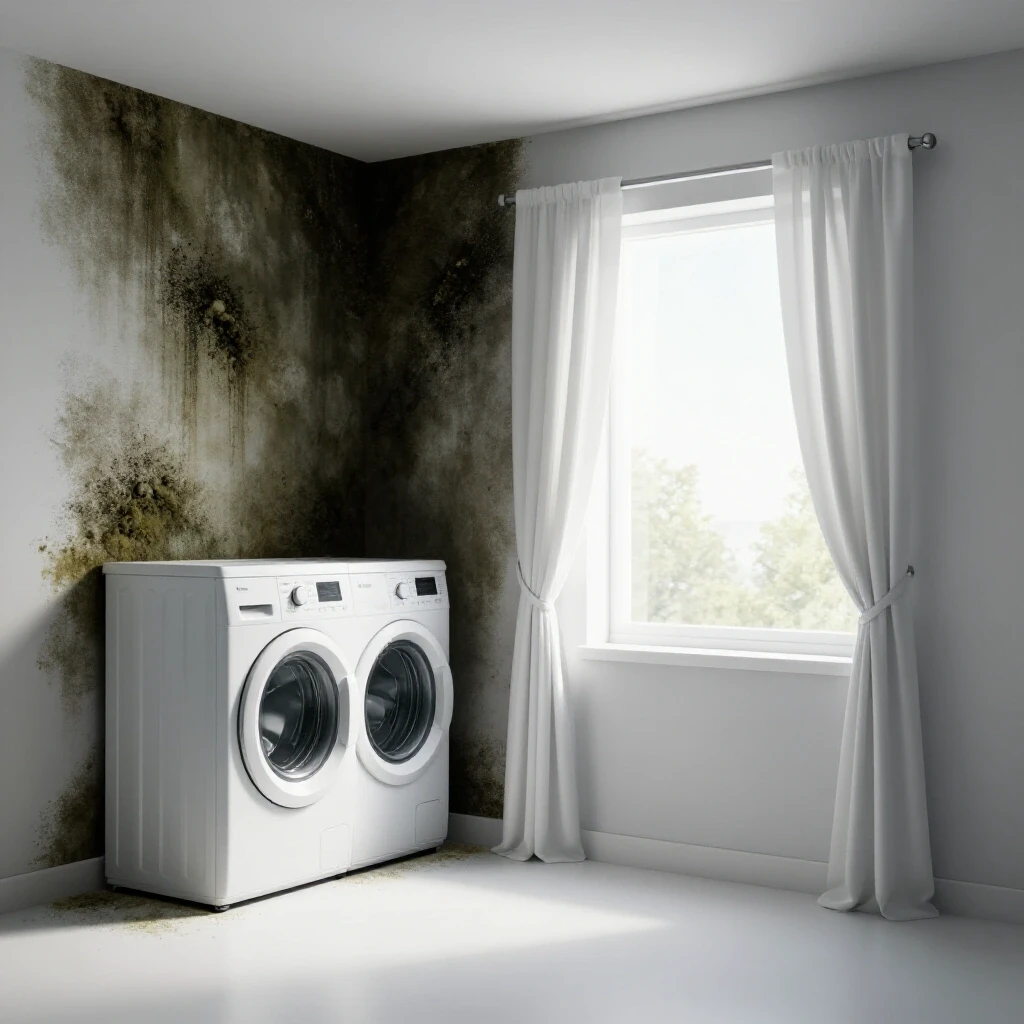
The primary driver of moisture issues in these rooms is often a lack of adequate air exchange. In older properties, laundry areas were frequently tucked into small closets or basements without dedicated supply air. When a dryer runs, it exhausts a significant volume of air—typically between 100 and 200 cubic feet per minute (CFM). If the room is sealed too tightly, the “stack effect” or negative pressure can pull air from unintended places, like wall cavities or crawlspaces, bringing in more humidity and dust.
To prevent surface dampness, we must maintain a balance between the air being removed and the air being introduced. This is known as “make-up air.” Without it, your exhaust systems struggle against static pressure, reducing their efficiency and allowing moisture to linger on walls and ceilings. Tracking these variables is the first step in a professional-grade diagnostic process.
Essential Diagnostic Tools for Moisture Detection
Residential diagnostics require specific instruments to move beyond guesswork and identify the hidden sources of water vapor. Using professional-grade tools allows you to establish a baseline for your home’s performance and detect failures before they become visible. These tools help you measure the invisible forces of humidity and thermal bridging that lead to surface issues.
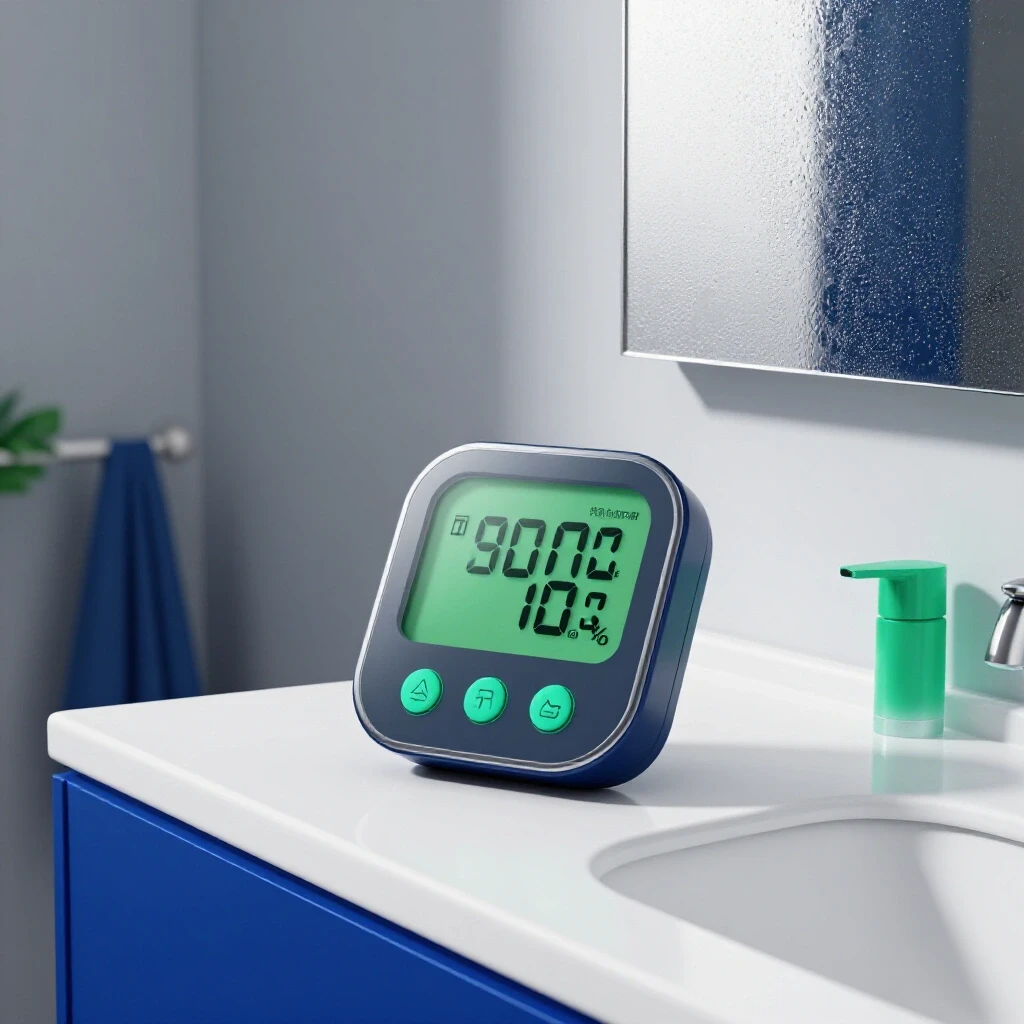
- Digital Hygrometer: This device measures relative humidity (RH) and ambient temperature. For a utility space, you want to see an RH level between 30% and 50%. Anything consistently above 60% provides the ideal environment for fungal spores to colonize surfaces.
- Pinless Moisture Meter: This tool uses electromagnetic signals to detect moisture content behind drywall, wood, or tile without marring the surface. It is essential for checking if a wall is damp due to an internal pipe leak or external condensation.
- Thermal Imaging Camera: By looking at temperature differentials, a thermal camera can identify “cold spots” on walls where insulation might be missing. These cold spots are where moisture is most likely to condense.
- Anemometer: This measures the velocity of air moving through your exhaust vents. If your dryer vent or exhaust fan is rated for 100 CFM but only pushing 40 CFM, you have a blockage or a mechanical failure.
- Manometer: Used to measure the static pressure within ductwork. High static pressure indicates that your ventilation path is too long, has too many bends, or is restricted by lint.
Identifying the Root Cause of Surface Growth
Effective preventative home care relies on a systematic approach to troubleshooting. Instead of just cleaning a surface, a technician looks for the “why” behind the moisture. This involves inspecting the appliance connections, the ductwork path, and the room’s overall airflow patterns to determine if the issue is mechanical or structural.
| Symptom | Potential Root Cause | Diagnostic Test |
|---|---|---|
| Dampness on exterior-facing walls | Thermal bridging or poor insulation | Use thermal camera to check for R-value gaps |
| Fogged windows during dryer use | Exhaust duct leak or blockage | Perform anemometer test at the exterior vent |
| Musty odor near the washing machine | Standing water in the drain pan or pump | Inspect the standpipe and p-trap for clogs |
| Peeling paint behind the dryer | High localized humidity/lack of airflow | Monitor RH levels with a digital hygrometer |
| Water pooling under the appliance | Failed hose gaskets or pump seal | Check water pressure (PSI) and hose integrity |
When I managed a 1940s colonial property, I encountered a recurring issue where the wall behind the dryer remained perpetually damp. Using a moisture meter, I found that the moisture content in the studs was 22%, well above the safe threshold of 12-15%. The cause wasn’t a leak, but a crushed foil transition duct that was restricting airflow and causing hot, moist air to seep back into the wall cavity through a poorly sealed vent plate.
Systematic Upgrades to Exhaust and Ventilation Systems
Improving the way air moves through a utility space is the most effective way to prevent fungal growth on walls and fabrics. This often involves moving away from standard, underperforming components toward higher-capacity, rigid materials that reduce friction and improve moisture expulsion. A targeted ventilation change focuses on reducing the workload on your appliances while ensuring vapor is moved entirely outside the building envelope.
Optimizing the Exhaust Path
The most common failure in older homes is the use of flexible, corrugated plastic or foil ducting. These materials create significant turbulence and trap lint, which increases fire risk and reduces airflow. Replacing these with 4-inch diameter rigid galvanized steel or aluminum ductwork is a standard building science recommendation. Rigid ducts have smooth interior walls, which allow air to flow with minimal resistance.
When installing rigid ducting, ensure that all joints are sealed with foil tape—never duct tape, which degrades over time. The total length of the run should ideally not exceed 25 feet, with each 90-degree elbow counting as 5 feet of length. If your run is longer, you may need to install a secondary booster fan to maintain the necessary velocity to carry moisture out of the house.
Implementing Supplemental Air Exchange
If a laundry room is small or lacks a window, a standard dryer exhaust may not be enough to handle the humidity spikes. I often recommend installing a dedicated exhaust fan, similar to a bathroom fan, but with a higher CFM rating and an integrated humidity sensor. These sensors can be set to trigger the fan automatically when the RH exceeds 50%, ensuring the room dries out even after the laundry cycle is finished.
For make-up air, consider installing a louvered door or a passive wall vent. This allows the dryer to pull fresh air from the rest of the house rather than creating a vacuum. In my own experience, replacing a solid closet door with a vented one reduced the cooling time of the room by 15 minutes per cycle and eliminated the “heavy” air feeling that often precedes surface dampness.
Structural Protection and Moisture Barrier Maintenance
Protecting the building envelope requires a focus on drainage pathways and the integrity of the surfaces surrounding your appliances. Moisture doesn’t just sit on the surface; it can migrate through drywall via capillary action, leading to hidden rot in the wall framing. Proper structural protection involves creating a defensive perimeter around your water and air connections.
- Install a High-Lip Drain Pan: Place your washing machine inside a plastic or metal drain pan with a dedicated drain line. This prevents small leaks from saturating the flooring.
- Upgrade to Braided Stainless Steel Hoses: Rubber hoses have a finite lifespan and are prone to bursting under high water pressure. Stainless steel braided hoses offer much higher burst resistance.
- Seal the Vent Penetration: Use fire-rated caulk or expandable foam to seal the gap where the dryer vent passes through the exterior wall. This prevents “backdrafting,” where moist air is blown back into the wall cavity.
- Apply Vapor-Barrier Paint: In high-humidity zones, use a high-quality primer and paint with a low perm rating. This acts as a semi-permeable barrier that prevents water vapor from soaking into the gypsum board.
Water pressure in residential homes should typically be between 40 and 60 PSI. If your pressure exceeds 80 PSI, it can cause “water hammer” and premature failure of appliance valves. Installing a pressure-reducing valve (PRV) at the main water line is a critical step in preventative home care that protects all your plumbing-connected appliances.
Step-by-Step Execution for Improving Air Circulation
Executing a ventilation change requires a logical sequence to ensure the system is balanced and meets local building codes. Safety is paramount, especially when dealing with gas-powered dryers or electrical circuits. Before starting any work, verify that all appliances are disconnected from their power and fuel sources.
- Step 1: Inspect the current exit point. Go outside and check the vent hood. Ensure the flapper moves freely and is not clogged with lint or bird nests.
- Step 2: Measure the duct run. Calculate the total equivalent length. If it exceeds 35 feet (per many local codes), you must plan for a shorter route or a booster.
- Step 3: Remove old flexible ducting. Discard any plastic or thin foil “accordion” style hoses. These are inefficient and difficult to clean.
- Step 4: Install rigid metal ductwork. Use a crimping tool to fit sections together, ensuring the “male” end of the pipe points in the direction of the airflow to prevent lint buildup at the seams.
- Step 5: Secure and seal. Support the ductwork every 4 to 6 feet with metal strapping. Seal every joint with UL-listed foil tape.
- Step 6: Test the system. Reconnect the dryer using a heavy-duty semi-rigid metal transition duct. Run a cycle and use your anemometer to verify the CFM at the exterior exit.
Multi-Year Prevention and Maintenance Schedule
Mastering routine care means moving away from reactive repairs and toward a scheduled maintenance framework. By performing small checks throughout the year, you can spot the early signs of wear—like a slow drain or a slightly loose vent—before they lead to a major failure.
| Frequency | Task | Metric/Target |
|---|---|---|
| Every Load | Clean the lint screen | Zero visible lint |
| Monthly | Inspect the exterior vent hood | Flapper should open fully |
| Every 6 Months | Vacuum the dryer cabinet and transition duct | No accumulation of dust |
| Annually | Deep clean the entire rigid duct run | Full airflow (CFM) restoration |
| Every 5 Years | Replace washing machine supply hoses | No cracks or corrosion |
| Every 10 Years | Replace the dryer exhaust vent hood | UV damage or seal failure check |
During my time maintaining older properties, I found that homeowners who followed a structured plumbing repair guide and maintenance list reduced their emergency repair costs by nearly 70%. The key is consistency. A five-minute check of the dryer vent every few months can prevent a thousand-dollar wall repair later.
DIY Limits vs. Professional Contractor Transition Points
While many ventilation and moisture-control tasks are within the reach of a determined homeowner, certain scenarios require the expertise of a licensed professional. Knowing when to transition ensures the job is done safely and according to code, particularly when structural or electrical modifications are necessary.
- DIY Scope: Replacing transition ducts, cleaning lint from vents, installing a new vent hood, monitoring humidity levels, and sealing minor air leaks.
- Professional Scope: Installing a new exterior wall penetration (especially through brick or stone), running new electrical circuits for a 240V dryer, repairing gas lines, or addressing extensive fungal growth that has penetrated the wall studs.
If you discover that your moisture issue is caused by a “backdrafting” water heater or furnace, stop immediately and call an HVAC professional. Backdrafting can pull carbon monoxide into your living space, which is a critical safety hazard. Similarly, if your moisture meter shows high readings deep within a load-bearing wall, a structural engineer may be needed to assess the wood’s integrity.
Conclusion: Taking the First Steps Toward a Drier Home
Addressing the environment in your laundry area is a fundamental part of residential diagnostics and structural protection. By understanding the building science of airflow and moisture, you can transform a damp, high-risk space into a stable, dry part of your home. Start by measuring your current humidity levels and inspecting your exhaust path. These small, data-driven actions are the foundation of a proactive maintenance strategy that saves time, money, and stress in the long run.
Frequently Asked Questions
Why does the wall behind my washing machine feel damp even when there are no leaks?
This is usually caused by condensation. When the washing machine uses hot water, it warms the air around it. If the wall is an exterior wall with poor insulation, it remains cool. The warm, moist air hits that cool surface and turns into liquid water. This is a sign that you need better airflow or improved wall insulation to move the dew point outside of the wall assembly.
Can I use a regular bathroom fan to help ventilate my laundry room?
Yes, but ensure it is rated for continuous use and has a high enough CFM for the room size. A laundry room often needs more air exchange than a bathroom. Look for a fan with a built-in humidistat that automatically turns on when humidity rises, as this provides “set it and forget it” protection for your home.
How do I know if my dryer vent is too long?
Most manufacturers and building codes limit dryer vents to 35 feet. Remember to subtract 5 feet for every 90-degree turn. If you have a long run, you will notice that clothes take multiple cycles to dry and the top of the dryer feels excessively hot. An anemometer test at the exit point can confirm if the airflow is below the manufacturer’s required CFM.
What is the best material for a dryer transition duct?
The transition duct—the piece connecting the dryer to the wall—should be semi-rigid metal. Avoid plastic or thin foil “slinky” ducts. Semi-rigid metal is more durable, handles heat better, and has a smoother interior, which reduces lint buildup and improves the efficiency of moisture removal.
How often should I check the moisture levels in my utility room?
If you live in a high-humidity climate or have an older home, check the relative humidity (RH) weekly during the summer and winter. Once you have established a baseline and have your ventilation system optimized, a monthly check with a hygrometer is usually sufficient to ensure your systems are performing correctly.
Is it normal for the laundry room to smell musty?
A musty smell is never “normal”; it is a diagnostic indicator of stagnant moisture or fungal growth. It often stems from water sitting in the washing machine’s bellows, a clogged drain, or moisture trapped behind the drywall. Use a moisture meter to check the walls and a flashlight to inspect the appliance’s internal components.
What is “make-up air” and why do I need it?
Make-up air is the fresh air that replaces the air exhausted by your dryer or vent fan. If your home is very airtight, the exhaust fan can’t push air out effectively because it’s fighting a vacuum. Providing a path for make-up air, like a louvered door, ensures your exhaust system can move moisture out of the room efficiently.
Can lint buildup cause moisture problems?
Absolutely. Lint acts like a sponge, holding onto water vapor inside the ductwork. If the duct is clogged with lint, the moist air cannot escape the house. This causes the air to back up into the laundry room, leading to high humidity and condensation on the walls and ceiling.
Should I insulate my dryer vent pipe?
If the vent pipe passes through an unheated space like an attic or crawlspace, it should be insulated. Without insulation, the warm air inside the pipe will cool down rapidly, causing moisture to condense inside the duct. This liquid water can then leak out of the joints or run back down into the dryer.
What is the ideal humidity level for a laundry area?
You should aim for a relative humidity level between 30% and 50%. Once the humidity exceeds 60%, the risk of fungal growth on surfaces increases significantly. Using a dehumidifier or increasing ventilation are the two primary ways to maintain these levels.
(This article was written by one of our staff writers, Daniel Whitaker. Visit our Meet the Team page to learn more about the author and their expertise.)