How to Choose the Right Mirror Size for Renovations (Guide)

After years of living in a home, the natural wear-and-tear on surfaces and systems becomes impossible to ignore. You notice the scuffs on the baseboards, the slow drain in the master bath, and the outdated layout that no longer fits your lifestyle. When you finally decide to pull the trigger on a major residential renovation, the excitement of a fresh start is often clouded by the fear of making a permanent, visible mistake. In my 18 years as a construction project coordinator, I have seen homeowners spend thousands on high-end finishes only to have the entire room feel “wrong” because a single element was out of proportion.
The Foundation of Proportional Design in Residential Renovations
Proportional design is the practice of ensuring every element in a room relates correctly to the size of the space and the other objects within it. In a residential setting, this means balancing the height, width, and placement of wall features to create a sense of harmony. When these dimensions are miscalculated, the room can feel cramped or awkwardly empty.
Early in my career, I coordinated a bathroom remodel where the homeowner chose a beautiful vanity but didn’t consider the wall space above it. They selected a reflective surface that was far too narrow for the wide double vanity. The result was a visual disconnect that made the expensive cabinetry look bulky and the wall look unfinished. This type of error is common in residential renovation planning when the focus stays on the “look” of an item rather than its physical scale in the room.
To avoid this, you must look at your room as a series of geometric relationships. A large wall requires a feature with enough visual weight to anchor the space. Conversely, a small powder room can be easily overwhelmed by a piece that extends too close to the corners or the ceiling. During the design phase, I always recommend using painter’s tape to mock up the exact dimensions of your wall features on the bare studs or existing drywall. This simple step provides a 1:1 scale preview that digital renderings often fail to capture.
- Aim for a width that is roughly 70-80% of the vanity or furniture piece below it.
- Ensure there is at least 4 to 6 inches of “breathing room” between the edge of the feature and the nearest wall or molding.
- Align the center of the piece with the eye level of the average user, typically 60 to 64 inches from the floor.
Why Misjudging Scale Leads to Costly Project Rework
Misjudging the scale of wall elements often forces a mid-project correction that can derail your construction sequencing and inflate your budget. When a piece doesn’t fit the way you imagined, it usually isn’t just the piece that needs to change; it is the electrical, the plumbing, or the tile work surrounding it.
In one of my personal home renovations, I learned this the hard way. I had already finished the “rough-in” phase—which is the stage where internal systems like wires and pipes are installed before the walls are closed. I had placed the sconce lights based on a standard size assumption. When the actual wall feature arrived, it was much wider than expected. To make it look right, I had to hire the electrician to come back, cut into the new drywall, and move the junction boxes.
This is what we call “rework,” and it is the primary driver of budget overruns. According to data derived from RSMeans construction estimating resources, the cost of moving an electrical box after the drywall is finished can be three to four times higher than the initial installation. You aren’t just paying for the electrician’s time; you are paying for the drywaller to patch the hole and the painter to blend the finish.
| Task Description | Rough-In Phase Cost (Estimated) | Rework/Post-Drywall Cost (Estimated) |
|---|---|---|
| Electrical Junction Box Placement | $75 – $125 | $350 – $550 |
| Plumbing Line Adjustment | $150 – $300 | $600 – $1,200 |
| Drywall Patching and Finishing | Included in base bid | $200 – $400 per area |
| Paint and Texture Matching | Included in base bid | $150 – $300 |
Integrating Visual Dimensions into Your Construction Sequence
Construction sequencing is the logical order in which tasks are performed to ensure efficiency and minimize damage to finished surfaces. For a successful remodel, the final dimensions of all wall-mounted features must be finalized before the first nail is driven. This allows the “rough” trades to align their work with your final vision.
Most homeowners think they can pick their mirrors and decor at the end of the project. This is a mistake. In professional contractor management, we require a “spec sheet” for every finish item before we begin the framing and rough-in phases. If you know that your bathroom mirror will be 36 inches tall, your contractor can ensure the light fixtures are mounted high enough to clear it while still providing adequate illumination.
If you change your mind later, you create a “change order.” A change order is a formal amendment to the original contract that outlines a change in the scope of work, the price, and the schedule. These are the “budget killers” of any renovation. By locking in your dimensions during the planning phase, you protect your kitchen remodel budget or bathroom estimates from these unnecessary spikes.
- Phase 1: Conceptual Design. Determine the general size and placement of all major elements.
- Phase 2: Technical Specifications. Collect the exact height, width, and depth of every wall-mounted item.
- Phase 3: Rough-In Alignment. Provide these specs to the electrician and plumber so they can center their “drops” perfectly.
- Phase 4: Structural Verification. Check that there is adequate blocking (extra wood support) behind the drywall to hold the weight of the items.
Managing Subcontractors to Ensure Precise Finish Placement
Subcontractor management involves overseeing specialized trades like electricians and tilers to ensure their work meets the project’s design standards. A common issue in renovations is the “communication gap” where a subcontractor installs an item according to code but not according to the aesthetic scale of the room.
When I manage a project, I never assume a subcontractor knows where a mirror or a light should go based on “standard” heights. Standards are just averages; they don’t account for your specific ceiling height or the height of the people living in the home. I provide a “dim-sheet” (dimension sheet) that clearly marks the centerline of the sink, the height of the backsplash, and the exact boundaries of the wall features.
To prevent disputes, use a structural inspection checklist before the drywall goes up. Walk the site with your lead contractor and a tape measure. If the light boxes are supposed to be 8 inches apart to frame a mirror, measure them. It is much easier to move a box when the studs are exposed than it is after the tile is set. This proactive approach is the hallmark of a seasoned contractor management guide.
- Verify Centerlines: Ensure the plumbing for the sink and the electrical for the lights are on the exact same vertical axis.
- Check for Obstructions: Look for vent pipes or structural studs that might prevent a recessed cabinet or mirror from being centered.
- Confirm Mounting Heights: Stand in the space and mimic the actions you will take (like brushing your teeth) to ensure the proposed height feels natural.
Real-World Consequences of Misaligned Wall Features
A misaligned or poorly scaled feature doesn’t just look bad; it affects how you use the room every day. If a mirror is too small, you may find yourself leaning over the counter to see your reflection. If it is too large and placed too low, it will constantly be splashed with water from the faucet, leading to more frequent cleaning and potential silvering damage over time.
I remember a project where the homeowner insisted on a massive, wall-to-wall mirror in a small powder room. They thought it would make the room feel larger. Instead, it reflected the toilet from every angle and made the small space feel like a “funhouse.” The scale was so overwhelming that it highlighted every minor imperfection in the tile alignment on the opposite wall.
This is why post-occupancy evaluations are so valuable. These are reviews conducted months after a project is finished to see how the design holds up in real life. Most homeowners who choose oversized or undersized features report “visual fatigue” within the first year. They stop seeing the beautiful material and start seeing the awkward gap between the light fixture and the glass, or the way the mirror cuts off the top of their head.
| Property Age | Recommended Contingency | Common Scaling Risks |
|---|---|---|
| 0-10 Years | 10-15% | Misaligned modern fixtures, drywall inconsistencies. |
| 11-30 Years | 15-20% | Outdated electrical placement, wall crowning (curved studs). |
| 30+ Years | 25%+ | Plaster thickness issues, non-standard stud spacing, hidden rot. |
Why Hidden Structural Surprises Blow Budgets and Scale
When you open up walls in an older home, you often find things that weren’t on the original blueprints. These structural surprises—like a stray vent pipe or a load-bearing post—can force you to move your planned wall features. If you haven’t planned for this, your perfectly scaled mirror might suddenly be blocked by a structural element you can’t move.
In my second full-home renovation, we found a main vent stack running exactly where I wanted to center a recessed medicine cabinet. Moving that pipe would have cost thousands and required a permit revision. Because I had a 20% contingency fund and a flexible design plan, we were able to pivot. We chose a surface-mounted mirror with a slightly different width that still maintained the room’s proportions without requiring us to move the plumbing.
This is why a structural inspection checklist is vital. Before you buy your final finishes, have your contractor do a “probe.” This involves cutting a small hole in the drywall to see what is behind it. It costs a few dollars in patch work but can save you from buying a custom-sized piece that simply won’t fit the reality of your home’s bones.
Practical Tools for Visualizing Room Harmony
Managing a renovation today is easier thanks to digital tools, but they must be used correctly. You don’t need to be an architect to use these resources to ensure your proportions are correct.
- Digital Blueprints: Use apps like MagicPlan or RoomScan Pro to create a 3D model of your room. You can drop in different sizes of mirrors and cabinets to see how they affect the “feel” of the space.
- Estimation Calculators: Use online labor cost calculators to see how much a “change order” might cost in your specific zip code.
- Scheduling Apps: Tools like CoConstruct or Buildertrend help you track the “critical path.” This is the sequence of tasks that must happen in order. For example, you cannot install the mirror until the walls are painted.
- Contract Templates: Ensure your contract includes a “Scope of Work” document that specifies that all finishes must be centered and aligned according to the provided design plan.
Avoiding the “Postage Stamp” Effect on Large Walls
One of the most common mistakes in home remodeling is selecting a feature that is too small for the wall. This is often called the “postage stamp” effect. It happens when homeowners are afraid of a piece being too dominant, so they play it too safe. The result is a feature that looks like an afterthought rather than a deliberate design choice.
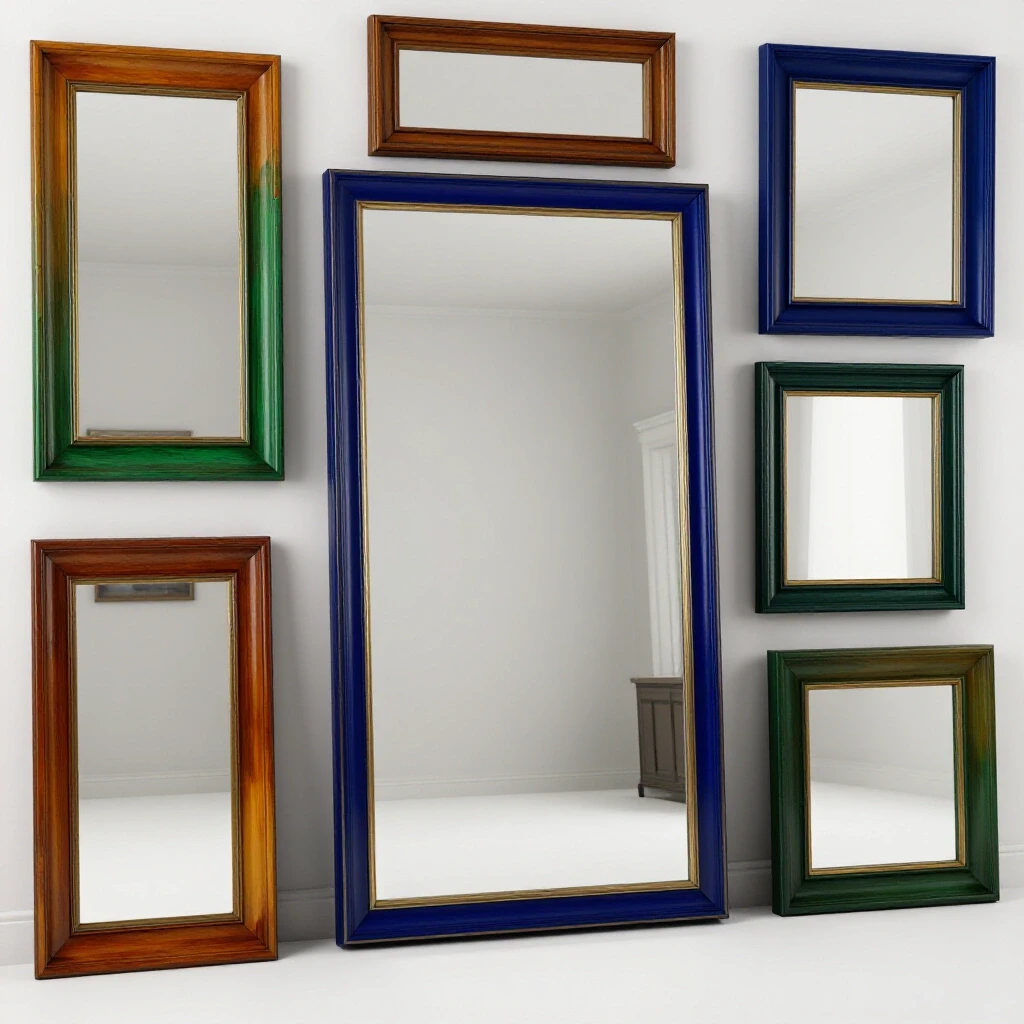
On a large master vanity, a single small mirror looks lost. To fix this, you can either go with one very large piece or two smaller pieces that are perfectly centered over each sink. The key is the distance between the items. If you have two mirrors, the gap between them should be smaller than the width of the mirrors themselves. This keeps the eye moving across the vanity as a single unit rather than jumping between disconnected objects.
Interestingly, the height of the ceiling plays a huge role here. In a room with 10-foot ceilings, a standard 30-inch tall mirror will look squat. You need to “draw the eye up” by selecting a taller piece or hanging the mirror slightly higher and using vertical light fixtures. This creates a sense of height that matches the architecture of the home.
Final Steps for a Successful Scale-Focused Remodel
As you move toward the end of your project, you will reach the “punch-list” phase. This is the final list of small tasks and corrections that need to be made before the contractor is paid in full. This is your last chance to fix any proportional errors.
If you walk into the room and something looks “off,” don’t ignore it. Check the measurements. Is the mirror centered on the sink? Is it level? Does it sit at the height you agreed upon? If the contractor deviated from the plan you provided, they are responsible for fixing it. However, if you didn’t provide a plan with specific dimensions, you may be on the hook for the rework costs.
- Review the Plan: Compare the finished installation to your original mock-up.
- Check the Lighting: Ensure the scale of the wall feature doesn’t create shadows on your face when the lights are on.
- Verify Clearances: Open all cabinet doors and medicine cabinets to make sure they don’t hit the faucet or the lights.
- Final Payment: Do not release the final 10% of the contract until every item on the punch-list is resolved to your satisfaction.
FAQ: Solving Common Proportional and Scaling Issues
How do I know if a mirror is too big for my bathroom? A mirror is likely too big if it touches the side walls, the backsplash, and the ceiling simultaneously. You generally want at least 2 to 4 inches of wall space visible on all sides to frame the piece. If it overlaps with the trim of a window or a door, it will look crowded and poorly planned.
What is the “Critical Path” in a bathroom remodel? The critical path is the sequence of events that dictates the project’s end date. For mirrors and wall features, the path is: Framing -> Rough-in Plumbing/Electric -> Drywall -> Tile -> Paint -> Finish Electrical -> Mirror Installation. If you miss a dimension at the “Framing” stage, it ripples down the entire path, causing delays.
Can I use a round mirror over a square vanity? Yes, mixing shapes can add visual interest. However, the scale remains vital. The widest part of the circle should still follow the 70-80% rule of the vanity width. If the circle is too small, it will look like a porthole rather than a functional design element.
How high should a mirror be hung above a backsplash? Standard practice is to leave 2 to 6 inches between the top of the backsplash and the bottom of the mirror. This prevents water from splashing directly onto the glass and allows for a clean line of wall or tile to be visible, which defines the two separate zones.
Why does my mirror look “off” even though it is centered on the wall? In many bathrooms, the sink is not perfectly centered on the wall due to plumbing constraints. If you center the mirror on the wall instead of the sink, the room will feel lopsided. Always center your wall features on the “functional element” (the sink or the furniture) rather than the physical wall.
What should I do if my contractor says a mirror size won’t work? Listen to their reasoning. Often, there is a structural stud or a vent pipe in the way that prevents a certain placement. Ask for a “probe” to verify the obstruction. If it’s a real issue, you may need to adjust the size of the piece or its horizontal placement.
How do I handle a dispute if the mirror was installed at the wrong height? Refer back to your written scope of work or the dimensioned drawings you provided. If the contractor has a signed document showing the agreed-upon height and they missed it, it is their responsibility to fix it. If no written plan existed, you may have to negotiate a change order to cover the labor of moving it.
Is custom-sized glass worth the extra cost? If you have a non-standard vanity size or unique architectural features, custom glass is often the only way to achieve the correct proportions. While it has a longer lead time (often 3-5 weeks), the visual harmony it provides usually outweighs the frustration of trying to make a “stock” size fit a space it wasn’t designed for.
(This article was written by one of our staff writers, David Langford. Visit our Meet the Team page to learn more about the author and their expertise.)