Common Warning Signs of Old Furnace Problems (Expert Guide)

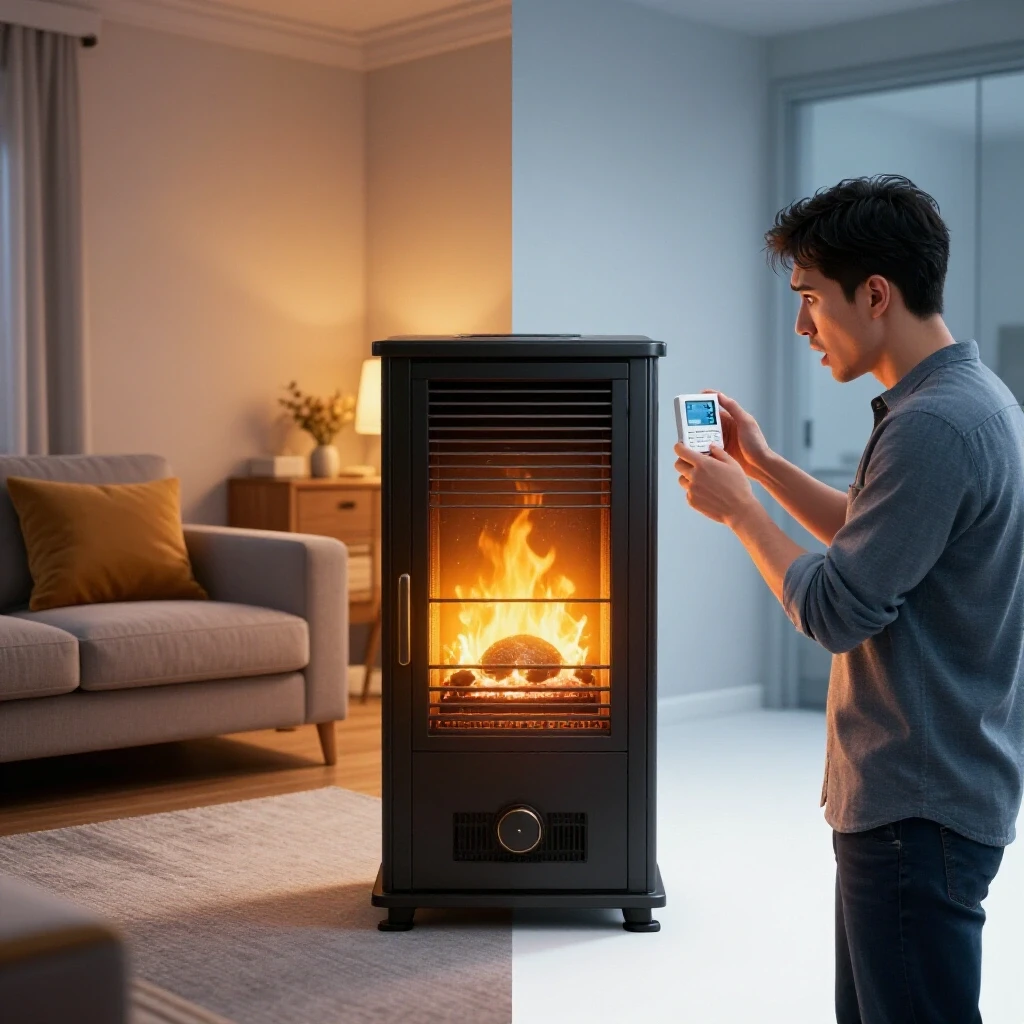
Bringing up layering is a concept most of us understand when we step outside on a crisp autumn morning. We put on a base layer, a sweater, and perhaps a shell to keep the wind at bay. In my 17 years as a facilities technician, I have learned that maintaining an older home requires a similar mindset. We aren’t just looking at a single machine in the basement; we are looking at how the entire structure retains warmth and how that warmth begins to falter as a legacy heating system nears the end of its functional life. I have spent nearly two decades tracking thermal failures and moisture intrusions in buildings that have seen a century of seasons. When a primary heat source starts to struggle, the house tells a story through subtle shifts in air movement, sound, and comfort levels.

Recognizing Environmental Shifts in Legacy Properties
Environmental shifts refer to the noticeable changes in the indoor climate, such as fluctuating temperatures or humidity levels, that occur when a heating system is no longer operating at peak efficiency.
In older homes, the relationship between the structure and the heat source is a delicate balance. When I walk into a property, the first thing I check is the consistency of the air. A system that is beginning to decline often creates “pockets” of air. You might find that the hallway is significantly cooler than the living room, or that the air feels unusually heavy or dry. These aren’t just quirks of an old house; they are often the first indicators that the central warmth provider is struggling to circulate air effectively.
Tracking Temperature Inconsistencies
Temperature inconsistency is the measurable variance in heat levels between different rooms or floors, often caused by a decline in a system’s ability to push air through a home’s ductwork.
During my years of facility logs, I noticed that homeowners often ignore a five-degree difference between rooms. However, in building science, this is a major red flag. If your thermostat is set to 70 degrees but your bedroom is hovering at 64, the system is likely losing its “throw”—the force required to move air to the furthest points of the house. I recommend using a simple digital thermometer to log these differences over a 48-hour period. If the gap widens during the coldest part of the night, your system is likely reaching its limit.
Monitoring Relative Humidity Fluctuations
Relative humidity is the amount of water vapor present in the air expressed as a percentage of the amount needed for saturation at the same temperature.
An aging heat source often struggles to manage the moisture balance within a home. In the winter, you might notice that the air feels “brittle” or that your wooden furniture is showing small gaps at the joints. This happens when a system runs for longer cycles to compensate for its age, effectively “baking” the moisture out of your living space. Conversely, if you see condensation on the bottom of your window panes, it may indicate that the air isn’t being circulated enough to prevent moisture from settling on cold surfaces.
The Science of Heat Distribution and Thermal Boundaries
Thermal boundaries are the physical barriers, such as insulation and air seals, that separate the conditioned interior of a home from the unconditioned outdoor environment.
To understand why an old heater fails, we have to look at the “stack effect.” This is a building science principle where warm air rises and escapes through the top of the house, pulling cold air in through the basement or crawlspace. When a heating system is young and strong, it can overcome this pressure. As it ages, it loses that battle. I have spent countless hours in crawlspaces tracking these air leaks. If you feel a draft near your floorboards, it’s not just a gap in the wood; it’s a sign that your heat source isn’t providing enough positive pressure to keep the cold air out.
Understanding Convective Loops
A convective loop is a circular current of air created when warm air rises and cool air falls within a single room, often caused by poor heat distribution or lack of insulation.
In older properties, you can actually “see” these loops if you look at how dust settles. If you notice dark “ghosting” lines on your carpets near the walls, that is often the result of a convective loop. The aging system isn’t moving air fast enough, so the air cools quickly against the exterior wall, drops to the floor, and filters through the carpet fibers, leaving dust behind. This is a classic sign that the air velocity from your vents has dropped below the necessary threshold for a healthy thermal envelope.
Assessing Thermal Bridging
Thermal bridging occurs when a more conductive material allows heat to bypass the insulation, creating a direct path for warmth to escape the building.
I often use the analogy of a bridge over a river. Just as a bridge allows cars to cross water, a wall stud or a metal window frame allows heat to “cross” your insulation. When your heating system is in decline, these bridges become much more apparent. You might notice that certain spots on the wall feel ice-cold to the touch. This is because the system can no longer provide enough “over-heat” to compensate for the energy being sucked out through the building’s structural members.
| Symptom | Observation | Potential Root Cause |
|---|---|---|
| Frequent Cycling | System turns on and off every 5-10 minutes. | Thermostat location or loss of system capacity. |
| Auditory Rattling | Metal-on-metal sounds when the air starts moving. | Loose ductwork or aging blower components. |
| Visual Dust Soot | Fine gray powder near supply registers. | Filtration bypass or aging internal surfaces. |
| Thermal Gaps | Rooms furthest from the unit are consistently cold. | Reduced air velocity and pressure. |
Auditory and Visual Cues of a System in Transition
Auditory and visual cues are the non-technical sounds and sights, such as clanking or dust buildup, that a homeowner can use to gauge the health of their heating system.
In my 17 years, I’ve learned to “listen” to a house. A healthy system has a predictable, rhythmic hum. When a system is aging, that hum changes. You might hear a “thump” when the air starts moving or a high-pitched whistle in the vents. These sounds are the system’s way of telling you that the mechanical tolerances have shifted. Visually, keep an eye on your air filters. If you find you are changing them twice as often because they are coated in a fine, gray ash-like dust, the system is likely working harder than it was designed to.
Identifying Unusual Noises
Unusual noises are sounds that deviate from the standard operational hum of a mechanical system, often indicating wear on moving parts or shifts in structural integrity.
- Banging or Clanking: This often suggests that the metal components are expanding and contracting unevenly, a common trait in legacy units.
- Whistling: This usually indicates a pressure imbalance. The system is trying to pull in more air than the intake can provide, creating a vacuum effect.
- Screeching: This is almost always a sign of friction in the air-moving components, suggesting that the system is under high physical stress.
Recognizing Air Quality Changes
Air quality changes refer to the increase in airborne particulates or shifts in odor that occur when a heating system’s internal surfaces begin to degrade.
One of the most common complaints I hear from owners of older homes is that the house feels “dustier” than it used to. While some of this is just the nature of an old building, a significant portion is often due to the internal degradation of the heating unit. As the components age, they can shed microscopic particles into the airstream. If you notice a “metallic” smell when the heat first kicks on, that is a sign that the system is struggling to reach its operating temperature efficiently.
Tools for Homeowner-Led Thermal Audits
A thermal audit is a systematic inspection of a home to determine where energy is being lost and how the heating system is performing relative to the building envelope.
You don’t need to be a professional to perform a basic diagnostic check on your home. I always recommend a few key tools that provide objective data. By using these, you move from “guessing” that the house feels cold to “knowing” exactly where the failure points are. This data is invaluable if you eventually need to call in a professional, as it allows you to provide a clear history of the problem.
- Infrared Thermal Camera: These have become much more affordable. You can plug one into your smartphone to see “heat leaks” around windows and doors.
- Digital Hygrometer: This measures the humidity in the air. Keep one in the basement and one in the main living area to track moisture swings.
- Non-Contact Laser Thermometer: This allows you to check the temperature of the air coming directly out of the vents.
- Smoke Pen or Incense Stick: Use this to track air currents. Hold it near a window or an outlet; if the smoke blows sideways, you have a draft.
Simple Enhancements for Seasonal Comfort Management
Seasonal comfort management involves using non-mechanical methods, such as draft blockers or thermal curtains, to maintain a stable indoor temperature and reduce the load on the heating system.
When I managed large facilities, we didn’t always replace a system the moment it showed age. We looked for ways to support it. For a homeowner, this means “lightening the load.” If your system is struggling, you can help it by addressing the “low-hanging fruit” of heat loss. This isn’t about fixing the machine; it’s about fixing the environment the machine lives in.
Implementing Draft Control
Draft control is the process of sealing small gaps in the home’s envelope to prevent the unwanted exchange of indoor and outdoor air.
- Draft Snakes: These are long, fabric tubes filled with sand or dried beans. Placing them at the base of exterior doors can stop a significant amount of cold air infiltration.
- Window Film: Applying a clear plastic heat-shrink film over older, single-pane windows can add an extra layer of “dead air” space, acting as a secondary thermal barrier.
- Outlet Gaskets: Small foam inserts that go behind your electrical outlet plates can stop cold air from being pulled out of the wall cavities.
Utilizing Thermal Drapery
Thermal drapery consists of heavy, multi-layered curtains designed to provide an additional R-value to window openings, reducing radiant heat loss.
In my experience, a good set of thermal curtains can be as effective as a minor repair. By closing them at sunset, you are essentially “insulating” the glass. This prevents the “cold-wall effect,” where the warm air in your room hits the cold glass, cools down, and drops to the floor, creating a draft. This simple craft-based solution can reduce the number of times your aging system needs to cycle during the night.
DIY vs. Professional Observation Boundaries
Observation boundaries are the limits within which a homeowner can safely diagnose and monitor their home systems before a professional intervention is required.
It is vital to know when to stop. As a technician, I’ve seen many well-intentioned homeowners try to “tweak” things they shouldn’t. Your role as a prevention-focused homeowner is to be the “detective.” You gather the clues—the sounds, the temperatures, the dust levels. You do not, however, need to open the cabinet of the machine itself. My rule of thumb is simple: if it requires a tool to open a panel, it is likely time to transition to a professional.
| Activity | Homeowner Scope | Professional Scope |
|---|---|---|
| Air Flow | Checking vent registers for dust. | Measuring CFM (Cubic Feet per Minute) at the source. |
| Temperature | Logging room-to-room variances. | Calibrating internal sensors and limits. |
| Sound | Identifying the location of a rattle. | Disassembling components to find mechanical play. |
| Filtration | Changing standard filters monthly. | Cleaning internal coils or air-moving assemblies. |
Building a Multi-Year Prevention Program
A prevention program is a long-term strategy for home maintenance that prioritizes regular monitoring and small, incremental improvements to avoid sudden system failures.
Maintaining an older home is a marathon, not a sprint. I recommend keeping a “Home Log Book.” Every November, take a few hours to walk through your property with your thermometer and your smoke pen. Note any new drafts or sounds. By tracking these changes year-over-year, you can predict when your system will eventually need replacement, allowing you to budget for it rather than being surprised by a failure in the middle of a blizzard.
- Annual Thermal Map: Record the temperature of every room on a day when it is below 30 degrees outside.
- Filter Audit: Note the condition of your filter every time you change it. Is it gray? Is it oily? Is it dry?
- Vent Inspection: Use a flashlight to look as far into your supply vents as possible. Look for standing dust or debris.
Managing Repair Cost Progression
Repair cost progression is the predictable increase in the frequency and expense of maintaining an aging system as its components reach the end of their service life.
In the first 10-12 years of a system’s life, costs are usually minimal—mostly filters and cleaning. Once you hit the 15-20 year mark, the “curve” steepens. You may find that while the system still runs, the cost of the energy it wastes exceeds the cost of a monthly payment on a new unit. I always tell homeowners: “Don’t just look at the repair bill; look at the utility bill.” If your heating costs are rising by 10% every year despite the weather being the same, your system is “taxing” you for its age.
Conclusion: Next Steps for the Proactive Homeowner
The key to avoiding the stress of a sudden mechanical failure is early detection. By shifting your focus from the machine to the environment, you can spot the warning signs of an aging heating system long before it stops working. Start by purchasing a few basic diagnostic tools, like a digital thermometer and a hygrometer. Spend an evening tracking the air currents in your home and logging the temperature in each room.
Once you have your baseline data, implement simple, non-mechanical fixes like draft snakes and thermal curtains to support the system you have. This proactive approach not only keeps you more comfortable but also gives you the most valuable asset in home maintenance: time. With time, you can research your options, save for future upgrades, and ensure that your legacy property remains a warm and safe sanctuary for years to come.
FAQ: Understanding Aging Home Heating
How can I tell if my heating system is too old without being a technician? You can monitor the “behavior” of your home rather than the machine. Look for uneven temperatures between rooms, a sudden increase in dust, or a change in the sounds the system makes when it starts up. If your utility bills are rising while your comfort is decreasing, the system is likely nearing the end of its lifespan.
What is the most common sign that a system is struggling to move air? The most common sign is “ghosting” or dark streaks on carpets and walls. This happens because the air isn’t moving fast enough to stay warm, causing it to drop and deposit dust as it hits cold surfaces.
Are noisy vents always a sign of a major problem? Not necessarily. Whistling often means a filter is clogged or a vent is blocked. However, persistent banging or metal clanking usually indicates that the system’s internal components are expanding and contracting under stress, which is a common sign of age.
How often should I change my air filters in an older home? In an older home, I recommend checking your filters every 30 days. Older systems often have more “bypass” air, meaning they pull in more dust from the wall cavities and basement than newer, sealed systems.
Can a drafty window actually damage my heating system? It won’t damage it physically, but it forces the system to run longer cycles. This “shortens the clock” on the mechanical parts, leading to faster wear and tear. Sealing drafts is the best way to extend the life of an aging unit.
What is a “convective loop” and why does it matter? A convective loop is when warm air rises to the ceiling, cools against a window or wall, and then sinks to the floor. This creates a constant drafty feeling even if the heat is on. It matters because it shows your system isn’t circulating air effectively.
Is it normal for the air to be very dry in the winter? Some dryness is normal, but an aging system that runs long, hot cycles will strip more moisture from the air. If you notice your wood floors creaking more or your skin feeling unusually dry, your system may be overworking.
What should I do if one room is always colder than the others? First, check the “throw” of the air from the vent using a tissue. If the tissue doesn’t flutter strongly, the system is losing pressure. You can use a thermal curtain in that room to help retain what little heat is getting there.
Does a “metallic” smell mean I should turn the system off? A brief metallic smell during the first run of the season is common dust burning off. However, if that smell persists or happens every time the heat kicks on, it means the system is struggling to reach its stable operating temperature.
How can a thermal camera help me as a homeowner? A thermal camera allows you to see “invisible” problems. You can see exactly where heat is leaking out of your house, which tells you if your heater is fighting a losing battle against poor insulation or gaps in the building envelope.
(This article was written by one of our staff writers, Daniel Whitaker. Visit our Meet the Team page to learn more about the author and their expertise.)