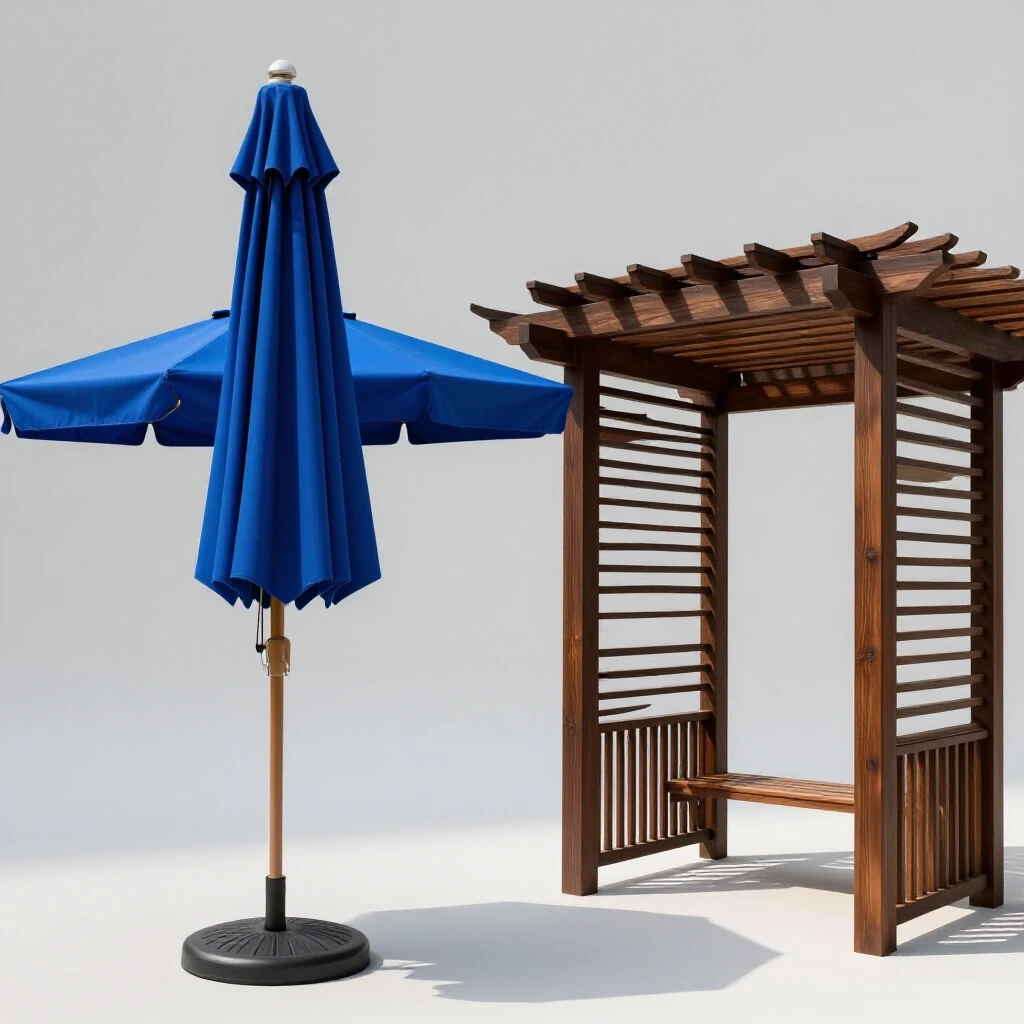
Patio Umbrella vs Pergola: Which Shade Solution to Buy (Guide)

Adding a shade structure to your outdoor space is more than just a style choice. It is a strategic move for energy efficiency. When you block direct sunlight from hitting your home’s exterior walls and glass doors, you can lower the heat inside. This reduces the load on your air conditioner. Over my 13 years in supply chain analysis, I have seen how the right materials can pay for themselves through these energy savings. Choosing between a portable fabric system and a permanent architectural frame requires a look at technical specs. You need to know if a higher price today means fewer repairs tomorrow.
Understanding Technical Standards for Outdoor Shade Materials
Technical standards ensure materials can withstand outdoor stressors like UV radiation, wind, and moisture. Organizations like ASTM International provide benchmarks for tensile strength and colorfastness. Understanding these metrics helps homeowners determine if a material will last five years or twenty before failing under environmental pressure.
When I evaluate home goods, I start with the material science. For fabric-based shade, the most important metric is the “solution-dying” process. In standard fabrics, color is printed on the surface. In solution-dyed acrylic, the pigment is added while the fiber is still liquid. This makes the color part of the fiber itself. According to ASTM G154 standards for UV exposure, solution-dyed fabrics can last ten times longer than basic polyester before fading.
For permanent structures, we look at the Janka hardness scale or metal gauge thickness. If you choose a wood frame, the Janka rating tells you how well it resists dents and scratches. For example, Western Red Cedar has a lower Janka rating than Teak, but it contains natural oils that resist rot. In my own home, I once chose a cheap pine structure. Within three years, the wood twisted because it lacked the dimensional stability found in higher-grade materials.
- ASTM D5034: Tests the breaking strength of fabrics.
- AATCC 16.3: Measures how well a material keeps its color in sunlight.
- Janka Hardness: Measures the force needed to embed a steel ball into wood.
- Powder Coating Thickness: Measured in mils (1/1000 of an inch) for metal durability.
Comparing Fabric Durability and Structural Integrity
This comparison looks at how flexible textiles and rigid frameworks handle mechanical stress. Fabric solutions rely on density and weave, while permanent structures depend on material hardness and corrosion resistance. Evaluating these factors allows for a clear trade-off analysis between portability and long-term stability.
In my professional work, I use “GSM” or grams per square meter to judge fabric quality. A high-end fabric shade usually sits between 280 and 320 GSM. Anything lower than 200 GSM is likely to tear in a moderate wind. I recently compared two different fabric models for a property. One used a 180 GSM polyester, and the other used a 300 GSM acrylic. After one season of salt air and high sun, the polyester felt brittle, while the acrylic remained flexible.
Permanent structures made of aluminum or wood offer a different kind of strength. Aluminum frames should be “6063-T6” grade. This is an architectural alloy that handles wind loads better than thinner “big box” metals. If you are looking at wood, the National Association of Home Builders (NAHB) notes that cedar and redwood are the gold standards for moisture resistance.
Side-by-Side Material Performance Specifications
| Material Type | UV Resistance (Hours) | Maintenance Cycle | Expected Lifespan |
|---|---|---|---|
| Solution-Dyed Acrylic | 1,500 – 2,000 | Annual Cleaning | 8-12 Years |
| Standard Polyester | 100 – 200 | Frequent | 1-3 Years |
| Powder-Coated Aluminum | 5,000+ | Bi-annual Rinse | 20+ Years |
| Pressure-Treated Pine | N/A | Annual Sealing | 10-15 Years |
| Western Red Cedar | N/A | 2-3 Year Staining | 20+ Years |
Lifecycle Costing and Long-Term Maintenance
Lifecycle costing includes the initial purchase price plus the recurring costs of cleaning, repairs, and replacements over fifteen years. Maintenance cycles vary significantly between fabric-based systems and permanent wood or metal installations. Analyzing these timelines prevents unexpected expenses and labor-intensive upkeep tasks.
I often tell my clients that the “cheaper” option is usually the most expensive over a decade. A portable fabric shade might cost $500, but if you replace it every three years, you spend $2,500 over 15 years. A permanent metal structure might cost $4,000 upfront, but with almost zero maintenance, it becomes the better value by year ten.
Maintenance for fabric involves removing bird droppings and sap to prevent mold. If you leave a fabric shade closed while wet, you invite “mildew bloom.” For wood structures, the maintenance is more physical. You must sand and reseal the wood to prevent UV graying and water intrusion. In my experience, homeowners often underestimate the labor cost of staining a large overhead structure.
- Initial Purchase Price: The “sticker price” at the store.
- Installation Labor: Professional assembly vs. DIY setup.
- Consumables: Cleaners, sealants, and replacement covers.
- Disposal Costs: The cost of removing and hauling away failed materials.
Environmental Sensitivity and Site Performance
Environmental sensitivity shows how a shade product handles weather like wind, salt spray, or heavy snow. Some materials are designed to be moved during storms, while others must stay in place year-round. Matching the material to the local climate is essential for long-term durability and safety.
Wind is the primary enemy of outdoor materials. A portable shade acts like a sail. If it is not retracted in winds over 20 mph, the frame can snap. I have analyzed many warranty claims where the “tensile strength” of the metal was blamed, but the issue was actually “wind lofting.” Permanent structures are rated for specific wind loads, often up to 90 or 100 mph, depending on how they are anchored.
If you live near the ocean, salt spray is your biggest concern. Aluminum with a high-quality powder coating is the best choice here. Avoid steel frameworks, even if they are “galvanized,” as salt will eventually find a way to the core metal. For inland areas with heavy snow, a permanent structure must have a “snow load” rating. This tells you how many pounds per square foot the roof can hold before it buckles.
- Wind Rating: Measured in MPH; fabric is usually 15-25 MPH, structures 80+ MPH.
- Corrosion Resistance: Salt spray test hours (ASTM B117).
- Snow Load: Pounds per square foot (PSF).
- Thermal Expansion: How much a material grows or shrinks in heat.
Technical Sourcing and Supply Chain Insights
Sourcing high-quality materials requires looking past the brand name to the manufacturer’s specs. Supply chains for outdoor goods are often split between mass-market imports and specialized architectural grade products. Knowing the difference between “commercial grade” and “residential grade” helps you avoid overpaying for marketing.
When I source materials, I look for “vertical integration.” This means the company that makes the frame also makes the fabric or at least controls the spec. Many expensive brands simply buy cheap components and put their logo on them. To avoid this, ask for the “technical data sheet” or “TDS.” A real manufacturer will have a document listing the exact alloy of the metal or the denier of the fabric.
I once worked on a project where we had to choose between a high-end composite material and traditional wood. The composite had a higher upfront cost but a 25-year warranty against rot. By looking at the supply chain, we found that the composite used recycled plastics and wood fibers, making it much more stable in a humid climate. This saved the homeowner from having to replace the structure due to termite damage later on.
Performance Comparison Matrix
- Fabric Weight: Look for 300+ GSM for longevity.
- Frame Thickness: Aluminum should be at least 2.0mm thick for major supports.
- Hardware: 304 or 316 Stainless Steel is required for all outdoor fasteners.
- Finish: “Marine grade” finishes are worth the 15% price premium in coastal areas.
Practical Steps for Evaluating Your Shade Choice
To make a confident decision, you need a systematic way to compare your options. I recommend using a “Trade-off Scoring Matrix.” Give each category a score from 1 to 5 based on what matters most to your lifestyle. If you move every few years, portability scores high. If you want a “set it and forget it” solution, durability wins.
- Get Material Samples: Request a fabric swatch and a piece of the frame material.
- The Scratch Test: Use a key to scratch the frame sample. If the color comes off easily, it is painted, not powder-coated.
- The Water Bead Test: Pour water on the fabric. It should bead up and roll off. If it soaks in, the “Durable Water Repellent” (DWR) coating is poor.
- Check the Hardware: Look at the bolts and screws. If they are silver and shiny, they might be zinc-plated (which rusts). If they are dull gray or marked “SS,” they are stainless steel.
- Review the Warranty: Does it cover “fading” or just “structural failure”? A 10-year warranty that doesn’t cover sun damage is useless for a shade product.
Final Decision Framework
Choosing between a flexible, movable shade and a fixed, permanent structure comes down to your “holding period.” If you plan to stay in your home for more than seven years, the permanent architectural route usually offers a better return on investment. The maintenance is more predictable, and the structural integrity adds actual value to the property.
However, if you enjoy changing your outdoor layout or have a smaller budget, a high-quality portable system is excellent. Just ensure you are buying “commercial-grade” specs. Look for solution-dyed fabrics and thick-walled aluminum poles. By focusing on the technical specs rather than the aesthetic, you ensure your investment survives the elements and keeps your home cool for years to come.
Frequently Asked Questions
What is the best fabric for long-term sun exposure? Solution-dyed acrylic is the industry standard for durability. Unlike polyester, the color is part of the fiber, which prevents fading. It also has a natural resistance to mold and mildew. Look for brands that offer at least a 5-year warranty against fading.
How do I know if a metal frame will rust? Check the material and the finish. Aluminum does not rust like steel does. If the frame is steel, it must be “hot-dip galvanized” or “e-coated” before being powder-coated. Always check that the assembly hardware is stainless steel, as that is where rust usually starts.
Can a shade structure really lower my electric bill? Yes. By shading windows and walls, you prevent “solar heat gain.” This can lower the surface temperature of your home’s exterior by up to 20 degrees. This means your air conditioner doesn’t have to work as hard to cool the interior.
What wind speed can a standard portable shade handle? Most residential models are rated for 15 to 25 mph. If the wind is strong enough to make a flag snap, you should retract your shade. Permanent structures are usually engineered for 80 mph or more, but always check the local building codes.
Is wood or aluminum better for a permanent structure? Aluminum is lower maintenance because it won’t rot, warp, or attract insects. Wood, like cedar or teak, offers a natural look but requires staining every 2-3 years. Aluminum is often better for modern homes, while wood fits traditional styles.
What does “GSM” mean in fabric specs? GSM stands for Grams per Square Meter. It measures the density and weight of the fabric. For outdoor shade, a GSM of 280 to 320 is considered high quality. Lower GSM fabrics are thinner and more likely to tear or sag over time.
How often should I clean my outdoor shade? You should rinse it with clear water once a month to remove dust and pollen. A deeper cleaning with mild soap should be done once a year. This prevents organic matter from turning into permanent stains or mold.
Are “high-tech” composite materials worth the cost? Composites made of wood fiber and plastic are excellent for durability. They don’t need staining and won’t rot. If you live in a very wet or humid climate, the extra upfront cost is worth it to avoid the maintenance of real wood.
How can I tell if a powder coating is high quality? High-quality powder coating feels slightly textured and is very hard to scratch. Ask if the manufacturer uses “Qualicoat” standards. This ensures the metal was cleaned and prepped correctly before the coating was applied.
What is the most common reason these products fail? For portable shades, it is wind damage from being left open during a storm. For permanent structures, it is “fastener failure” where cheap screws rust and cause the joints to weaken. Investing in better hardware and being diligent with wind safety prevents most issues.
(This article was written by one of our staff writers, Andrew Morrison. Visit our Meet the Team page to learn more about the author and their expertise.)