Paver Patio Cost Breakdown & Contractor Comparison (Pricing Guide)

Discussing investment in outdoor living spaces requires a shift in perspective from simple aesthetics to long-term asset management. As a financial planner who has meticulously logged every nail and stone in my own home renovations over the last twelve years, I have learned that the gap between a contractor’s initial estimate and the final ledger can be wide. When I planned my first major backyard project, I assumed the price on the paper was the price I would pay, but a 15% variance in material delivery and unexpected soil stabilization needs taught me otherwise.
Establishing a Financial Foundation for Hardscaping
A financial foundation for outdoor projects involves setting a strict spending ceiling based on the current market value of your home and your available liquid assets. This phase prevents the “lifestyle creep” that often occurs when homeowners choose premium materials without considering the total impact on their debt-to-income ratio or long-term savings goals.
Before you look at a single stone sample, you must determine your project’s “value ceiling.” In my professional practice, I advise clients to limit total outdoor improvements to 5% to 10% of their home’s total value. If your home is worth $400,000, spending more than $40,000 on a backyard renovation may lead to a situation where you are “over-improved” for your neighborhood. This means you likely won’t see a dollar-for-dollar return when you eventually sell.
I use a simple “Sinking Fund” model for my own home projects. Instead of relying on high-interest credit, I allocate a set amount into a high-yield savings account for 18 months prior to the build. This allows the interest to work in my favor rather than the bank’s. When you have a cash-backed home renovation budget, you gain significant leverage during contractor negotiations because you can offer flexible payment schedules that align with project milestones.
Breaking Down the Line-Item Expenses of Stone and Brick Surfacing
A detailed cost breakdown guide is the only way to avoid the mid-project panic that sets in when funds run low. This involves separating the project into distinct categories: site preparation, base materials, surface units, and professional installation fees to ensure every dollar is accounted for before the first shovel hits the ground.
When I analyzed my own contractor quotes, I realized that the “surface” (the actual pavers) only accounted for about 20% to 30% of the total bill. The real expense lies beneath the surface. To build a realistic remodeling expense tracker, you must account for the “invisible” layers. This includes the geotextile fabric that prevents weeds, the six inches of compacted gravel for the sub-base, and the one inch of bedding sand.
Material Selections and Their Impact on the Bottom Line
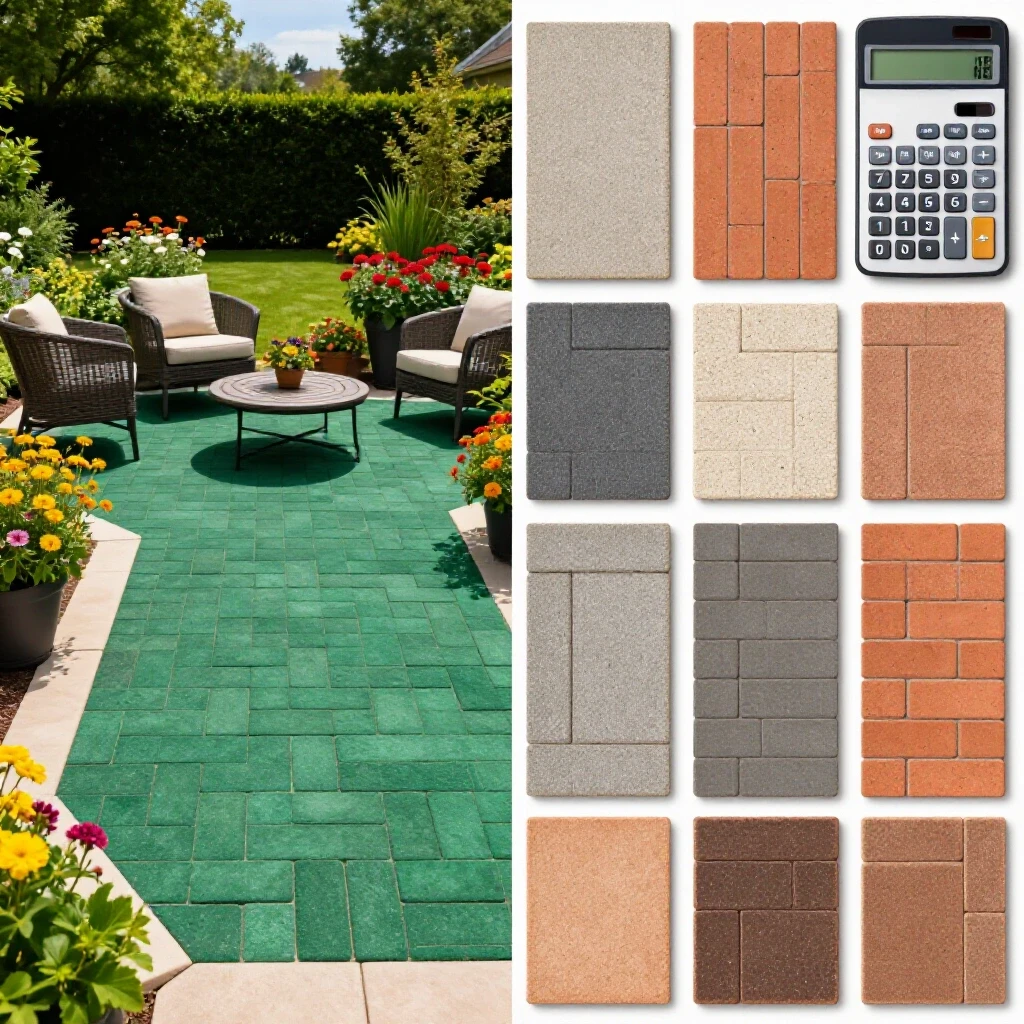
Material selection is the primary lever you can pull to adjust your total project cost without compromising structural integrity. Choosing between manufactured concrete units, clay bricks, or natural flagstone creates a ripple effect throughout your entire financial plan, influencing both the purchase price and the labor required for installation.
- Concrete Pavers: Typically range from $8 to $15 per square foot installed. These are uniform, making them the fastest and most cost-effective to lay.
- Brick Pavers: Generally cost between $14 and $20 per square foot. They offer a classic look but require more precision in the base layer to prevent shifting.
- Natural Stone (Flagstone or Slate): These are the premium option, often exceeding $25 per square foot. Because the pieces are irregular in thickness and shape, the labor hours required to fit them together like a puzzle will skyrocket.
| Material Type | Material Cost (per sq. ft.) | Labor Complexity | Estimated Total (per sq. ft.) |
|---|---|---|---|
| Basic Concrete | $3.00 – $6.00 | Low | $8.00 – $15.00 |
| Tumbled Brick | $5.00 – $9.00 | Medium | $14.00 – $22.00 |
| Natural Stone | $10.00 – $18.00 | High | $25.00 – $45.00 |
Analyzing Labor Rate Variables Across Regional Markets
Labor costs are not static and are heavily influenced by the U.S. Bureau of Labor Statistics’ regional wage data and the local demand for skilled tradespeople. Understanding these multipliers allows you to adjust national averages to fit your specific zip code, preventing the frustration of receiving quotes that seem “too high” compared to online estimates.
In my experience tracking regional construction costs, labor usually commands 40% to 60% of the total project budget. If you live in a high-cost-of-living area like the Northeast or the West Coast, you should apply a 1.2x multiplier to any national average you find online. Conversely, homeowners in the Midwest or South might see a 0.85x or 0.9x adjustment.
I once worked with a client who moved from Ohio to New Jersey and was shocked that the same 400-square-foot project cost $5,000 more in their new location. This wasn’t “price gouging”; it was the reality of local labor markets and insurance requirements. When comparing quotes, look for the “man-hour” estimate. A reputable contractor should be able to tell you how many people will be on-site and how many days the job will take.
Why Initial Quotes Often Differ from Final Expenditures
The “Actual vs. Budget” variance is a common trap in financial planning for homeowners, usually caused by unforeseen site conditions or “scope creep.” Understanding the difference between a fixed-price contract and a time-and-materials agreement is essential for protecting your savings from unexpected shifts in project requirements.
One of the biggest hidden costs I’ve encountered in my personal remodeling spreadsheets is “soil disposal and site access.” If a contractor cannot get a skid-steer loader into your backyard because of a narrow gate, they will have to move tons of earth by hand. This can add $500 to $1,500 in labor costs that aren’t always apparent in a preliminary walkthrough.
Another variable is drainage. If your yard doesn’t slope away from your foundation at a rate of at least one inch for every four feet, you will need to invest in a French drain or a dry well. I always advise adding a 15% “Contingency Buffer” to the final quote. If the contractor says the project will cost $10,000, I set aside $11,500. If we don’t use it, that money stays in my brokerage account.
Evaluating the Cost-to-Value Ratio for Outdoor Flooring
The cost vs value home improvement calculation helps you determine if a project is a wise financial move or a purely lifestyle-driven expense. By analyzing data from industry reports, you can estimate how much of your initial spend will be recaptured when the property is eventually appraised for sale.
According to Remodeling Magazine’s recent data, high-quality outdoor hardscaping typically recovers between 60% and 75% of its cost at resale. This is considered a strong “lifestyle” investment. Unlike a kitchen remodel, which might return 80% but requires constant maintenance, a well-installed stone surface is durable and adds “curb appeal” that can help a home sell faster in a competitive market.
However, you must be wary of the “diminishing returns” threshold. If every house in your neighborhood has a simple 10×10 concrete slab and you install a 500-square-foot multi-tiered stone terrace with built-in lighting, you are unlikely to recover that premium. You are effectively paying for your own enjoyment, which is fine, as long as you don’t expect the next buyer to pay for it.
A Spreadsheet Framework for Tracking Outdoor Project Spending
A robust remodeling expense tracker is the best tool for maintaining financial discipline during a construction project. By logging every expense in real-time, you can see exactly where you stand against your initial projections and make informed decisions if one area of the project goes over budget.
I recommend a simple four-column structure for your project ledger:
- Category (e.g., Excavation, Base Gravel, Pavers, Sand, Labor)
- Budgeted Amount (The quote you agreed to)
- Actual Amount (What you actually paid)
- Variance (The difference between the two)
My Personal Project Ledger Example
In my last project, I tracked a 300-square-foot installation. Notice how the small “extra” items added up quickly.
| Item | Budgeted | Actual | Variance |
|---|---|---|---|
| Excavation & Haul-off | $1,200 | $1,550 | +$350 |
| 21A Crushed Stone Base | $900 | $900 | $0 |
| Concrete Pavers | $2,400 | $2,650 | +$250 |
| Polymeric Sand & Edging | $300 | $420 | +$120 |
| Professional Labor | $4,000 | $4,000 | $0 |
| Total | $8,800 | $9,520 | +$720 |
The $720 overage was due to a price increase in pavers between the time of the quote and the delivery, plus an extra load of soil that had to be trucked away. Because I had my 15% contingency fund ready, this didn’t cause any financial stress.
Practical Steps to Protect Your Home Improvement Funds
Managing a renovation budget requires a proactive approach to contract management and payment scheduling. By following a strict financial framework, you can ensure that you only pay for completed work and that your contractor remains motivated to finish the project on time and within the agreed-upon price.
- Never pay more than 10% to 33% upfront. A large deposit is a red flag. Use these funds only for material procurement.
- Tie payments to specific milestones. For example, pay 30% after excavation and base preparation are complete, and the final 30% only after the site is cleaned and the joints are sanded.
- Get everything in writing. If you decide to change the pattern or add a small walkway mid-project, ask for a “Change Order” form. This prevents a surprise bill at the end of the month.
- Verify insurance. Ensure your contractor has active general liability and workers’ compensation insurance. If a worker is injured on your property and the contractor isn’t covered, your homeowner’s insurance—and your wallet—could be at risk.
Next Steps for Your Outdoor Renovation
The most important step you can take today is to start your “Project Discovery” phase without spending a dime. Open a spreadsheet and list your “Must-Haves” versus your “Nice-to-Haves.” Use the cost-per-square-foot ranges provided here to create a “Rough Order of Magnitude” (ROM) budget.
Once you have a number that fits within your 5% to 10% home value limit, start interviewing contractors. Ask for references from projects completed three to five years ago, not just last month. This will tell you how their work—and the base they built—stands up over time. By staying disciplined and data-driven, you can create a beautiful outdoor space that enhances your lifestyle without compromising your financial future.
FAQ
What is the average cost per square foot for a professional paver installation? Most homeowners should budget between $10 and $25 per square foot for a complete professional installation. This range covers everything from basic concrete units to premium natural stone. Factors like site accessibility, soil type, and the complexity of the pattern will determine where your specific project falls within that range.
How much should I set aside for a contingency fund? I recommend a 15% to 20% contingency buffer. For outdoor projects, most overruns occur during the excavation phase when contractors discover poor soil quality, hidden stumps, or old debris that must be removed. Having this cash set aside prevents you from having to cut corners on the finishing materials later.
Does a new patio increase my property taxes? In many jurisdictions, permanent outdoor structures like patios are considered capital improvements. While they add value to your home, they may also trigger a slight increase in your property tax assessment. However, the impact is usually much lower than that of an interior addition or a finished basement.
Is it cheaper to use larger pavers or smaller ones? Larger pavers (like 12×24 or 24×24 units) can sometimes be faster to install, potentially lowering labor costs. However, they are also more prone to cracking if the base is not perfectly level. Smaller, modular pavers are more forgiving of slight ground movement and are often easier for contractors to handle, which can keep the labor bid stable.
How long does a typical installation take to complete? A standard 300 to 500-square-foot project usually takes three to five days of active work. This includes one day for excavation, one to two days for base preparation and compaction, and one to two days for laying the stones and finishing the joints. Weather delays are the most common cause of extended timelines.
What is the most expensive part of a hardscaping project? Labor and site preparation are almost always the most expensive components. Many homeowners focus on the price of the stone, but the “invisible” work—digging out six to eight inches of dirt, hauling it away, and bringing in tons of crushed stone—often accounts for more than half of the total invoice.
Can I save money by doing the excavation myself? While “sweat equity” can save you money, excavation is the most critical part of the project. If you don’t dig to the correct depth or achieve proper compaction, your expensive pavers will shift and sink within a year. Unless you have experience operating heavy machinery and understanding soil mechanics, this is a task best left to professionals.
What is the difference between “dry-laid” and “wet-laid” pavers? Dry-laid pavers are set on a bed of compacted gravel and sand, which allows for natural drainage and flexibility during freeze-thaw cycles. Wet-laid pavers are set in a bed of mortar over a concrete slab. Dry-laid is generally more cost-effective and easier to repair, making it the preferred choice for most residential budgets.
How do I know if a contractor’s quote is fair? The best way to verify a quote is to get at least three detailed bids that use the same material specifications. If one bid is significantly lower than the others, they are likely cutting corners on the base preparation or don’t carry proper insurance. A “fair” bid is one that aligns with regional labor averages and provides a clear line-item breakdown.
Should I choose a “fixed price” or “time and materials” contract? For a well-defined project like a patio, always insist on a fixed-price contract. This protects you from paying more if the contractor takes longer than expected. Time and materials contracts are better suited for complex renovations where the scope of work cannot be fully determined until the project begins.
(This article was written by one of our staff writers, Steven Fletcher. Visit our Meet the Team page to learn more about the author and their expertise.)