Porcelain vs Ceramic Tile Durability: Which Lasts Longer? (Guide)

Imagine walking into a kitchen where the floor looks exactly as it did the day it was installed, even after a decade of heavy foot traffic, dropped cast-iron pans, and the occasional plumbing leak. This level of performance is not a matter of luck. It is the result of selecting materials based on rigorous technical data rather than just a visual preference. As a supply chain analyst, I look at home materials through the lens of long-term value, focusing on how a product’s physical properties translate into daily resilience.
When I renovated my first property thirteen years ago, I faced the same dilemma many homeowners face today. I had to choose between two common kiln-fired materials for a high-traffic entryway. One was significantly more expensive upfront, while the other seemed like a bargain. To make the right choice, I stopped looking at the price tags and started looking at the ASTM International data sheets. I wanted to know which material would actually survive a busy household without chipping or staining.
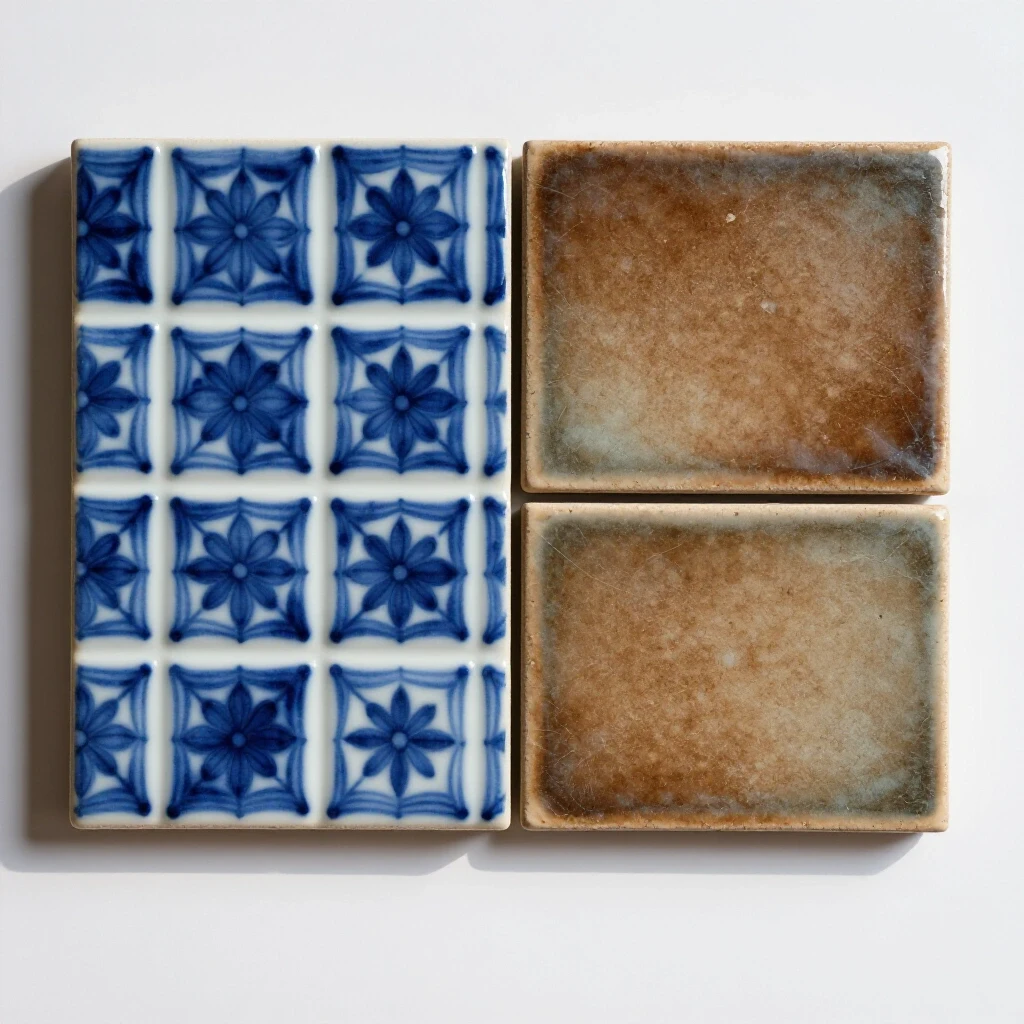
In my years of evaluating materials, I have found that the most expensive option is not always the best fit for every room. However, understanding the engineering behind these products allows you to make a strategic trade-off. By comparing density, moisture resistance, and surface hardness, you can determine exactly where to invest your budget for the highest return on durability.
Decoding Technical Standards for Kiln-Fired Surfaces
Technical standards like water absorption rates and density determine how a material handles moisture and pressure. These metrics separate standard clay products from high-density options. Understanding these figures helps you predict if a floor will crack under stress or resist deep stains over a decade of household use.
To understand the difference between these materials, we first have to look at how they are made. Both are composed of clay and other natural minerals, but the composition and firing process vary. High-density options, often referred to as porcelain, use a more refined kaolin clay and are fired at temperatures exceeding 2,200 degrees Fahrenheit. This intense heat causes a process called vitrification, where the material turns into a glass-like, non-porous solid.
Standard ceramic options are usually fired at lower temperatures. This results in a material that is less dense and more porous. While this makes the material easier to cut, it also means it is more susceptible to water damage and impact. When evaluating these materials, the most important number to look for is the water absorption rate, governed by the ASTM C373 standard.
- Impervious Materials: Have an absorption rate of 0.5% or less.
- Vitreous Materials: Have an absorption rate between 0.5% and 3.0%.
- Semi-Vitreous Materials: Have an absorption rate between 3.0% and 7.0%.
- Non-Vitreous Materials: Have an absorption rate of more than 7.0%.
In my own testing, I found that materials in the “impervious” category are the only ones suitable for areas prone to standing water or freezing temperatures. If you use a semi-vitreous material in a bathroom, any water that seeps through the grout can be absorbed into the body of the tile, eventually leading to structural failure or mold growth.
Side-by-Side Material Performance Specifications
Material performance specifications provide an objective way to compare how different products will age. By looking at breaking strength and wear ratings, you can move past marketing claims and see the actual engineering limits of a product. These specifications are the foundation of a data-driven purchasing decision.
The following table outlines the technical differences I look for when reviewing spec sheets for residential projects.
| Specification | Standard Ceramic | High-Density Porcelain |
|---|---|---|
| Water Absorption (ASTM C373) | 3.0% to 7.0% | < 0.5% |
| Breaking Strength (ASTM C648) | 200 – 250 lbs | 350 – 400+ lbs |
| Mohs Hardness Scale | 5 to 6 | 7 to 9 |
| PEI Wear Rating | Class 1 to 3 | Class 4 to 5 |
| Body Composition | Red or White Clay | Refined Kaolin/Feldspar |
| Manufacturing Process | Lower Temp / Lower Pressure | Higher Temp / Higher Pressure |
Building on this data, the breaking strength is particularly important for kitchens. In my second property, I installed a standard ceramic in the pantry. Within three years, a dropped jar of pickles caused a hairline fracture that eventually spider-webbed across three tiles. When I replaced that floor with a high-density porcelain, a similar impact left no mark at all. The higher breaking strength—often nearly double that of standard ceramic—provides a significant safety margin against daily accidents.
Impact Resistance and the PEI Scale
Impact resistance measures a tile’s ability to withstand dropped objects and abrasive wear without fracturing. This is often quantified by the PEI rating system, which ranks surface wear from light residential use to heavy industrial applications. Evaluating these ratings ensures your material choice matches the actual physical demands of your specific room.
The Porcelain Enamel Institute (PEI) rating is perhaps the most practical metric for a homeowner. It measures the abrasion resistance of the glaze. If you choose a material with a PEI rating that is too low for your traffic level, the surface will eventually dull and show “paths” where people walk most often.
- PEI 1: Light traffic (bathrooms where people walk barefoot).
- PEI 2: Moderate traffic (bedrooms).
- PEI 3: Normal residential traffic (all rooms of the home).
- PEI 4: High traffic (entryways, kitchens, and small commercial spaces).
- PEI 5: Heavy traffic (malls, airports, and heavy-duty commercial).
Interestingly, many people assume they need a PEI 5 for their home. In my experience, a PEI 4 is more than sufficient for even the busiest kitchens. The trade-off is often in the texture; higher PEI ratings sometimes result in a rougher surface that can be harder to clean. For most of my projects, I aim for a PEI 4 in the kitchen and a PEI 3 in the bathrooms to balance durability with ease of maintenance.
Analyzing Scratch Tolerance and Surface Hardness
Scratch tolerance is measured on the Mohs scale, which ranks minerals from 1 to 10 based on their ability to resist permanent marking. Higher ratings indicate a denser surface that can withstand abrasive grit, sand, and heavy foot traffic. This technical spec is vital for maintaining a pristine finish over time in homes with pets or outdoor access.
Surface hardness is what prevents your floor from looking “scuffed” after a few years. On the Mohs scale, a diamond is a 10, while talc is a 1. Most standard ceramics land around a 5 or 6, which is roughly the hardness of a steel knife blade. High-density porcelain usually hits a 7 or 8, making it harder than most common household metals and minerals.
This difference becomes critical if you live in an area with sandy soil. Sand is mostly quartz, which has a Mohs hardness of 7. If you have a ceramic floor with a hardness of 5, the sand trapped under your shoes will act like sandpaper, slowly grinding away the glaze. Over five years, this results in a permanent loss of shine. Because porcelain is harder than sand, it resists this abrasive wear much more effectively.
Long-Term Maintenance and Chemical Resistance
Maintenance profiles depend on how a material reacts to cleaning agents and acidic spills. Non-porous surfaces require less frequent deep cleaning and are less likely to harbor bacteria or permanent stains. A material’s chemical resistance rating indicates its long-term stability when exposed to standard household cleaners and common spills.
One of the biggest pain points I hear from homeowners is the struggle to keep floors looking clean. In my 13 years of tracking material performance, I have observed that the porosity of the material dictates the maintenance schedule. Because standard ceramic is more porous, it can absorb pigments from spilled wine, coffee, or even dirty mop water if the glaze is compromised.
- Porcelain: Naturally resistant to chemicals and staining due to its high density. It rarely requires sealing on the surface itself.
- Ceramic: The surface glaze is stain-resistant, but if the tile chips, the underlying clay body is highly absorbent and will stain permanently.
- Grout Considerations: Regardless of the tile type, the grout is the weakest link. I always recommend using high-performance epoxy or urethane grouts to match the durability of a high-density tile.
As a result of its density, porcelain is also more resistant to “thermal shock.” If you have a sunroom where the floor gets very hot in the afternoon and cools rapidly at night, porcelain is less likely to expand and contract to the point of cracking. This stability reduces the need for repairs over the 15-to-20-year lifecycle of the floor.
Why Higher Upfront Costs Don’t Always Guarantee Durability
Higher upfront costs are often associated with precision manufacturing and refined raw materials. However, a higher price does not always mean a material is “indestructible” in every context. Evaluating the real trade-offs involves looking at the specific manufacturing tolerances, such as whether the edges are rectified or pressed.
In the supply chain, we look at “rectification.” A rectified tile is one that has been mechanically finished on all sides to achieve exact dimensions. This allows for much thinner grout lines (as small as 1/16th of an inch). Non-rectified or “pressed” tiles have slightly rounded edges and more variation in size, requiring wider grout lines to hide the discrepancies.
While rectified porcelain costs more, it reduces the amount of grout exposed on your floor. Since grout is the part of the floor that requires the most maintenance, paying more for the material can actually lower your long-term cleaning costs. In my own home, I chose a rectified porcelain specifically to minimize grout maintenance, and ten years later, it remains one of the best ROI decisions I have made.
15-Year Maintenance and Life Cycle Outlay
A life cycle analysis compares the initial purchase price with the expected costs of cleaning, sealing, and potential repairs over a decade and a half. This perspective shifts the focus from the “check-out price” to the “total cost of ownership.” Often, a material that seems expensive today saves thousands of dollars in replacement costs later.
| Expense Category | Standard Ceramic (15 Years) | High-Density Porcelain (15 Years) |
|---|---|---|
| Initial Material Cost | $ (Lower) | $$ (Higher) |
| Sealing Requirements | Moderate (if unglazed) | Minimal to None |
| Repair Frequency | Higher (Chipping/Cracking) | Very Low |
| Deep Cleaning Cost | Higher (Porous body) | Lower (Non-porous) |
| Replacement Risk | 30% chance after 10 years | < 5% chance after 10 years |
| Total 15-Year Outlay | Higher | Lower |
As you can see, the “cheaper” material often becomes more expensive by year ten. If a ceramic tile chips, you see the red or white clay underneath, which makes the damage highly visible. With “through-body” porcelain, the color goes all the way through the material. If it does chip, the damage is almost invisible because the color is consistent. This eliminates the need for many small repairs.
Practical Evaluation: My At-Home Durability Test
Before committing to a large purchase, you can perform a few simple tests on samples to verify manufacturer claims. These hands-on evaluations help you feel the difference in density and see how the material reacts to real-world stressors. I never buy a pallet of material without putting a sample through these four steps.
- The Water Bead Test: Place a few drops of water on the unglazed back of the tile. On a high-density porcelain, the water should bead up and stay there for a long time. On a standard ceramic, the water will often soak into the clay within minutes.
- The Scratch Test: Take a high-carbon steel screwdriver and try to scratch the surface of the tile. A high-quality porcelain should show no marks, or at most, a metal transfer that can be wiped away.
- The “Key” Test for Through-Body Color: Look at the side of the tile. Does the color on the top match the color in the middle? If it’s just a thin layer of glaze over a different colored base, it’s a standard ceramic.
- The Weight Check: Hold a sample of each in your hands. Porcelain is significantly heavier than ceramic of the same size because it is much denser.
I once tested a “budget” porcelain that failed the water bead test. It turned out the manufacturer was labeling a high-grade ceramic as porcelain to command a higher price. Without that simple five-minute test, I would have installed an inferior product in a wet environment.
Supply Chain and Sourcing: What to Look For
Sourcing origin and manufacturing tolerances can impact the structural integrity of your home materials. In the global supply chain, certain regions have higher standards for quality control and raw material purity. Knowing where your material comes from can give you a clue about its long-term performance.
Look for the “PTCA” (Porcelain Tile Certification Agency) seal on the box. This certification means the material has been lab-tested and verified to meet the <0.5% water absorption standard. In my experience, certified products have much tighter manufacturing tolerances. This means the tiles will be flatter and more consistent in size, which prevents “lippage”—the annoying unevenness where one tile edge sits higher than the neighbor.
Also, consider the “caliper” or thickness. Standard floor tiles are usually 8mm to 10mm thick. For high-traffic areas, I look for at least 9mm. Thinner tiles are more prone to cracking if there is even a tiny void in the mortar underneath them.
Final Trade-Off Analysis: Making the Confident Choice
Choosing between these materials comes down to matching the technical specs to your specific lifestyle. If you are updating a guest bathroom that rarely sees use, a standard ceramic is a perfectly logical, cost-effective choice. However, for a kitchen, entryway, or any area with outdoor access, the technical advantages of high-density porcelain are worth the investment.
- Choose Ceramic if: You are on a strict budget for a low-traffic area, or you need a material that is very easy to cut for a complex DIY pattern.
- Choose Porcelain if: You have pets, children, or high foot traffic. It is also the only choice for outdoor use or areas with significant moisture.
By focusing on the ASTM standards and the PEI ratings, you remove the guesswork from the process. You aren’t just buying a floor; you are buying a decade of maintenance-free performance. My 13 years of tracking these materials have proven that the data never lies—investing in density and low porosity always pays off in the end.
Frequently Asked Questions
Does porcelain really need to be sealed? Generally, no. Glazed porcelain and high-density unglazed porcelain are virtually non-porous. However, the grout lines between the tiles are almost always porous and should be sealed to prevent staining, unless you use a specialized epoxy grout.
Why is it harder to cut porcelain than ceramic? The same density that makes porcelain durable also makes it difficult to cut. It requires a diamond blade and a wet saw because the material is so hard it will shatter if cut with standard tools. Ceramic is softer and can often be cut with a simple “snap” cutter.
Can I use ceramic tile outside? It is not recommended. Because ceramic absorbs more water, it will soak up moisture from rain. If the temperature drops below freezing, that water expands and will crack the tile from the inside out. Only “impervious” porcelain is rated for outdoor use in cold climates.
What is “through-body” porcelain? Through-body means the color and pattern are consistent throughout the entire thickness of the tile. If the surface gets chipped, the damage is nearly invisible because the material underneath looks exactly the same as the surface.
Is a higher PEI rating always better? Not necessarily. A PEI 5 is designed for commercial use and may have a very rough texture that traps dirt in a residential setting. A PEI 3 or 4 is usually the “sweet spot” for home use, offering plenty of durability without being difficult to clean.
How can I tell if a tile is “rectified”? Look at the edges. A rectified tile has perfectly square, sharp 90-degree edges that look like they were cut with a saw. A non-rectified tile has slightly rounded or “pillowed” edges from the molding process.
Does tile thickness affect durability? Yes. A thicker tile (9mm-10mm) generally has a higher breaking strength than a thin tile (5mm-7mm). For floor applications, thickness is a key factor in preventing cracks from heavy furniture or dropped items.
What is the “lippage” and how do I avoid it? Lippage is when one tile is higher than the one next to it. You can avoid this by choosing “calibrated” or “rectified” tiles, which have more consistent dimensions, and by ensuring the subfloor is perfectly flat before installation.
Is porcelain more slip-resistant than ceramic? Slip resistance is determined by the surface texture (COF – Coefficient of Friction), not the material type. Both materials come in “matte” or “textured” finishes that provide excellent grip, as well as “polished” finishes that can be slippery when wet.
Why is porcelain more expensive to install? Because the material is harder, it takes more time to cut and requires specialized diamond-tipped tools. The precision required for high-end porcelain, especially rectified versions, often demands more labor-intensive preparation of the surface.
(This article was written by one of our staff writers, Andrew Morrison. Visit our Meet the Team page to learn more about the author and their expertise.)