Roman Shades vs Roller Shades for Privacy (Detailed Comparison)

Modern home design is shifting toward clean lines and high-performance materials. Homeowners today are moving away from heavy, dust-collecting drapery and looking for streamlined window treatments that offer precise control over their environment. Privacy remains the top priority in these selections, especially as residential lots become smaller and homes are built closer together.
The Material Science of Opacity and Light Transmission
Opacity is a technical measurement of how much light a material allows to pass through its fibers or substrate. In the world of window treatments, this is often quantified by Visible Light Transmission (VLT), which tracks the percentage of light that moves from the exterior to the interior.
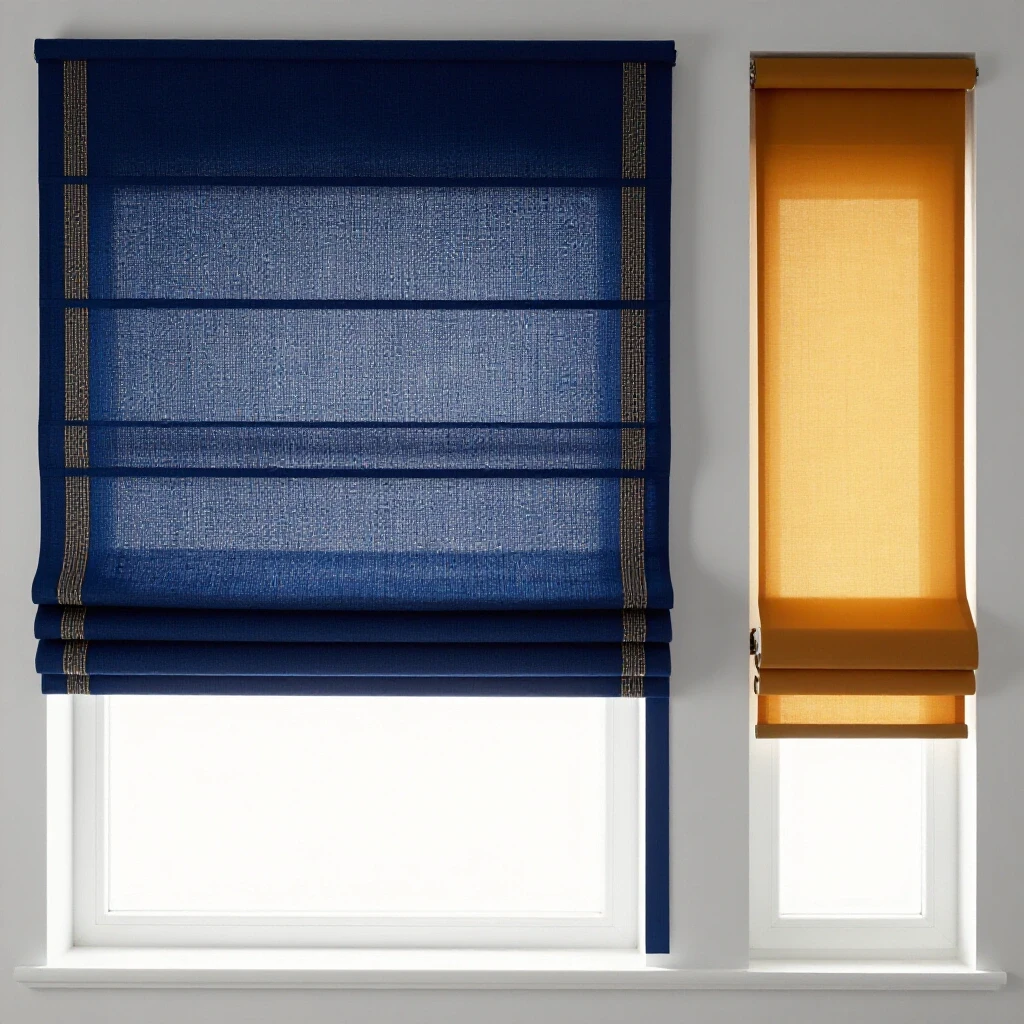
Understanding how different materials handle light is the first step in any privacy evaluation. When I began analyzing materials for my own properties, I looked at the weave density of various fabrics. A material with a high opacity rating blocks more light and provides a more effective barrier against outside observers. For example, a “blackout” rated fabric is engineered to have a VLT of nearly 0%, meaning no discernible light or shapes can be seen through the material itself.
In contrast, “light-filtering” materials are designed to diffuse light. They use a looser weave or a thinner chemical composition to allow a soft glow into the room. While these are excellent for reducing glare, they vary significantly in how much privacy they offer. In my testing, I found that the composition of the material—whether it is a natural woven textile or a synthetic composite—drastically changes how light scatters when it hits the surface.
Structural Design and the Physics of Edge Light Seepage
Light seepage, often called “light gaps,” occurs at the perimeter where the window treatment meets the window frame. This phenomenon is a result of the physical hardware required to operate the shade and the necessary clearance for the material to move without friction.
When comparing a flat-rolling shade to a folded fabric shade, the hardware requirements create different privacy outcomes. A shade that retracts by winding around a top-mounted tube requires a specific amount of space for the brackets. This often leaves a gap of 0.5 to 0.75 inches on either side of the window. In my 13 years of evaluating materials, I have noted that these gaps can compromise privacy if the window is at ground level or near a high-traffic sidewalk.
Folded fabric shades, which stack horizontally when raised, interact with the window frame differently. Because the fabric is often wider than the operating mechanism, it can sometimes sit closer to the casing. However, if the material is thick, it may “bow” slightly, creating small points of light entry. The technical term for this is “edge clearance,” and it is a critical metric for anyone prioritizing a total privacy barrier.
| Performance Metric | Folded Fabric Shade (Roman) | Cylindrical Rolling Shade (Roller) |
|---|---|---|
| Typical Edge Light Gap | 0.25″ – 0.5″ | 0.5″ – 0.8″ |
| Material Opacity Range | 50% to 100% | 1% to 100% |
| VLT (Blackout Option) | < 0.1% | < 0.1% |
| Silhouette Diffusion | High (due to fabric depth) | Moderate (single layer) |
| Openness Factor Options | Rare | Common (1%, 3%, 5%, 10%) |
Nighttime Visibility and the Internal Silhouette Effect
External visibility at night is a primary concern for homeowners in urban or suburban settings. This occurs when the interior of a home is brightly lit while the exterior is dark, turning the window treatment into a backlit screen that can reveal shapes.
During my privacy tests, I used a standardized light source of 500 lux inside a room and measured visibility from a distance of 10 feet outside. Materials with a single, thin layer often produced a clear silhouette. This is common in simple rolling shades where the material is a single ply of polyester or vinyl. Even if the material is not transparent, the light creates a shadow of anyone standing near the window.
Folded fabric shades typically provide better silhouette diffusion. This is due to the inherent thickness of the woven materials and the way the fabric folds create depth. When you have multiple layers of fabric or a dedicated liner, the light has to pass through more mass. This scatters the photons more effectively, making it nearly impossible for an observer to see anything more than a vague change in light intensity.
Daytime Privacy and the Openness Factor Technical Standard
Daytime privacy relies on the contrast between bright outdoor light and dimmer indoor environments. The “Openness Factor” is a technical specification used primarily for mesh-like materials to describe the percentage of the shade that is comprised of holes.
A shade with a 1% openness factor means that 99% of the material is solid. In my experience, a 1% to 3% openness factor provides excellent daytime privacy. You can see out to the street, but someone walking by cannot see into the home because the bright exterior light reflects off the weave. However, as soon as the sun goes down and the interior lights are turned on, this effect reverses.
Folded fabric shades usually do not have an “openness factor” because they are made from solid-weave textiles. They provide a more consistent privacy level throughout the day and night. If you choose a solid-weave material, you sacrifice the view of the outdoors during the day in exchange for a guaranteed privacy barrier that does not change based on the sun’s position.
Material Composition and Layering Standards
The thickness of a window treatment material is measured in millimeters or “mils” (one-thousandth of an inch). Heavier materials generally offer better light blockage and privacy, but they also change how the shade functions within the window frame.
In my material procurement logs, I have tracked how “layered” systems perform compared to “single-ply” systems. A single-ply rolling shade is often between 0.3mm and 0.6mm thick. These are streamlined and efficient but rely entirely on the chemical coating of the fabric for privacy. If that coating is uneven, pinpoints of light can shine through.
Folded shades often utilize a face fabric and a secondary lining. This two-layer system creates a physical air gap between the materials. This gap acts as an extra buffer for light. When I tested a double-layered fabric shade against a high-end single-ply roller, the double-layered system consistently blocked more ambient light from the street. The technical advantage here is “optical density,” which is the material’s ability to absorb or reflect light rather than transmit it.
- Single-Layer Synthetic: 0.3mm – 0.5mm thickness; relies on dense weave or coatings.
- Double-Layer Woven: 1.0mm – 2.5mm combined thickness; provides superior light scattering.
- Blackout Liners: Often made of 100% polyester with a silicone or acrylic backing for zero light transmission.
Personal Privacy Evaluation Log: A 24-Hour Comparison
I conducted a side-by-side test in a bedroom facing a neighbor’s driveway. The goal was to determine which material structure provided the most secure environment during different phases of the day.
- Morning (Direct Sunlight): The rolling shade with a 3% openness factor allowed me to see the trees outside, but from the driveway, my neighbor could not see my desk or furniture. The light was bright enough to reflect off the shade surface.
- Midday (Ambient Light): The folded fabric shade (Roman) blocked all views. It created a solid wall of color. While it felt more private, I lost all connection to the outdoors.
- Evening (Interior Lights On): This was the most critical test. With the interior lights at full brightness, the 3% rolling shade allowed my neighbor to see the color of my shirt and my general movements. The folded fabric shade, even without a blackout liner, only showed a faint glow of light with no discernible shapes.
- Late Night (Streetlights): The edge gaps on the rolling shade allowed “light halos” to hit the side walls. The folded shade sat tighter against the window, reducing the halo effect significantly.
Technical Specifications Tracker for Privacy Selection
When you are evaluating materials for your home, use this checklist to compare the technical specs of each option. Do not rely on visual inspection alone; ask for the manufacturer’s data sheets.
- VLT Rating: Look for a Visible Light Transmission of less than 5% for bedrooms and bathrooms.
- Openness Factor: If choosing a mesh, stay at or below 1% for ground-floor windows.
- Material Thickness: Measure in millimeters. Anything over 1.0mm (including liners) will offer superior silhouette masking.
- Hardware Deduction: Check the “fabric deduction” spec. This tells you exactly how much smaller the fabric is than the window opening. A 0.75″ deduction means a 0.375″ gap on each side.
- Coating Type: Verify if the material is “solution-dyed” or “coated.” Coated materials often provide higher opacity but can be stiffer.
Final Recommendations for Privacy-Focused Material Selection
Choosing the right window treatment requires a technical trade-off between visibility and light control. If your primary goal is to prevent outsiders from seeing into your home at all hours, a thick, folded fabric shade with a secondary liner is the most effective material choice. The layering of fabrics provides a level of optical density that single-ply materials struggle to match.
For rooms where you want a view during the day but need privacy at night, a rolling shade with a very low openness factor (1%) is a viable technical solution. However, you must be aware of the “silhouette effect” and the larger light gaps at the edges of the frame. In my analysis, these gaps are the most common point of failure for homeowners seeking total privacy.
The most successful privacy strategies often involve measuring the exact dimensions of your window casing and choosing a material that maximizes coverage while minimizing VLT. By focusing on these technical specs rather than just the appearance, you can ensure your home remains a private sanctuary.
Frequently Asked Questions
What is the most effective way to eliminate light gaps on the sides of a shade?
The most effective technical solution is to use “side channels” or “light blockers.” These are L-shaped tracks that the edges of the shade slide into, physically blocking the gap between the material and the window frame. Without these, some light seepage is inevitable due to hardware clearance requirements.
Does a darker color shade provide more privacy than a lighter one?
Not necessarily. Privacy is determined by the weave density and opacity, not just the color. However, dark colors are often better at reducing glare, while light colors can sometimes be more translucent when backlit, potentially revealing more of a silhouette at night.
Can I see through a 5% openness factor shade at night?
Yes. At night, if your interior lights are on, a 5% openness factor allows people outside to see quite a bit of detail inside your home. It is generally recommended to use a 1% openness factor or a solid material for areas where nighttime privacy is a requirement.
What does “Blackout” actually mean in technical terms?
In the window treatment industry, “blackout” refers to materials that block 100% of the light from passing through the fabric itself. It does not account for light that leaks around the edges or top of the treatment.
How does material thickness affect the “silhouette effect”?
Thicker materials scatter light photons more as they pass through the fibers. A material that is 2mm thick will blur a shadow much more effectively than a 0.4mm material, even if both have the same VLT rating.
Is there a difference in privacy between natural and synthetic fibers?
Synthetic fibers like polyester can be engineered for specific opacity levels and often have more uniform weaves. Natural fibers like linen or bamboo have inherent variations in the weave which can create “pinholes” of light, slightly reducing total privacy.
What is “Fabric Deduction” and why does it matter?
Fabric deduction is the difference between the total width of the window treatment hardware and the actual width of the fabric. In rolling shades, the fabric must be narrower than the brackets to spin, which creates the side light gaps.
Can a light-filtering shade provide enough privacy for a bathroom?
A high-quality light-filtering shade with a dense weave can provide enough privacy to obscure details, but it may still show a silhouette. For bathrooms, a material with a VLT of 0% (blackout) or a very heavy weave is technically superior for guaranteed privacy.
How do I measure the “Openness Factor” of a fabric I already have?
You cannot easily measure this without specialized optical equipment. However, you can do a “flashlight test” by holding a bright light against the back of the fabric in a dark room. If you can see the shape of the bulb clearly, the openness factor is likely high.
Why do some shades look different from the outside than the inside?
Many high-performance materials use a “white-to-street” backing. This is a technical coating applied to the exterior side of the shade to provide a uniform look from the street and to reflect more light, which can actually improve daytime privacy.
(This article was written by one of our staff writers, Andrew Morrison. Visit our Meet the Team page to learn more about the author and their expertise.)