Rug Cleaning Cost Comparison: Professional vs DIY (Complete Guide)

Maintaining the assets within your home is often more cost-effective than replacing them. For many homeowners, high-quality area rugs represent a significant investment that anchors a room’s aesthetic and contributes to the overall property value. By applying the same rigorous financial tracking used for kitchen remodels or roof repairs, you can turn a recurring chore into a predictable, low-stress line item in your annual household ledger.
Establishing a Financial Framework for Area Rug Maintenance
A financial framework is a structured plan for your money that categorizes expenses into fixed and variable costs. In the context of home maintenance, this means setting aside specific funds for recurring services to prevent “lump sum” shocks to your bank account. This proactive approach treats home textiles as depreciating assets that require periodic reinvestment to extend their useful life.
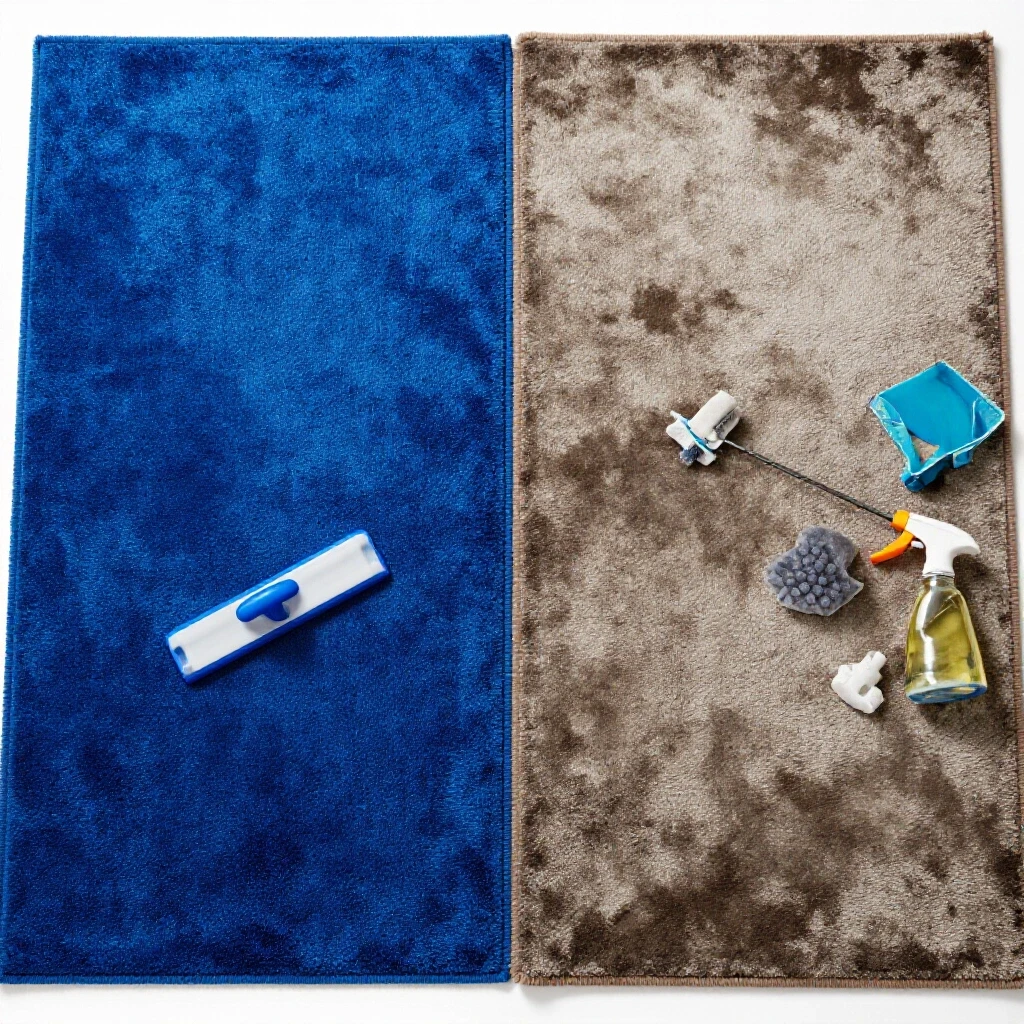
When I look at my own home maintenance spreadsheet, I categorize floor covering care as an “operating expense.” Just as you wouldn’t ignore an oil change for your car, you shouldn’t ignore the soil buildup in your rugs. Over the last decade, I have found that homeowners who fail to budget for professional care often face a $3,000 replacement cost every five to seven years. Conversely, those who allocate a few hundred dollars every 18 to 24 months can push that replacement date out to fifteen years or more.
To build a realistic forecast, you must first understand the “1% Rule.” This common financial planning principle suggests setting aside 1% of your home’s total value annually for maintenance. If your home is worth $400,000, you should have $4,000 in a dedicated account. Within that $4,000, I typically recommend allocating 5% to 8% specifically for soft surface maintenance, which includes area rugs and upholstery.
Calculating the Cost-to-Value Ratio of Professional Care
The cost-to-value ratio compares the expense of a service against the extended lifespan of the item being serviced. By spending a small fraction of the replacement cost on a regular schedule, you avoid the total loss of the asset due to fiber degradation. This preserves the home’s interior quality without requiring a massive capital outlay for new decor.
In my professional experience, the return on investment (ROI) for textile care isn’t just about the rug itself. It is about the “lifestyle value” and the prevention of secondary costs. For example, a rug that is not properly maintained can trap allergens, leading to higher HVAC filter costs or health-related expenses. When I track these variances in my personal ledger, the data clearly shows that a well-maintained rug retains its pile height and color vibrancy 40% longer than neglected counterparts.
Comparing Professional Service Fees Against DIY Equipment Costs
A direct comparison involves analyzing the upfront cost of rental or purchased machinery against the per-square-foot rate of a certified professional. This audit must include the hidden costs of your personal time, the price of specialized cleaning solutions, and the financial risk of improper drying. For cost-conscious planners, the goal is to find the “break-even point” where professional expertise outweighs DIY savings.
Many of my clients consider buying their own high-end rug cleaner to save money. On paper, a $300 machine seems like a win compared to a $400 professional service. However, when we look at the “depreciation schedule” of the machine and the cost of chemicals, the math changes. Most consumer-grade machines lack the extraction power of professional equipment. This often leaves behind a soap residue that actually attracts more dirt, leading to more frequent cleanings and faster fiber wear.
| Expense Category | Professional Service (In-Plant) | DIY Rental/Machine Purchase |
|---|---|---|
| Initial Outlay | $150 – $600 (Per project) | $150 – $400 (One-time) |
| Labor Time | 0 Hours (Drop-off/Delivery) | 4 – 8 Hours (Personal labor) |
| Consumables | Included | $30 – $60 (Shampoos/Defoamers) |
| Risk Factor | Insured/Guaranteed | High (Fiber shrink/Color bleed) |
| Drying Time | Controlled environment | 24 – 48 Hours (In-home) |
As you can see from this breakdown, the professional route offers a “fixed cost” with a guarantee, whereas the DIY route introduces “variable risks” that could lead to a total loss of the rug.
Understanding Square Foot Estimating Methods
Square foot estimating is the standard method for calculating the cost of professional textile care. Most providers charge based on the total area of the rug, often with different price tiers based on the material type. Knowing these dimensions allows you to populate your spreadsheet with high accuracy before even calling for a quote.
- Standard Synthetic Rugs: $1.50 – $3.00 per square foot.
- Wool or Natural Fiber Rugs: $3.00 – $5.50 per square foot.
- Specialized Fringe Cleaning: $2.00 – $5.00 per linear foot.
I recommend measuring every rug in your home and keeping those dimensions in a “Home Asset Log.” This prevents the common mistake of overestimating the size and over-allocating funds in your monthly budget.
Identifying Hidden Line Items in Professional Quotes
Hidden fees are costs that are not immediately visible in a base quote, such as travel surcharges, specialized treatments, or protection applications. Understanding these potential “add-ons” ensures your final invoice matches your initial estimate. This transparency is vital for avoiding the “mid-project cash crunch” that plagues many home improvement tasks.
When I audited my own rug maintenance costs last year, I found three “stealth” expenses that I hadn’t initially accounted for. First was the “pick-up and delivery fee.” Some companies include this, while others charge a flat $50 to $75. Second was the “pet odor neutralizing treatment,” which can add 20% to the total bill. Finally, there is the “stain protection” application, which is a proactive cost intended to make future cleanings easier.
- Pick-up/Delivery: $0 – $100 depending on distance.
- Stain Protection: $0.50 – $1.00 per square foot.
- Moth/Insect Treatment: $1.00 – $2.00 per square foot.
- Rug Pad Replacement: $1.50 – $4.00 per square foot.
By including a 15% “contingency buffer” in your cleaning budget, you can absorb these costs without dipping into your emergency fund. This is a standard accounting practice in construction that applies perfectly to home maintenance.
Why Standard Estimates Fail and How to Forecast Better
Standard estimates often fail because they do not account for the specific construction of the rug or the local market conditions. A “one-size-fits-all” price usually ignores the complexities of high-pile shags or the fragility of certain backings. To create a realistic forecast, you must gather at least three local quotes and average them.
Interestingly, I’ve noticed that pricing can fluctuate based on the season. Many companies offer discounts during “off-peak” months like January or February. If you are a cost-conscious planner, scheduling your maintenance during these windows can save you 10% to 20% on the total invoice. This is a “timing strategy” that I use in my own financial planning to maximize the value of every dollar spent.
Regional Labor Multipliers and Market Rate Variability
Market rates for services vary significantly based on local labor costs and the density of service providers in your area. Using regional multipliers helps you adjust national averages to fit your specific zip code. This ensures your budget is grounded in the reality of your local economy rather than a generic internet search.
Data from the U.S. Bureau of Labor Statistics (BLS) shows that service industry wages can vary by as much as 30% between a rural town and a major metropolitan area. For instance, a professional cleaning in New York City or San Francisco will naturally be at the higher end of the spectrum compared to a mid-sized city in the Midwest.
- High-Cost Areas (NYC, LA, DC): Multiply national average by 1.25.
- Mid-Cost Areas (Atlanta, Dallas, Phoenix): Multiply national average by 1.0.
- Low-Cost Areas (Rural/Small Towns): Multiply national average by 0.85.
I always suggest checking the “Cost vs. Value” reports for your specific region to see how local contractors are pricing their labor. While those reports often focus on large remodels, the labor trends they highlight usually trickle down to smaller home services.
Budgeting for Long-Term Home Value Impacts
Long-term budgeting considers how current maintenance expenses affect the future resale value of your home. While a clean rug might not directly increase your appraisal by thousands of dollars, the “curb appeal” of a well-maintained interior is a key factor in how quickly a home sells. Clean, fresh-smelling textiles signal to a potential buyer that the home has been meticulously cared for.
I view these costs as “preventative maintenance capital.” If you plan to sell your home in the next three to five years, keeping your rugs in top condition is much cheaper than buying new ones to stage the house for a sale. In my personal spreadsheet, I track this as “Staging Preparation Savings.” By spending $200 a year now, I am effectively saving myself from a $2,000 staging expense later.
Case Study: A 10-Year Maintenance Ledger
To illustrate the financial impact of these decisions, let’s look at a real-world example from my own records. In 2014, I purchased a high-quality wool rug for $1,800. My goal was to see if professional maintenance was actually cheaper than the “buy and replace” cycle many people follow.
- Initial Cost (2014): $1,800
- Cleaning 1 (2016): $210 (Professional in-plant)
- Cleaning 2 (2018): $225 (Professional in-plant)
- Cleaning 3 (2020): $240 (Professional in-plant + protection)
- Cleaning 4 (2022): $255 (Professional in-plant)
- Cleaning 5 (2024): $270 (Professional in-plant)
- Total Maintenance Cost: $1,200
- Current Value/Condition: Excellent (Estimated 10+ years of life remaining)
If I had replaced the rug every five years with a similar quality item, I would have spent $3,600 by now (assuming a modest 2% inflation rate on the purchase price). By choosing professional maintenance, I have spent $3,000 total (purchase + cleaning) and still have a high-value asset. This represents a $600 net savings, plus the rug currently in my living room is of much higher quality than a cheap replacement would have been.
Tools for Tracking Your Maintenance Budget
Managing these costs doesn’t have to be complicated, but it does require consistency. Using the right tools can help you visualize where your money is going and when your next service is due. I recommend a combination of digital and physical tracking methods to ensure nothing slips through the cracks.
- Google Sheets or Excel: Create a dedicated tab for “Home Assets” and “Maintenance Schedule.”
- Home Maintenance Apps: Tools like HomeZada or Centriq can track service dates and store digital copies of your receipts.
- Digital Calendar Alerts: Set a recurring reminder for “Rug Inspection” every 12 months to check for wear and soil.
- Local Price Index: Keep a simple list of the three local companies you’ve vetted and their current per-square-foot rates.
By using these tools, you move from “reactive spending” to “strategic allocation.” This is the hallmark of a cost-conscious home planner.
Practical Next Steps for Your Household Budget
Establishing a predictable spending plan for your home textiles is a straightforward process when you have the right data. Start by taking an inventory of the rugs in your home that require professional attention. Measure them, identify the fiber type, and research three local providers to get a baseline price.
Once you have your data, create a “sinking fund” in your savings account. If your total estimated cost for cleaning all rugs is $600 and you want to do it every two years, you only need to save $25 per month. This small, manageable amount ensures the money is there when you need it, protecting your monthly cash flow from unexpected hits.
Finally, always ask for a “written scope of work” before any technician starts. This document should detail exactly what is included in the price, from the type of cleaning method to the drying process. This is your insurance policy against “scope creep” and hidden fees, keeping your project budget firmly on track.
Frequently Asked Questions
How often should I realistically budget for a professional cleaning? For most residential settings, a professional cleaning every 12 to 18 months is the standard recommendation. If you have pets, high foot traffic, or children, you may need to move that up to every 6 to 12 months. Budgeting for an 18-month cycle is a safe middle ground for most financial planners.
Is it cheaper to have rugs cleaned in my home or at a facility? In-home cleaning is often cheaper upfront because it eliminates transportation costs. However, “in-plant” cleaning is generally more thorough and safer for the rug. From a value perspective, in-plant cleaning offers a better ROI because it removes more deep-seated grit that causes fiber wear.
Do I really need to pay for the extra stain protection? Financially, stain protection is like an insurance policy. It usually costs about 20% of the cleaning price but can extend the time between professional cleanings. If it allows you to wait 24 months instead of 18 months, it pays for itself by reducing the frequency of the larger service fee.
How do I know if a rug is “over-improved” for my neighborhood? Look at the “comparable” homes in your area. If most homes have $500 rugs and you are spending $500 a year to clean a $5,000 rug, you may be over-investing in an asset that won’t be reflected in the home’s sale price. Keep your maintenance costs proportional to the value of the home and the quality of the neighborhood.
Can I save money by bringing the rug to the cleaner myself? Yes. Many professional facilities offer a “cash and carry” discount, often ranging from 10% to 20%. If you have a vehicle that can safely transport the rug without folding it too tightly, this is an excellent way to reduce your maintenance line item.
What is the “contingency buffer” I should keep for these services? I recommend a 15% contingency. This covers unexpected issues like specialized stain removal, minor fringe repair, or fluctuations in local labor rates. If you don’t use it, the money stays in your maintenance fund for the next project.
Should I budget differently for wool versus synthetic rugs? Absolutely. Wool rugs require specialized, pH-neutral cleaners and more careful drying, which typically costs 50% to 100% more than cleaning synthetic fibers. Always identify your rug’s material before setting your budget.
Is there a way to verify if a price quote is fair? Compare the quote to the national averages adjusted by your regional multiplier. If a quote is more than 20% higher than the adjusted average, ask the provider to justify the cost. They may be offering a higher level of service, or they may simply be overpriced for your market.
Does professional cleaning help with rug depreciation for tax purposes? For a primary residence, maintenance costs like rug cleaning are generally not tax-deductible. However, if you have a home office, a portion of these costs may be deductible as a business expense. Consult with a tax professional to see how these maintenance items fit into your specific financial situation.
What happens to my budget if I wait too long between cleanings? Waiting too long can lead to “permanent traffic lane graying,” where dirt actually scratches and dulls the fibers. At that point, no amount of cleaning can restore the rug, and you will be forced to replace it. This turns a small maintenance fee into a large capital expenditure, which is exactly what we want to avoid.
(This article was written by one of our staff writers, Steven Fletcher. Visit our Meet the Team page to learn more about the author and their expertise.)