How to Prevent Runner Rugs from Slipping in Hallways (Guide)

Investing in the right floor coverings for your home involves more than just picking a pattern that matches your walls. When we look at narrow transition spaces like hallways, the choice of material becomes a technical decision that impacts both safety and long-term savings. A poor choice leads to premature wear or, worse, physical accidents that could have been avoided with a better understanding of material friction and fiber resilience.
In my 13 years as a supply chain analyst, I have evaluated thousands of household goods. I have learned that the most expensive option is not always the most durable. However, the cheapest option almost always costs more over a decade due to replacement labor and maintenance. When you select a textile for a high-traffic corridor, you are managing a small-scale engineering project. You must balance the “give” of the fiber underfoot with the “grip” of the backing against your floor.
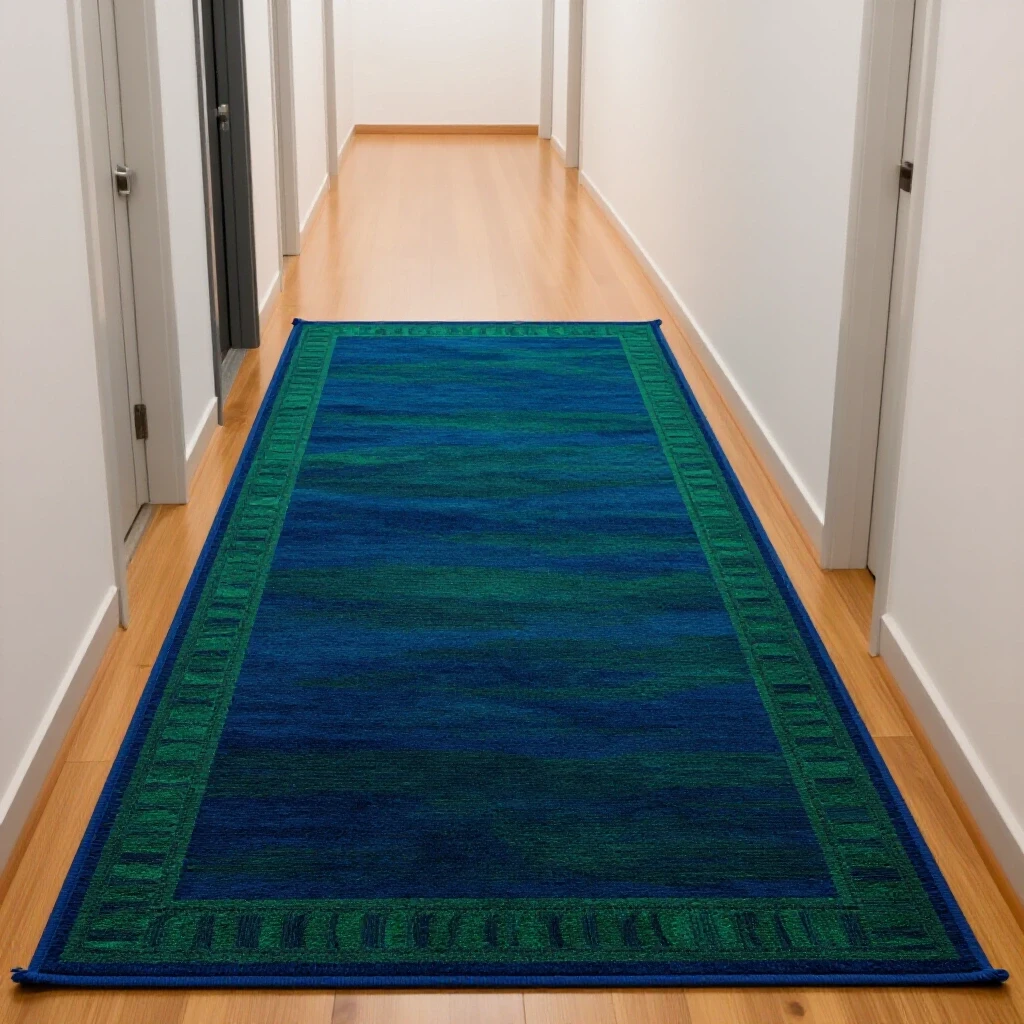
Understanding Fiber Integrity and Friction Standards
Fiber integrity refers to the structural stability of a material under repeated mechanical stress, while friction standards measure the resistance between the rug backing and the floor surface. These metrics determine how long a textile lasts and how safely it stays in place. In technical terms, we look at the Static Coefficient of Friction (SCOF) to ensure a safe walking surface.
When I first began managing properties, I made the mistake of choosing a high-pile polyester rug for a main corridor. It felt soft, but within six months, the fibers had “matted” or crushed down. Because it lacked a high-quality backing, it also tended to “creep” or move slightly every time someone walked on it. This movement isn’t just annoying; it creates a trip hazard. According to ASTM D2047, a standard for measuring surface friction, a polished floor requires a covering with a specific grip rating to prevent sliding.
- Wool: Naturally resilient, high crush resistance, and contains lanolin which repels light stains.
- Nylon: The strongest synthetic fiber, excellent for high-traffic “choke points” in a home.
- Polypropylene: Highly stain-resistant and affordable but can feel “plastic-like” and has a lower melting point (sensitive to friction heat).
- Jute/Sisal: High durability but very low moisture resistance and can be abrasive to the finished floor underneath.
Analyzing the Trade-off Between Upfront Cost and Long-term Maintenance
This analysis evaluates the initial purchase price against the cumulative costs of cleaning, repairs, and premature replacement over a ten-to-fifteen-year horizon. High-end materials often yield lower life-cycle costs by resisting crushing and staining in high-traffic zones. While a synthetic rug might cost $150 and last three years, a high-quality wool version might cost $600 but last twenty.
Building on this, we have to look at the “cost per walk.” If a hallway sees 50 passes a day, that is over 18,000 steps a year. A low-grade fiber will show a “traffic lane”—a visible path of crushed fibers—within 24 months. Interestingly, the National Association of Home Builders (NAHB) notes that high-quality flooring components are one of the best ways to maintain home value.
| Material Type | Upfront Cost (Sq. Ft.) | Expected Lifespan | 15-Year Replacement Cycle | Total 15-Year Cost (Est.) |
|---|---|---|---|---|
| Low-Grade Synthetic | $2 – $5 | 3-5 Years | 4 Times | $1,200 |
| Mid-Grade Nylon | $6 – $12 | 7-10 Years | 2 Times | $950 |
| Premium Wool | $15 – $35 | 20+ Years | 1 Time | $750 |
| Natural Sisal | $5 – $10 | 5-8 Years | 2-3 Times | $1,100 |
As shown in the table, the premium wool option, despite a higher entry price, is the most economical choice over a 15-year period. This is a classic home material comparison where technical material specifications outweigh the initial sticker shock.
The Engineering of Stability: Why Underlays and Backing Matter
Rug backing and underlays are the secondary layers that provide dimensional stability and grip. Technical specifications for these components focus on shear strength and the prevention of lateral movement on smooth surfaces like hardwood or tile. A rug that slides is a failure of engineering, regardless of how much the face fibers cost.
I recall a specific incident in my second home. I had installed a beautiful, hand-knotted runner in the upstairs hallway. It was expensive and made of the finest New Zealand wool. However, I skipped the high-end underlay, opting for a cheap “waffle” style plastic grid. One afternoon, while carrying a heavy laundry basket, I stepped on the edge of the rug. The rug slid four inches, my foot lost purchase, and I nearly tumbled down the stairs.
That was my “slip lesson.” I realized that the interface between the rug and the floor is just as important as the rug itself. For high-end home materials, you should look for felt and rubber hybrid pads. These provide: 1. Cushioning: Protects the rug fibers from being crushed against the hard floor. 2. Grip: Increases the Static Coefficient of Friction to prevent lateral sliding. 3. Floor Protection: Prevents the rug backing from scratching the finish of your hardwood or stone.
Performance Metrics for High-Traffic Corridor Textiles
High-traffic metrics include pile density, face weight, and the ability to withstand “pilling” or fiber loss. For corridor applications, these ratings ensure the material can handle thousands of footfalls without showing a visible traffic path. You should always check the “Face Weight,” which is the weight of the fiber per square yard.
In a durability vs maintenance cost trade-off analysis, pile height is a critical variable. A high pile (over 0.5 inches) creates a greater trip hazard and is harder to vacuum. For a hallway, a low-profile “loop” or a short “cut pile” is superior. It allows doors to swing freely and doesn’t trap as much grit at the base of the fibers. Grit is the enemy of any rug; it acts like tiny saws, cutting through the fibers every time you step on them.
- Pile Height Standards:
- Low Pile: 0.25″ or less (Ideal for safety and cleaning).
- Medium Pile: 0.25″ to 0.5″ (Good balance of comfort and durability).
- High Pile: Over 0.5″ (Avoid for high-traffic hallways).
- Density Rating: Look for a density of at least 3,000 to 4,000 ounces per cubic yard for heavy residential use.
- Twist Level: The number of times a fiber is twisted per inch. Higher twist levels generally mean better resilience.
Evaluating Synthetic vs. Natural Fibers
Comparing lab-created polymers like nylon and polyester against natural proteins like wool involves looking at moisture absorption, tensile strength, and flame resistance. Each material reacts differently to the friction and soil common in residential corridors. This is a core part of any appliance buying guide or material evaluation.
Nylon is often the “gold standard” for synthetic durability. It is a resilient fiber, meaning it can “bounce back” after being stepped on. Polyester, while softer and often made from recycled materials, lacks this resilience. If you choose polyester for a hallway, expect it to look flat within a few years. Wool, on the other hand, has a natural crimp that acts like a spring.
Interestingly, the supply chain for these materials also impacts their performance. Solution-dyed nylons have the color locked into the fiber during the liquid stage of production. This makes them nearly impossible to fade or bleach out, which is a major advantage if your hallway gets a lot of direct sunlight.
The Role of Pile Height in Safety and Durability
Pile height is the measurement from the primary backing to the top of the fiber. In narrow walkways, a lower pile (under 0.5 inches) reduces trip hazards and prevents the “crushing” effect that makes rugs look worn. This is particularly important for households with children or elderly residents.
From a technical material specifications standpoint, a shorter pile also improves the effectiveness of vacuuming. High-suction vacuums can struggle with high-pile rugs, often pulling at the fibers and causing premature wear. A low-pile rug allows the vacuum to reach the dirt trapped near the backing, which extends the life of the textile.
- Measure your door clearance: Ensure the rug and pad together are at least 0.25 inches lower than the bottom of your doors.
- Check for “Tripping Edges”: Look for rugs with surged or bound edges that lay flat.
- Test the “Hand”: Press your thumb into the pile. If it doesn’t spring back immediately, it will likely crush under foot traffic.
Installation and Structural Requirements
Installing a corridor covering is not just about unrolling it. You must ensure the floor surface is clean and dry. Any dust between the floor and the underlay will act as a lubricant, causing the rug to slide regardless of the pad quality.
In my experience, the best way to secure a long runner is to use a “full-spread” pad that is cut exactly one inch smaller than the rug on all sides. This allows the edges of the rug to taper down to the floor, reducing the chance of catching your toe on the edge. If you are installing over a particularly slick surface like polished marble, you may need a specialized “dry-back” adhesive pad that uses micro-suction technology rather than traditional adhesives.
- Labor Costs: While many homeowners do this themselves, professional “tackless strip” installation for a runner can cost $100 to $300 but ensures the rug never moves.
- Warranty Limits: Be aware that many manufacturers void warranties if the rug is not used with a proper underlay.
- Environmental Sensitivity: Natural fibers like wool can expand or contract with humidity. Ensure your hallway has a stable climate to prevent “buckling.”
Long-Term Cleaning Regimens and Lifecycle Costs
Maintenance is where the true cost of a material is revealed. A rug that requires professional “dry cleaning” only will be significantly more expensive to maintain than one that can be steam cleaned or spot-treated at home.
Wool is surprisingly easy to maintain because its scales naturally “shed” dirt. However, it cannot handle high-heat steam cleaning, which can shrink the fibers. Nylon is more robust and can handle most cleaning chemicals. When I evaluate the durability vs maintenance cost, I look for “stain-resistance ratings.” Some fibers are coated with chemicals to resist stains, but these coatings can wear off over time. Solution-dyed fibers are naturally stain-resistant throughout the entire material.
- Weekly: Vacuum with a brush-roll (unless it’s a shag or delicate weave).
- Monthly: Rotate the rug 180 degrees to even out wear patterns.
- Yearly: Professional deep clean (hot water extraction for nylon, low-moisture for wool).
- Every 5 Years: Inspect the underlay. Rubber and foam pads can break down and become brittle, losing their grip.
Actionable Buying Worksheet: The Corridor Rug Scoring Matrix
To help you make a confident decision, use this scoring matrix. Rate each potential purchase on a scale of 1 to 10.
- Fiber Resilience: Does it spring back? (Wool/Nylon = 10, Polyester = 4)
- Safety/Grip: Does it come with or require a high-COF backing? (1-10)
- Cleaning Ease: Is it solution-dyed or naturally stain-resistant? (1-10)
- Profile/Pile Height: Is it under 0.5 inches? (Yes = 10, No = 5)
- Life-Cycle Cost: Divide the price by the expected years of use. (Lower cost = higher score)
Total Score: 40-50 (Excellent), 30-39 (Good), Under 30 (Reconsider).
Conclusion and Next Steps
Choosing the right covering for your home’s busiest pathways is an exercise in practical supply chain management and material science. By focusing on fiber type, pile height, and the critical interface of the underlay, you can avoid the common pitfalls of premature wear and safety hazards. My own “slip lesson” taught me that the hidden components—the backing and the pad—are just as vital as the visible design.
For your next steps, I recommend ordering material samples. Don’t just look at them; step on them with shoes on. Pour a little water on them to see how they absorb moisture. Most importantly, test the sample on your actual floor to see how much it slides. Making an evidence-based decision today will save you hundreds of dollars and significant frustration in the years to come.
Frequently Asked Questions
What is the best material for high-traffic corridors? Nylon and wool are the top performers. Nylon offers the highest durability and stain resistance for the price. Wool provides superior longevity, natural soil resistance, and a premium feel, though it comes at a higher upfront cost.
How do I prevent a narrow rug from sliding on hardwood? Use a high-quality underlay made of felt and natural rubber. Avoid cheap PVC “waffle” pads, as they can break down and damage floor finishes. Ensure the floor is perfectly clean before laying the pad to maximize friction.
Does a higher price always mean better durability? No. A high price may reflect a brand name or intricate hand-weaving that is actually quite delicate. For hallways, you want “industrial-strength” construction, which is often found in mid-to-high-range power-loomed rugs rather than fragile antiques.
What is the ideal pile height for safety? A pile height between 0.25 and 0.375 inches is ideal. This is low enough to prevent tripping and allow doors to clear the rug, but high enough to provide adequate cushioning and sound dampening.
How does the floor surface affect rug choice? Polished surfaces like marble or hardwood have a lower Static Coefficient of Friction, requiring more aggressive non-slip pads. Textured surfaces like slate or distressed wood provide more natural grip but can be more abrasive to the rug’s backing.
What is the ASTM D2047 standard? This is a standard test method for measuring the Static Coefficient of Friction of polish-coated flooring surfaces. While typically used for the floor itself, it informs the type of non-slip backing needed for safety.
How often should I replace the underlay? Most high-quality rubber pads last 10 to 15 years. However, if you notice the rug starting to move or “bunch up,” or if you see yellow powder (disintegrating foam) under the rug, it is time for an immediate replacement.
Can I use a rug on heated floors? Yes, but you must ensure the rug and pad are “breathable.” Avoid solid rubber backings that can trap heat and potentially damage the heating elements or the floor finish. Felt-based pads are usually the best choice for radiant heat.
How do I calculate the life-cycle cost? Add the initial purchase price, the cost of the pad, and the estimated cost of professional cleanings over 10 years. Divide that total by the number of years you expect the rug to last. This gives you the true annual cost of ownership.
What is the difference between hand-tufted and power-loomed? Hand-tufted rugs use a glue backing to hold fibers in place, which can eventually crack or smell. Power-loomed rugs are woven by machine and are often more dimensionally stable and durable for high-traffic areas, despite being less “artisanal.”
(This article was written by one of our staff writers, Andrew Morrison. Visit our Meet the Team page to learn more about the author and their expertise.)