Shed Build Budget Guide: Cost Breakdown & Planning Tips (DIY)

Discussing budget options for a first-time backyard construction project requires a shift in mindset from “spending” to “allocating.” When I planned my very first storage structure, I mistakenly thought a lump sum estimate was enough. I quickly learned that without a granular breakdown, a project can easily spiral. As a financial planner, I have spent years tracking every nail and board in my own home renovation budget spreadsheets. This guide provides the same data-driven framework I use to help my clients avoid debt while improving their properties.
Establishing a Financial Framework for a DIY Structure
A financial framework is a structured plan that defines your spending limits and identifies where every dollar goes before the project begins. It serves as a protective barrier against impulse buys and mid-project price spikes. For a novice builder, this framework must include a dedicated safety buffer to account for learning curves and material waste.
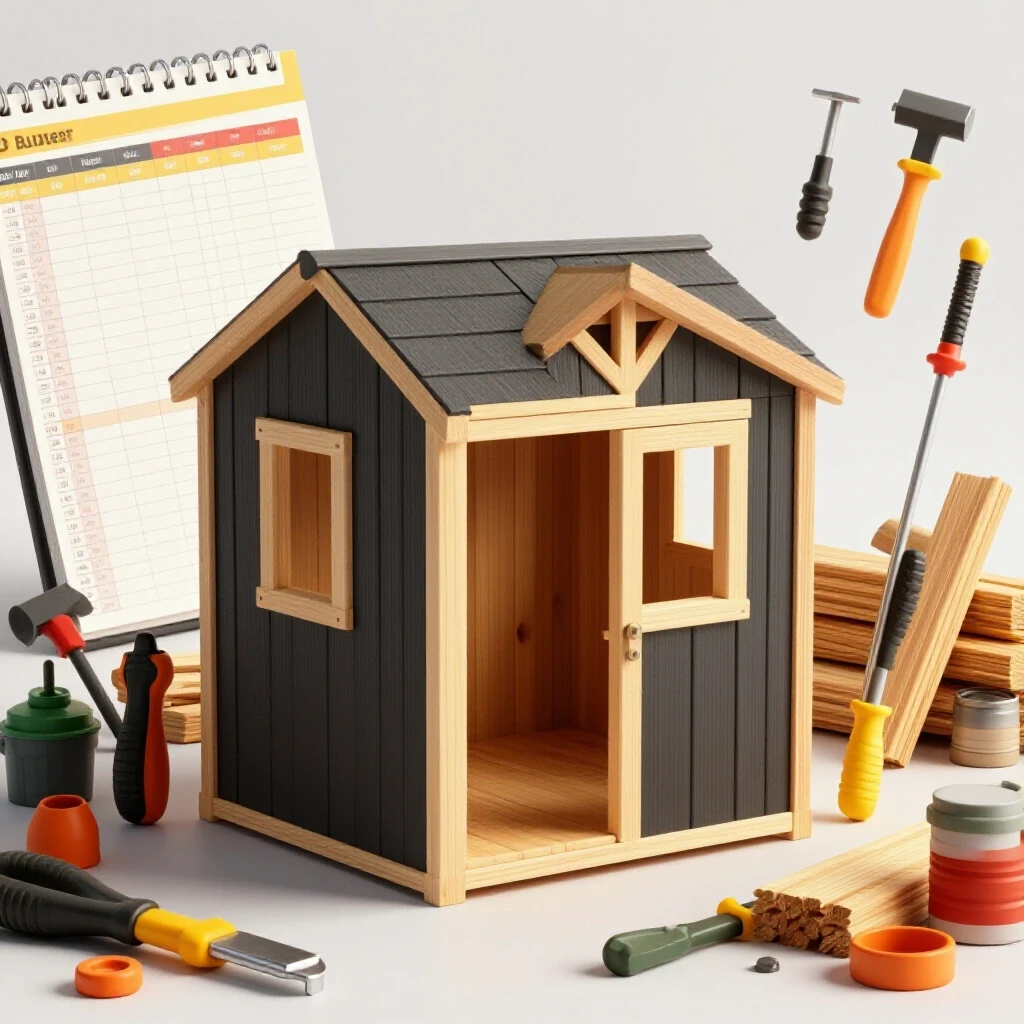
When I look at my early remodeling expense tracker files, the most successful projects all shared one trait: a conservative contingency fund. For a beginner-led outdoor build, I recommend a 20% to 30% buffer. While a professional might only need 10%, a first-timer is likely to mis-cut a few 2x4s or realize they need a different type of fastener halfway through the day.
Building on this, you must determine your funding source. Are you using cash reserves or a small home equity line of credit? I always advise my clients to avoid high-interest credit cards for home improvements. If you cannot fund the materials in cash, it may be better to scale back the dimensions of the project rather than take on debt that outlasts the utility of the structure itself.
Why Standard Estimates Fail and How to Forecast Costs
Standard estimates often fail because they rely on national averages rather than local market realities. A cost breakdown guide is only useful if it reflects the prices at the lumber yard five miles from your house. Regional price variations for pressure-treated lumber can swing by as much as 15% depending on your proximity to supply hubs.
Interestingly, many homeowners forget to account for the “small” items. In my first ledger, I ignored fasteners, hinges, and leveling shims. I thought they were negligible. However, when I totaled the receipts, those small items accounted for nearly 12% of the total spend. To forecast accurately, you must list every component, from the foundation blocks to the drip edge on the roof.
The Material-to-Tool Ratio for Beginners
The material-to-tool ratio represents the percentage of your budget spent on physical building supplies versus the equipment needed to assemble them. For a first-time builder, this ratio is often skewed because you lack a baseline tool kit. This can lead to unexpected financial strain if not planned for in advance.
If you don’t own a circular saw, a high-quality level, or a sturdy drill, these costs must be line-itemed. In my experience, renting specialized tools like a plate compactor for the foundation is often more cost-effective than buying. However, basic hand tools are better purchased, as they have long-term value for future home maintenance.
- Materials: 70-80% of the budget.
- Tools: 10-15% of the budget (if starting from scratch).
- Permits/Fees: 5% of the budget.
Itemized Cost Breakdown for a Basic Wooden Structure
A detailed cost breakdown is the cornerstone of any successful home improvement project. It separates the “must-haves” from the “nice-to-haves,” allowing you to adjust the scope if prices rise. By categorizing your expenses, you can track where your money is going in real-time.
Below is a data-driven look at what a typical 8×10 wooden storage project might cost based on current market averages. These figures are based on my personal tracking of material price indexes and local retail data.
| Category | Item Description | Estimated Cost Range | Percentage of Total |
|---|---|---|---|
| Foundation | Concrete blocks, gravel, pressure-treated skids | $150 – $250 | 12% |
| Framing | 2×4 studs, 2×6 floor joists, top/bottom plates | $400 – $600 | 30% |
| Sheathing | OSB or plywood for walls and floors | $250 – $400 | 18% |
| Roofing | Shingles, underlayment, drip edge, nails | $200 – $350 | 15% |
| Exterior | Siding (T1-11 or similar), trim, paint/stain | $300 – $500 | 18% |
| Hardware | Screws, hinges, latch, door handle | $100 – $150 | 7% |
| Total | Estimated DIY Project Cost | $1,400 – $2,250 | 100% |
Accounting for Regional Labor Multipliers
Even though this is a DIY project, understanding regional labor costs is vital for calculating sweat-equity valuation. Sweat equity is the value you add to your home through your own physical labor rather than paying a professional. It is the “profit” you earn by doing the work yourself.
According to data from the U.S. Bureau of Labor Statistics, the average hourly wage for a carpenter varies significantly by state. If a local pro charges $50 per hour and the project takes 40 hours, you are essentially “saving” $2,000. This helps you justify the time investment against your personal hourly earnings at your day job.
Navigating Hidden Municipal Fees and Site Preparation
Municipal fees and site preparation are often the most overlooked aspects of a project budget. Site preparation involves clearing the land and ensuring it is perfectly level before the first board is laid. Municipal fees include the cost of building permits and any potential increases in property tax assessments.
In many jurisdictions, a small shed under 100 or 120 square feet does not require a structural permit. However, zoning permits—which dictate how close the structure can be to your property line—are almost always required. I once worked with a client who skipped the $75 permit, only to be fined $500 and forced to move the structure three feet to the left.
- Permit Fees: $50 – $150 (varies by city).
- Leveling Materials: $100 – $200 (gravel, sand, or dirt).
- Zoning Reviews: Often free but require a site plan.
The Importance of a Level Foundation
A level foundation is not just a structural necessity; it is a budget protector. If your base is uneven, every subsequent step—framing the walls, hanging the door, and laying the roof—will be more difficult and expensive. You will waste money on “shims” and “fixes” that could have been avoided with a $20 bag of leveling gravel.
In my first attempt at an outdoor build, I rushed the foundation. As a result, the door wouldn’t close properly once the wood settled. I had to buy a new door frame and spend an extra weekend fixing the mistake. This cost me an additional $120 in materials that were never in the original plan.
Avoiding Common Financial Traps for Novice Builders
Financial traps occur when a lack of experience leads to wasted materials or the need for expensive repairs shortly after completion. For a cost-conscious homeowner, the goal is to build it right the first time. The most common traps involve buying the wrong grade of lumber or failing to protect the structure from moisture.
One major trap is using non-pressure-treated wood for any part of the structure that touches the ground. While standard lumber is cheaper, it will rot within a few years, forcing a complete rebuild. This is a classic example of “penny wise, pound foolish.” Investing an extra $50 in treated skids and floor joists adds a decade to the structure’s lifespan.
- Trap 1: Buying “economy” grade studs that are warped. You will spend more time (and money) trying to make them work than if you bought “standard” grade.
- Trap 2: Over-buying fasteners. Buy in bulk boxes rather than small bags to save 30% on the unit price.
- Trap 3: Skipping the drip edge. This $30 metal strip prevents water from rotting your roof deck, saving you a $400 repair later.
Tracking Progress with a Remodeling Expense Tracker
A remodeling expense tracker is a living document—usually a spreadsheet—where you record every purchase the day it happens. This allows you to perform a “variance analysis.” Variance analysis is the process of comparing what you planned to spend against what you actually spent.
If you see that your lumber costs are 10% over budget after the framing phase, you know you need to find savings in the siding or paint phase. This real-time adjustment is what keeps a project from running out of money before the roof is on. I recommend using a simple mobile-friendly spreadsheet so you can enter costs while standing in the checkout line.
Essential Tools for Financial Tracking
- Google Sheets or Excel: For creating your initial line-item budget and tracking actual spends.
- Receipt Scanning Apps: Use apps like Adobe Scan or Expensify to keep digital copies of every hardware store trip.
- Local Inventory Checkers: Use the Home Depot or Lowe’s apps to check real-time prices at your specific store before you drive there.
- Unit Price Calculator: Always check the price per foot or price per pound to ensure bulk buys are actually saving you money.
Calculating Long-Term Home Value and Tax Impact
Homeowners often worry about “over-improving” their property. This happens when the cost of an improvement exceeds the value it adds to the home’s resale price. For a storage structure, the return on investment (ROI) is generally measured in utility rather than a direct dollar-for-dollar increase in home value.
According to Remodeling Magazine’s Cost vs. Value reports, outdoor structures typically recover about 50% to 80% of their cost at resale. However, the true value for many is the “lifestyle value”—the ability to clear out a cluttered garage and protect expensive lawn equipment. From a tax perspective, a non-permanent shed (one not on a concrete slab) often does not trigger a significant increase in property tax assessments, though you should verify this with your local assessor.
- Depreciation Schedule: Most wooden sheds have a functional life of 15-20 years with proper maintenance.
- Maintenance Reserve: Plan to spend 1-2% of the build cost annually on paint, roof inspections, and hardware lubrication.
- Market Ceiling: Look at your neighbors’ yards. If no one else has a shed, a massive, expensive one might not add much value. If everyone has one, it’s a standard expectation for the neighborhood.
Real-World Case Study: The “Fletcher Ledger” Results
To illustrate these principles, let’s look at the actual data from my first attempt at a backyard storage project. I had a budget of $1,500. I felt confident, but the reality of the build process provided a sharp lesson in financial planning for homeowners.
I initially projected $400 for lumber. However, because I was a novice, I made several mistakes on the rafters. I ended up needing three extra 2x4s and two sheets of plywood. Additionally, I didn’t realize that the “sale” price on shingles didn’t include the starter strips or the ridge caps.
| Item | Projected Cost | Actual Cost | Variance |
|---|---|---|---|
| Lumber | $450 | $515 | +$65 |
| Roofing | $200 | $265 | +$65 |
| Hardware | $80 | $115 | +$35 |
| Paint/Trim | $150 | $140 | -$10 |
| Total | $880 | $1,035 | +$155 |
The 17% variance was covered by my contingency fund. Because I had tracked these costs in my spreadsheet, I didn’t panic when the total hit $1,000. I knew exactly where the extra money was coming from. This is the peace of mind that a data-driven budget provides.
Next Steps for the Cost-Conscious Planner
The key to a successful first-time build is preparation. Before you pick up a hammer, you should have a completed spreadsheet and a site plan. This ensures that you are building within your means and following local regulations.
- Draft your line-item list: Use the table above as a starting point and customize it for your specific dimensions.
- Verify local prices: Spend an hour on a home improvement store website to get current costs for your zip code.
- Check your tools: Identify what you need to buy or rent and add those to the budget.
- Secure your permits: Contact your local building department to confirm setback requirements.
- Build your spreadsheet: Set up your “Projected vs. Actual” columns so you are ready to track receipts from day one.
By following this financial framework, you can approach your backyard project with the confidence of a seasoned planner. You won’t just be building a structure; you’ll be practicing the disciplined financial management that protects your home’s value and your family’s savings.
Frequently Asked Questions
How much extra should I budget for mistakes on my first build?
I recommend a 20% to 30% contingency buffer for first-time builders. This covers the cost of “learning lumber”—the boards you will inevitably cut too short or split while nailing. As you gain experience, you can lower this buffer to 10% for future projects.
Do I really need a permit for a small backyard wooden structure?
In most cases, yes, though the type of permit varies. While you might not need a structural permit for a small footprint, you almost always need a zoning permit to ensure the structure is a safe distance from property lines and other buildings. Always check with your local municipality first to avoid fines.
What is the most expensive part of a DIY storage project?
Lumber and sheathing typically make up the largest portion of the budget, often around 40% to 50% of the total spend. However, roofing materials and exterior siding can also be significant expenses depending on the aesthetic choices you make.
How do I track my building expenses effectively?
The best method is a simple spreadsheet with columns for “Budgeted Amount,” “Actual Spend,” and “Variance.” Update this daily during the build. Keeping physical or digital copies of all receipts is essential for accurate tracking and potential tax or insurance purposes later.
Is it cheaper to buy a pre-cut kit or build from scratch?
Building from scratch is usually 20% to 30% cheaper in raw material costs, but it requires more tools and much more time. A kit provides convenience but often uses lower-grade materials. For a cost-conscious planner, building from scratch offers the best cost-to-quality ratio if you have the time.
How does adding a structure affect my property taxes?
If the structure is considered “portable” (meaning it is not on a permanent concrete foundation), it often has little to no impact on property taxes in many regions. However, a large, permanent building on a slab will likely increase your home’s assessed value and your tax bill.
What is “over-improving” in the context of a backyard build?
Over-improving means spending more on the project than the market value it adds to your home. For example, if the average home in your neighborhood has a $1,500 basic shed, spending $8,000 on a high-end custom structure may not be a wise financial move if you plan to sell soon.
Why is leveling the ground so important for the budget?
If your foundation isn’t level, the entire frame will be “racked” or tilted. This makes it impossible to hang doors and windows correctly without expensive modifications. Spending $100 on proper leveling gravel saves you hundreds in wasted materials and labor later.
Should I use pressure-treated wood for the whole project?
No. You only need pressure-treated wood for the parts of the structure in contact with or near the ground, such as the skids, floor joists, and floor sheathing. Using it for the wall studs and rafters is an unnecessary expense and can actually make the build harder because treated wood is prone to warping as it dries.
How do I calculate the cost per square foot for my project?
Divide your total estimated budget by the square footage of the structure. For an 8×10 project (80 square feet) with a $1,600 budget, your cost is $20 per square foot. Compare this to local “shed-in-a-box” prices to ensure your DIY route is providing real financial value.
(This article was written by one of our staff writers, Steven Fletcher. Visit our Meet the Team page to learn more about the author and their expertise.)