Bathroom Tile Repair Cost Breakdown for Small Projects (Guide)

Think of a loose bathroom tile like a small chip in your car’s windshield. If you address it immediately with a few dollars and an hour of your time, it remains a minor footnote in your ledger. If you ignore it, the moisture seeps behind the wall, eventually turning a simple maintenance task into a structural nightmare that could drain your emergency fund.
Establishing a Financial Framework for Minor Home Fixes
A financial framework for small repairs is the practice of categorizing minor home maintenance as a protective investment rather than a sunk cost. It involves setting aside a specific percentage of your monthly income to handle small-scale aesthetic and functional issues before they escalate into larger capital expenditures.
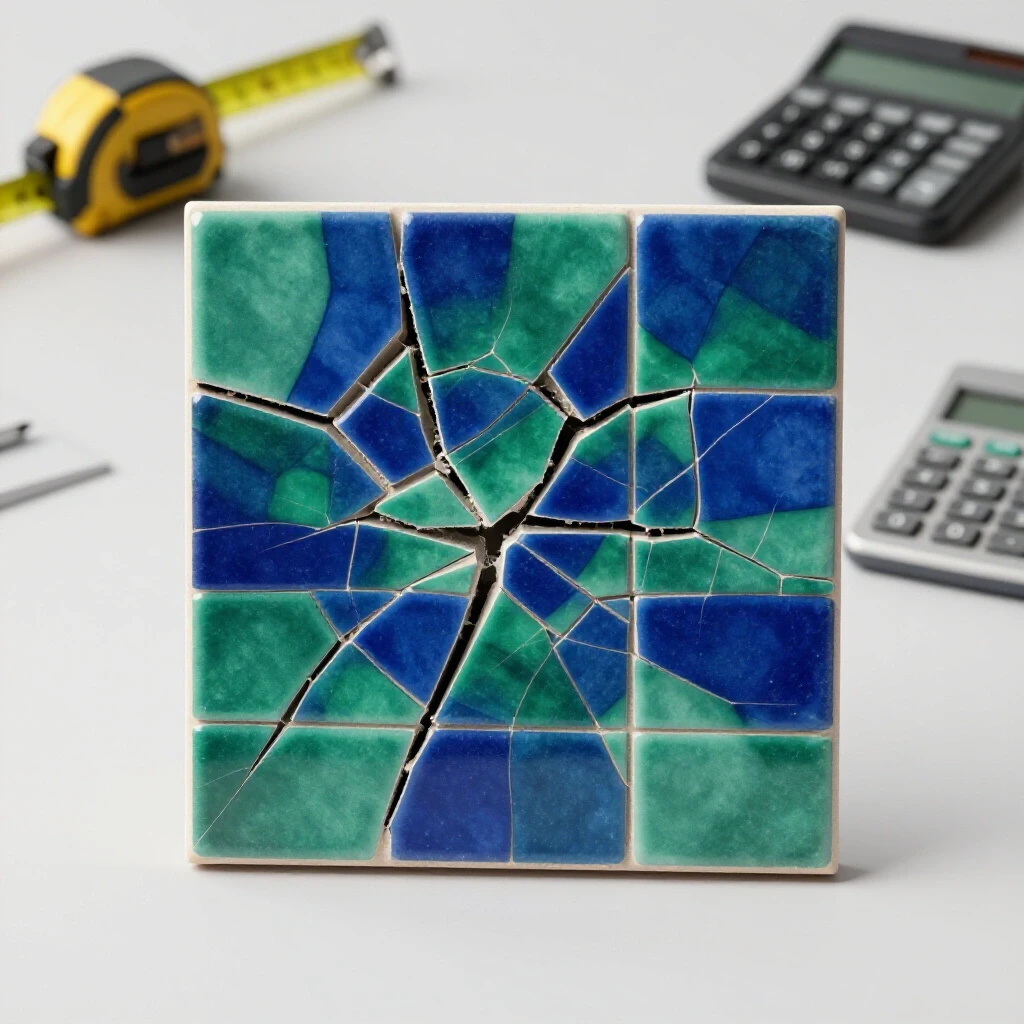
In my decade of tracking home expenses, I have found that homeowners who treat small ceramic fixes as high-priority maintenance items save significantly over the long term. We often focus on the “big” home renovation budget items, like full kitchen overhauls, but the real erosion of wealth happens in the “death by a thousand cuts” of deferred maintenance. When I look at my personal remodeling expense tracker, the most successful projects are those where I caught a cracked grout line before it compromised the backer board.
For a cost-conscious planner, the goal is to keep the “repair-to-value” ratio low. You want to spend the minimum amount necessary to restore function and appearance without over-improving a space beyond what the local market supports. This requires a disciplined approach to material selection and a refusal to let a small patch job turn into a full-room update.
Determining Your Project Scope and Spending Limits
Project scope definition is the process of setting hard boundaries on what you will and will not fix during a single work session. It prevents “scope creep,” where a simple task of replacing two cracked tiles evolves into a weekend spent re-tiling an entire backsplash.
I once consulted with a homeowner who started with a $50 goal to fix a single loose tile near their tub. Because they didn’t set a hard scope, they ended up buying new fixtures and a different shade of grout for the whole room, ballooning the cost to $400. To avoid this, I recommend a “stop-loss” limit on small repairs. If the cost of materials for a patch exceeds 10% of what a full replacement would cost, you need to re-evaluate the project’s financial logic.
- Establish a “hard ceiling” for total spending before visiting the store.
- Document exactly which tiles need attention and ignore the rest.
- Prioritize areas with direct water contact to protect the home’s structural integrity.
The Role of a 20% Contingency Buffer in Small Repairs
A contingency buffer is a reserved portion of your budget—typically 10% to 30%—set aside to cover unexpected price fluctuations or mistakes. In small-scale DIY work, this usually covers extra materials needed due to breakage or the discovery of minor underlying issues.
Even for a project that seems to cost less than $100, I always advocate for a 20% buffer. In my own 2021 ledger, I tracked a small tile fix where I accidentally cracked a second tile while removing the first. Because I had budgeted for 20% more material than “perfect” measurements suggested, I didn’t have to make a second, gas-consuming trip to the retailer.
| Item Category | Base Estimate | 20% Contingency | Total Allocated |
|---|---|---|---|
| Ceramic Tiles (Individual) | $15.00 | $3.00 | $18.00 |
| Premixed Grout (Small Tub) | $12.00 | $2.40 | $14.40 |
| Adhesive/Thinset | $10.00 | $2.00 | $12.00 |
| Total Project Cost | $37.00 | $7.40 | $44.40 |
Line-Item Material Forecasting for Tile Restoration
Line-item forecasting is a detailed accounting method where every single physical component of a project is listed with its current market price. This granularity eliminates the “hidden fees” that often surprise homeowners who rely on broad, rounded-off estimates.
When I build a cost breakdown guide for my clients, we look at the unit price of everything down to the plastic spacers. For a small tile repair, your primary costs are the tiles themselves, the bonding agent, and the grout. By using a remodeling expense tracker, you can see that prices for small tubs of premixed grout have risen about 8% over the last year due to supply chain shifts.
Financial planning for homeowners requires knowing that buying in small quantities often carries a “convenience premium.” A gallon of grout might be $30, while a small 1-quart tub is $15. While the quart is more expensive per ounce, the $15 savings is better for your cash flow if you only need a handful of material.
Analyzing Ceramic Tile Unit Costs
Unit cost analysis involves breaking down the price of materials into the smallest measurable increments, such as price per tile or price per square foot. This allows for an apples-to-apples comparison between different retailers and material grades.
For a basic repair, standard ceramic tiles are the most fiscally responsible choice. According to current retail data, a standard 4×4 inch white ceramic wall tile ranges from $0.15 to $0.80 per piece. I always suggest buying five extra tiles than you think you need. The cost-to-value home improvement data shows that having “attic stock” for future repairs adds more value to a home than using a slightly higher-grade material that you can’t find a match for later.
- Standard Ceramic (4×4): $0.15 – $0.50 per piece.
- Large Format Ceramic (12×12): $1.20 – $2.50 per piece.
- Subway Tiles (3×6): $0.30 – $0.90 per piece.
Selecting Adhesives and Grout for Budget Efficiency
Budget efficiency in material selection means choosing products that provide the necessary durability without paying for “over-engineered” features. For small repairs, premixed products often save money by reducing the need for specialized mixing tools and minimizing waste.
I prefer premixed grout for small patches because it eliminates the risk of color inconsistency caused by improper water-to-powder ratios. From a financial standpoint, the $5 extra you pay for a premixed tub is an insurance policy against having to redo the work because the color didn’t match. In my spreadsheets, I’ve noted that “time-to-completion” is a hidden variable; premixed products get the bathroom back in service faster, which has a tangible “lifestyle value.”
Local Labor Rate Indexing and the Value of Your Time
Labor rate indexing is a method of calculating the market value of the work you are performing yourself. By understanding what a professional would charge in your specific zip code, you can determine the “savings” generated by your DIY efforts.
While we are focusing on a DIY approach, it is vital to know the localized cost factors. According to the U.S. Bureau of Labor Statistics, the median hourly wage for flooring installers varies significantly by region. If you live in a high-cost area like San Francisco, your “sweat equity” is worth more than if you live in a lower-cost area. I track this to help homeowners realize that their four hours of weekend work might be saving them $200 or more in service fees.
Calculating Your Personal Sweat Equity
Sweat equity is the non-monetary contribution a homeowner makes to a project through their own labor. To calculate this accurately, you should value your time at a “fair market rate” to see if the DIY route is truly the best use of your resources.
If you value your time at $40 per hour and a repair takes you five hours, you have “spent” $200 in labor. If the materials cost $50, your total economic investment is $250. As a financial planner, I look at this as an opportunity cost. If those five hours could have been spent earning $100 per hour at your job, the DIY project actually “cost” you money. However, for most of my cost-conscious clients, the cash-flow benefit of not paying an outside party outweighs the theoretical opportunity cost.
- Track your “clock-in” and “clock-out” times on your spreadsheet.
- Include time spent driving to the hardware store and cleaning up.
- Compare your total “labor hours” against the retail cost of the materials.
Regional Cost Multipliers for Small Projects
Regional cost multipliers are numerical factors used to adjust national average prices to reflect local market realities. These multipliers account for differences in taxes, transportation costs, and local demand.
Data from Remodeling Magazine’s Cost vs. Value reports suggests that project costs in the Pacific region are often 15-20% higher than the national average. When I plan a small project, I apply these multipliers to my material estimates. If a national website says a tub of grout is $10, but my local multiplier is 1.15, I budget $11.50. This prevents the small “sticker shock” that can derail a tight budget.
| Region | Labor/Material Multiplier | Notes |
|---|---|---|
| Northeast | 1.12 | Higher transport costs for materials. |
| Midwest | 0.95 | Lower than average retail pricing. |
| South | 0.92 | Competitive retail market for basic goods. |
| West | 1.18 | High overhead for local hardware stores. |
Accounting for Hidden Fees and Incidental Costs
Hidden fees in home repair are the unquoted expenses that arise from the need for specialized tools, disposal of old materials, or protective gear. These “incidentals” can often equal the cost of the primary materials in a very small project.
In one of my personal ledger files from 2019, I recorded a “simple” tile fix where I forgot to account for the cost of a notched trowel and a grout float. Those two tools added $18 to a $30 material list—a 60% increase. For a cost-conscious planner, the goal is to audit your existing tool kit before setting the budget. If you have to buy tools, look for “multi-use” items that will serve you in future projects to amortize the cost over a longer period.
Tool Amortization and Rental Strategies
Tool amortization is the process of spreading the cost of a tool over its expected lifespan or the number of projects it will be used for. This helps you understand the “per-use” cost of your equipment.
For a small tile repair, you don’t need a wet saw. A manual score-and-snap cutter can often be found for under $20, or even borrowed from a neighbor. If you buy a $20 cutter and use it for four repairs over five years, the cost is only $5 per repair. I always advise my clients to check local “tool libraries” or community groups first. Spending $0 on tools is the ultimate win for your remodeling expense tracker.
- Audit your current supplies (sponges, buckets, rags).
- Check community forums for free or borrowed tools.
- Buy “contractor grade” only if you plan to use the tool more than five times.
Disposal and Cleanup Costs
Disposal costs refer to the fees associated with getting rid of construction debris. While a few broken tiles can go in the household trash, larger amounts of old grout and ceramic might require specific disposal methods.
For a small project, this is usually negligible, but don’t overlook the cost of cleaning supplies. You will need high-quality sponges and perhaps a specialized grout cleaner to prep the area. I have found that “blue painter’s tape” is a frequently forgotten expense that is essential for protecting surrounding tiles. Adding a flat $10 “sundries” line item to your budget is a safe way to cover these small but necessary purchases.
Tax, Resale, and Long-Term Value Impact
Long-term value impact is the measure of how a repair affects the future selling price of your home. While a small tile fix won’t necessarily increase your home’s value, failing to do it can decrease it significantly during a home inspection.
In financial planning for homeowners, we look at “maintenance ROI.” This isn’t about making a profit; it’s about preventing “value leakage.” A bathroom with missing or cracked tiles signals to a potential buyer that the home has been neglected. This can lead to lower offers or “repair credits” during escrow that far exceed the $50 it would have cost you to fix the tile today.
Depreciation Schedules for Bathroom Finishes
A depreciation schedule is a timeline that tracks the declining value of a home’s components over time. Most bathroom finishes like ceramic tile have a “useful life” of about 20 to 30 years.
If your tiles are 25 years old and starting to fail, a small repair is a temporary financial “patch.” As a planner, I analyze whether it’s better to keep patching or to start a “sinking fund” for a more significant update in three years. If you are spending $50 every six months to fix different areas of an old floor, you are essentially experiencing a high “maintenance tax” on an asset that has already fully depreciated.
- Year 1-10: Repairs are purely for aesthetics and minor wear.
- Year 11-20: Repairs become necessary to prevent water infiltration.
- Year 20+: Evaluate if the cost of repairs is exceeding the value of the finish.
Impact on Property Tax Assessments
Tax assessment adjustment is the change in your home’s value as determined by local government for tax purposes. Minor repairs generally do not trigger a reassessment.
One of the biggest fears for my clients is that improving their home will lead to higher property taxes. The good news is that “maintenance and repair”—like replacing a few tiles—is typically not considered an “improvement” that increases your assessed value. You are simply restoring the home to its existing condition. This makes small repairs one of the most tax-efficient ways to manage your property.
Practical Steps to Finalize Your Project Ledger
To keep your project on track, you need a system for recording every penny spent as it happens. This “real-time” tracking prevents the psychological trap of “rounding down” your expenses in your head.
I recommend using a simple spreadsheet or a dedicated mobile app to log receipts immediately after leaving the store. When I look at my historical data, the projects that stayed under budget were the ones where I checked my “actual vs. projected” numbers halfway through the work. If I saw I was overspending on materials, I would find a way to save on the “sundries” or cleanup phase.
- Create a simple spreadsheet with columns for: Item, Estimated Cost, Actual Cost, and Variance.
- Save all digital and physical receipts in a single folder for at least one year.
- Review the variance after the project is done to improve your next estimate.
By following this data-driven approach, you can maintain your home’s beauty and integrity without the stress of financial uncertainty. The key is to treat every $50 repair with the same analytical rigor as a $50,000 renovation. This discipline is what separates prudent homeowners from those who find themselves overwhelmed by the costs of homeownership.
Frequently Asked Questions
How much should I realistically budget for a single tile replacement?
For a single ceramic tile fix, a safe budget is between $40 and $65. This includes the cost of a small tub of premixed grout ($15), a small container of adhesive ($12), a few individual tiles ($5), and basic tools like a grout float or sponge ($15). Always include a 20% contingency for unexpected needs like extra cleaning supplies.
Does fixing a few tiles myself actually save money compared to doing nothing?
Yes, it saves money by preventing “deferred maintenance” costs. A loose tile can allow water to seep into the subfloor or wall, which can lead to mold or rot. Fixing a $50 tile issue today can prevent a $2,000 structural repair in two years.
What is the most expensive part of a small tile repair?
Surprisingly, the tools and “sundries” often cost more than the tiles themselves. While a single tile might cost $0.50, the specialized grout, adhesive, and application tools can easily total $40 or more. This is why I recommend borrowing tools whenever possible.
Should I buy the cheapest grout available to save money?
No. In my financial tracking, I’ve found that “cheap” grout often requires more maintenance or fails sooner. Spending an extra $5 on a high-quality, mold-resistant premixed grout is a better long-term investment because it extends the time between repairs.
How do I find the exact match for an old tile without spending a fortune?
Start by checking “attic stock” left by previous owners. If that fails, take a sample to a local tile specialty shop rather than a big-box retailer. They can often identify the manufacturer. If an exact match is too expensive, consider a “contrast” tile that looks intentional, which is cheaper than a custom-ordered match.
Will a small tile repair increase my home’s resale value?
It won’t necessarily “increase” the value, but it protects it. Buyers look for signs of neglect. A well-maintained bathroom with no cracked tiles allows you to maintain your asking price, whereas visible damage often leads to “repair credits” where buyers ask for thousands off the price.
How long does a typical small tile patch take to complete?
From a labor-value perspective, plan for about 3 to 5 hours of active work spread over two days. Day one involves removing the old tile and setting the new one. Day two is for grouting and final cleanup once the adhesive has cured.
Is it worth buying a wet saw for a small bathroom repair?
No. For a small project involving only a few tiles, a manual “score and snap” cutter ($15-$20) or even a simple tile nipper is much more cost-effective. A wet saw is a “capital expense” that is only justified if you are tiling a large area.
How do I track these small costs in my annual home budget?
I recommend a “Maintenance & Repair” line item in your monthly budget, usually 1% of your home’s value per year. Small tile repairs should be drawn from this fund. Use a simple spreadsheet to track these “micro-projects” so you can see the cumulative impact on your home’s value.
Can I reuse old grout or adhesive from a previous project?
Only if it hasn’t expired. Most premixed products have a shelf life of 6 to 12 months once opened. Using expired materials is a financial risk because the bond may fail, forcing you to spend money on a second repair. Always check the “use by” date before starting.
(This article was written by one of our staff writers, Steven Fletcher. Visit our Meet the Team page to learn more about the author and their expertise.)