How Sink Location Affects Kitchen Workflow (Expert Renovation Tips)

When you walk into a home that feels right, you usually notice the light or the colors first. However, the true source of that comfort often lies in the invisible rhythm of the floor plan. After 18 years in residential project coordination, I have learned that the most significant factor in how a room functions isn’t the cabinetry or the tile. It is the placement of the primary water source. When we change where a basin sits, we aren’t just moving a fixture. We are rewriting the entire script of how a family moves, talks, and works within their walls.
Redefining the Heart of Home Activity Through Layout Strategy
This phase involves analyzing how the primary water station acts as a pivot point for all other tasks in a room. By identifying the most frequent paths taken between the sink, storage, and prep areas, homeowners can create a more natural movement pattern.
In my first personal home renovation, a 1940s bungalow, the kitchen sink was tucked into a dark corner facing a wall. Every time I washed a vegetable or rinsed a glass, my back was turned to the rest of the house. It felt isolating. When we decided to move that station to a central island, the entire workflow of our evenings changed. Suddenly, I could prep dinner while helping my kids with homework. This shift in orientation is a classic example of how a layout change influences social interaction and task efficiency.
According to post-occupancy evaluations, homeowners spend nearly 60% of their kitchen time at the sink. If that station is poorly placed, you are essentially fighting your house every single day. When planning your remodel, you must look at the “path of least resistance.” If you have to cross a high-traffic hallway to get from the sink to the stove, you have a “workflow bottleneck.”
The Evolution from Work Triangles to Functional Zones
This concept explains the shift from the traditional three-point kitchen layout to a more modern, multi-station approach. It focuses on grouping related tasks together to minimize unnecessary steps and physical strain during daily use.
For decades, the “work triangle”—the path between the sink, fridge, and stove—was the gold standard. But as our homes have become more multi-functional, this model has evolved into “work zones.” In a zone-based layout, the sink serves as the anchor for the “Cleaning and Prep Zone.”
Building on this, consider how a secondary sink in a bathroom or a mudroom changes the sequence of a morning routine. In one project I coordinated, we added a small basin to a wide hallway leading from the garage. This simple change meant the kids could wash their hands before they ever touched a doorknob in the main living area. It redirected the “dirt flow” of the house.
- Prep Zone: Includes the sink, trash pull-out, and at least 36 inches of clear counter space.
- Cooking Zone: Centered around the range or cooktop, ideally within one or two steps of the prep zone.
- Storage Zone: The refrigerator and pantry, located at the edge of the workspace to allow access without interrupting the cook.
How Repositioning a Basin Impacts Daily Movement Patterns
This section examines the physical steps and “mileage” added or saved by changing where a fixture is located. It highlights how ergonomic placement reduces the need for repetitive reaching, turning, or walking across large spaces.
When I oversaw a full-house remodel for a client in a 1970s ranch, we discovered that the original bathroom layout forced the user to walk around a swinging door to reach the sink. By shifting the basin just 24 inches, we cleared a straight path. Interestingly, the client reported that the room felt twice as large, even though the square footage hadn’t changed. This is the power of visual and physical flow.
In a kitchen, moving the sink from a perimeter wall to an island often turns a “one-person” kitchen into a “multi-person” space. When the sink faces the room, the person cleaning or prepping is no longer an obstacle to the person trying to reach the cabinets. This reduces “traffic jams” during the high-stress morning rush.
| Layout Type | Workflow Efficiency Score | Primary Movement Benefit |
|---|---|---|
| Wall-Facing Sink | Moderate | Keeps water mess contained to the perimeter. |
| Island-Facing Sink | High | Allows for social interaction and multi-person prep. |
| Corner Sink | Low | Often creates a bottleneck and limits cabinet access. |
| Window-Facing Sink | High | Provides natural light and a visual break during tasks. |
The Psychological Shift of Visual Flow and Sightlines
This topic explores how the view from a workstation affects the user’s mood and connection to the rest of the home. It focuses on the transition from “chore-oriented” spaces to “experience-oriented” environments.
As a project coordinator, I often saw homeowners focus solely on the “look” of a new sink. However, the “view” from the sink is what actually impacts long-term satisfaction. If your sink faces a beautiful backyard or opens up to the living room, the task of washing dishes becomes less of a chore.
In my second full-home renovation, I prioritized placing the sink under a large window. This choice wasn’t about the plumbing; it was about the morning light. It changed my “starting workflow” for the day. Instead of staring at a backsplash, I was connected to the outdoors. This visual link can reduce the perceived effort of domestic tasks.
Sequencing the Design Phase to Avoid Layout Regret
This strategy outlines the steps needed to verify a new layout before any physical work begins. It emphasizes the use of templates and mock-ups to test movement patterns and identify potential physical conflicts.
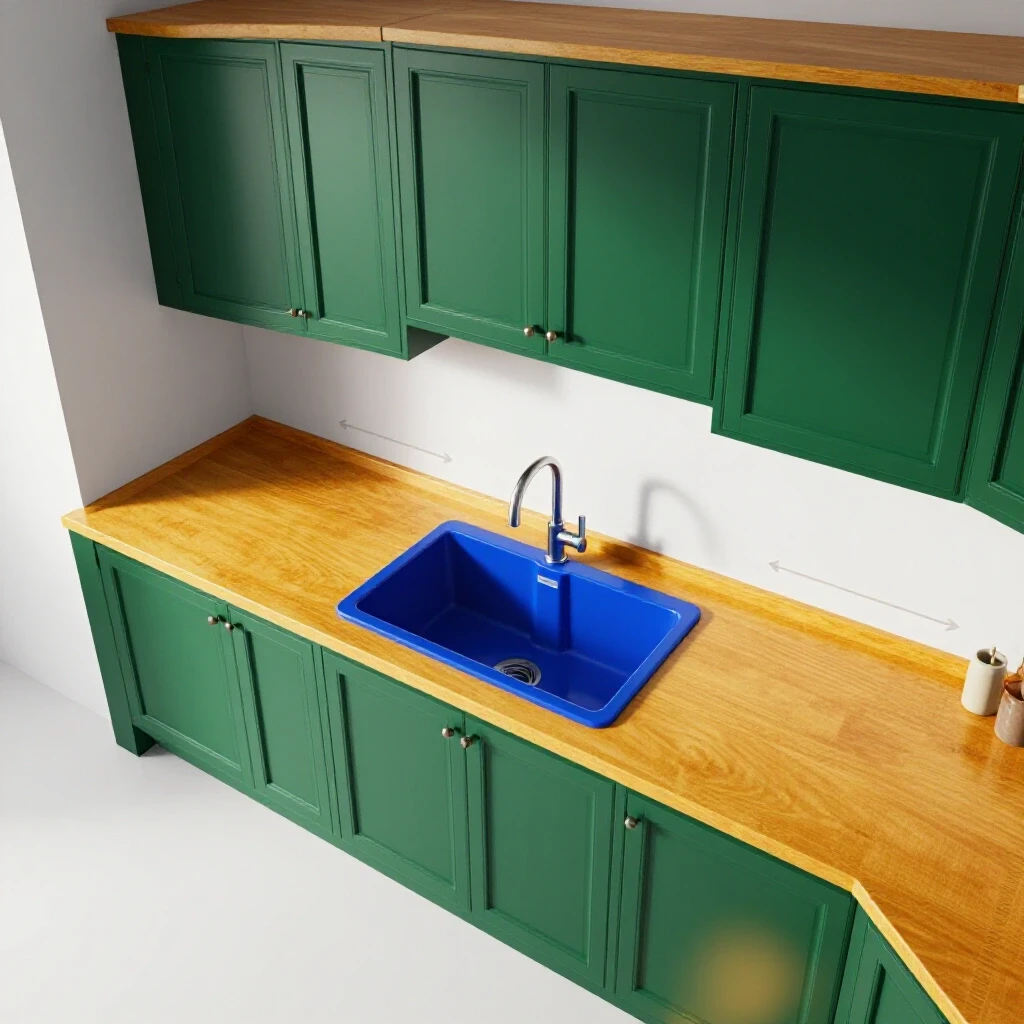
Before you commit to a new location, you must walk through the “ghost” of your future room. I always tell my clients to use blue painter’s tape on the floor to mark out the new sink and counter positions. Then, actually go through the motions of making a meal or brushing your teeth.
- Mock-up Phase: Use tape or cardboard boxes to simulate the new fixture locations.
- Traffic Test: Have two people move through the space at the same time to check for collisions.
- Reach Analysis: Ensure that frequently used items (like soap, towels, or spices) are within a “primary reach zone” of 15 to 48 inches from the floor.
- Sightline Verification: Stand at the proposed sink location and see what you will be looking at for 30 minutes a day.
Managing the Transition: From Blueprints to Daily Use
This section details the operational shifts that occur during the construction process when a layout is changed. It focuses on maintaining a functional home environment while the primary work zones are being relocated.
During a major renovation, the loss of a primary sink is the biggest disruption to a family’s workflow. In my 18 years of experience, the most successful projects are those that plan for a “temporary water station.” Whether it’s a utility sink in the basement or a setup in the laundry room, having a designated spot for hygiene and cleaning prevents the stress of a “dry house.”
As a result of moving a sink, you might also find that your storage needs change. If the sink moves to an island, you lose the upper cabinets that usually hold your glasses. You must then plan for drawer storage or open shelving nearby. This “ripple effect” is why a layout change is never just about one fixture; it is a total recalibration of the room’s storage logic.
Structural Discoveries and Their Impact on Layout Choices
This part addresses the reality of what happens when walls are opened and how those findings can force a change in the planned workflow. It emphasizes the need for flexibility when hidden elements interfere with the ideal design.
In residential renovation planning, we often encounter “surprises” behind the drywall. I remember a project where we planned to move a bathroom sink to create a double vanity. Once the walls were open, we found a massive structural post that we couldn’t move without spending thousands on a steel beam.
Instead of fighting the structure, we adapted the workflow. We split the vanities, putting one on each side of the post. This actually created a “his and hers” zone that functioned better than a single long counter. The lesson here is that your layout must be resilient. Always have a “Plan B” for your sink location in case the house reveals a secret.
- Contingency Buffer: Always set aside 15–25% of your timeline for “discovery” delays.
- Structural Verification: Have your contractor check for load-bearing walls or hidden HVAC ducts before finalizing the sink’s new home.
- Lead-Time Awareness: Custom sinks or specialized faucets can have lead times of 6–12 weeks; order them before the “rough-in” phase.
Ergonomic Adjustments for Long-Term Home Use
This focus area looks at how the height and depth of a sink placement can reduce physical strain over time. it considers the needs of different age groups and physical abilities within a household.
Standard counter height is 36 inches, but that isn’t perfect for everyone. If you are tall, a deep farmhouse sink might actually cause back pain because you have to lean over further to reach the bottom. Conversely, a shallow sink might be better for someone with limited reach.
When I evaluate a layout, I look at the “user height to basin depth” ratio. A well-planned workflow considers the physical comfort of the person using the space. If you plan to stay in your home as you age, consider “universal design” principles. This might mean leaving space under the sink for a seated user or choosing a faucet with a motion sensor to simplify the workflow.
Using Technology to Track Layout Progress
This list provides modern tools that help homeowners and coordinators stay on top of layout changes and ensure the vision matches the reality.
- Home Design Apps: Tools like Roomle or MagicPlan allow you to visualize the 3D flow of a room before you move a single pipe.
- Project Management Platforms: Apps like CoConstruct or Buildertrend help you track change orders and layout adjustments in real-time with your contractor.
- Digital Leveling Tools: Use phone-based sensors to check if your proposed “prep zones” are truly level and ergonomic.
- Visual Documentation: Take photos of the “open walls” before the new sink is installed. This creates a “map” for any future repairs or changes.
The Final Walkthrough: Validating the New Flow
This concluding step focuses on the “punch list” for a layout change. It ensures that the final result meets the ergonomic and efficiency goals established at the beginning of the project.
Once the renovation is complete, the “post-occupancy evaluation” begins. For the first few weeks, pay attention to where you “fumble.” Do you find yourself reaching for a towel that isn’t there? Are you dripping water across the floor to get to the trash?
These small friction points are normal as you adapt to a new workflow. Most can be solved with small adjustments, like adding a hook or a small rug. The goal of a successful layout change is not perfection, but a significant reduction in the daily “micro-stresses” of home life. By focusing on how you move, rather than just how the room looks, you create a space that truly supports your lifestyle.
Frequently Asked Questions
How does moving a sink affect the overall timeline of a kitchen remodel?
Relocating a sink usually adds 3 to 5 days to the “rough-in” phase of a project. This is because the layout of the floor or walls must be adjusted to accommodate the new position. It also requires more coordination between the flooring and cabinetry teams to ensure the new “footprint” is seamless.
What is the “butt-bump” rule in kitchen layout planning?
This is a practical measurement used to prevent traffic jams. There should be at least 42 to 48 inches of space between a sink and any opposite island or wall. This allows one person to work at the sink while another person passes behind them without physical contact.
Can a sink location change improve the resale value of my home?
Yes, but only if it improves the “flow.” A sink that faces a living area or a window is generally more desirable than one tucked in a corner. Buyers look for “open-concept” workflows where the person in the kitchen feels connected to the rest of the house.
What are the signs that my current sink location is causing a “workflow failure”?
If you constantly have water on the floor between your sink and stove, or if you feel “trapped” when someone else enters the kitchen, your layout is failing. Another sign is if you find yourself using a secondary bathroom sink for kitchen tasks because the main one is too difficult to access.
How do I choose between a single or double basin for my new layout?
This depends on your “cleaning workflow.” If you use a dishwasher for almost everything, a large single basin is often better for soaking large pots. If you hand-wash many items, a double basin allows you to have one side for soapy water and one for rinsing without stopping the flow of work.
Does a sink in the island make the kitchen look messier?
It can, as the sink becomes a focal point. To mitigate this, many homeowners choose a “deep basin” to hide dirty dishes from view or install a “raised ledge” on the back of the island to create a visual barrier between the kitchen and the dining area.
How much counter space is needed on either side of a sink for an efficient workflow?
Industry standards suggest at least 18 inches on one side and 24 inches on the other. This provides enough “landing space” for dirty items on one side and clean, drying items on the other, preventing a backup in your task sequence.
What is the biggest mistake people make when changing their sink location?
The most common error is forgetting about the “trash flow.” The trash bin should always be located directly next to the sink. If you move the sink but leave the trash across the room, you will spend your entire day walking back and forth with dripping food scraps.
(This article was written by one of our staff writers, David Langford. Visit our Meet the Team page to learn more about the author and their expertise.)