Smart Switches vs Smart Bulbs: Which Is Best for Your Home? (Guide)

Deciding on the final details of a home renovation often feels like a race against time. You have already spent weeks comparing the density of quartz versus the heat resistance of granite. You have weighed the scratch resistance of luxury vinyl plank against the timelessness of solid oak. Now, you are standing in a room with exposed studs or freshly painted drywall, and you must decide how you will actually interact with your lighting. This choice is not just about a gadget; it is a long-term commitment to the tactile feel and visual harmony of your home. If you choose the wrong hardware, you may find yourself replacing components every two years or staring at a beautiful light fixture ruined by an unattractive bulb.
In my 13 years of analyzing supply chains and material performance, I have seen how small hardware choices impact the daily experience of a property. When I renovated my third property, a mid-century modern home, I realized that lighting controls are just as much a “material” as your flooring. They have a specific lifespan, a physical texture, and a failure rate that can be measured. Making an objective, evidence-based decision now prevents the frustration of a system that feels cheap or fails to meet the aesthetic standards of a high-end build.
Understanding the Physical Architecture of Smart Lighting Hardware
The physical architecture of lighting hardware refers to the mechanical and electronic components that make up a control system. This includes the internal circuitry, the exterior housing materials, and the interface points where a user interacts with the device.
When we evaluate these components, we are looking at how they are built to last. A wall-mounted control unit is a permanent fixture. It is designed to stay in the wall for a decade or more. In contrast, an intelligent bulb is a consumable. Even the highest quality LED has a finite number of hours before the diodes or the internal driver fail. Understanding this distinction is the first step in a technical material comparison.
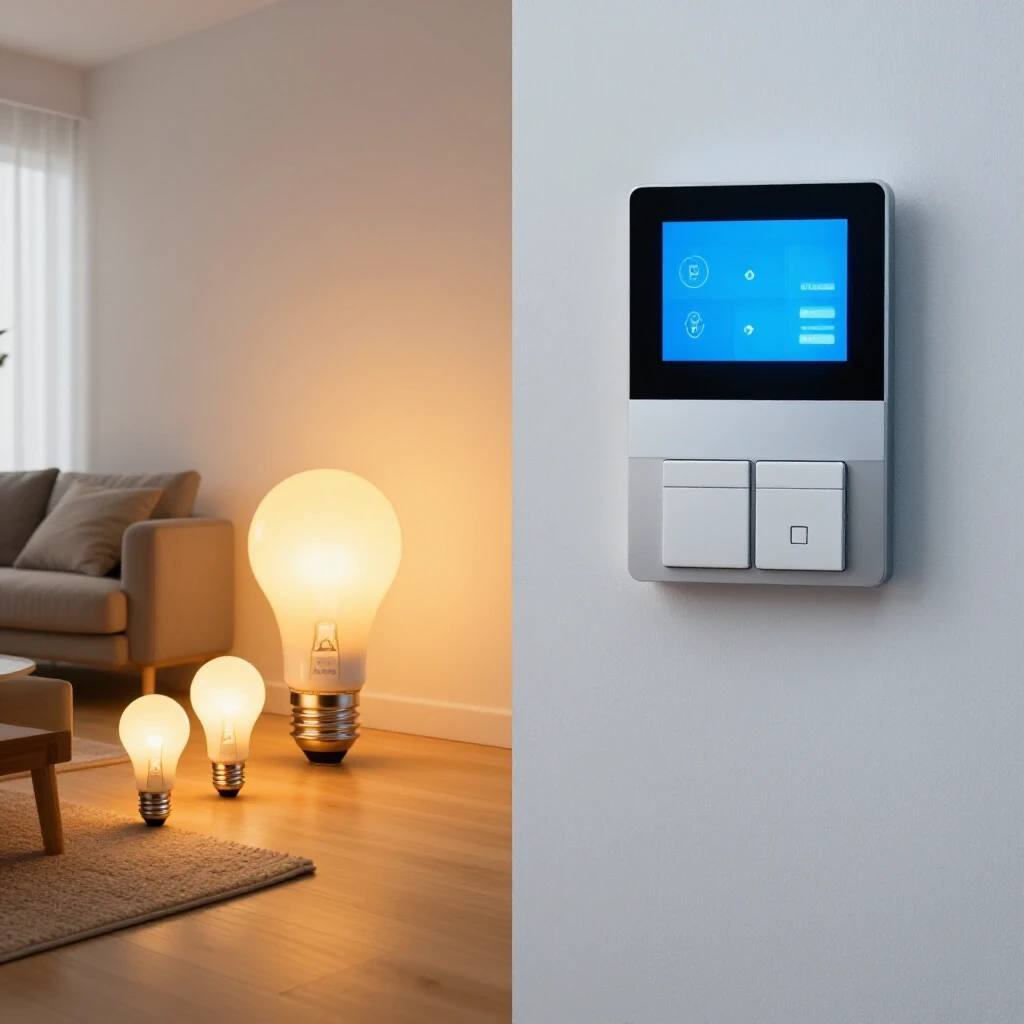
- Wall-Mounted Controls: These replace the traditional toggle or rocker. They use a physical relay or a solid-state dimmer to manage the flow of power to the fixture.
- Intelligent Bulbs: These contain the control hardware inside the base of the bulb itself. This means the bulb is always “powered,” even when the light is technically off.
Material Durability and Mechanical Wear Standards
Material durability is the ability of a product to withstand its intended use over a long period without failing. For lighting hardware, this is measured through mechanical cycle testing and thermal management efficiency.
In the world of supply chain analysis, we look at the “actuation force” and “cycle count” of a switch. A standard high-quality wall control is often rated for 100,000 to 200,000 clicks. This is a mechanical standard that ensures the internal spring and contact points do not degrade. Intelligent bulbs, however, do not have moving parts, but they face a different enemy: thermal stress. Because the control electronics are packed into the base of the bulb next to the heat-generating LEDs, the materials must have high thermal conductivity to prevent premature failure.
Side-by-Side Material Performance Specifications
| Feature | Wall-Mounted Control Units | Intelligent Integrated Bulbs |
|---|---|---|
| Primary Material | Polycarbonate / ABS Blend | Ceramic / Aluminum / Glass |
| Mechanical Lifespan | 100,000+ Cycles | N/A (No moving parts) |
| Thermal Management | Passive Air Cooling | Integrated Heat Sinks |
| Impact Resistance | High (IK07+ Rating) | Low (Fragile Glass/Plastic) |
| UV Stability | High (Non-yellowing plastics) | Variable (Depends on lens) |
| Tactile Quality | Consistent Spring Tension | N/A |
Visual Design Outcomes and Fixture Compatibility
Visual design outcomes refer to how well a piece of hardware blends with the interior design of a home. This involves looking at the color matching of plastics, the profile of the hardware, and whether the bulb fits the intended aesthetic of a light fixture.
One of the biggest pain points I have seen in high-end homes is “aesthetic clashing.” You might buy a stunning, clear-glass pendant light only to find that an intelligent bulb looks like a piece of industrial equipment inside it. These bulbs often have a large, opaque plastic base (the “snow cone” look) to hide the electronics. This can ruin the lines of a designer fixture. Wall-mounted controls, on the other hand, allow you to use any decorative bulb you want, including vintage-style Edison bulbs with delicate filaments.
- Color Matching: Most wall controls come in standard architectural white, light almond, or black. They are designed to match standard wall plates from manufacturers like Lutron or Leviton.
- Form Factor: Intelligent bulbs are often larger and heavier than standard LEDs. This can cause issues with small shades or “clip-on” lamp covers.
- Finish Consistency: If you have a specific metal finish on your switch plates (like unlacquered brass), finding a wall control that fits that aesthetic is usually easier than finding a bulb that complements it.
Maintenance Cycles and Component Lifespan Analysis
Maintenance cycles represent the frequency and effort required to keep a system operational. Lifespan analysis looks at the total time a product remains functional before it requires a full replacement.
From a supply chain perspective, the “total cost of ownership” is heavily influenced by how often you have to climb a ladder. In my own properties, I have tracked the failure rates of various lighting setups. I found that intelligent bulbs in high-ceiling recessed cans were a maintenance nightmare. Even with a 25,000-hour rating, the heat trapped in a recessed housing often shortened the bulb’s life to three or four years. A wall-mounted control, however, sits in a cool wall box. I have units that have been in service for over 10 years without a single touch.
15-Year Maintenance Outlay Comparison
| Task | Wall-Mounted Control Unit | Intelligent Integrated Bulbs |
|---|---|---|
| Initial Installation | 15-30 Minutes per unit | 1 Minute per bulb |
| Cleaning Requirement | Surface wipe during dusting | Bulb removal for dusting |
| Replacement Frequency | 10–15 Years | 3–5 Years |
| Failure Point | Mechanical Relay / Capacitor | LED Driver / Heat Stress |
| Labor Intensity | Low (One-time setup) | High (Recurring replacements) |
A Practical Supply Chain Evaluation of Lighting Options
When I evaluate these products, I look at the “BOM” or Bill of Materials. A wall-mounted control uses higher-grade plastics and more robust capacitors because it isn’t limited by the tiny footprint of a bulb base. This makes them a more “industrial” choice for a residential setting.
In my experience, homeowners often fall into the trap of the lower upfront price of a single bulb. However, if a room has six recessed lights, you are buying six sets of electronics. If you use a single wall control, you are buying one set of high-quality electronics to manage six standard, inexpensive bulbs. This is a classic supply chain trade-off: centralizing the technology usually leads to higher durability and lower long-term maintenance.
Technical Material Specifications to Look For
- Polycarbonate Housing: Look for wall controls made of high-impact polycarbonate. This material resists scratches and does not turn yellow when exposed to sunlight from nearby windows.
- Ceramic Heat Sinks: If you choose bulbs, look for those with ceramic or aluminum bases rather than pure plastic. Ceramic has much better thermal dissipation properties.
- Gold-Plated Contacts: In high-end wall controls, internal contacts are often gold-plated to prevent oxidation, ensuring the light doesn’t flicker over time.
- Capacitor Rating: Quality hardware uses capacitors rated for 105°C rather than the standard 85°C. This significantly extends the life of the electronic driver.
Real-World Case Study: The Kitchen Renovation
In a project I managed two years ago, the homeowner was torn between these two options for their kitchen. The kitchen featured a large island with three decorative glass pendants and ten recessed “can” lights.
- The Choice: We tested intelligent bulbs in the pendants first. The bulbs were too large and stuck out past the bottom of the glass shades, creating a harsh glare.
- The Pivot: We switched to a high-quality wall-mounted dimmer. This allowed us to use “dim-to-warm” LED bulbs that looked exactly like traditional incandescent bulbs.
- The Result: The aesthetic was preserved. More importantly, when one of the inexpensive bulbs burned out a year later, the homeowner replaced it for $5 without needing to reconfigure any software or settings. The “intelligence” stayed in the wall, where it belonged.
Actionable Buying Worksheet for Homeowners
When you are ready to purchase, use this scoring matrix to evaluate your specific needs. Assign a score from 1 to 5 for each category.
- Fixture Visibility: Are your bulbs visible? (If yes, wall controls score higher).
- Ceiling Height: Are your lights hard to reach? (If yes, wall controls score higher due to longevity).
- Rental vs. Owned: Do you own the home? (If yes, wall controls are a better long-term investment).
- Tactile Preference: Do you prefer the feel of a real switch? (If yes, wall controls are the only choice).
- Multi-Bulb Fixtures: Does your fixture have more than 3 bulbs? (If yes, wall controls are more cost-effective).
Totaling your score: – 18–25 Points: Invest in high-quality wall-mounted control units. – Under 18 Points: Intelligent bulbs may be a suitable temporary or localized solution.
Conclusion and Next Steps
Choosing the right way to control your home’s atmosphere is a balance of material science and design. Wall-mounted controls offer superior durability, better material quality, and a cleaner aesthetic for high-end fixtures. They treat lighting as a permanent part of the home’s infrastructure. Intelligent bulbs offer a quick way to add features to a single lamp or a small space, but they often fall short in long-term maintenance and visual harmony.
If you are in the middle of a build or a major update, my recommendation is to prioritize the infrastructure. Look for wall controls that use high-grade polymers and have a proven track record of mechanical reliability. This ensures that your home not only looks modern today but continues to function flawlessly for the next decade.
Practical Next Steps:
- Audit your fixtures: Count how many bulbs are in each room to determine if a central control or individual bulbs make more sense.
- Check bulb clearances: Measure the height and width of your favorite decorative shades to see if a larger intelligent bulb will even fit.
- Test the “Click”: Visit a showroom and physically press the buttons on different wall controls. The tactile response is a key indicator of internal build quality.
Frequently Asked Questions
Why do some wall controls feel “mushy” while others have a crisp click?
This is due to the quality of the internal micro-switch or relay. High-end units use mechanical components with higher spring tension and better housing tolerances. A “mushy” feel often indicates cheaper ABS plastic or lower-grade internal springs that may fail sooner.
Can I use any bulb with a smart wall control?
Most wall-mounted dimmers require “dimmable” LEDs. While you have more freedom with aesthetics, you must ensure the bulb’s driver is compatible with the switch’s dimming method (typically Forward Phase or Reverse Phase).
Do intelligent bulbs really die faster than standard LEDs?
Yes, in many cases. Because the bulb contains sensitive electronics right next to the heat-producing LEDs, they are prone to “thermal fatigue.” Standard LEDs move those electronics to a simpler, cooler design, often resulting in a longer actual lifespan.
Will a smart switch fit in my existing wall box?
Most modern smart controls are deeper than traditional switches because of the internal electronics. You should verify that your wall boxes are “deep” style (at least 2.5 to 3 inches) to ensure the wires and the unit fit comfortably without crushing the materials.
Is there a difference in the plastic used for these devices?
Absolutely. Premium brands use UV-stabilized polycarbonate, which resists impact and maintains its color. Cheaper alternatives often use ABS plastic, which can become brittle and turn a yellowish hue after a few years of exposure to sunlight.
How do I know if a bulb has a good heat sink?
Weight is a primary indicator. A bulb with a heavy aluminum or ceramic base will dissipate heat much better than a lightweight, all-plastic bulb. In my testing, heavier bulbs almost always outlast their lighter counterparts.
What happens to my wall control if the company goes out of business?
If you choose a unit that follows standard physical protocols, it will still function as a manual switch. This is a major durability advantage over bulbs, which may lose certain features if their specific cloud service is discontinued.
Do wall controls work with chandeliers?
They are the preferred choice for chandeliers. Trying to sync 12 or 24 individual intelligent bulbs in a single chandelier is a logistical headache and often looks cluttered. A single wall control manages the entire fixture as one unit.
Can I mix and match these two technologies?
It is generally not recommended to put an intelligent bulb on a circuit controlled by a smart wall switch. This creates a “double-switching” scenario that can lead to flickering or hardware damage due to inconsistent power delivery.
What is the most common failure point for a smart switch?
The most common failure point is the internal relay or the capacitor. High-quality manufacturers use “inrush current protection” to prevent the initial spike of power from welding the relay shut, which is a common problem with cheaper, no-name brands.
(This article was written by one of our staff writers, Andrew Morrison. Visit our Meet the Team page to learn more about the author and their expertise.)