Solid Surface vs Quartz: Which Is Best for Home Renovations? (Guide)

Have you ever stood in a kitchen showroom, running your hand over a cool, polished slab, and wondered if that specific material would actually survive a decade of Tuesday night dinners and heavy grocery bags?
During my eighteen years as a construction project coordinator, I have seen homeowners lose sleep over this exact decision. In my first full-home renovation back in 2006, I opted for a polyester-based solid surface because I loved the idea of an integrated sink with no visible seams. However, three years later, when I remodeled a rental property, I shifted to engineered quartz to handle the potential abuse from tenants. Both materials have their place, but choosing the wrong one for your lifestyle can lead to premature wear or a budget-straining replacement.
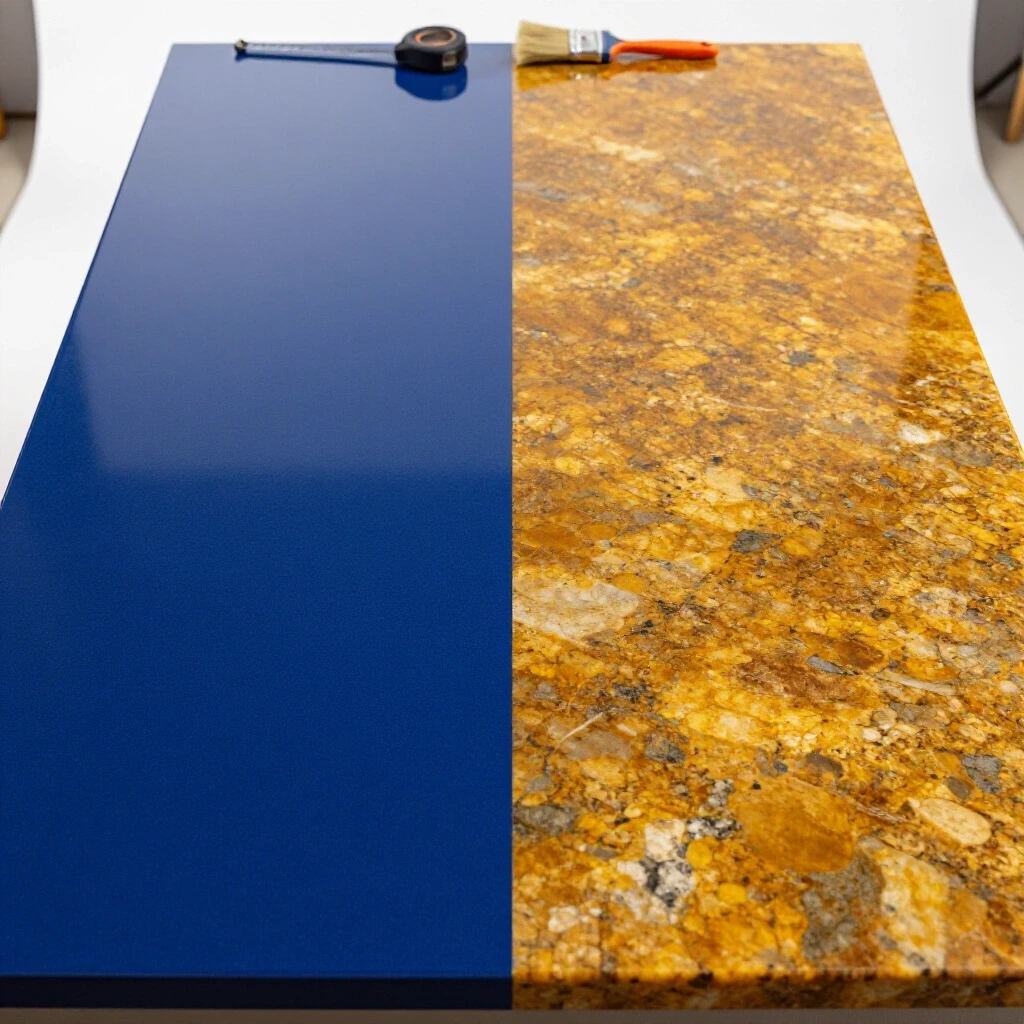
Managing a residential renovation is less about picking colors and more about risk management. You are balancing the aesthetic goals of your kitchen or bathroom with the hard realities of structural integrity, contractor reliability, and financial limits. Whether you are leaning toward the seamless versatility of resin-based materials or the rugged durability of stone-and-resin composites, understanding how these surfaces impact your project timeline and bottom line is essential for a successful outcome.
Evaluating Material Performance for Modern Kitchens and Baths
This section examines the fundamental differences between acrylic-based resins and engineered stone composites. Understanding these core characteristics helps you determine which material aligns with your household’s daily habits, maintenance tolerance, and long-term durability requirements for high-traffic areas like kitchens and primary bathrooms.
When we talk about solid surface materials, we are referring to a blend of acrylic or polyester resins mixed with mineral fillers. The magic of this material lies in its “inconspicuous seams.” Because the fabricator uses a matching chemical adhesive, the joints disappear, making it look like one continuous piece. This was a lifesaver in a narrow galley kitchen I managed where we had to navigate several odd angles.
Engineered quartz, on the other hand, is a different beast entirely. It consists of roughly 90% to 94% crushed natural stone bound together by polymer resins. While it isn’t “seamless” like solid surface, it offers a level of hardness that is difficult to match. In my second personal renovation, I chose quartz for the island because I knew my kids would be sliding heavy pots and pans across it daily.
- Heat Resistance: Quartz can generally handle higher temperatures, though neither should have a hot pan placed directly on them.
- Porosity: Both are non-porous, meaning they resist bacteria and don’t require the periodic sealing that natural granite or marble does.
- Repairability: Solid surface wins here. Scratches can be sanded out by a professional, whereas a chip in quartz requires a more complex resin filler.
Budget Forecasting and RSMeans Cost Estimations
Effective financial planning requires a deep dive into the cost per square foot and the hidden expenses associated with fabrication and delivery. By using industry-standard data, homeowners can create a realistic budget that accounts for material tiers, edge profiles, and the labor required for a professional result.
In my experience, many homeowners underestimate the “fully loaded” cost of countertops. They see a price per square foot at a big-box store and assume that is the final number. Using RSMeans construction estimating data as a baseline, we can see how these materials typically stack up in a standard residential renovation.
| Material Type | Low-End (per sq. ft.) | High-End (per sq. ft.) | Typical Labor % |
|---|---|---|---|
| Acrylic Solid Surface | $50 | $95 | 25-30% |
| Engineered Quartz | $75 | $150+ | 20-25% |
| Integrated Sinks (Solid Surface) | $400 (per unit) | $800 (per unit) | Included in Fab |
Building a 20% contingency into your countertop budget is a move I always recommend. During a bathroom remodel I oversaw last year, we discovered the subfloor was unlevel by nearly an inch over six feet. We had to pause the countertop installation to reinforce the floor and level the cabinets, which added $1,200 in unexpected labor. If you don’t have that buffer, a small structural surprise can halt your entire project.
Construction Sequencing and Lead-Time Management
The timing of your countertop installation is a critical milestone that dictates when plumbing and electrical finishes can be completed. This section outlines how to integrate material selection into a master schedule, focusing on the gap between cabinet installation, templating, and final delivery.
One of the biggest friction points in a kitchen remodel is the “black hole” of lead times. You cannot template for your surfaces until your base cabinets are permanently installed, leveled, and secured. This means your kitchen will likely be non-functional for two to four weeks while the fabricator works off-site.
- Cabinet Install: Ensure they are perfectly level to prevent the stone or resin from cracking under stress.
- Templating: The fabricator visits the site to create a digital or physical map of the space.
- Fabrication: The slabs are cut, edges are profiled, and sink cutouts are made in the shop.
- Installation: The crew brings the finished pieces to the home for final fitting.
I once worked on a project where the homeowner changed their mind from a solid surface to a specific imported quartz slab three days before templating. This “scope creep” pushed the entire project back by five weeks because the new material was stuck in a shipping container. To avoid this, lock in your material choice at least thirty days before the cabinets are scheduled to arrive.
Vetting Subcontractors and Avoiding Contractor Disputes
Selecting the right fabricator is just as important as selecting the material itself, as poor craftsmanship can ruin even the highest-quality slab. This guide provides a framework for interviewing subcontractors, checking references, and ensuring that your contract includes clear quality-control benchmarks and payment milestones.
When you are vetting a countertop subcontractor, don’t just ask for a price. Ask to see a portfolio of their seam work. For a resin-based solid surface, the seams should be virtually invisible. For engineered stone, the seams should be tight (less than 1/16th of an inch) and color-matched to the slab.
- Verify Insurance: Ensure they carry both general liability and workers’ compensation.
- Check the Slab: Personally inspect your specific quartz slabs at the warehouse to check for “resin pools” or pigment clusters that you might find unattractive.
- Payment Schedule: Never pay 100% upfront. A standard schedule is 50% upon signing and 50% after the “punch list” is completed to your satisfaction.
In my years of coordination, I’ve found that the best contractors are the ones who ask about your sink and faucet models early. If a contractor doesn’t ask for your sink’s “cutout template” before they start cutting, that is a major red flag.
Hidden Structural Surprises and Site Preparation
Countertops are incredibly heavy and require a stable foundation to prevent sagging or catastrophic failure. This section explores the structural requirements for different surfaces, including cabinet reinforcement, floor load-bearing capacities, and the importance of identifying issues like mold or outdated wiring before the slabs are set.
A standard kitchen island with a quartz top can weigh over 500 pounds. If you are renovating an older home, you must verify that the floor joists can handle that concentrated load. During a 1920s bungalow remodel, I found that the kitchen floor was bouncing. Had we installed the heavy engineered stone without sistering the joists below, the countertop likely would have cracked within a year.
- Mold Inspection: Once the old counters are off, check the drywall and cabinet backs for signs of water damage or mold.
- Electrical Updates: This is the time to ensure your outlets are GFCI-protected and meet current building codes before the backsplash goes up.
- Plumbing Rough-in: Ensure the sink plumbing is correctly positioned for your new sink depth, as resin-based integrated sinks often sit lower than top-mount versions.
Managing Change Orders and Scope Creep
Change orders are the primary cause of budget overruns in residential construction, often stemming from late-stage design shifts or unforeseen site conditions. This section details how to document changes, calculate their impact on the project’s critical path, and maintain financial control during the renovation process.
A change order is a written agreement to alter the original scope of work. For example, if you decide to add a waterfall edge to your island after the initial contract is signed, that is a change order. These are not just material costs; they involve additional fabrication time and often a more complex installation process.
Interestingly, I’ve seen projects where a simple change in backsplash height added $2,000 to the bill because it required an extra slab of material. Always ask your contractor: “How does this change affect the total cost and the completion date?” and get the answer in writing.
Quality Control and the Final Punch List
The final phase of a countertop installation involves a meticulous inspection to ensure all specifications have been met and no damage occurred during the process. This section provides a checklist for homeowners to use during the final walkthrough, covering seam quality, edge consistency, and surface integrity.
The “punch list” is your final defense against a job left 90% finished. Before you hand over the final check, walk the perimeter of the installation with a flashlight.
- Check the Seams: Run your fingernail across them; they should be smooth and level.
- Inspect the Edges: Look for “chatter marks” or rough spots from the polishing tools.
- Verify Levelness: A marble or a level should not roll off the surface.
- Test the Sink: Fill the sink and drain it to ensure there are no leaks at the flange or the integrated bond.
I remember a project where the installer accidentally scratched a solid surface counter while installing the cooktop. Because the material was a resin-based solid surface, they were able to buff it out on-site in twenty minutes. Had that been a deep scratch in quartz, we would have been looking at a much more difficult and visible repair.
Long-Term Maintenance and Post-Occupancy Evaluation
Once the dust settles, the longevity of your new surfaces depends on proper care and an understanding of the material’s limitations. This section offers practical advice on daily cleaning, preventing heat damage, and knowing when to call a professional for repairs to ensure your investment remains in peak condition.
Living with your renovation is the ultimate test of your planning. In my current home, I’ve found that while quartz is nearly indestructible regarding stains, I have to be more careful with heavy glass jars to avoid chipping the edges. With solid surface, I’ve had to be diligent about using trivets, as high heat can cause the resin to discolor or even crack.
- Cleaning: Use mild soap and water. Avoid abrasive cleaners that can dull the finish over time.
- Protection: Always use cutting boards. Even though quartz is scratch-resistant, your knives will dull quickly against the stone.
- Periodic Check-ups: Inspect the silicone caulking where the countertop meets the backsplash every year to prevent water from seeping behind the cabinets.
Project Management Tools for a Smooth Renovation
Navigating a remodel requires organization that goes beyond a simple notebook. Utilizing modern tools can help you track your budget, stay on schedule, and communicate effectively with your construction team.
- Gantt Chart Apps: Use tools like TeamGantt or even a simple Excel sheet to visualize how the countertop installation fits between cabinet install and plumbing hookups.
- Digital Blueprints: Keep a PDF of your kitchen layout on your phone to quickly verify dimensions with suppliers.
- Budget Trackers: Apps like Mint or specialized construction spreadsheets can help you monitor your 20% contingency fund in real-time.
- Communication Logs: Keep all texts and emails with your contractor in one folder. If a dispute arises about a material choice, you will have a timestamped paper trail.
By taking a systematic approach to your material selection and project management, you can reduce the stress of your renovation. Whether you choose the seamless, repairable nature of solid surface or the hard, polished finish of quartz, your success lies in the details of the planning and the quality of the execution.
Frequently Asked Questions
Which material is better for a bathroom vanity with an integrated sink?
Solid surface is often preferred for integrated bathroom sinks because the bowl and the countertop can be fused together with no visible seams. This eliminates the “caulk line” where mold and grime typically accumulate. While quartz can have undermount sinks, it cannot achieve the same truly seamless, one-piece look and feel.
Can I install these materials myself to save on labor costs?
I strongly advise against DIY installation for both materials. Quartz requires specialized wet saws and heavy lifting equipment, while solid surface requires specific chemical adhesives and professional sanding tools to achieve invisible seams. Most manufacturers will also void the warranty if the material is not installed by a certified professional.
How do I handle a contractor who wants 100% payment before the counters are installed?
This is a major red flag in the industry. A standard payment schedule is 50% down to order the material and cover fabrication costs, with the remaining 50% paid only after the installation is complete and you have signed off on the punch list. Never pay the full amount upfront, as it removes your leverage if the work is sub-standard.
Will quartz or solid surface increase my home’s resale value more?
Generally, quartz has a higher “perceived value” among homebuyers and is often highlighted in real estate listings. According to industry cost-vs-value reports, engineered stone typically offers a slightly better return on investment. However, a high-quality solid surface in a well-designed, modern bathroom can be just as attractive to the right buyer.
What should I do if I find mold behind my old countertops during demolition?
Stop work immediately and assess the extent of the moisture. You must identify the source of the leak—usually a faulty sink seal or a pipe in the wall—and repair it before installing new surfaces. Moldy drywall should be removed and replaced. This is why a 15-25% contingency fund is vital; these “behind the wall” issues are common in renovations.
Are there specific colors or patterns that hide seams better in solid surface?
Small-to-medium particulate patterns (speckled looks) are the best at hiding seams in resin-based materials. Solid, dark colors or patterns with large “veining” are more challenging and may show a faint line where the pieces are joined. Always ask your fabricator for a sample of a joined seam in your chosen color before finalizing the order.
How much weight can my cabinets actually hold?
Most modern, high-quality kitchen cabinets are designed to hold the weight of heavy stone or quartz. However, if you have an “overhang” (like a breakfast bar) that exceeds 10 to 12 inches, you will need to install structural brackets or corbels. Your project coordinator or fabricator should verify the need for additional support during the templating phase.
What is the typical lead time from templating to installation?
In a standard market, expect a lead time of 10 to 14 business days. However, during peak renovation seasons or if you choose a rare material, this can extend to 3 or 4 weeks. Always confirm this timeline with your fabricator before you tear out your old countertops, as you will be without a kitchen sink during this window.
Can I use these materials for an outdoor kitchen?
Quartz is generally not recommended for outdoor use because the resin binders can yellow or “fade” when exposed to UV light. Some solid surface brands offer specific outdoor-rated collections, but you must verify the warranty. For outdoor spaces, natural stone or specialized outdoor porcelain are often safer bets.
How do I fix a chip in my engineered quartz countertop?
While quartz is very hard, it can chip if hit by a heavy object like a cast-iron skillet. A professional can repair these chips using a color-matched epoxy resin that is cured with a UV light and then polished flush. It is rarely a DIY job if you want the repair to be invisible.
(This article was written by one of our staff writers, David Langford. Visit our Meet the Team page to learn more about the author and their expertise.)