Stair Runner vs Bare Wood: Which Is Safer for Your Home? (Guide)

For years, I believed that the sleek, minimalist look of polished oak steps was worth the occasional cautious step. That changed one Tuesday morning when I was carrying a heavy load of laundry and my heel lost its grip on the third step from the top. I didn’t fall, but the sudden “whoosh” of my foot sliding forward was enough to make me rethink my entire approach to home material safety.
Understanding Traction and Surface Stability on Vertical Transitions
Surface stability refers to the amount of grip or friction a material provides to prevent sliding during movement. In a home, this is measured by the Static Coefficient of Friction (SCOF), which determines how much force is needed to start a slide between two surfaces.
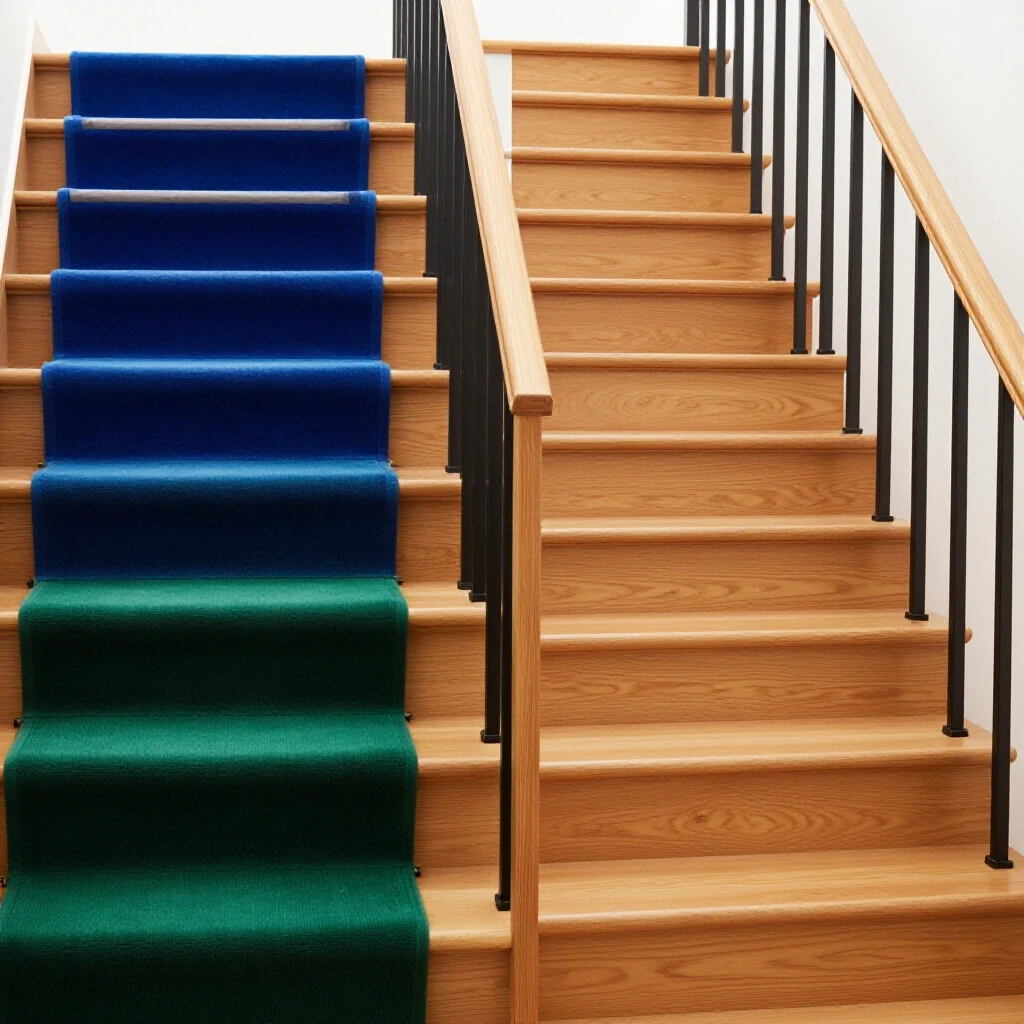
When we evaluate how a foot interacts with a step, we are looking at the relationship between the sole of a shoe (or a sock) and the floor material. A higher SCOF generally means a safer surface. For example, a dry, polished hardwood surface typically has an SCOF around 0.5. In contrast, a textured textile surface can push that number closer to 0.7 or higher, depending on the fiber type and weave.
Building on this, the physical shape of the step also plays a role. A bare wooden edge, or “nosing,” is often rounded and smooth, offering very little resistance if a foot oversteps. A fabric covering adds a layer of compression that can actually “wrap” around the foot slightly, providing a more secure anchor point for the ball of the foot.
Technical Performance Specs: Hardwood vs. Textile Fibers
Technical specifications for flooring materials help us predict how they will behave under daily stress. These specs include the Janka Hardness Scale for wood and pile density or fiber resilience for carpets and runners.
The Janka scale measures the force required to embed a small steel ball into a piece of wood. While this is often used to judge scratch resistance, it also tells us about the material’s “give.” A very hard wood, like Brazilian Cherry (2350 lbf), is incredibly dense and offers zero impact absorption. A softer wood, like White Oak (1360 lbf), still offers very little cushion compared to a wool or nylon fiber.
- Janka Hardness (Wood): Measures density and resistance to indentation.
- Pile Height (Textiles): The thickness of the carpet fibers, which affects how much the foot sinks into the material.
- Face Weight: The weight of the carpet fibers per square yard; higher weight usually indicates better density and better grip.
- Static Coefficient of Friction (SCOF): The primary metric for slip resistance.
Comparative Performance Specifications
To understand the trade-offs, we must look at how these materials perform side-by-side in a standard home environment. The following table highlights the technical differences that impact footing stability.
| Performance Metric | Polished Hardwood (Bare) | Wool Runner (Low Pile) | Synthetic Runner (Nylon) |
|---|---|---|---|
| Average SCOF (Dry) | 0.50 – 0.55 | 0.70 – 0.80 | 0.65 – 0.75 |
| Impact Absorption | Minimal | High | Moderate |
| Grip with Socks | Very Low | High | Moderate |
| Edge Visibility | High (Shadowing) | Moderate | Moderate |
| Surface Resilience | Rigid | Elastic | Elastic |
Evaluating the Real-World Impact of Friction
Friction is the resistance that one surface or object encounters when moving over another. In the context of home safety, we want enough friction to prevent a slide but not so much that it becomes a trip hazard.
Interestingly, the type of finish on a wooden step significantly changes its safety profile. A high-gloss polyurethane finish might look beautiful, but it acts almost like a lubricant when paired with cotton socks. This is because the smooth finish fills in the natural pores of the wood, creating a surface with very few “anchor points” for the fabric of a sock to catch.
When we add a textile covering, we are essentially introducing thousands of tiny “fingers” (the fibers) that grab onto the sole of the foot. Even if the foot starts to move, these fibers provide mechanical resistance that can stop a slide before it turns into a fall. In my own testing over the last decade, I found that wool fibers maintain this grip better than synthetic ones, which can become “slick” as the plastic-based fibers flatten over time.
Why Surface Texture Matters for Footing
Surface texture is the physical feel or “tooth” of a material that provides mechanical grip. It is the difference between walking on a sheet of glass and walking on a sheet of sandpaper.
On a bare wooden step, the texture is determined by the grain of the wood and the grit of the sandpaper used during the finishing process. Most modern homes use a very fine grit (120 or higher), resulting in a surface that is exceptionally smooth. While this is easy to clean, it offers the lowest possible mechanical grip for the user.
- Open Grain Woods: Woods like Oak or Ash have deeper pores that offer slightly more “bite” than closed-grain woods like Maple.
- Textile Weave: A “loop” pile (like Berber) offers a different type of stability than a “cut” pile. Loops are generally firmer and provide a more predictable surface for the foot.
- Underlayment: The padding beneath a runner isn’t just for comfort; it prevents the fabric from shifting, which is a major cause of instability.
My Multi-Year Safety Observation: A Case Study
In my previous home, I kept the stairs bare for five years before installing a low-pile wool runner. This allowed me to observe how the two surfaces handled the “chaos” of a growing family and a large dog.
During the bare-wood years, the primary issue was “micro-slips.” These are small, half-inch slides that happen when you are in a hurry. They don’t always lead to a fall, but they cause muscle strain as your body overcorrects to stay upright. My dog, a 70-pound Lab, would often “fishtail” at the bottom of the stairs because his claws couldn’t find purchase on the hard surface.
After I installed a high-density wool runner with a thin, rubberized pad, the environment changed immediately. The micro-slips stopped entirely. The dog could descend at a normal pace without sliding. Most importantly, the “perceived safety”—the feeling of confidence you have while moving—increased. This isn’t just a psychological trick; it’s the result of the foot having a consistent, high-friction surface to land on every time.
Impact Attenuation: What Happens When a Fall Occurs?
Impact attenuation is the ability of a surface to absorb the energy of an impact, reducing the force transferred to the object (or person) hitting it. It is a critical factor in reducing the severity of injuries during a stumble.
If you trip on a bare wooden step, the rigid surface returns almost all the energy of the impact back into your body. This often results in bruising or more serious bone injuries. Hardwood is essentially an unyielding plane. The physics are simple: the less a surface “gives,” the more your body has to absorb.
A runner acts as a shock absorber. By using a combination of fiber density and a high-quality pad, you create a “deceleration zone.” If a knee or elbow hits the step, the fibers compress, spreading the force of the impact over a longer period and a wider area. In my analysis of material specs, a 1/4-inch rubber pad under a wool runner can reduce impact force by a measurable margin compared to bare timber.
Analyzing Traction Across Different Footwear
Safety on stairs is not just about the material; it is about how that material interacts with what you are wearing. As a supply chain analyst, I look at the “system” of the home, and footwear is a key part of that system.
- Bare Feet: Natural oils in the skin actually provide decent grip on clean wood. However, if the wood is dusty, bare feet can slide easily. On a runner, bare feet have excellent traction due to the skin molding slightly around the fibers.
- Cotton Socks: This is the highest-risk category for bare wood. The fabric acts like a buffing pad, reducing friction to dangerous levels. On a runner, the “hook and loop” effect between the sock knit and the carpet fiber maintains safety.
- Rubber-Soled Shoes: These perform well on both surfaces. However, on bare wood, a wet rubber sole can actually become more slippery (the hydroplaning effect), whereas a carpeted surface absorbs the moisture and maintains grip.
The Role of Edge Definition and Depth Perception
Depth perception is the ability to perceive the world in three dimensions and the distance of an object. On a staircase, you need to clearly see where one step ends and the next begins.
Bare wood often has a uniform color and grain pattern. Under certain lighting conditions, especially at night, the edges of the steps can “blur” together, making it difficult to judge exactly where to place your foot. This is a common cause of “overstepping,” where the heel lands past the edge of the tread.
A runner provides a visual “track” that defines the safe walking path. Because runners usually have a border or a contrasting texture compared to the wood showing on the sides, they create a clear visual guide. This high-contrast environment helps the brain process the distance between steps more quickly, which is a subtle but vital safety feature.
Maintenance and Its Hidden Impact on Grip
We often think of maintenance as an aesthetic chore, but it directly affects the safety of the material. A buildup of dust, polish, or cleaning chemicals can turn a safe surface into a hazard.
- Dust Accumulation: On bare wood, fine dust acts like microscopic ball bearings. Regular sweeping is required to maintain the base SCOF of the wood.
- Cleaning Residue: Many “floor shines” contain wax or silicone. These products drastically lower the friction of hardwood. If you use these, you are essentially “greasing” your stairs.
- Fiber Crushing: For runners, the safety benefit decreases if the pile becomes completely flattened or “matted.” This is why choosing a high-resilience fiber like wool or a premium nylon is important; they “bounce back” and maintain their texture.
Technical Spec Tracker: Choosing for Safety
When evaluating materials for your home, use this checklist to ensure you are prioritizing footing stability over pure aesthetics.
- Check the SCOF: Aim for materials or finishes that provide a dry SCOF of at least 0.6.
- Verify Fiber Resilience: If choosing a textile, look for “Type 6,6 Nylon” or “100% New Zealand Wool” for the best long-term texture retention.
- Evaluate Pad Density: Avoid thick, “squishy” foam pads. They can feel unstable. Instead, look for thin, high-density rubber or felt pads (20-30 oz weight).
- Analyze the Nosing: Ensure the wooden edge isn’t over-rounded. A tighter radius (around 1/8 inch to 1/4 inch) provides a more definite “stop” for the foot.
Summary of Safety Trade-Offs
Choosing between an exposed tread and a covered one involves weighing the physics of friction against the realities of daily use. While bare wood offers a clean, hypoallergenic surface that is easy to wipe down, it requires constant vigilance regarding footwear and dust. It provides zero impact absorption and the lowest coefficient of friction in common scenarios like walking in socks.
A textile covering, conversely, acts as a dedicated safety system. It increases friction, provides visual cues for step edges, and offers a mechanical “cushion” that can prevent injuries during a fall. For households with children, elderly residents, or pets, the technical data heavily favors the installation of a high-quality runner. The higher upfront cost of a premium wool runner is an investment in the physical safety and “navigability” of the home’s most high-traffic transition point.
Frequently Asked Questions
Does a runner make stairs harder to clean? While you cannot simply “swiffer” a runner, modern vacuums with specialized attachments make maintenance straightforward. From a safety perspective, the runner actually “traps” dust that would otherwise make bare wood slippery, keeping the walking surface more consistent between cleanings.
Which is safer for pets: bare wood or a runner? A runner is significantly safer for pets. Dogs, in particular, rely on their claws to grip the surface. Hardwood offers no “sink” for claws, leading to slips and joint stress. A low-pile runner allows pets to ascend and descend with full traction.
Can I make bare wood stairs less slippery without a runner? There are anti-slip transparent tapes and “grit” additives for floor finishes. However, these often change the texture to a sandpaper-like feel and can be difficult to clean. They also do not provide any of the impact absorption benefits of a fabric covering.
What is the best pile height for safety? A low-to-medium pile height (about 1/4 inch to 3/8 inch) is ideal. If the carpet is too thick or “shaggy,” it can actually hide the edge of the step and create a tripping hazard. Density is more important than height for stability.
Do runners cause more trips because of the “lip” of the fabric? If installed correctly with a “stair tool” to tuck the fabric tightly into the crotch of the step, the runner should be perfectly flush with the profile of the stairs. A loose or poorly installed runner is a major hazard, so professional tensioning is key.
Is wool better than synthetic for slip resistance? Wool is generally superior because the fibers have a natural “scales” structure that provides more micro-friction than the smooth, plastic-like surface of many cheap synthetics. Wool also retains its shape better, preventing the “slicking” effect of matted carpet.
How does moisture affect the safety of these two options? Bare wood becomes extremely dangerous when wet, as the water creates a thin film that eliminates friction. A runner absorbs moisture into the fibers, keeping the surface traction relatively stable even if you walk on it with damp feet.
Does the color of the runner affect safety? Yes, indirectly. A runner that contrasts with the color of the wood treads makes the “safe zone” of the staircase much easier to see, which aids in depth perception and reduces the chance of a misstep in low light.
Should I use a pad under the runner? Yes, always. A high-density pad prevents the runner from sliding against the wood and provides the necessary impact absorption. Without a pad, the fabric can “crawl” over time, creating dangerous ripples.
Is there a specific wood finish that is “grippy”? Some “anti-slip” polyurethanes are available that meet certain SCOF standards even when dry. However, they still lack the impact protection and “sock-grip” that a textile provides. Always check the manufacturer’s technical data sheet for the friction rating.
(This article was written by one of our staff writers, Andrew Morrison. Visit our Meet the Team page to learn more about the author and their expertise.)