Subfloor Repair Cost Breakdown: How to Fix Rot on a Budget (Guide)

In the 1986 film The Money Pit, Tom Hanks famously laughs hysterically as his bathtub crashes through a rotting floor. For many homeowners, that scene is less of a comedy and more of a cautionary tale. When you step on a soft spot in your hallway or notice a tile cracking for no reason, the financial anxiety starts to set in immediately. You begin to wonder how deep the damage goes and how much of your savings will vanish beneath the floorboards.
Creating a Financial Framework for Base Floor Remediation
A financial framework for structural repairs is a structured plan that identifies every potential cost before the first board is pulled up. It moves beyond simple guessing by using historical data and current market prices to create a range of outcomes. This approach protects your primary residence’s equity while ensuring you do not overspend on basic structural needs.
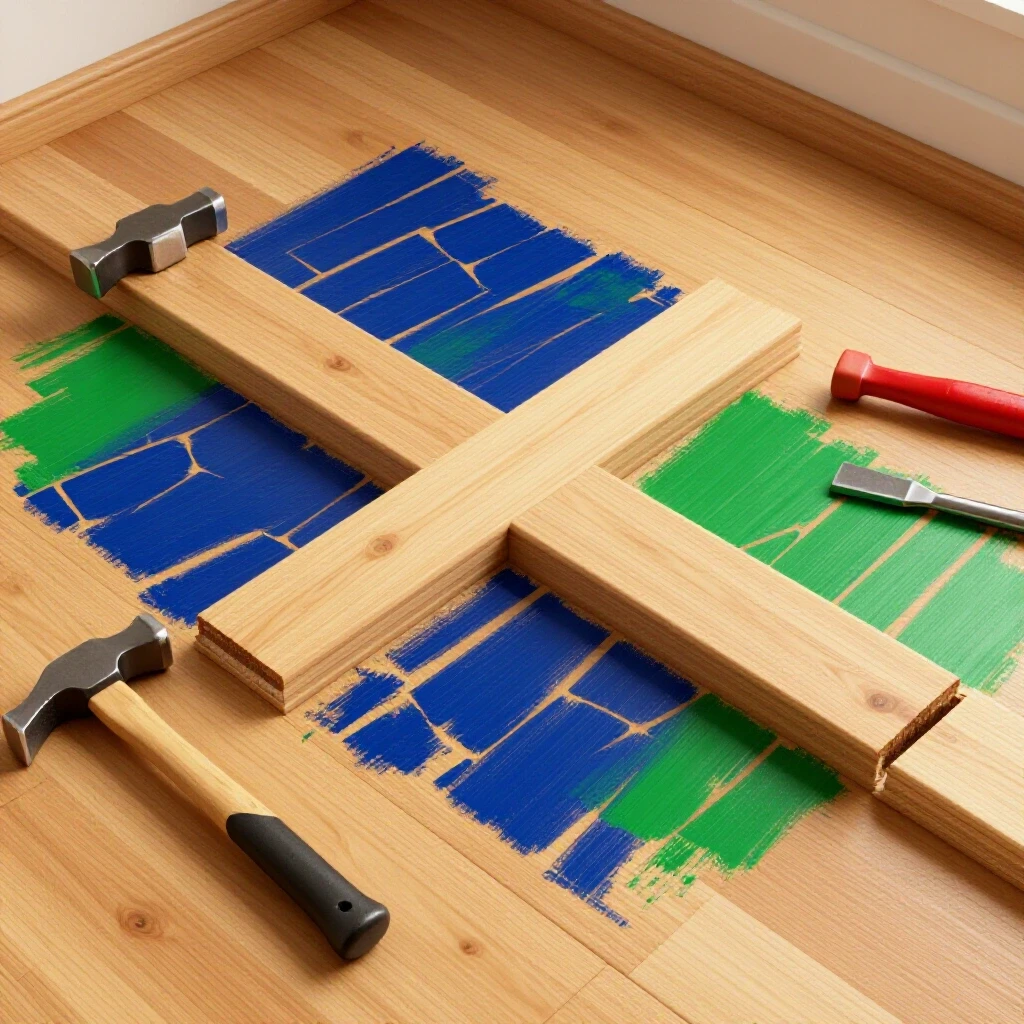
When I managed the renovation of my second home, a 1940s colonial, I discovered a significant soft spot near the guest bathroom. My initial estimate was based on a simple plywood swap, but my detailed spreadsheet soon revealed a different reality. Construction accounting for a project like this requires you to understand the “what” and “why” of your spending. You are not just buying wood; you are investing in the load-bearing capacity of your home.
To start, I recommend a 20% contingency buffer specifically for structural floor fixes. This is higher than the standard 10% for cosmetic updates because wood decay rarely stops where you think it does. According to the U.S. Bureau of Labor Statistics, the producer price index for construction materials can fluctuate by 3% to 5% in a single quarter. By locking in your budget with a buffer, you shield your household from these sudden market shifts.
Detailed Material Audits for Wood Decay Restoration
A material audit is a line-by-line list of every physical item needed to complete a repair, from the primary panels to the smallest screws. This process prevents “project creep,” where small, unrecorded trips to the hardware store eventually drain hundreds of dollars from your budget. Knowing your exact square footage and material grades is the foundation of this audit.
When you are dealing with moisture-damaged wood, the material choice is your biggest variable. For a standard interior repair, you will likely choose between OSB (Oriented Strand Board) and CDX plywood. In my personal tracking logs, I have found that while OSB is cheaper, CDX plywood offers better moisture resistance for areas near plumbing.
- CDX Plywood (3/4 inch): $45 – $55 per 4×8 sheet.
- Construction Adhesive (High-strength): $8 – $12 per tube.
- Structural Wood Screws (Deck grade): $15 – $25 per box.
- Pressure-Treated 2x4s (for sistering joists): $6 – $9 per board.
I track these costs in a “Projected vs. Actual” spreadsheet to see where my estimates missed the mark. For example, during a kitchen leak repair, I underestimated the number of adhesive tubes required by 40%. While the dollar amount was small, these variances add up across a 200-square-foot area.
Evaluating the Sweat Equity Value of DIY Structural Fixes
Sweat equity valuation is the practice of calculating the financial benefit of performing labor yourself versus hiring a professional. It involves comparing your “internal hourly rate” to the local market rate for carpentry. For cost-conscious planners, this helps determine if a project is a wise use of time or a financial drain due to lost productivity elsewhere.
Regional labor coefficients play a massive role here. In the Midwest, a carpenter might charge $50 per hour, while in the Northeast, that rate could jump to $85. If you are doing the work yourself, you are essentially “earning” that hourly rate in savings. However, you must also account for tool acquisition. If you don’t own a circular saw or a reciprocating saw, your first-day costs will spike.
| Expense Category | DIY Estimated Cost | Professional Estimate (Lower Tier) | Savings Variance |
|---|---|---|---|
| Materials (100 sq ft) | $450 | $600 (with markup) | $150 |
| Labor (16 hours) | $0 | $1,200 | $1,200 |
| Tool Rental/Purchase | $200 | $0 | -$200 |
| Disposal Fees | $50 | $150 | $100 |
| Total Project Cost | $700 | $1,950 | $1,250 |
Building on this data, I always advise my clients to look at the “opportunity cost.” If taking two days off work to fix a floor costs you more in lost wages than the $1,200 labor fee, the DIY route is actually a net loss. But for most homeowners in the 28–55 age bracket, performing the work on a weekend provides a clear financial win.
Managing Contingency Buffers for Hidden Moisture Damage
A contingency buffer is a dedicated “emergency fund” within your project budget that is only touched when the scope of work expands. It is not for upgrades or better finishes; it is specifically for unforeseen structural issues discovered during demolition. This buffer acts as a psychological and financial safety net to prevent mid-project debt.
Interestingly, the most common “hidden fee” in floor restoration isn’t the wood itself—it’s the preparation. Once the top layer is removed, you may find that the floor joists are not level. This requires “sistering,” which is the process of bolting a new board alongside an old one to add strength. This adds both material costs and significant time to your timeline.
- 10% Buffer: Use this only if the house is less than 10 years old and the damage is localized.
- 20% Buffer: The standard for most homes built between 1950 and 2000.
- 30% Buffer: Essential for older homes where “surprises” like non-standard joist spacing are common.
As a result of tracking my own overruns, I now use a 25% buffer for any area involving water. In my last project, I found that a small leak had traveled along a joist further than the surface damage suggested. Because I had that 25% set aside, I didn’t have to put the extra lumber on a high-interest credit card.
Long-Term Value and ROI of a Sound Home Foundation
Return on Investment (ROI) in home improvement measures how much of the project’s cost is recovered during a home sale. While a new kitchen might have a high “lifestyle value,” structural repairs have a high “transactional value.” Buyers will walk away from a house with soft floors, but they will rarely pay a premium for a floor that simply does what it’s supposed to do.
According to Remodeling Magazine’s Cost vs. Value reports, structural maintenance doesn’t always provide a 100% return in terms of a higher asking price. Instead, it prevents a “value ding” during the inspection phase. If an inspector finds wood rot, the buyer will often ask for a credit that is double what the repair would have cost you to do yourself.
- Home Value Preservation: Maintaining the base layer ensures that expensive top-layer flooring, like hardwood or tile, does not crack or fail.
- Inspection Protection: A solid floor passes the “bounce test” during buyer walkthroughs, maintaining the home’s marketability.
- Depreciation Mitigation: Wood decay is a form of physical depreciation. Fixing it resets the clock on that component of your home’s structure.
I view these expenses as “defensive investing.” You aren’t trying to beat the market; you are trying to keep your home from losing value relative to the neighbors. If the average home in your area is worth $400,000, a $2,000 floor fix is a small price to pay to ensure you don’t get hit with a $10,000 price reduction during closing.
Practical Tools for Tracking Structural Repair Expenses
To keep your project on track, you need more than a bank statement. You need a system that categorizes spending in real-time. This allows you to see if you are over-improving for your neighborhood or if you have extra room in the budget for higher-quality fasteners or underlayment.
- Spreadsheet Templates: Create columns for “Budget,” “Actual,” “Source,” and “Notes.” Use the notes to track why a price changed.
- Construction Price Indices: Sites like the RSMeans data can give you a ballpark for regional material costs.
- Mobile Scanning Apps: Use apps to scan every receipt immediately. This is vital for tax purposes if you plan to add the repair costs to your home’s cost basis.
- Digital Levels and Moisture Meters: Investing $40 in a moisture meter can tell you if the wood is dry enough to cover, preventing future decay and protecting your investment.
In my consultations, I often see homeowners fail because they stop tracking small items. They remember the $500 for plywood but forget the $150 spent on sandpaper, screws, and drill bits. By using a dedicated tracking tool, you ensure that your “actual” total doesn’t surprise you when the project is finished.
Establishing a Low-Barrier Execution Plan
The best way to avoid financial strain is to start small and verify your assumptions. Before you tear out a whole room, cut a small inspection hole in the most damaged area. This gives you a “micro-view” of the joists and the thickness of the current panels without committing to a full-scale demolition.
Once you have verified the extent of the wood decay, update your spreadsheet. Check the current prices at your local lumber yard, as these can differ from the big-box stores. If the costs are within your 20% buffer, proceed with the purchase. If they exceed it, look for areas where you can save, such as choosing a different grade of plywood or doing more of the demolition yourself.
Finally, remember that a structural fix is a success if the floor is level, silent, and solid. It doesn’t need to be fancy; it just needs to be right. By following a data-driven framework, you can turn a potentially stressful home crisis into a managed financial event.
Frequently Asked Questions
How do I know if my base flooring needs a full replacement or just a patch? If the soft spot is smaller than 12 inches and the surrounding wood is dry and firm, a patch may work. However, if the decay spans across multiple joists or the wood crumbles when poked with a screwdriver, a full panel replacement is usually more cost-effective in the long run.
What is the average cost per square foot for DIY structural floor fixes? For materials only, expect to spend between $3 and $6 per square foot. This includes 3/4-inch plywood, adhesive, and fasteners. If you need to reinforce joists, that cost can rise to $8 or $10 per square foot.
Does wood rot always mean I have a plumbing leak? Not always, but it is the most common cause. It can also be caused by high humidity in a crawlspace or poor sealing around windows. You must identify and stop the moisture source before spending money on new wood, or the decay will return.
Can I use OSB instead of plywood to save money? Yes, OSB is a standard material for many modern homes. However, if the area is prone to moisture (like a bathroom or laundry room), plywood is often worth the extra $10 per sheet because it handles getting wet and drying out much better than OSB.
Will I need a building permit for a small floor repair? In many jurisdictions, “like-for-like” repairs do not require a permit. However, if you are cutting into or replacing structural floor joists, your local building department may require a permit and an inspection to ensure the home remains safe.
How does fixing a floor impact my home’s tax assessment? Generally, basic repairs and maintenance do not increase your property taxes because they don’t add square footage or “luxury” value. They simply maintain the existing condition of the home.
What is the “bounce test” and why does it matter for my budget? The bounce test involves walking heavily or jumping slightly on the floor to check for deflection. If the floor feels springy, you may need to budget for additional joist bracing (blocking) to make the floor stiff enough for finishes like tile.
How much should I budget for tool rentals? If you need a heavy-duty circular saw or a floor sander, budget about $40 to $70 per day for rentals. For most small repairs, buying a mid-range saw for $100 is often more economical than renting one for three separate days.
Is it safe to leave old, slightly damp wood in place? No. Any wood that shows signs of structural failure or active decay should be removed. Covering damp wood traps moisture and can lead to faster decay of the new materials you just paid for.
How do I track these expenses for a potential future home sale? Keep a dedicated folder (digital or physical) with all receipts and a few “before and after” photos. While repairs aren’t usually tax-deductible, they can sometimes be added to your home’s “cost basis,” which could lower your capital gains tax when you sell the house later.
(This article was written by one of our staff writers, Steven Fletcher. Visit our Meet the Team page to learn more about the author and their expertise.)