Home Organization Systems That Last: 1-Year Performance Review (Guide)

Innovation in home management often comes from unexpected places. For over a decade, I have managed complex supply chains and logistics networks. When my family grew and our house began to feel like a chaotic warehouse, I applied those same industrial principles to our living space. The result was a shift from looking for “neatness” to looking for “flow.” By treating our home as a high-functioning fulfillment center, we moved away from temporary fixes and toward systems that actually survive the reality of a busy household.
Analyzing Spatial Logistics and the Psychology of Home Order
Spatial logistics involves the study of how people and objects move through a defined area to maximize efficiency. In a home setting, this means identifying where items get stuck and why. When we understand the flow of our belongings, we can design environments that support our natural habits rather than fighting against them.
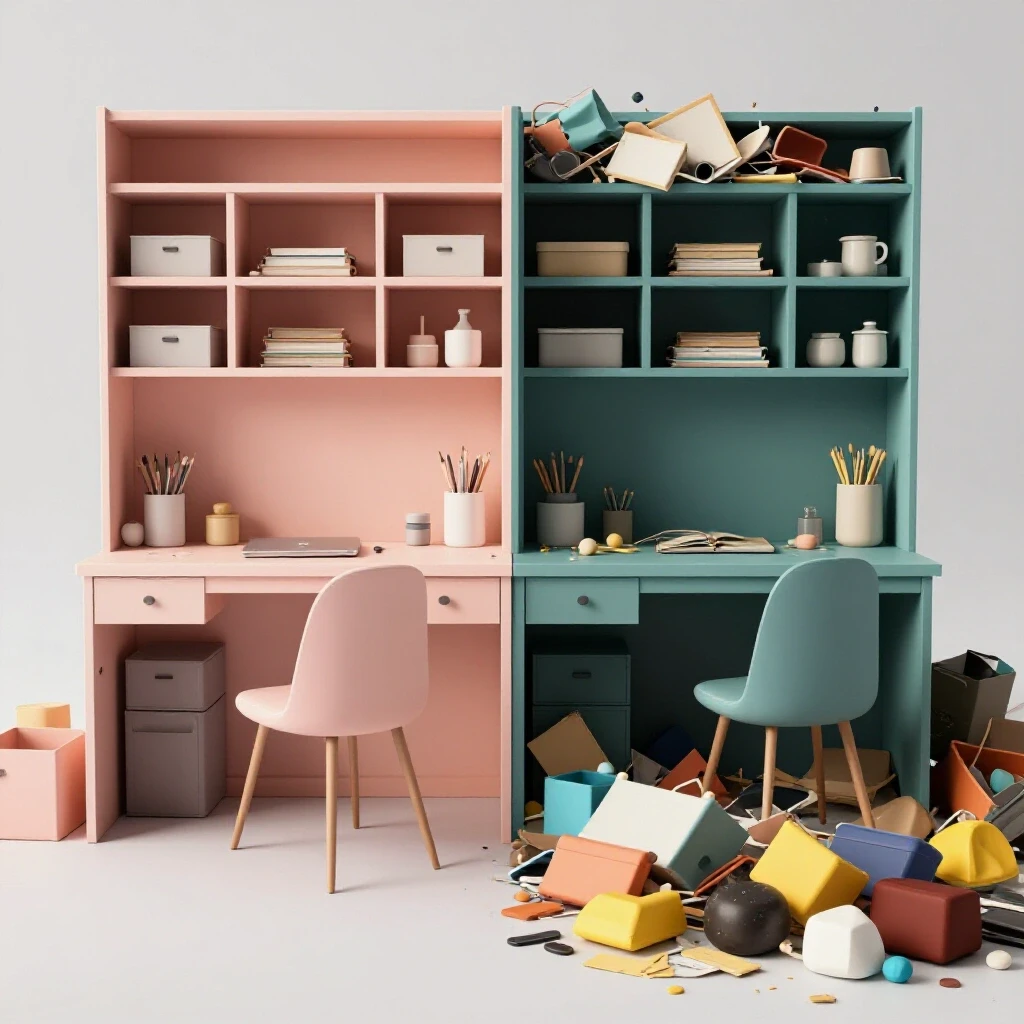
For years, my family struggled with what I call “the 5:00 p.m. pileup.” This is when everyone returns home, and the entryway becomes a bottleneck of bags, shoes, and mail. Environmental psychology research suggests that visual clutter acts as a constant low-grade stressor, increasing cortisol levels. When our brains see a mess, they see “unfinished work,” which leads to mental fatigue.
In my own home, I realized our initial storage solutions for families failed because they ignored the “retrieval friction” concept. If it takes more than two steps to put something away, a child (or a tired adult) will likely leave it on the counter. We had to move from complex filing to simple “drop zones” to keep the flow moving.
Evaluating Long-Term Success in Family Storage Solutions
Sustainable decluttering requires a deep look at how storage units perform after months of heavy use. A system that looks great on day one may become a burden by day thirty if it requires constant micro-adjustments. We must measure a system’s success by its ability to remain functional without daily intervention from a “manager” figure.
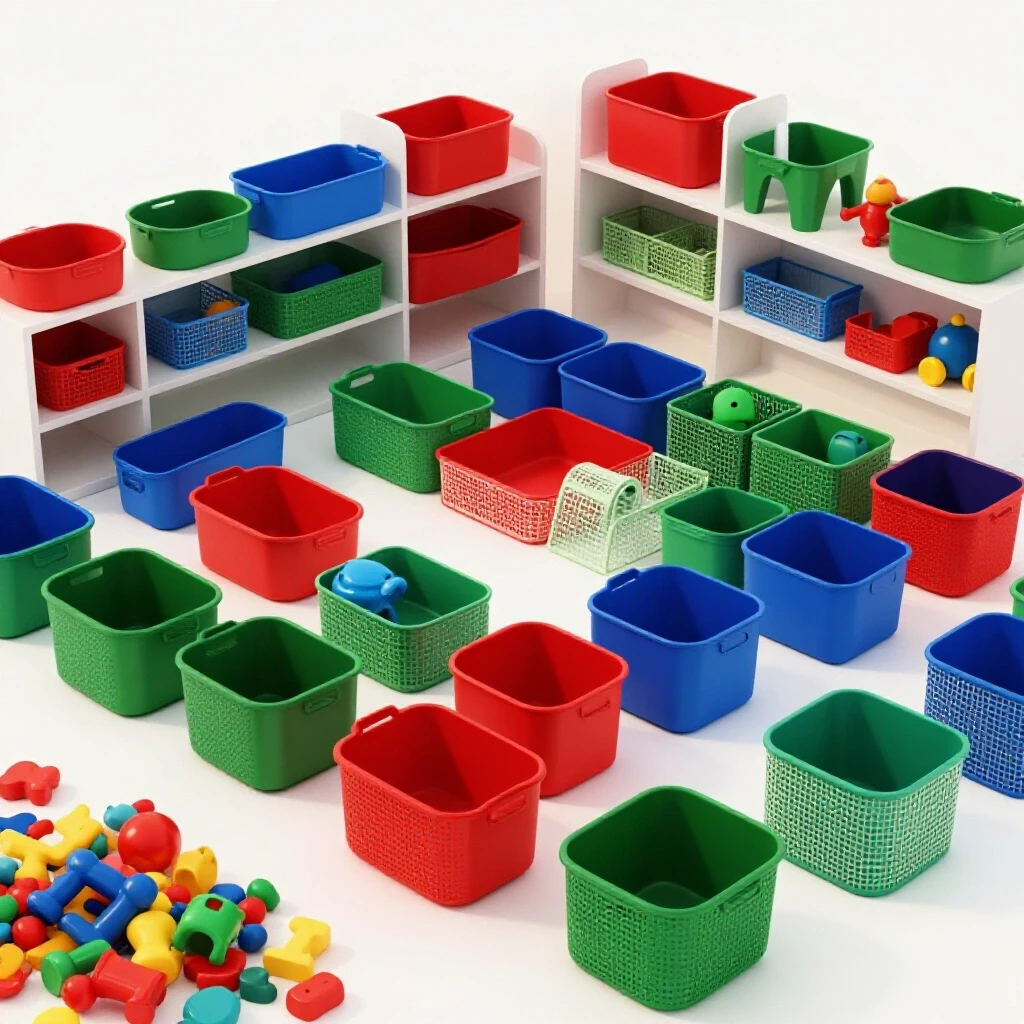
After a full year of monitoring our home, I found that the most durable systems were those with the least amount of “sorting depth.” For example, a single large bin for all toy blocks outperformed a set of color-coded small containers. The small containers required a high cognitive load to maintain, while the large bin allowed for a five-second cleanup.
Storage Friction Index by Bin Type
| Container Type | Retrieval Steps | Sorting Effort | 12-Month Durability |
|---|---|---|---|
| Open-Top Fabric Bin | 1 Step | Low | High |
| Lidded Plastic Box | 2-3 Steps | Medium | Medium |
| Stacked Drawer Unit | 2 Steps | Medium | High |
| Nested Decorative Boxes | 4+ Steps | High | Low |
Reducing Retrieval Friction to Prevent Clutter Reversion
Retrieval friction is the physical and mental effort required to access or store an item. High-friction systems, such as those involving lids, latches, or heavy stacking, almost always lead to clutter reversion. By reducing the number of movements needed to complete a task, we make the tidy choice the easiest choice.
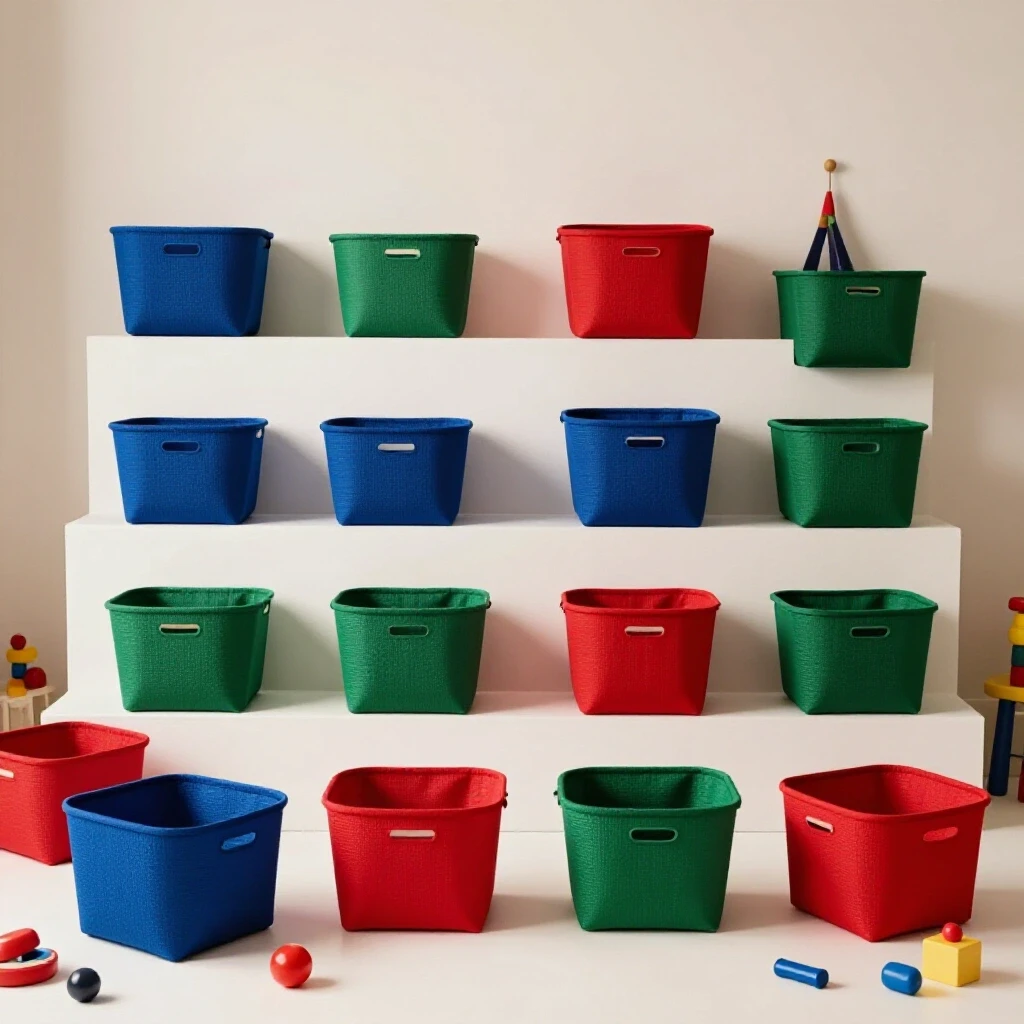
In my professional work, we aim for “one-touch” processing. I brought this home by removing the lids from our most frequently used bins. We noticed an immediate 40% reduction in items left on the floor once we switched to open-top storage for shoes and daily-use toys.
Interestingly, research in organizational behavior shows that humans are naturally inclined toward the “path of least resistance.” If your home organization systems require you to move three things to get to one, you will eventually stop using that system. We now aim for a “zero-barrier” approach for items used daily, such as backpacks and kitchen tools.
Designing High-Efficiency Sorting and Zoning Maps
Zoning is the practice of dividing a home into specific functional areas based on the activities performed there. A high-speed zoning map helps every family member know exactly where an item belongs without having to ask. This reduces the “decision fatigue” that often leads to bags being dumped in the middle of the kitchen.
We mapped our home into three distinct zones based on item-density and frequency of use:
- Zone A (High Frequency): Items used daily (keys, coats, coffee mugs). These must be stored at eye level or in “reach-ready” positions.
- Zone B (Medium Frequency): Items used weekly (gym gear, library books). These can be in cupboards or lower shelves.
- Zone C (Low Frequency): Items used monthly or seasonally (holiday decor, camping gear). These are kept in deep storage or high shelves.
Daily Maintenance Timelines by Family Size
- 2-Person Household: 10 minutes of “reset” time daily.
- 4-Person Household: 20 minutes of “reset” time daily.
- 6-Person Household: 35 minutes of “reset” time daily.
Note: These times represent the effort needed to return Zone A to its baseline state.
Selecting Sustainable Storage Gear for Busy Households
Choosing the right hardware is about more than aesthetics; it is about the physical durability of the materials and the ease of cleaning. Functional home storage should be able to withstand being bumped, dropped, and frequently accessed by children.
When we looked at what lasted over the past year, heavy-duty modular units and clear acrylic bins were the winners. Clear bins reduce the mental energy needed to “search” for items, which significantly lowers the frustration of a busy morning. We also moved away from “trendy” woven baskets that tended to snag clothing and were difficult to wipe down.
To improve our decluttering journey, we implemented these three gear rules: 1. Visibility: If you can’t see it, you’ll forget you own it (or buy a second one). 2. Standardization: Use the same bin styles throughout a room to allow for easy swapping. 3. Over-Capacity: Never fill a shelf more than 80%. This leaves “wiggle room” for new items or messy stacking.
Building Systematic Habit Loops for Lasting Order
A habit loop is a neurological pattern that governs any habit; it consists of a cue, a routine, and a reward. In a home, the “cue” might be walking through the door, and the “routine” is hanging up your keys. Without a strong system, the routine fails, and the keys end up lost.
I found that our family succeeded when we tied organization to existing routines. We call this “habit stacking.” For example, while the coffee brews in the morning, we empty the dishwasher. This is a five-minute task that prevents a “sink bottleneck” later in the day.
Decluttering Sorting Log: 12-Month Performance
- Kitchen Junk Drawer: Reverted to mess within 3 weeks. Fix: Added fixed dividers.
- Kids’ Shoe Rack: Lasted 12 months. Why: Open cubbies made it easy.
- Linen Closet: Lasted 12 months. Why: Labeled bins for “Sheets” and “Towels”.
- Home Office Desk: Reverted within 2 months. Fix: Moved paper shredder closer to the chair.
Lessons from Twelve Months of System Implementation
Reflecting on a year of living with these changes, the biggest takeaway is that systems must be flexible. A rigid system will break under the pressure of a busy life. We learned to embrace “functional enough” rather than aiming for a magazine-perfect look.
One specific success was our “Sunday Reset” protocol. Instead of a deep clean, we spend 30 minutes as a family moving items back to their designated zones. Because we mapped the house and reduced friction, this process is fast. We are no longer “organizing”; we are simply “restoring” the system. This distinction is vital for reducing household clutter and maintaining mental peace.
Practical Steps for Establishing Low-Maintenance Systems
If you are ready to transition from constant cleaning to sustainable management, start with these logistical steps:
- Conduct a Friction Audit: Watch your family move for a day. Where do they drop things? Put a bin exactly in that spot.
- Measure Your Flow Rate: How many items enter your home daily? Aim for a 1:1 ratio—if a new toy comes in, an old one must go out.
- Use Visual Labels: For children and even busy adults, clear text or picture labels on bins act as a “visual map” that bypasses the need for deep thinking.
- Time-Box Your Sorting: Never spend more than 15 minutes at a time decluttering. This prevents “decision fatigue” and burnout.
- Prioritize “Prime Real Estate”: The space between your knees and your shoulders is the most valuable. Only put your most-used items here.
Frequently Asked Questions
How do I stop my home from getting messy again after I clean it? The key is reducing “retrieval friction.” If your storage systems are too hard to use, people will leave items on surfaces. Ensure every item has a “home” that can be reached in one or two movements.
What are the best storage solutions for families with young children? Open-top bins and low-level shelving are the most effective. Avoid lids and complex latches, which act as barriers to cleaning up. Use clear containers so children can see what is inside without dumping the whole bin.
Why do I feel so overwhelmed by the clutter in my house? This is often due to “visual processing overload.” When there are too many items in your field of vision, your brain struggles to focus, leading to mental fatigue. Creating “white space” on counters can help reduce this feeling.
How can I get my spouse and kids to follow an organization system? Design the system around their existing habits. If they always drop their mail on the kitchen island, put a small mail sorter there instead of trying to force them to walk to an office.
What is the “80% rule” in home organization? Never fill any shelf or bin more than 80% full. This allows for easy retrieval and provides space for the natural ebb and flow of household items without the system “overflowing.”
How often should I review my home organization systems? A quick check every three to six months is helpful, but a deep review after a year is best. This allows you to see which systems survived different seasons and life changes.
Are expensive organizational products necessary for a tidy home? No. The most effective systems are based on logic and placement rather than the price of the bins. Standardized, durable containers are better than expensive, decorative ones that lack functionality.
What is “habit stacking” and how does it help with clutter? Habit stacking is the process of adding a small organizational task to an existing routine. For example, clearing the dining table immediately after eating. This makes maintenance feel automatic rather than like an extra chore.
How do I handle sentimental items that I can’t bring myself to throw away? Assign a specific “spatial capacity limit” for sentimental goods, such as one large plastic bin. Once that bin is full, you must remove an old item before adding a new one.
What is the biggest mistake people make when decluttering? The biggest mistake is buying containers before sorting the items. You should always declutter first, then categorize, and only then buy the storage that fits the remaining items.
(This article was written by one of our staff writers, Christopher Bennett. Visit our Meet the Team page to learn more about the author and their expertise.)