TV Stand vs Wall Mount: Which Is Best for Your Living Room? (Guide)

Talking about smart homes often leads us to focus on software and connectivity, but the physical placement of our hardware is where the daily experience truly lives. Over the last 13 years, I have evaluated hundreds of home materials, from the density of engineered wood to the tensile strength of steel alloys. When you decide how to display a large screen, you are not just choosing a look; you are making a technical choice about material durability, spatial ergonomics, and long-term maintenance costs.
Understanding Technical Standards for Media Support Systems
Technical standards in media support involve evaluating the load-bearing capacity of metals and the structural integrity of furniture-grade materials. This ensures the housing can withstand the weight of modern electronics without warping or failing over a decade of use.
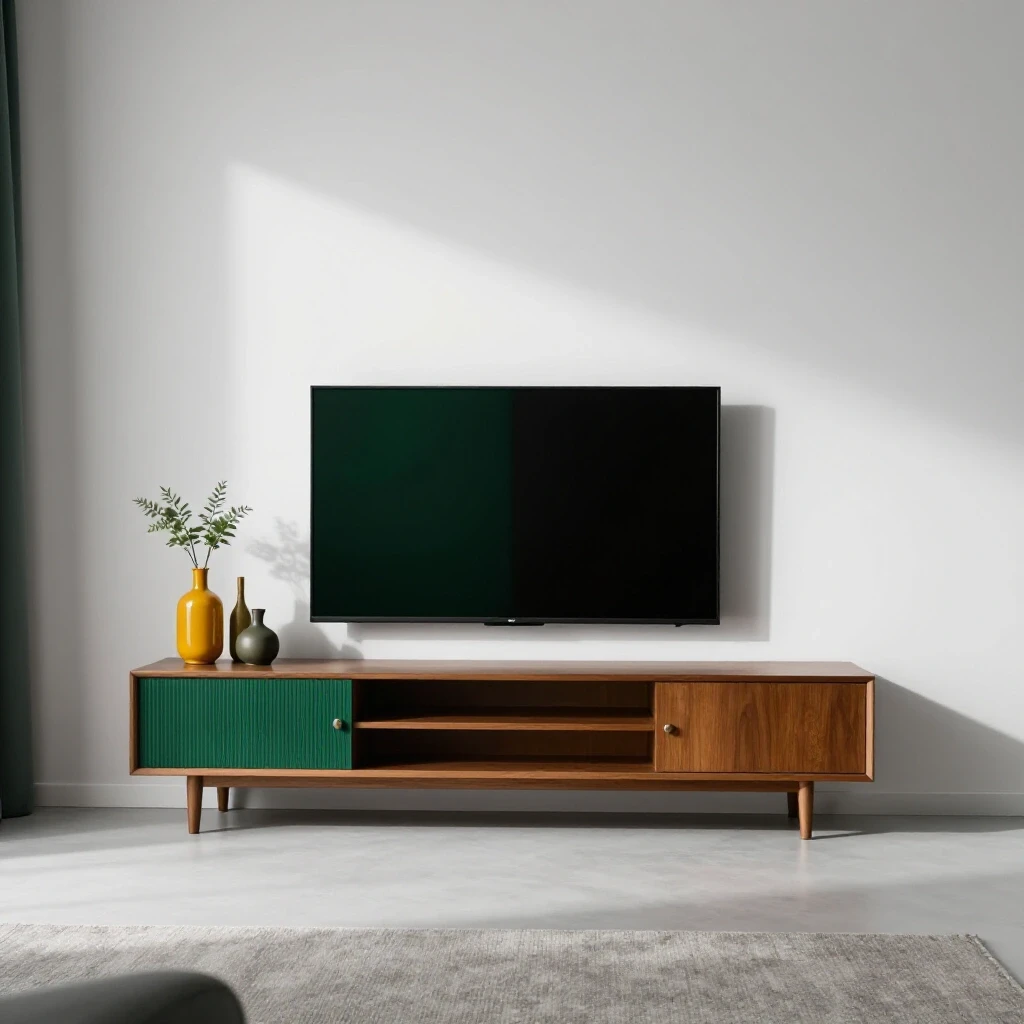
When I look at a high-end media console, I check the Janka hardness rating of the wood. This rating measures the force needed to embed a small steel ball halfway into the wood. For example, solid white oak has a Janka rating of about 1,360 lbf, making it highly resistant to the dings and scratches common in busy living rooms. On the other hand, many mid-range consoles use Medium Density Fiberboard (MDF). While MDF is stable and resists warping better than solid wood in humid environments, its density (usually measured in kg/m³) determines if the shelves will sag under the weight of an appliance.
For wall-integrated brackets, the focus shifts to material science. Most premium brackets are made from cold-rolled steel. This material undergoes a shaping process at room temperature, which increases its yield strength and hardness compared to hot-rolled steel. I always look for a powder-coated finish that meets ASTM B117 standards for salt spray resistance, even for indoor use, as this indicates a finish that won’t flake or corrode over time.
Comparing Material Performance Specifications
A side-by-side material performance specification helps homeowners see beyond the price tag to the actual engineering of the product. This technical material specification data allows for a clear trade-off analysis between different support methods.
| Feature | Solid Wood Console | Engineered Wood (MDF) | Cold-Rolled Steel Mount |
|---|---|---|---|
| Material Density | 600-900 kg/m³ | 600-800 kg/m³ | 7,850 kg/m³ |
| Surface Hardness | High (Janka 1000+) | Low to Medium | Very High |
| Moisture Resistance | Moderate (can swell) | Low (edges can blow out) | High (if powder-coated) |
| Lifespan | 20+ Years | 5-10 Years | 15+ Years |
| Maintenance | Polishing/Waxing | Dusting/Careful cleaning | Occasional bolt check |
In my own experience, I once purchased a beautiful cherry wood console for a sunlit living room. Within three years, the UV exposure had significantly changed the wood’s color where the electronics sat. This is a factor many homeowners overlook. If you choose a furniture-based setup, you must consider the “photoreactivity” of the wood species. Conversely, a steel bracket tucked behind a screen is immune to such environmental factors, though it offers no storage for peripheral devices.
Evaluating Spatial Footprint and Ergonomic Sightlines
Spatial footprint refers to the total square footage a piece of furniture occupies, while ergonomic sightlines are the calculated angles between your eyes and the center of the display. These metrics determine how well an appliance fits into your daily lifestyle.
When I conduct a viewing test, I measure the “seated eye height,” which for most adults is between 36 and 45 inches from the floor. A freestanding console has a fixed height, usually between 18 and 30 inches. This often places the center of a large screen exactly at eye level, which is the ergonomic ideal. However, it takes up significant floor space. In a 12×12 foot room, a 60-inch wide console can consume nearly 10 square feet of walkable area once you account for the clearance needed around it.
A wall-fixed panel, however, has a zero-floor footprint. This is a massive advantage in smaller homes or minimalist designs. The challenge I’ve found in my comparative evaluations is that homeowners often mount their screens too high, like a piece of art. This creates a “neck-tilt” angle that deviates from the recommended 0-to-15-degree downward viewing slope suggested by ergonomic experts.
- Console Advantage: Provides a natural height for the screen and hides wall imperfections.
- Mount Advantage: Reclaims floor space and allows for precise height customization.
- Trade-off: Furniture adds aesthetic warmth but limits layout flexibility.
The Reality of DIY Assembly and Installation Complexity
Installation complexity measures the time, tools, and technical skill required to set up a product safely. This directly impacts the “upfront cost” if you value your time as a financial metric.
Assembling a high-end media cabinet often involves cam-lock systems or dowel joinery. In my logs, a standard 70-inch console takes roughly 90 to 120 minutes to assemble. The risk here is “over-torquing” the fasteners, which can strip the pre-drilled holes in particle board or MDF. I always recommend using hand tools rather than power drills for the final tightening phase to maintain the structural integrity of the joints.
Installing a fixed wall bracket is a different technical challenge. It requires identifying the internal structure of your wall and using a level to ensure a horizontal plane. While the hardware is simpler, the margin for error is smaller. If a console is slightly unlevel, you can use felt pads to shim the legs. If a wall bracket is crooked, you are looking at drilling new holes and patching the old ones.
- Unboxing: Check for finish defects and hardware counts.
- Layout: Measure the screen’s VESA pattern (the distance between mounting holes in millimeters).
- Assembly: Connect the bracket to the screen or build the furniture base.
- Cable Routing: Plan how power and data lines will reach the device.
Long-Term Maintenance and Durability vs. Maintenance Cost
Long-term maintenance profiles look at the labor and materials required to keep the setup looking new over a 15-year lifecycle. This is where the durability vs. maintenance cost debate becomes most visible.
Furniture requires regular cleaning. Dust settles on flat surfaces, and wood finishes can be damaged by the heat generated by electronics. I have seen consoles where the veneer began to delaminate because a gaming console was placed in a poorly ventilated cubby, raising the local temperature and drying out the adhesive. If you choose a console, ensure it has at least two inches of clearance on all sides of any heat-producing appliance.
Wall brackets are almost maintenance-free once installed. The primary “cost” is the labor of cable management. If you want a clean look, you must use on-wall cord covers or in-wall cable routing kits. In-wall kits must be “CL2” or “CL3” rated to meet safety standards for heat resistance. Without these, you end up with a “spaghetti” of wires that attracts dust and complicates cleaning.
| Cost Category | High-End Console (15 Years) | Premium Wall Mount (15 Years) |
|---|---|---|
| Upfront Purchase | $600 – $2,500 | $80 – $300 |
| Installation Tools | Basic Screwdriver | Level, Drill, Stud Finder |
| Cleaning Labor | Weekly dusting/polishing | Monthly dusting behind screen |
| Repair/Refinish | Potential sanding/staining | None |
| Total Estimated Cost | $750 – $2,800 | $150 – $450 |
Sourcing Impacts and Material Quality
Sourcing origin impacts the quality of the materials and the environmental sensitivity of the product. Understanding where your materials come from helps in predicting how they will react to your home’s climate.
Most high-end home materials like solid hardwoods are sourced from North American or European forests under sustainable practices. These woods are kiln-dried to a specific moisture content (usually 6-8%) to prevent warping. When I evaluate a supply chain, I look for “FSC Certified” labels. Cheap imports often use wood that hasn’t been properly seasoned, leading to cracks when the heater kicks on in the winter.
Steel mounts are often sourced globally, but the quality of the alloy is what matters. Look for “heavy-gauge” steel. A 2.0mm thick steel arm on a full-motion mount will feel significantly more stable than a 1.2mm arm. This thickness standard is a key indicator of whether the screen will “droop” over time or stay perfectly level.
Actionable Buying Worksheet for Your Media Setup
To make a confident purchasing decision, use this scoring matrix. Rate each category from 1 to 5 based on your specific room needs.
- Floor Space Availability: (1 = Tight, 5 = Spacious)
- Storage Needs for Peripherals: (1 = None, 5 = Many devices)
- Aesthetic Preference: (1 = Minimalist/Floating, 5 = Traditional Furniture)
- Installation Comfort Level: (1 = Beginner, 5 = Experienced DIYer)
- Budget for Materials: (1 = Under $200, 5 = Over $1,000)
If your score is high on “Storage” and “Budget,” a console is likely your best fit. If you score high on “Floor Space” and “Minimalism,” the wall-integrated route is the clear winner.
Conclusion and Next Steps
Choosing how to support your home entertainment hardware is a balance of material science and personal lifestyle. A freestanding console offers immediate storage and a classic furniture feel, but it demands more floor space and long-term surface maintenance. A wall-mounted solution provides a sleek, space-saving profile but requires a more technical installation and a plan for cable management.
My recommendation is to first measure your seated eye height and your available floor square footage. If you value the longevity of solid wood and need a place for a Blu-ray player or gaming system, invest in a high-Janka-rated wood console. If you prefer a modern, clean look and have a small room, opt for a heavy-gauge steel bracket. Your next step should be to check the VESA dimensions of your screen and compare them against the spec sheets of your chosen support system to ensure a perfect technical match.
Frequently Asked Questions
What is the most durable material for a media console? Solid hardwoods like Oak, Maple, or Walnut are the most durable due to their high Janka hardness ratings. They can be sanded and refinished if they sustain surface damage, unlike MDF or particle board which generally cannot be repaired once the top layer is gouged.
How do I know if a wall bracket is high quality? Look for the gauge of the steel and the weight rating. A high-quality bracket will usually be made of cold-rolled steel at least 2mm thick. It should also have a UL (Underwriters Laboratories) certification, meaning it has been tested to hold four times its rated weight capacity.
Does a console or a mount better protect my electronics? Consoles provide a physical barrier but can trap heat. Mounts provide excellent airflow, which is better for the lifespan of the internal components of your screen. However, you must ensure the mount is installed perfectly level to avoid internal stress on the screen’s frame.
What is the maintenance cycle for wood furniture versus steel mounts? Wood furniture should be dusted weekly and polished or waxed every six months to maintain the finish. Steel mounts are virtually maintenance-free, though I recommend checking the tension of the bolts once a year to ensure nothing has loosened due to vibrations or movement.
How much should I expect to spend on a quality setup? A durable, solid-wood console typically starts at $600 and can go up to $3,000. A premium, heavy-duty wall bracket ranges from $100 to $300. The “value” depends on whether you need the extra storage that furniture provides.
Can I hide cables without cutting into my walls? Yes, you can use surface-mounted cable raceways. These are plastic channels that adhere to the wall and can be painted to match your wall color. While not as seamless as in-wall routing, they are a great DIY solution for renters or those avoiding wall modifications.
What is a VESA pattern and why does it matter? VESA is a standard that defines the distance between the four mounting holes on the back of a screen in millimeters (e.g., 400×400). You must match the VESA pattern of your screen to the bracket or the mounting hardware of your console to ensure they fit together.
Is tempered glass a safe material for media shelves? Yes, if it meets ASTM C1048 standards. Tempered glass is four to five times stronger than standard glass and is designed to shatter into small, blunt pieces if it breaks, which is a key safety feature for home furniture.
How does humidity affect my choice? In high-humidity environments, solid wood can swell or warp. In these cases, a high-quality MDF with a thick veneer or a metal-and-glass setup may be more stable. Steel mounts are unaffected by humidity as long as they have a proper powder-coated finish.
What is the biggest mistake people make when choosing a setup? The most common mistake is ignoring ergonomics. People often buy a console that is too high or mount their screen too high on the wall, leading to discomfort. Always plan for the center of the screen to be at or slightly below eye level when seated.
(This article was written by one of our staff writers, Andrew Morrison. Visit our Meet the Team page to learn more about the author and their expertise.)