Waterproofing Mistakes: What Causes Failure and How to Fix (Guide)

Introducing flooring as art is the best way to view your home’s surfaces. Just like a canvas requires the right primer, your hardwood, tile, or stone requires a hidden layer of protection to stay beautiful. If that invisible shield fails, the art eventually falls apart, leading to warped boards and loose tiles.
In my 18 years as a project coordinator, I have seen many beautiful rooms ruined by small errors under the surface. It is rarely the expensive tile that fails; it is usually the way the moisture barrier was handled during the “rough-in” phase. This is the stage where plumbing and structural elements are installed before the walls are closed. On my first personal home renovation, I learned this the hard way when I rushed a bathroom floor and ignored a small gap in the corner seal. Two years later, I was pulling up marble I had spent weeks installing.
Residential renovation planning is about more than picking colors. It is about managing the invisible details. You are likely here because you want to avoid the stress of a budget-blowing surprise. By understanding how barriers work and how to manage the people installing them, you can protect your investment and your sanity.
Why Moisture Barrier Planning is the Foundation of Your Budget
Planning for moisture protection means identifying every area where water might touch a surface and deciding how to block it. This involves choosing the right materials, like liquid membranes or plastic sheets, and ensuring they are applied in the correct order. Without this plan, you risk costly redo work later.
When I look at a project, I start with a structural inspection checklist. Before a single tile is laid, the “envelope” of the room must be sound. In a kitchen remodel budget, people often forget to account for the cost of high-quality underlayment or specialized sealants for stone. They focus on the $20-per-square-foot tile but skip the $2-per-square-foot protection layer.
According to RSMeans construction data, the cost of a high-end bathroom remodel can average $150 to $250 per square foot. However, if a barrier fails, the cost to repair it is often double the original installation price because you have to pay for demolition, new materials, and labor. I always advise homeowners to set aside a specific portion of their budget just for these “hidden” layers.
Allocating Your Contingency Fund by Property Age
A contingency fund is a pot of extra money set aside for unexpected issues. For moisture protection, older homes usually require more money because their subfloors are often uneven or made of materials that do not bond well with modern sealants.
| Property Age | Recommended Contingency % | Common Moisture Issues |
|---|---|---|
| New Construction (0-5 years) | 10-15% | Settling cracks in barriers, poor window flashing |
| Mid-Age (15-30 years) | 20% | Outdated plumbing, subfloor rot, worn-out sealants |
| Historic (50+ years) | 25-30% | Unlevel floors, porous foundations, no vapor barriers |
Contractor Management Guide: Vetting for Precision and Patience
A contractor management guide helps you find a pro who values the steps that won’t be seen once the job is done. You want a contractor who treats the “prep work” as the most important part of the day. Many disputes happen because a homeowner expects a fast finish, while a good pro knows that membranes need time to dry.
In my coordination career, I once worked with a subcontractor who was excellent at laying tile but terrible at waiting for the liquid barrier to cure. He saw the “dry to the touch” state as a green light to start tiling. However, the manufacturer required 24 hours for a full bond. Because he rushed, the tile didn’t stick properly, and the entire floor sounded hollow when walked upon.
When interviewing, ask about their “application sequencing.” A pro should be able to explain exactly how they handle corners, seams, and drains. If they say, “We just use plenty of caulk,” that is a red flag. Caulk is a temporary fix, not a structural moisture barrier.
Questions for Your Structural Inspection Checklist
- How do you test the slope of a floor before applying a barrier?
- What specific brand of sealant do you use for concrete vs. wood?
- How long do you allow for “cure time” between the barrier and the finish flooring?
- Do you use seam tape on all joints in the cement board?
Construction Sequencing: The Order of Protection
Construction sequencing is the specific order in which tasks must be completed to ensure the home stays dry. If you install the finish materials before the barriers are fully tested, you are asking for trouble. Think of it like putting on your socks before your pants; the order matters for the final result.
Building on this, I have found that most errors happen at the “transitions.” This is where two different materials meet, like where a bathtub hits the floor or where wood flooring meets a sliding glass door. Interestingly, these are the exact spots where most DIY-ers and rushed pros skip the extra layer of reinforcement.
In my second home renovation, I spent three extra days just on the “rough-in” phase of the laundry room. I made sure the floor was sloped toward a central drain and that the liquid barrier went six inches up the wall. It felt like a waste of time then, but when a hose cracked a year later, that sequence saved my hardwood floors in the hallway.
Renovation Phase Sequencing for Moisture Control
| Phase | Task | Quality Control Benchmark |
|---|---|---|
| 1. Demolition | Strip to studs/subfloor | Inspect for existing rot or old water stains |
| 2. Structural | Level the subfloor | Floor must be within 1/8 inch over 10 feet |
| 3. Rough-In | Install pipes and drains | Pressure test all lines for 24 hours |
| 4. Barrier | Apply membrane/sealant | No pinholes; seams must be overlapped 2 inches |
| 5. Testing | Flood test (if applicable) | Water level must hold for 24-48 hours |
| 6. Finish | Lay tile or flooring | Ensure no “thin-set” bypasses the barrier |
Identifying Common Barrier Failures in Wood and Concrete
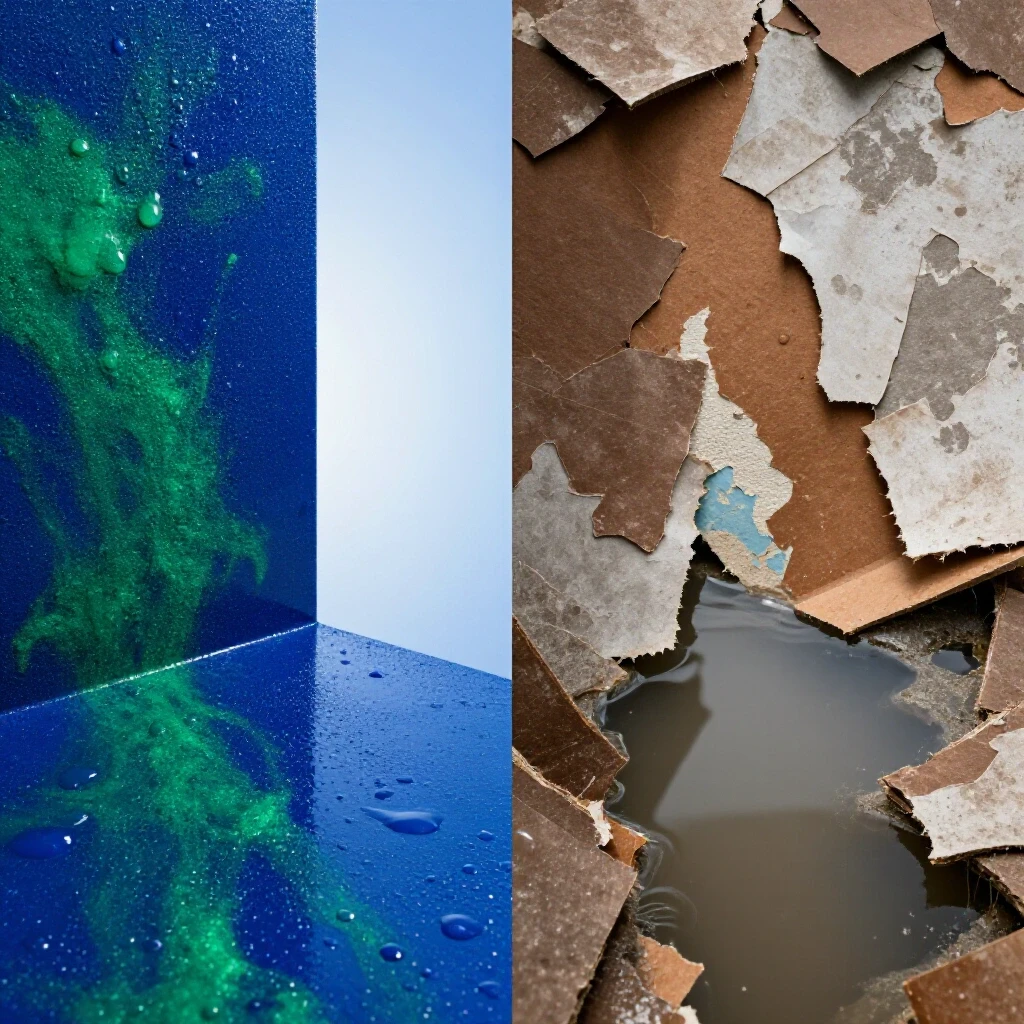
A barrier failure occurs when moisture gets behind or under the protective layer, causing the material to peel, crack, or bubble. On wood, this often looks like “cupping,” where the edges of the planks rise. On concrete, it might look like white powder (efflorescence) pushing through the sealer.
As a result of improper prep, many homeowners find that their expensive basement flooring starts to lift after the first heavy rain. Concrete is like a sponge; it pulls moisture from the ground. If you don’t use a vapor barrier—a thick plastic or epoxy layer—the moisture pushes up and breaks the glue holding your floor down.
I remember a project where the homeowner chose a beautiful wide-plank oak for their kitchen. The contractor didn’t check the moisture levels in the subfloor before installing. Within a month, the wood expanded so much it buckled. We had to remove the entire floor, dry the subfloor for two weeks, and start over. This was a classic case of ignoring the “why” before the “how.”
Indicators of Improper Barrier Application
- Peeling Coatings: Usually caused by applying a sealer to a dirty or damp surface.
- Seam Separation: Occurs when the overlap between two sheets of barrier is too small.
- Trapped Bubbles: Often a sign that the surface was too hot or the product was shaken instead of stirred.
- Soft Spots: Indicates that water is already trapped under the barrier, rotting the wood beneath.
How to Formulate a Real Contingency Plan for Hidden Surprises
A real contingency plan is a strategy for handling the “what ifs” without losing your mind or your savings. It involves setting aside money and time for the things you cannot see behind the drywall. When you open a wall and find old, wet insulation or a leaking pipe, your contingency plan kicks in.
Most home remodeling tips tell you to save 10%, but in my experience, that is rarely enough for major kitchen or bath work. I suggest 20% for any room involving water. This “buffer” allows you to fix a structural issue correctly rather than patching it and hoping for the best.
Change orders—written changes to the original contract—can quickly drain your funds. If a contractor finds a problem, they will issue a change order for the extra labor and parts. By having a pre-set budget for this, you can approve the work immediately, keeping the project on schedule.
Change Order Impact Analysis: Moisture Issues
- Small (Under $500): Replacing a small section of rotted subfloor found during demo.
- Medium ($500-$2,000): Needing a self-leveling compound across a large room to ensure the barrier bonds.
- Large ($2,000+): Discovering that the entire floor joist system is unlevel or damaged by old leaks.
Site Management and Quality Control Benchmarks
Site management is the daily oversight of the work being done in your home. You don’t need to be an expert, but you do need to know what a “good” barrier looks like. Quality control benchmarks are the specific standards the work must meet before you pay the next installment.
For example, when a liquid membrane is applied to a shower or a laundry room floor, it should look like a continuous, rubbery coat. There should be no “holidays”—which is pro-speak for missed spots. If you can see the color of the board underneath, the coat is too thin.
I always recommend using a digital blueprint or a simple scheduling app to track these milestones. When the barrier is done, take photos. These photos are your “X-ray” of the house. If a leak happens five years from now, you will know exactly where the seams were located.
5 Project Management Tools for Homeowners
- CompanyCam or Google Photos: For daily photo logs of every layer before it is covered.
- Trello or Asana: To track the sequence of subcontractors (plumber, then barrier pro, then tiler).
- Magicplan: For creating quick digital floor plans to estimate material needs.
- RSMeans Data Online: To check if your contractor’s quote for “waterproofing” is in the right ballpark.
- A Simple Level: To personally check if the floor is flat before the barrier goes down.
Resolving Punch-List Disputes Over Protective Layers
A punch-list is a final list of small tasks that need to be finished before the job is officially done. Disputes often happen here because “protection” is hard to see. A contractor might say the floor is sealed, but you might see a spot that looks dull or absorbs water.
Building on this, the best way to resolve a dispute is with a simple test. If you are worried about a stone sealer, drop a few beads of water on it. If the water beads up, the sealer is working. If it soaks in and darkens the stone, the barrier failed or was never applied.
In my years of coordinating, I found that clear “milestone payments” prevent most disputes. Do not pay the final 10-20% until the punch-list is clear and you have verified the integrity of the moisture barriers. This keeps the contractor motivated to fix even the smallest “holiday” in the sealant.
Practical Steps for Your Final Walkthrough
- Check all plumbing fixtures for slow drips that could bypass the barrier.
- Look at the baseboards for any signs of “wicking” moisture.
- Verify that all grout is consistent in color, as dark spots can indicate trapped dampness.
- Ensure you have copies of all warranties for the barrier products used.
Conclusion: Protecting Your Investment for the Long Haul
Navigating a major remodel is a marathon, not a sprint. The most successful projects I have overseen were not the ones with the biggest budgets, but the ones with the best preparation. By focusing on the invisible barriers, you ensure that your “flooring as art” remains a masterpiece for decades.
Remember that a small delay to let a sealant cure is much better than a major renovation two years later. Stay involved, ask about the sequence of work, and keep your contingency fund ready for those inevitable structural surprises. With a clear plan and a watchful eye, you can manage your home remodel with confidence.
Next Steps for Homeowners
- Review your quotes: Ensure “moisture barrier” or “waterproofing” is a specific line item, not just included in “labor.”
- Check the weather: If you are sealing concrete or applying exterior barriers, ensure you have a dry window of at least 48 hours.
- Buy a moisture meter: A $30 tool can tell you if your subfloor is dry enough to accept a new barrier.
- Update your schedule: Add “Cure Time” as a specific 24-48 hour block where no one is allowed to walk on the floors.
FAQ: Essential Guide to Moisture Barriers and Remodeling
What is the most common reason a moisture barrier fails?
The most common reason is poor surface preparation. If there is dust, oil, or old adhesive on the subfloor, the new barrier cannot bond. It will eventually lift or crack, allowing moisture to seep through. Always ensure the surface is “white-glove” clean before applying any sealant or membrane.
How can I tell if my contractor is skipping steps?
Watch the sequencing. If they are installing tile the same afternoon they applied a liquid membrane, they are likely rushing the cure time. Most high-quality barriers require 12 to 24 hours to set. Ask to see the manufacturer’s instructions on the bucket or roll; it will tell you exactly how long it needs to sit.
Do I really need a barrier on a concrete basement floor?
Yes, absolutely. Concrete is porous and naturally moves moisture from the damp soil outside into your home. This is called vapor drive. Without a proper vapor barrier (like a 6-mil plastic sheet or specialized epoxy), any flooring you put on top—especially laminate or wood—will eventually warp or grow mold underneath.
What is a “flood test” and should I ask for one?
A flood test involves plugging the drain in a newly waterproofed area (like a shower pan) and filling it with a few inches of water. You let it sit for 24 to 48 hours to ensure the water level doesn’t drop. It is the only way to guarantee the barrier is perfect before you cover it with expensive tile.
Can I apply a new barrier over an old one?
Usually, no. Most barriers need to bond directly to the structural material (wood or concrete). Layering a new membrane over an old, failing one creates a “sandwich” where moisture can get trapped between the two layers. This often leads to a total failure of the new floor.
How much extra should I budget for high-quality sealants?
For a standard bathroom, expect to spend an extra $300 to $600 on premium barrier materials compared to basic options. While this seems high, it is a small fraction of a $15,000 remodel. Using RSMeans data, this investment represents less than 4% of the total cost but prevents 90% of future floor failures.
What is the difference between a vapor barrier and waterproofing?
Waterproofing is designed to stop liquid water (like a leak or a shower). A vapor barrier is designed to stop water in its gas form (humidity or moisture rising through concrete). Many modern products do both, but it is important to confirm the product you are using is rated for the specific problem you are solving.
How do I handle a dispute if I find a leak after the contractor is gone?
This is why you need a “post-occupancy evaluation” period and a clear contract. Most reputable contractors provide a one-year warranty on labor. If you find a failure, document it with photos immediately. If the contractor refuses to fix it, your daily photo logs from the construction phase will be your best evidence for mediation.
Is seam tape really necessary for cement board joints?
Yes. The joints between boards are the weakest points in your wall or floor. Even if you use a liquid barrier, the house will naturally shift and settle. Seam tape provides the structural strength to prevent the barrier from tearing at those joints. Skipping this step is a major cause of cracked grout and leaking corners.
Can “breathable” sealants prevent moisture traps?
In some cases, yes. On exterior brick or certain types of natural stone, you want a “breathable” or penetrating sealer. This allows moisture inside the material to escape as vapor while stopping liquid water from entering. Using a “non-breathable” plastic coating on these materials can actually cause them to crumble over time.
(This article was written by one of our staff writers, David Langford. Visit our Meet the Team page to learn more about the author and their expertise.)