Essential Moving Tips for Settling Into a New Home (Pro Guide)

Moving into a new home often feels like dealing with a seasonal allergy. You enter a fresh space, but soon the dust of the old environment starts to irritate your senses. There is a literal layer of dust on the boxes, but there is also a figurative “itch” that comes from things not quite fitting where they should. Over the last nineteen years, my family and I have navigated four major relocations. Each move taught me that the discomfort of a new house isn’t just about the heavy lifting; it is about how our lives interact with the physical boundaries of a room.
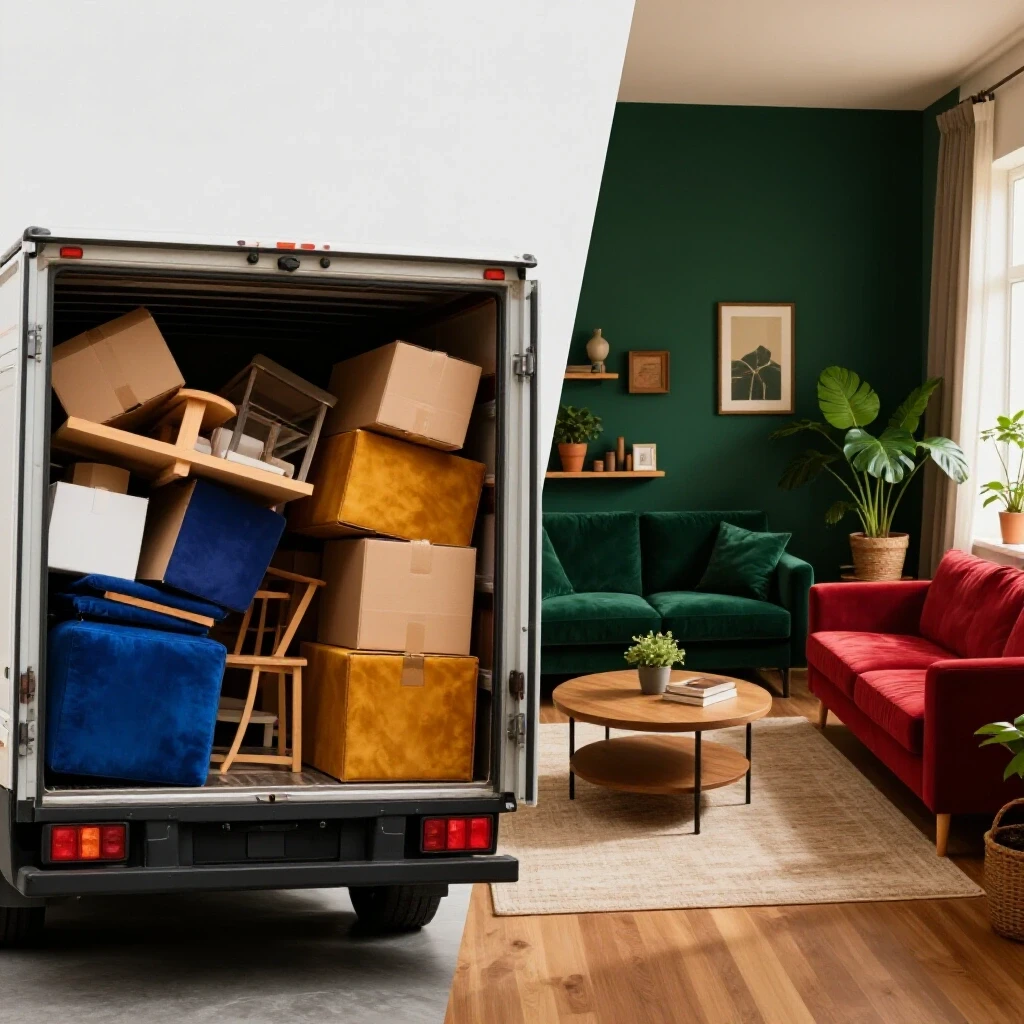
I have spent nearly two decades refining how to turn a strange floor plan into a functional home. Whether we were moving across the country or just down the street, the challenges remained the same. We had to figure out how to make a large sofa work in a narrow living room and how to build a sense of community in a place where we didn’t know a soul. This guide shares the practical strategies I developed through these four residential shifts to help you settle in with less stress and more logic.
Developing a Strategic Spatial Audit Before the Move
A spatial audit is the process of measuring your current belongings against the dimensions of your future home to ensure a physical fit. This step prevents the logistical nightmare of moving heavy items that simply cannot function in the new environment due to size or flow constraints.
Before you even pack a single box, you need a home moving checklist that prioritizes spatial data. In my second move, I assumed our heavy oak dining table would fit anywhere. I was wrong. We spent three hours trying to wedge it into a breakfast nook, only to realize it blocked the path to the refrigerator. Now, I use a more rigorous approach.
Spatial layout adaptation starts with understanding “circulation paths.” These are the invisible “roads” in your house where people walk. If a piece of furniture sits on a road, it creates a bottleneck. To avoid this, you must measure the “clearance margins” of every room in the new house.
Understanding Clearance Margins and Traffic Flow
Clearance margins are the specific amounts of empty space required around furniture to allow for comfortable movement and door swings. Maintaining these margins ensures that a room feels open rather than cramped, regardless of its total square footage or ceiling height.
In a standard home, a hallway or a main walkway should ideally be 30 to 36 inches wide. This allows two people to pass each other or one person to carry a laundry basket without hitting the walls. In a kitchen, the “work triangle” between the stove, sink, and fridge needs at least 42 inches of clearance for safety.
- Walkways: 30–36 inches for main traffic.
- Coffee Table to Sofa: 15–18 inches for legroom.
- Dining Chair Pull-out: 32–36 inches from the table edge to the wall.
- Bed Sides: 24–30 inches to allow for easy making of the bed.
Using a Spatial Blueprint Compatibility Matrix
A compatibility matrix helps you visualize which items from your current inventory are “high risk” for the new floor plan. By categorizing furniture by its “visual weight” and physical footprint, you can decide what to sell, donate, or bring along before the movers arrive.
| Furniture Item | Footprint (Sq Ft) | Visual Weight | Compatibility Risk | Action Plan |
|---|---|---|---|---|
| Sectional Sofa | 45 | High | High | Measure door frames; check for “left-arm” vs “right-arm” orientation. |
| King Bed Frame | 42 | High | Medium | Verify if it blocks closet doors or heaters. |
| Bookshelves | 6 | Low | Low | Easy to fit; use for vertical storage in small rooms. |
| Dining Table | 18 | Medium | High | Ensure 3 feet of clearance on all sides for chairs. |
Why Blind Furniture Placement Fails and How to Plan
Blind furniture placement occurs when you move items into a room based on where they “look nice” rather than where they function best. This often leads to blocked outlets, covered vents, or awkward walking patterns that disrupt the flow of your daily household routines.
In my third move, I learned that home transition planning requires more than just a tape measure; it requires a map. I now use digital floor planners to “test drive” my furniture. Seeing a 2D or 3D model of your room helps you spot problems before you break your back moving a dresser.
Drafting Your First Spatial Layout Blueprint
A layout blueprint is a scaled drawing of a room that includes fixed elements like windows, doors, radiators, and electrical outlets. Creating this document allows you to experiment with different furniture configurations without physically moving a single heavy object during the transition.
- Measure the perimeter: Record the length of every wall.
- Mark the “immovables”: Note where the windows, doors, and outlets are located.
- Scale your furniture: Cut out paper shapes representing your furniture at the same scale as your room drawing.
- Test the flow: Move the paper shapes around. Ensure you aren’t blocking a heat vent or a light switch.
Furniture Clearance Guidelines by Room Footprint
This table provides standard measurements to help you maintain a functional small room furniture layout. Following these metrics ensures that even the tightest spaces remain usable and don’t feel like a storage unit.
| Room Type | Minimum Walkway | Key Clearance Metric | Common Mistake |
|---|---|---|---|
| Living Room | 30 inches | 18″ between sofa and coffee table | Oversized rug bunching under doors |
| Bedroom | 24 inches | 36″ in front of dresser drawers | Blocking the path to the bathroom |
| Home Office | 30 inches | 48″ behind the desk for chair pull-back | Placing desk with back to the door |
| Kitchen | 42 inches | 15″ of landing space next to appliances | Blocking the dishwasher door swing |
Adapting to Awkward Layouts and Small Rooms
Awkward layouts are rooms with non-standard shapes, such as slanted ceilings, “L-shaped” footprints, or rooms with too many doors. Successfully adapting to these spaces requires “zoning,” which is the practice of dividing one large or strange room into smaller, functional areas.
During our fourth move, we encountered a long, narrow “shotgun” living room. It felt like a bowling alley. I learned that you can break the “tunnel effect” by using rugs to define zones. One rug for the seating area and another for a small reading nook helps the eye see two distinct rooms instead of one awkward hallway.
Strategies for Small Room Furniture Layout
Optimizing a small room involves prioritizing vertical space and multi-functional pieces. When floor space is limited, look up. Use tall bookshelves or wall-mounted desks to keep the “traffic lanes” clear while still maintaining the storage capacity your family needs.
- Use “Leggy” Furniture: Pieces with visible legs create a sense of more floor space.
- Mirror Placement: Reflecting light and views can make a 10×10 room feel significantly larger.
- Zoning with Color: Use different shades of paint or decor to signal where the “office” ends and the “bedroom” begins.
- Scale Down: If your old coffee table is too big, consider using two small end tables that can be moved easily.
Case Study: The “L-Shaped” Living Room Transition
In one of my previous homes, the living room had a strange “L” shape that felt disconnected. We initially tried to make it one giant seating area, but it felt cold. By applying spatial layout adaptation techniques, we turned the short end of the “L” into a dedicated play zone for the kids. This kept the toys out of the main walkway and gave the room a clear purpose.
The First-Month Spatial Adjustment Timeline
A successful move doesn’t end when the boxes are dropped off; it takes about thirty days to truly understand how a house “lives.” This adjustment period is for testing your routines and making small tweaks to the layout as you discover where you naturally drop your keys or where the kids like to do homework.
I recommend a “soft setup” for the first week. Don’t hang pictures or bolt shelves to the wall immediately. Live with the furniture for a few days to see if the traffic flow feels natural. If you find yourself walking around the couch every time you go to the kitchen, it’s time to move the couch.
Managing Your Home Unpacking Plan
A structured unpacking plan prevents the “box fatigue” that often sets in after the first three days. By focusing on high-utility zones first, you can establish a sense of normalcy even while the rest of the house is still in transition.
| Phase | Timeline | Focus Area | Goal |
|---|---|---|---|
| Phase 1 | Days 1–2 | Kitchen, Bedrooms, One Bathroom | Ensure sleep, hygiene, and basic meals are possible. |
| Phase 2 | Days 3–7 | Living Room, Home Office | Create a space for relaxation and work. |
| Phase 3 | Days 8–14 | Closets, Secondary Storage | Get the empty boxes out of sight. |
| Phase 4 | Days 15–30 | Decor, Art, Neighborhood Exploration | Finalize the “feel” and start neighborhood community building. |
Essential Box Inventory Packing Log
Keeping a detailed log is the only way to survive a multi-room move without losing your mind. Instead of just writing “Kitchen” on a box, use a numbering system. This allows you to find your coffee maker on morning one without opening ten different “Kitchen” boxes.
- Box #001: Coffee maker, 2 mugs, coffee, filters, sugar.
- Box #002: Bed sheets for the master bedroom, pillows.
- Box #003: Basic tools (screwdriver, hammer, box cutter, tape).
- Box #004: Essential toiletries and one towel per person.
- Box #005: Charging cables and power strips.
Building Community and Establishing New Routines
Neighborhood integration is the final step in a successful move. It is the process of mapping your new surroundings—finding the best grocery store, the nearest park, and the neighbors who are willing to keep an eye on your house. This reduces the feeling of isolation that often follows a relocation.
In my experience, the “social friction” of a move is just as taxing as the physical labor. To combat this, I make it a point to walk the neighborhood at the same time every day during the first two weeks. Whether it’s walking the dog or just a stroll, consistency makes you a familiar face to your neighbors.
Practical Neighborhood Community Building
Building a local network doesn’t happen overnight, but you can accelerate the process with intentional steps. Start small. You don’t need to host a block party; you just need to be present in the local ecosystem.
- The “Front Yard” Rule: Spend time in the front of your house. It makes you approachable.
- Join Local Groups: Use digital platforms to find neighborhood watch or hobby groups.
- Visit the “Third Places”: Find a local coffee shop or library and go there regularly.
- Ask for Advice: Ask a neighbor for a recommendation for a local plumber or a good pizza place. It’s a low-pressure way to start a conversation.
New Home Adjustment Guide: Setting Up Room Systems
A “room system” is a set of organized habits and storage solutions that keep a space functional. For example, a “mudroom system” includes a place for shoes, a hook for keys, and a basket for mail. Establishing these systems in the first month prevents clutter from taking over your new home.
- The Entryway System: Install hooks and a small table immediately to catch daily items.
- The Laundry System: Determine where dirty clothes go and how clean ones return to rooms.
- The Trash/Recycle System: Locate these near the exit to make taking them out effortless.
- The Command Center: A central spot for a calendar and school forms helps the family stay synced.
Conclusion: Taking the First Steps in Your New Space
Relocating is a marathon, not a sprint. Over nineteen years and four moves, I have learned that the key to a comfortable home isn’t having the most expensive furniture; it’s having a layout that supports your daily life. By measuring your spaces, planning your traffic flow, and being patient with your adjustment period, you can turn any house into a functional sanctuary.
Start by auditing your current inventory today. Measure your largest pieces of furniture and compare them to your new floor plan. If something won’t fit, let it go now. Your future self—the one trying to navigate a narrow hallway with a heavy box—will thank you for the foresight.
Frequently Asked Questions
How do I know if my existing furniture will fit in a smaller home? You must measure both the “footprint” of the furniture and the “clearance margins” of the new room. Use a compatibility matrix to compare your items to the new square footage. If a piece leaves less than 30 inches of walking space, it is likely too large for that specific room.
What is the most important measurement to take before moving? The width and height of all entry doors and narrow hallways are the most critical measurements. Even if a sofa fits in the living room, it won’t matter if it cannot pass through the front door or around a tight corner in a hallway.
How can I make an awkward, L-shaped room feel cohesive? Use “zoning” techniques. Define separate areas with rugs or lighting. For example, place a large rug under the seating group to anchor it, and use a different lamp or a smaller rug to define a workspace in the corner. This gives each part of the room a clear purpose.
What is the “30-36 inch rule” for home layouts? This rule states that major traffic paths through a room should be at least 30 to 36 inches wide. This allows people to walk comfortably without bumping into furniture or walls. It is a standard ergonomic guideline used in both residential and commercial design.
How soon should I start unpacking after the move? Aim to have the “high-utility” areas—kitchen, bedrooms, and one bathroom—unpacked within the first 48 hours. This allows you to maintain basic routines. The rest of the house can be unpacked over the following two to three weeks to avoid burnout.
What should I do if my furniture blocks a heater or an outlet? If possible, use furniture with legs (elevated off the floor) to allow air from a heater to circulate. For outlets, use flat-plug extension cords or power strips before placing heavy furniture against the wall so you can still access power without moving the item later.
How can I meet my new neighbors without being intrusive? The easiest way is to spend time in your front yard or on your porch. Simple activities like watering plants or checking the mail provide natural opportunities for a “hello.” You can also ask for local recommendations, which is a great, low-pressure icebreaker.
What tools do I need for a DIY spatial layout plan? You can use a simple tape measure, graph paper, and a pencil. For a digital approach, there are many free online floor planners and mobile apps that allow you to drag and drop furniture into a virtual room based on your specific measurements.
How do I handle “box fatigue” during a long move? Break the process down into phases. Don’t try to unpack the whole house in one weekend. Set a goal of three to five boxes per day after the initial essential rooms are done. This keeps the momentum going without making you feel overwhelmed.
Why is “visual weight” important in small room furniture layouts? Visual weight refers to how “heavy” an object looks. A solid, dark-colored sofa to the floor looks heavier than a light-colored sofa with thin legs. In small rooms, using furniture with “low visual weight” makes the space feel more open and airy.
(This article was written by one of our staff writers, Kevin Thompson. Visit our Meet the Team page to learn more about the author and their expertise.)