How to Organize a Shared Bedroom for Long-Term Success (Guide)

Moving requires a high degree of adaptability, especially when you are trying to fit the life you’ve built into a completely new set of walls. Over the last 19 years, I have moved my family between four different homes, ranging from spacious suburban houses to cramped city apartments. Each transition taught me that the most successful layouts aren’t the ones that look best on day one, but the ones that survive the friction of daily life a year later.
My first cross-country move was the most eye-opening. We were downsizing from a three-bedroom house to a two-bedroom apartment, and I had to figure out how to make a single room work for two people with very different schedules. I quickly learned that if you don’t plan for the “traffic jams” that happen at 7:00 AM, the most beautiful furniture arrangement will eventually fail.
Analyzing the Spatial Footprint Before the Moving Truck Arrives
A spatial layout is the strategic arrangement of physical items within a room to maximize utility and movement. It involves understanding how static elements like walls, windows, and doors dictate the natural flow of people throughout the day.
When you are staring at a new floor plan, it is easy to focus on where the bed goes. However, you must first conduct a spatial audit. I recommend using a digital floor planner or even simple grid paper to map out every permanent fixture. Mark the swing of every door and the location of every electrical outlet.
In our third move, I ignored the radiator’s position in the secondary bedroom. As a result, our main storage unit blocked the heat, and we had to rearrange the entire room in the middle of winter. Now, I always include “environmental obstacles” in my initial home moving checklist to ensure the layout remains functional through every season.
Why Blind Furniture Placement Fails
Layout optimization for irregular rooms involves identifying underutilized corners and using furniture to redefine the room’s center of gravity. This is crucial when adapting large furniture to smaller footprints or shared environments.
Many movers make the mistake of “eye-balling” it. They assume a dresser will fit because the wall looks long enough. In reality, you need to account for clearance margins. For a room to feel comfortable, you generally need 30 to 36 inches of walking space in main traffic paths. If two people are sharing a space, these margins become even more critical to prevent constant physical bumping.
Mapping Multi-Occupant Furniture to New Room Scales
Scale adjustments involve comparing the physical dimensions of your current furniture against the square footage of a new environment. This ensures that essential items fit without blocking pathways or making the room feel claustrophobic.
In a shared living situation, the “visual weight” of furniture matters. If you put two heavy, dark wood desks in a small room, the space will feel smaller than it actually is. During our move to a smaller urban flat, I swapped out a bulky headboard for a slim, wall-mounted version. This saved us 6 inches of floor space, which was exactly what we needed to keep the closet doors from hitting the bed frame.
Spatial Blueprint Compatibility Matrix
| Furniture Item | Standard Depth | Required Clearance | Shared Room Impact |
|---|---|---|---|
| Twin/Full Bed | 75-80 inches | 24 inches on sides | High: Dominates floor flow |
| Standard Desk | 24-30 inches | 30 inches for chair | Medium: Needs dedicated zone |
| Dresser/Chest | 18-22 inches | 36 inches for drawers | High: Blocks walking paths |
| Nightstand | 15-20 inches | 0 inches | Low: Fits in dead corners |
Creating Durable Systems for Shared Living Quarters
Sustainable organization refers to systems that survive the daily friction of multiple users. It focuses on accessibility, shared storage zones, and low-maintenance routines that remain functional for more than a year.
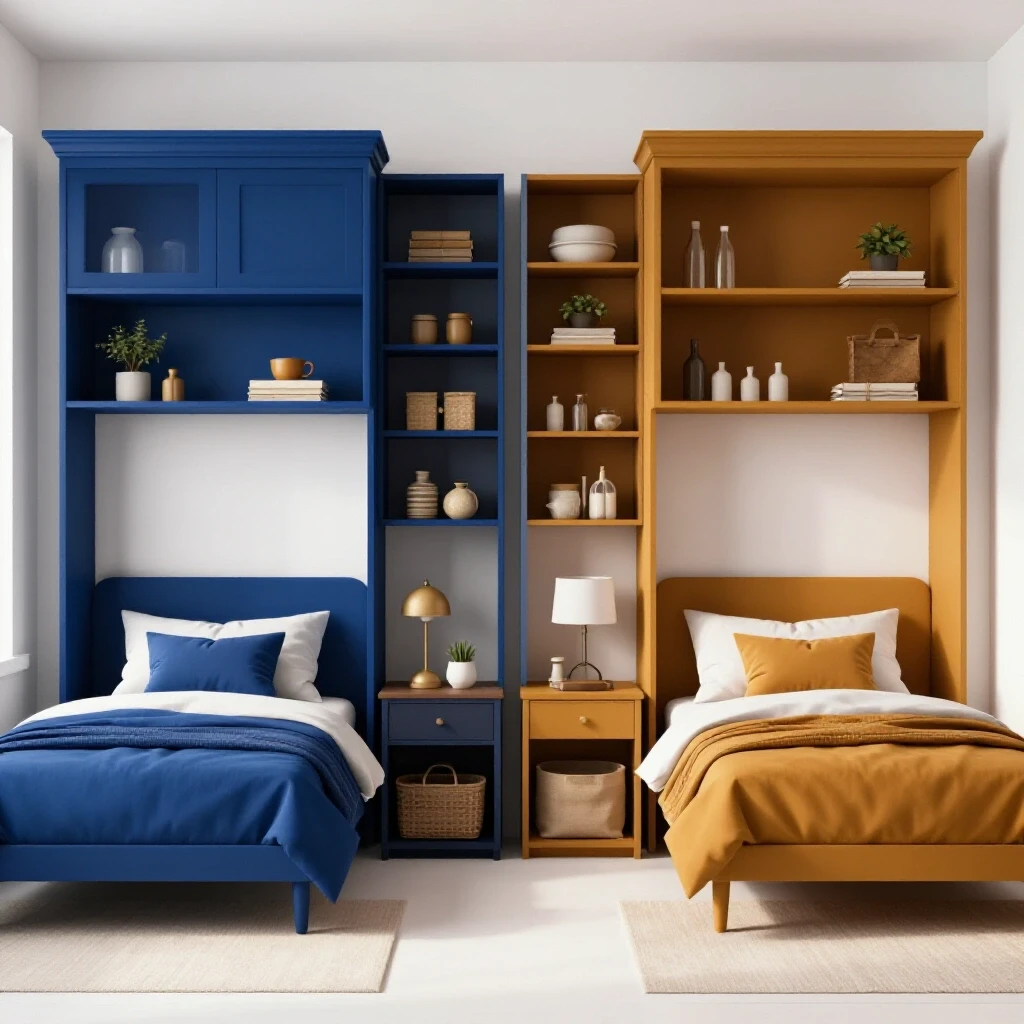
When two people share a room, “zoning” is your best friend. This means creating a clear physical boundary for different activities. For example, the sleeping zone should be distinct from the study or dressing zone. In one of our previous apartments, we used a low open-shelf unit as a room divider. It provided storage for both people while creating a psychological sense of “my side” and “your side.”
- Vertical Storage: Use the top 20% of your walls for items used less than once a month.
- Clearance Buffers: Maintain at least 18 inches between the edge of a bed and the nearest wall.
- Dual-Purpose Pieces: Choose ottomans with internal storage to reduce visual clutter.
Navigating the First-Month Spatial Adjustment Timeline
A transition timeline is a structured schedule for unpacking and evaluating room functionality. It helps residents move from basic survival to a fully optimized living state within 30 days.
The first 48 hours are about “survival layout.” You need to be able to sleep and get dressed. However, the real work happens in weeks two and three. This is when you notice that the light switch is behind the bookshelf or that the sun hits your computer screen at noon. I always tell families to keep their moving tools handy for at least a month to make these small but vital adjustments.
First-Month Spatial Adjustment Timeline
- Days 1–2: Establish “Primary Paths.” Clear 36-inch walkways to the bathroom and exit.
- Days 3–7: Test “Morning Friction.” Observe if residents are crowding the same closet or mirror simultaneously.
- Days 8–14: Adjust for “Environmental Factors.” Move furniture away from drafty windows or noisy shared walls.
- Days 15–30: Finalize “Storage Habits.” Label shared bins and ensure every daily item has a home within reach.
Overcoming the Friction of Awkward Floor Plans
Small room furniture layout requires a shift in perspective. Instead of trying to make the room fit your furniture, you must make the furniture fit the room’s unique geometry.
Awkward alcoves or slanted ceilings are common in older homes. I once lived in a house where the secondary bedroom had a five-foot ceiling on one side. We adapted by placing low-profile storage units in the “dead space” under the eaves. This kept the center of the room open for standing and walking. By utilizing these odd footprints, we increased our usable storage volume by 15% without losing any floor space.
Furniture Clearance Guidelines by Room Footprint
- Hallways: Minimum 30 inches, preferred 36 inches.
- Behind Chairs: Allow 24 inches to pull out a chair and sit comfortably.
- Between Beds: In a shared room, 30 inches is the standard for a shared walkway.
- Closet Access: Ensure a 36-inch radius is clear in front of swinging doors.
Integrating Routines into Your New Neighborhood Environment
Neighborhood community building is the process of establishing social connections and local familiarity. It transitions a house from a physical structure to a home within a supportive ecosystem.
Moving isn’t just about the four walls; it’s about the four blocks surrounding you. In my 19 years of relocating, I’ve found that the faster you establish an external routine, the more comfortable your internal layout feels. If you know there is a great coffee shop two blocks away, you might not feel the need to cram a massive espresso station into your small kitchen.
- The “Walk the Block” Rule: Walk in a different direction for 20 minutes every evening for the first week.
- Local Mapping: Identify your “Third Places”—the library, a park, or a local diner—where you can escape if the house feels too small during the transition.
- Introduction Strategy: Aim to meet three neighbors in the first ten days. A simple “We just moved in” is enough to start building a safety net.
Essential Tools for Home Transition Planning
To manage the logistics of a move without losing your mind, you need a centralized system. I have relied on a mix of digital and analog tools to keep our four moves on track.
- MagicPlan or Floorplanner: These apps allow you to scan your new room and drop in virtual furniture to check clearances before you lift a single heavy box.
- Color-Coded Labeling System: Assign a color to each room. Use high-visibility tape on all four sides of the box so you can see where it goes even when stacked.
- The “First Night” Box: A clear plastic bin containing bed linens, basic toiletries, a multi-tool, and phone chargers.
- Digital Inventory Spreadsheet: Track the weight and contents of every box. This is vital for insurance and for finding your coffee mugs on day three.
Setting Up Functional Daily Systems
A home transition planning guide is only as good as the habits it supports. Once the furniture is in place, you must design the “operating system” of the home.
In a shared bedroom, this often means managing the “drop zone.” This is the place where bags, keys, and coats land. If you don’t designate a spot for these, they will migrate to the bed or the floor, ruining your carefully planned layout. We installed a simple row of hooks behind the door in our last move. It took up zero floor space but kept the room organized for the entire year we lived there.
- The One-In, One-Out Rule: For every new item brought into a small shared space, one must leave.
- Daily Reset: Spend five minutes every night returning shared surfaces to their “base state.”
- Visual Cues: Use different colored bins for different residents to prevent “storage creep.”
Practical Next Steps for a Smooth Transition
Moving is a marathon, not a sprint. The goal of spatial layout adaptation is to create a home that supports your life rather than one that requires constant maintenance.
Start by measuring your largest pieces of furniture today. Compare those numbers to your new floor plan. If the math doesn’t work, it is better to sell or donate the item now than to pay to move it and realize it blocks the hallway. Focus on the flow of movement first, and the aesthetics will naturally follow as you settle into your new community.
Frequently Asked Questions
How do I decide which furniture to keep when downsizing for a shared room? Focus on multi-functionality and footprint. Measure the “footprint” (width x depth) of each piece. If a dresser takes up 6 square feet but only holds a small amount of clothing, consider replacing it with a taller, narrower unit that uses vertical space. Prioritize pieces that offer “closed storage” to keep the room looking tidy.
What is the minimum clearance needed for a comfortable shared bedroom? You should aim for at least 30 inches of walking space between major pieces of furniture. For the area between two beds, 36 inches is ideal to allow two people to pass each other. If space is tight, you can go down to 24 inches in low-traffic areas, but anything less will feel cramped and cause daily frustration.
How can I reduce noise friction in a shared sleeping space? Spatial layout can help with acoustics. Use “soft” furniture like bookshelves filled with books, heavy curtains, or area rugs to absorb sound. If schedules differ, place the bed of the early riser closer to the door to minimize the distance they have to walk through the room while the other person sleeps.
How do I handle a room with an awkward layout, like a long, narrow “shotgun” style? In long, narrow rooms, avoid lining all furniture against one wall, which creates a “bowling alley” effect. Instead, use a rug or a small desk to break the room into two distinct square zones. This creates a visual pause and makes the room feel more balanced and functional.
When should I start planning my furniture layout for a new home? You should start as soon as you have a confirmed floor plan, ideally 4 to 6 weeks before the move. This gives you enough time to sell furniture that won’t fit and purchase any specific organizational tools, like over-the-door racks or slim-profile shelving, that the new space requires.
What is the most common mistake people make when moving into a new layout? The most common mistake is trying to recreate their old room in a new space. Every home has a different “rhythm.” People often force a layout because “that’s how it was before,” ignoring the fact that the windows or closet doors are in different spots. Be willing to experiment during the first two weeks.
How do I manage shared storage without causing conflict? Clear boundaries are essential. Divide shared closets or dressers physically using shelf dividers or separate bins. Assigning “ownership” of specific shelves prevents the “your stuff is in my way” argument. Revisit the system after one month to see if one person needs more space than originally planned.
How can I make a small shared room feel larger? Keep the floor as clear as possible. Use furniture with legs so you can see the floor underneath, which creates an illusion of more space. Use mirrors to reflect light and keep the “visual height” of the room low by avoiding tall, dark pieces of furniture near the entrance.
(This article was written by one of our staff writers, Kevin Thompson. Visit our Meet the Team page to learn more about the author and their expertise.)