How to Find the Right Neighborhood Fit After Moving (Guide)

One of the most effective ways to reduce stress during a transition is to perform a physical spatial audit before any furniture arrives. I recommend using painter’s tape to outline your largest furniture pieces directly on the floor of your new home. This simple act reveals exactly how much walking space remains, helping you decide what to keep and what to let go before you spend energy moving heavy items into an awkward corner.
Assessing the Physical Footprint of Your New Environment
Spatial layout adaptation refers to the process of analyzing how your furniture and belongings interact with the unique dimensions and flow of a new home. It involves looking beyond the total square footage to understand the “usable” space, which is often dictated by window placement, door swings, and electrical outlets.

Over the last 19 years, I have moved my family through four different states, transitioning from sprawling suburban houses to compact urban apartments. Each time, I realized that a home moving checklist is only as good as the spatial data you feed it. In our second move, I tried to force a massive sectional sofa from a high-ceilinged living room into a narrow historical cottage. The sofa physically fit, but it blocked the natural path to the kitchen, making the whole house feel cramped and frustrating.
To avoid this, you must analyze the “structural scale” of your new environment. This means looking at the height of the baseboards, the width of the hallways, and the direction of the sunlight. These elements dictate how you will eventually use each room. If a room has low light, for example, your home transition planning should prioritize light-colored furniture or strategic mirror placement to prevent the space from feeling like a cave.
Defining Circulation Paths and Traffic Flow
Circulation paths are the invisible “highways” in your home that people use to move from one room to another. Proper layout zoning ensures these paths are at least 30 to 36 inches wide to allow for comfortable movement without bumping into furniture corners.
When we moved into our third home, a mid-century modern with a very open floor plan, I struggled with “visual weight.” The room was large, but the traffic patterns were diagonal. By measuring out 36-inch clearance margins, I discovered we couldn’t place chairs where we originally wanted them. We had to shift our entire living room “zone” four feet to the left to keep the path to the backyard clear.
- Hallway Clearance: Maintain 36 inches for main thoroughfares.
- Dining Space: Allow 32 to 36 inches between the table edge and the wall for chair pull-out.
- Coffee Table Gap: Keep 14 to 18 inches between the sofa and the table.
- Entryway Landing: Reserve at least 48 inches of depth near the front door for groups to enter.
Why Blind Furniture Placement Fails and How to Draft a Blueprint
A spatial layout blueprint is a scaled drawing or digital map that accounts for every permanent fixture in a room, including radiators, vents, and light switches. Creating this map prevents the common mistake of blocking a heat source or making an outlet inaccessible with a heavy wardrobe.
Most people experience move-in exhaustion because they are making too many decisions on the fly. By drafting a blueprint, you move the decision-making process to a time when you are calm and have a measuring tape in hand. I use a simple 1:12 scale (where one inch equals one foot) on graph paper, but modern digital space-planners are equally effective for those who prefer a screen.
Spatial Blueprint Compatibility Matrix
| Existing Furniture Item | New Room Dimensions | Compatibility Score (1-10) | Required Adaptation |
|---|---|---|---|
| King Size Bed | 11′ x 11′ Bedroom | 4 | Remove one nightstand |
| 8-Seat Dining Table | 10′ x 12′ Dining Area | 6 | Use as a desk or downsize |
| L-Shaped Sectional | 14′ x 16′ Living Room | 9 | Orient toward the focal window |
| Tall Bookshelf | 8′ Ceiling Height | 2 | Sell or move to basement |
Practical Approaches for Small Room Furniture Layout
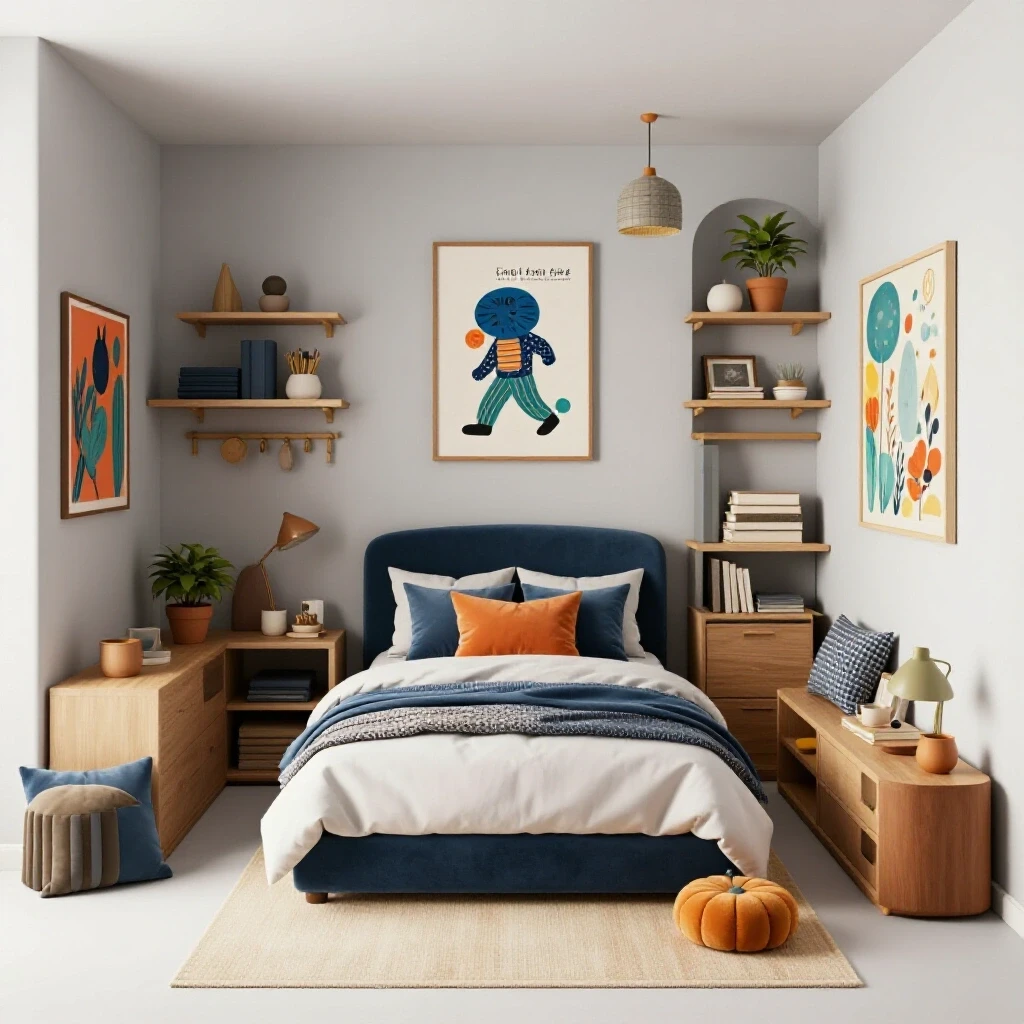
Small room furniture layout is the art of maximizing utility in limited square footage without sacrificing comfort or aesthetics. It requires a focus on multi-functionality and vertical storage to keep the floor clear and the room feeling airy.
In our smallest apartment, I had to fit a home office into a bedroom that was barely 100 square feet. The key was “visual weight shifts.” We chose a desk with thin metal legs rather than a heavy wooden one. This allowed the eye to see the floor underneath, which trickled into our subconscious and made the room feel larger than it actually was.
When you are dealing with awkward or small rooms, every inch counts. I recommend a “low-profile” approach. Choosing furniture that sits lower to the ground can make ceilings feel higher. Additionally, using “leggy” furniture—pieces where you can see the floor beneath—creates an illusion of continuous space.
- Use the 60/40 Rule: Fill no more than 60% of the floor space with furniture to maintain a sense of openness.
- Vertical Thinking: Use floating shelves to move storage off the floor.
- Mirror Placement: Place mirrors opposite windows to double the perceived depth of a small room.
- Multi-use Pieces: An ottoman with internal storage can replace both a coffee table and a linen chest.
Solving Common Layout Friction in Transitional Spaces
Home transition planning involves identifying “friction points”—areas where your daily habits clash with the physical constraints of your new house. Common friction points include a lack of an entryway “mudroom” or a kitchen with insufficient counter space for your cooking style.
When we moved to a home with no formal foyer, shoes and mail started piling up by the front door within 48 hours. This created a mental “clutter tax” every time we walked in. To fix this, we created a functional zone using a narrow console table and a wall-mounted coat rack. We adapted our routine to fit the house, rather than waiting for the house to change for us.
First-Month Spatial Adjustment Timeline
- Week 1: Focus on “Survival Layouts.” Set up beds, one functional bathroom, and a basic kitchen station.
- Week 2: Evaluate traffic flow. If you are constantly walking around a chair, move it.
- Week 3: Address storage gaps. Install shelving or hooks in areas where clutter naturally gathers.
- Week 4: Finalize aesthetics. Hang art and position rugs once the furniture placement feels permanent.
Establishing New Household Routines After a Relocation
A new home adjustment guide must include a section on routines, as your physical environment dictates your behavior. If your coffee maker is across the kitchen from your mugs, your morning routine will feel disjointed. Functional zoning is the practice of grouping related items together to support specific activities.
I learned this the hard way during a cross-country move when my “work from home” setup was in the middle of the family play area. I was stressed, and the kids were frustrated. We eventually carved out a dedicated zone using a tall bookshelf as a room divider. This physical barrier signaled to my brain—and my family—when I was “at work.”
- Morning Zone: Group coffee, mugs, and breakfast supplies in one area.
- Landing Zone: Create a spot for keys, bags, and mail near the primary entrance.
- Cleaning Zone: Keep specialized supplies in the rooms where they are used (e.g., bathroom spray in the bathroom).
- Rest Zone: Keep electronics out of the bedroom to reinforce the space as a place for sleep.
Connecting Your Interior Design to the Surrounding Community
Neighborhood community building starts with how you use your home’s exterior and public-facing spaces. Your home is not an island; it is part of a larger ecosystem. Adapting to the local lifestyle might mean setting up a front porch seating area if your neighbors are active outside, or prioritizing a mudroom if you’ve moved to a rainy climate.
In our current neighborhood, people spend a lot of time in their front yards. We adjusted our layout to include a small bench near the front walk. This simple design choice led to more conversations with neighbors in one month than we had in three years at our previous, more secluded home. Look at how the homes around you are styled—not to copy them, but to understand the local “rhythm.”
Furniture Clearance Guidelines by Room Footprint
| Room Type | Recommended Clearance | Why It Matters |
|---|---|---|
| Bedroom | 24″ around the bed | Allows for easy bed-making and walking. |
| Living Room | 30″ between seating groups | Encourages conversation without feeling crowded. |
| Kitchen | 42″ to 48″ in work triangles | Prevents “door collisions” between fridge and oven. |
| Bathroom | 21″ in front of toilet/sink | Ensures basic ergonomic comfort. |
Essential Tools for Layout Mapping and Transition Coordination
To manage the logistics of a move without the high stress, you need a reliable set of tools. These resources help you visualize the space before you arrive and keep your measurements organized.
- MagicPlan: An app that uses your phone’s camera to create floor plans simply by scanning the room.
- SketchUp Free: A more robust tool for 3D modeling if you have complex furniture and want to see how it fills a volume.
- Floorplanner: A user-friendly web tool that allows you to drag and drop furniture into a 2D or 3D space.
- A 25-foot Steel Tape Measure: Never rely on “eyeballing” a space; physical measurements are the only source of truth.
- Digital Caliper: Useful for measuring the thickness of trim or the depth of recessed areas for custom shelving.
Conclusion: Taking the First Steps in Your New Space
The transition into a new home is a marathon, not a sprint. By focusing on spatial layout adaptation and functional zoning, you can reduce the mental load of moving. Start by measuring your paths, masking out your furniture with tape, and observing how you naturally move through the rooms.
Remember that a home is a living thing. It will take time to find the right “fit.” Don’t be afraid to move a chair three times or swap the purpose of two rooms entirely. The goal is to create an environment that supports your daily life and helps you feel grounded in your new neighborhood.
Frequently Asked Questions
How do I know if my old furniture will fit in a smaller home?
The best way is to create a floor plan of the new space and subtract 36 inches for walkways. Then, measure your furniture’s footprint. If the remaining “usable” square footage is less than the total footprint of your furniture, you will need to downsize or choose multi-functional pieces.
What is the most common mistake people make when arranging furniture in a new house?
The most common mistake is “wall-hugging,” where all furniture is pushed against the perimeter. This often leaves a large, awkward empty space in the middle and makes the room feel cold. Pulling furniture even a few inches away from the wall can create a more intimate and professional look.
How can I make an awkward, long, and narrow room feel functional?
Break the room into distinct zones using rugs or furniture placement. For example, use one end for a seating area and the other for a small desk or reading nook. A long room is essentially two or three smaller rooms combined; treat them that way to avoid the “bowling alley” effect.
How long does it usually take to feel “settled” in a new layout?
Research into housing adaptation suggests it takes about three to six months to fully adjust to a new environment. The first month is for physical logistics, while the following months are for refining routines and building a sense of community.
What should I do if my furniture blocks a window or a vent?
If a piece of furniture must block a window, choose a low-profile item that doesn’t go above the sill. For vents, use air deflectors to redirect the airflow into the room rather than letting it get trapped behind a sofa or cabinet.
How do I plan a layout for a room with multiple doors and windows?
Identify the “primary” wall—the one with the fewest obstructions—and place your largest piece of furniture there. Use the 30-36 inch rule to ensure that every door has a clear swing path and that you can easily access windows for cleaning or opening.
Is it worth buying new furniture immediately after moving?
I usually recommend waiting at least 30 days. Live in the space first to see how the light changes and how you actually use the rooms. You might find that the “perfect” chair you planned to buy doesn’t actually fit the way you live in the new house.
How do I handle “visual clutter” in a new, smaller space?
Focus on “closed storage.” Swap open bookshelves for cabinets with doors. In a smaller home, seeing the contents of every shelf can feel overwhelming. Hiding the “visual noise” behind doors helps the room feel much calmer and more organized.
(This article was written by one of our staff writers, Kevin Thompson. Visit our Meet the Team page to learn more about the author and their expertise.)