How to Choose Timeless Decor Over Trends After 40 (Expert Tips)

The best option for a sustainable home environment is rarely found in a seasonal catalog or a viral social media post. Instead, it emerges from a deliberate focus on how a room supports your actual habits over several years. After fifteen years in retail merchandising, I have seen thousands of products enter homes only to be replaced within twenty-four months because they failed the basic tests of daily friction. Shifting toward a philosophy of enduring design means prioritizing the physical and psychological needs of the household over fleeting visual styles.
The Environmental Psychology of Enduring Spaces
Environmental psychology examines how our physical surroundings influence our stress levels, social interactions, and cognitive function. In a home setting, this involves looking at how furniture placement and room flow impact the way a family moves and communicates throughout the day.
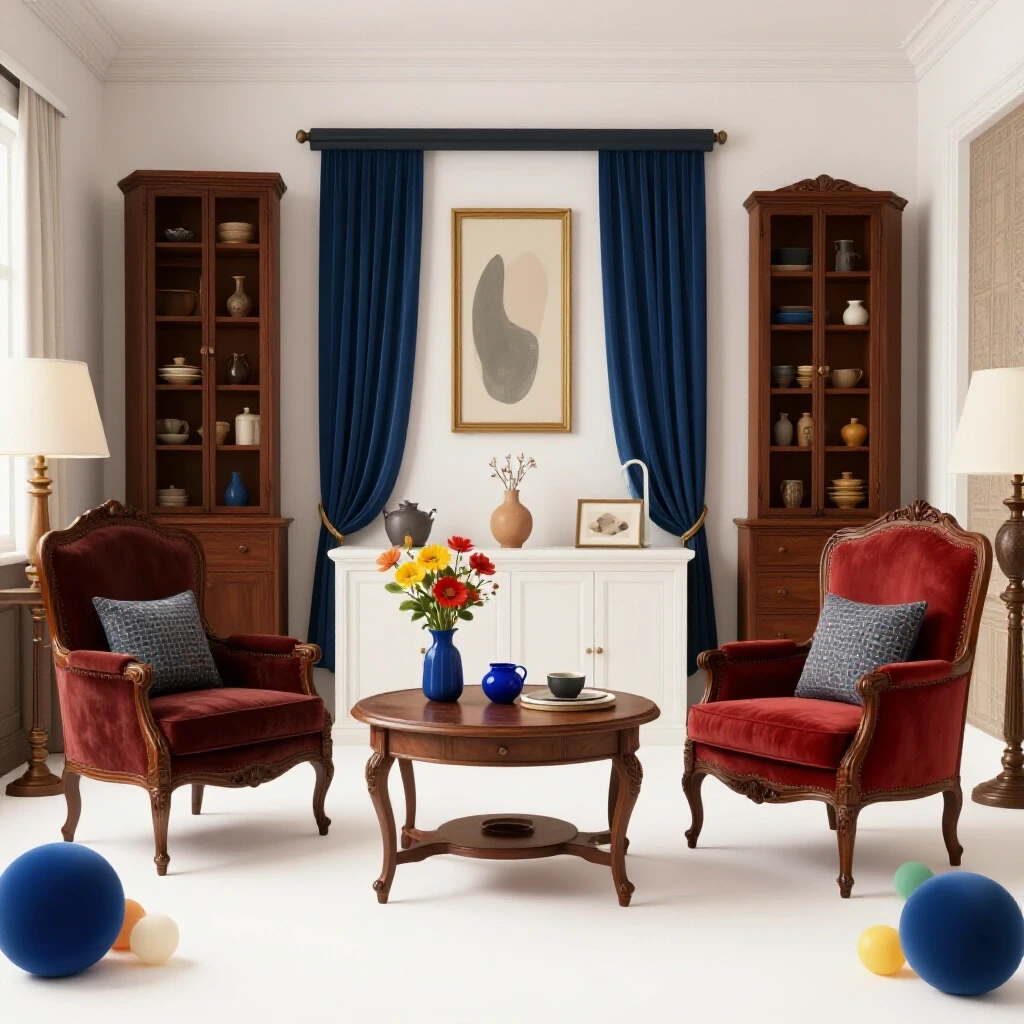
When we design for the long term, we have to consider the concept of “behavioral mapping.” This is a method I used in retail to track how people actually moved through a space versus how we wanted them to move. In a family home, a room that looks beautiful but forces everyone to walk in a tight, awkward zigzag around a sharp-edged coffee table will eventually cause subconscious irritation. Longitudinal studies on residential satisfaction often show that “spatial adequacy”—having enough room to move without bumping into objects—is a higher predictor of long-term happiness than the specific color of the walls.
Interestingly, the “Prospect-Refuge Theory” suggests that humans feel most comfortable in spaces where they have a clear view of the room (prospect) while feeling physically protected (refuge). I often see homeowners make the mistake of floating furniture in the middle of a massive room without any “anchors.” This can lead to a feeling of exposure that makes the room feel less cozy over time. By placing larger seating elements against or near solid walls, you satisfy this deep-seated psychological need for security, making the room a place people actually want to linger in for years.
Structural Standards for Durable Home Decor
Structural durability refers to the physical integrity of materials and construction methods that allow furniture to withstand the weight, movement, and environmental changes of a lived-in home. It is the difference between a table that wobbles after six months and one that remains stable for a decade.
During my years in merchandising, I learned that the internal “skeleton” of a piece is more important than the finish. For example, kiln-dried hardwood frames are a benchmark for longevity because the drying process prevents the wood from warping or cracking as the humidity in your home changes. In contrast, frames held together with staples and glue often fail under the repetitive stress of people sitting and standing.
- Frame Construction: Look for corner-blocked joinery where extra pieces of wood are screwed into the corners for stability.
- Suspension Systems: Eight-way hand-tied springs are often cited as a high standard, but modern sinuous springs can be equally durable if they are made of heavy-gauge steel.
- Cushion Density: High-resiliency (HR) foam with a minimum density of 1.8 to 2.5 pounds per cubic foot ensures that seating maintains its shape rather than sagging after a year of use.
Why High-Traffic Pathways Fail and How to Calculate True Clearance Paths
Clearance paths are the designated walking routes between furniture and architectural elements like walls or doorways. Maintaining proper clearance is essential for preventing a room from feeling cramped and ensuring that the layout remains functional as family needs evolve.
In my experience, the most common layout error is “over-furnishing,” where the desire for more seating compromises the ability to walk through the room. A standard walking pathway should be at least 36 inches wide. This allows two people to pass each other comfortably and provides enough room for someone carrying a laundry basket or a tray of food. In smaller rooms, you might drop this to 30 inches, but anything less will begin to feel like a navigational hazard.
| Room Area | Recommended Clearance | Purpose |
|---|---|---|
| Main Traffic Artery | 36 – 42 inches | Primary movement through the house |
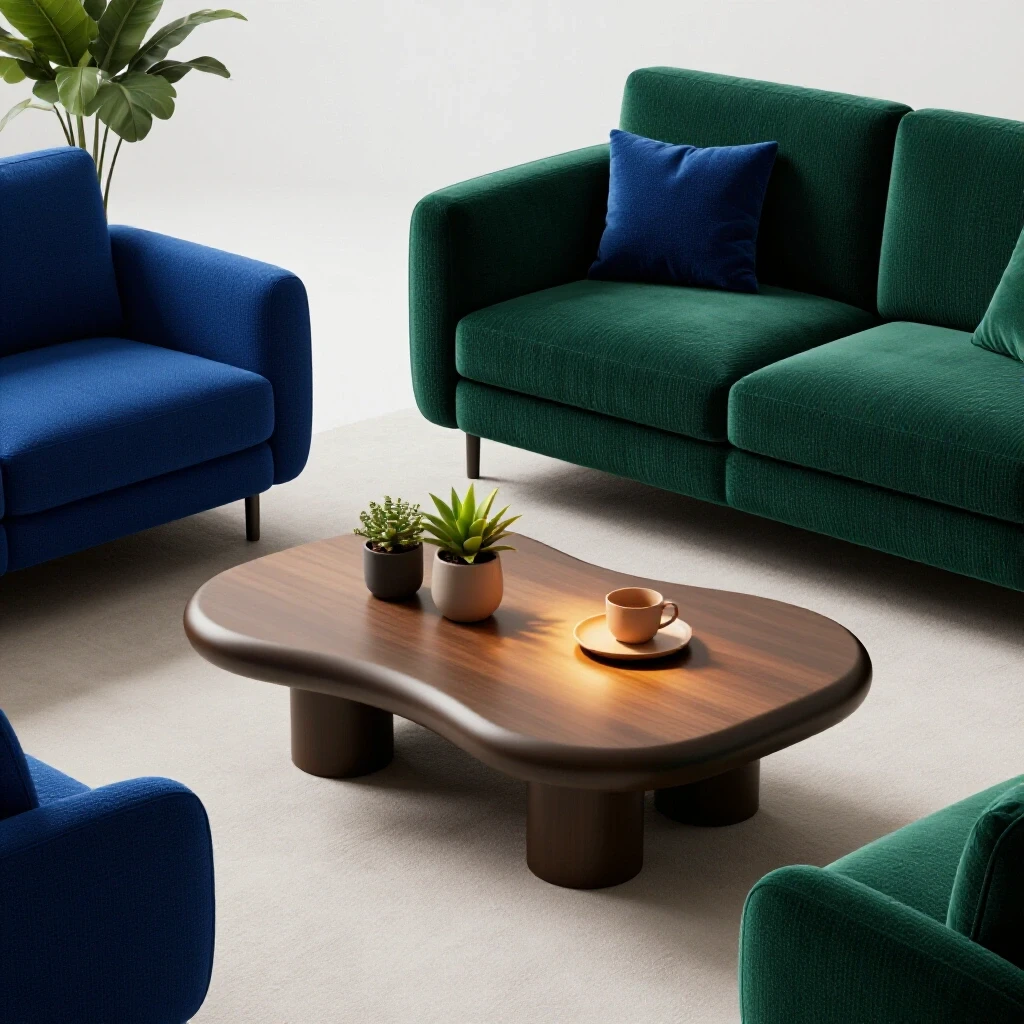
| Between Coffee Table and Sofa | 14 – 18 inches | Legroom while remaining reachable |
| Behind Dining Chairs | 32 – 36 inches | Space to pull out chair and walk behind |
| Side of Bed to Wall | 24 – 30 inches | Easy movement for making the bed |
When planning a layout, I recommend using a “spatial budget.” Just as you wouldn’t spend all your money on one item, you shouldn’t spend all your floor space on one oversized sectional. A well-balanced room typically leaves about 30% to 40% of the floor area open. This “negative space” is not wasted; it is what allows the furniture to breathe and the room to feel organized.
Material Selection and the Tactile Durability Index
Material selection involves choosing textiles, metals, and woods based on their resistance to abrasion, staining, and light exposure. This process ensures that the visual appeal of the item does not degrade rapidly under the pressure of pets, children, or daily use.
For upholstered furniture, the most reliable metric for durability is the Wyzenbeek test, which measures “double rubs.” A double rub is one back-and-forth motion of a mechanical arm covered in cotton duck fabric against the test material. For a family room that sees daily use, you should look for fabrics rated for at least 15,000 to 30,000 double rubs. Anything labeled “extra heavy duty” will typically exceed 50,000 double rubs, making it nearly impervious to standard wear.
- Performance Fabrics: These are often made from solution-dyed acrylic or polyester. Because the color is integrated into the fiber itself, they resist fading and can often be cleaned with mild bleach solutions.
- Natural Fibers: While cotton and linen are breathable, they tend to wrinkle and absorb stains more easily. I often suggest blends that combine the feel of natural fibers with the strength of synthetic ones.
- Leather: Top-grain leather is highly durable and develops a patina over time, but it can be susceptible to scratches from pets.
Lighting Scale and Light Reflectance Values (LRV)
Light Reflectance Value (LRV) is a scale from 0 to 100 that measures the percentage of light a paint color reflects. Understanding LRV is vital for making decorating decisions that keep a room feeling bright and usable regardless of the time of day.
An LRV of 50 is considered a neutral midpoint. Colors with an LRV above 60 reflect a significant amount of light, which can help a small, dark room feel more spacious. Conversely, colors with an LRV below 40 absorb light, creating a moody or cozy atmosphere but requiring a more robust artificial lighting plan. In my fifteen years of observing home transitions, I’ve noticed that people often tire of very low LRV colors because they make daily tasks, like reading or cleaning, more difficult.
To create a lighting plan that supports long-term livability, you must layer your light sources. 1. Ambient Lighting: The general overhead light for basic visibility. 2. Task Lighting: Focused light for specific activities, like a floor lamp by a chair (the lamp base should be roughly 25 to 30 inches from the floor). 3. Accent Lighting: Light used to highlight architectural features or art, adding depth to the room.
Integrating Storage for Functional Room Layouts
Integrated storage refers to cabinetry, shelving, or furniture with hidden compartments designed to house household items. Effective storage design prioritizes accessibility and organization, preventing the “clutter creep” that often ruins a room’s aesthetic over time.
A major pain point for families is the “catch-all” surface—usually a kitchen island or an entry table. To combat this, I advocate for the 1:1 Storage Ratio. For every open surface you add to a room, you should have one equivalent “closed” storage option. This could be a sideboard with doors or a coffee table with drawers. This balance allows you to display what you love while hiding the necessary but unsightly items of daily life, like remote controls, mail, or chargers.
- Vertical Storage: Utilizing the space above head height for items used once a year (like holiday decor) frees up “active” storage zones between waist and eye level.
- Multi-functional Pieces: An ottoman with internal storage or a bed frame with drawers can provide significant storage without increasing the room’s footprint.
- Zone Planning: Store items where they are used. If you always open mail in the kitchen, the recycling bin and letter opener should be located there, not in a distant home office.
Practical Steps for a Long-Term Home Livability Audit
A livability audit is a systematic review of your home’s current state to identify areas where the design is failing to meet your daily needs. It shifts the focus from “How does this look?” to “How does this work?”
- The Pathway Test: Walk through your home in the dark. If you find yourself hesitating or bumping into furniture corners, your clearance paths are insufficient.
- The 1,000-Day Surface Check: Look at your most-used surfaces (dining table, sofa, rugs). If they show significant wear that cannot be cleaned or repaired, the material grade was likely too low for your lifestyle.
- The Friction Audit: For one week, note every time you feel frustrated in a room. Is it because there is no place to put a drink? Is the light too dim? These small “frictions” are the best indicators of where your layout needs adjustment.
- The Scale Assessment: Measure your largest piece of furniture. If it takes up more than 15% of the total square footage of the room, it may be creating a visual and physical bottleneck.
Case Study: The Evolution of a Living Room Layout
I once worked with a family who had purchased a massive, deep-seated sectional that dominated their living room. On day one, it looked like a cozy haven. By day one thousand, they were frustrated. The deep seats made it difficult for older guests to sit comfortably, and the size of the piece blocked the natural flow to the patio doors.
We replaced the sectional with a standard-depth sofa and two swivel chairs. This change maintained the same amount of seating but improved the “clearance paths” by 18 inches. The swivel chairs allowed the family to face each other for conversation or turn toward the television, providing a “multi-functional” solution that the static sectional could not offer. This shift wasn’t about following a style; it was about acknowledging that their lives required more flexibility than a single large piece of furniture could provide.
Tools for Practical Interior Design Planning
To make better decorating decisions, you need tools that help you visualize scale and durability before you commit to a purchase.
- Floor Plan Applications: Use digital tools to recreate your room dimensions. Always include a 36-inch “no-fly zone” for walkways in your digital sketches.
- Fabric Swatch Kits: Never buy a large upholstered piece without ordering a swatch. Test it by rubbing a key against it or spilling a drop of water to see how it reacts.
- Painter’s Tape: This is the most underrated tool in design. Tape out the dimensions of a potential new furniture piece on your floor and leave it there for forty-eight hours. If you find yourself stepping on the tape, the piece is too large.
- Light Meters: You can use smartphone apps to measure the “lux” (light intensity) in different corners of your room to see where you need to add task lighting.
Sustainable Aesthetic Choices and Personal Coherence
A home that feels cohesive over time is one where the design choices are rooted in personal preference and functional necessity rather than external trends. This approach requires a level of “visual discipline”—the ability to say no to a beautiful item because it doesn’t fit the established “spatial budget” or “durability requirements” of your home.
When you focus on quality materials and functional layouts, the “style” of the room tends to take care of itself. A well-constructed wooden table and a sofa covered in high-quality performance fabric have a neutral, timeless quality. You can then layer in personality through smaller, easily changeable items like art, books, or textiles. This method ensures that the “bones” of your home remain constant while the “skin” can evolve without requiring a total overhaul.
Frequently Asked Questions
What is the most durable fabric for a home with pets? Synthetic performance fabrics, specifically those made of 100% polyester or acrylic, are generally the best choice. They have high Wyzenbeek ratings (often over 50,000 double rubs) and are resistant to the snagging caused by pet claws. Microfiber is also a strong contender because its tight weave makes it difficult for hair to become embedded.
How much space should I leave between a coffee table and a sofa? The standard recommendation is 14 to 18 inches. This distance is close enough to reach a drink or a book but far enough away to allow you to sit down and stretch your legs comfortably. If you have very tall family members, aim for the higher end of that range.
What paint LRV is best for a small room with little natural light? Look for a Light Reflectance Value (LRV) of 65 or higher. These colors will reflect the limited light available, making the walls appear to recede and the room feel less enclosed. Avoid colors with an LRV below 50 in these spaces unless you want a very dark, “den-like” feel.
How do I know if a sofa is high-quality without taking it apart? Lift one front corner of the sofa about six inches off the ground. The other front corner should also lift. If it stays on the floor or the frame twists, the frame is weak. Also, check the weight; high-quality hardwood frames and heavy-gauge springs are significantly heavier than cheap pine or particle board versions.
What is the ideal height for hanging artwork? The “center-line” of the artwork should be roughly 57 to 60 inches from the floor. This is the average human eye level. If you are hanging art above a sofa, leave about 6 to 8 inches between the bottom of the frame and the top of the sofa back to ensure the pieces feel visually connected.
Can I mix different wood tones in one room? Yes, and doing so often makes a room feel more “evolved” and less like a showroom. The key is to keep the “undertone” consistent. For example, you can mix a light oak with a dark walnut if they both have warm, golden undertones. Avoid mixing a very “cool” gray-toned wood with a very “warm” orange-toned wood.
How do I calculate how much storage I need? A good rule of thumb is the 20% Buffer Rule. Calculate the volume of your current belongings and ensure your storage solutions have 20% more capacity than you currently need. This allows for new acquisitions and prevents the “one-in, one-out” stress of a perfectly full cabinet.
Why does my room feel “off” even though I like all the furniture? It is likely a “visual weight” issue. If all your heavy, dark furniture is on one side of the room, the space will feel tilted. Balance a large sofa with two chairs or a substantial bookshelf on the opposite side. Also, check your rug size; a rug that is too small (the “postage stamp” effect) can make even expensive furniture look disjointed.
What is the best way to plan a room layout for a multi-functional space? Use “zoning.” Define different areas with rugs or lighting. For example, a rug can anchor the seating area, while a dedicated pendant light can define a dining or work nook. Ensure there is at least a 36-inch pathway between these zones so they feel like distinct “rooms” within a single space.
Is it worth buying “performance” versions of natural materials like wood? Engineered wood or high-quality laminates can be better than solid wood in areas with high moisture or temperature swings, like kitchens or basements, because they won’t warp. However, solid wood can be sanded and refinished, which gives it a longer functional lifespan in dry living areas.
How do I choose a rug size for my living room? The “All Legs On” or “Front Legs On” rule is best. Ideally, all furniture legs should sit on the rug to unify the space. At a minimum, the front legs of all seating should be on the rug. For a standard living room, this usually requires an 8×10 or 9×12 foot rug. Anything smaller often makes the room feel fragmented.
How often should I perform a livability audit? I recommend a “seasonal check-in” every six months. As the weather changes, so do our habits. You might find that in the winter, you need more light near a chair, or in the summer, a certain walkway becomes crowded when the patio door is used more frequently. Small adjustments twice a year prevent major frustrations from building up.
(This article was written by one of our staff writers, James Whitaker. Visit our Meet the Team page to learn more about the author and their expertise.)