How to Set Up a Budget Home Office for Better Focus (Step-by-Step)

When we think about home updates, we often focus on resale value. However, the true value of a room lies in its daily utility and how it supports our mental state. Over my fifteen years as a retail merchandising manager, I have learned that the most expensive furniture rarely guarantees a productive environment. Instead, long-term home livability comes from how we arrange what we already own and how we choose durable home decor that stands up to family life.
I remember my first home office in a cramped corner of our laundry room. On day one, it looked like a Pinterest dream with a trendy glass desk and a sleek, armless chair. By day one thousand, the glass was perpetually smudged, the chair caused back pain, and the lack of storage meant piles of paper blocked my view. This taught me that practical interior design is not about buying your way to a better life. It is about making smart decorating decisions that favor functional room layouts over fleeting trends.
Understanding Spatial Mapping for Affordable Concentration Zones
Spatial mapping involves analyzing how you move through a room and where your eyes rest during tasks. By identifying high-traffic paths and visual distractions, you can position furniture to create a sense of enclosure and privacy without building new walls. This foundational step ensures your workspace feels integrated but distinct from the rest of the home.
In my merchandising career, we used “dwell time” to see where customers stopped. You can apply this to your home by tracking where you naturally feel most settled. For a low-cost desk area, the goal is to minimize “visual noise”—the extra items that catch your eye and pull you away from your work.
- Furniture-to-Screen Ratios: Place your desk so the screen is at eye level and 20 to 40 inches away from your face.
- Walking Pathway Clearance: Ensure there is at least 36 inches of space for main walkways.
- Chair Backup Space: Leave 30 to 36 inches behind your desk chair so you can move freely without hitting walls or other furniture.
Why High-Traffic Pathways Impact Your Attention
A high-traffic pathway is any route through a room that family members use frequently. If your desk sits directly in one of these paths, your brain stays in a state of “environmental hyper-vigilance,” waiting for the next interruption. Moving your desk just a few feet away from these routes can significantly increase your ability to stay on task.
When I evaluated floor plans for retail stores, we never put the most important displays in a cramped hallway. The same applies to your work area. If you are constantly tucking your feet in so someone can walk by, you are losing focus. Aim for a “dead-end” layout where your back is to a wall or a low-traffic corner.
Reducing Visual Noise with Low-Cost Solutions
Visual noise refers to the clutter and varied colors that compete for your brain’s attention. In a budget-friendly workspace, reducing this noise often involves simple rearrangements and craft-based tweaks rather than buying new storage systems. By streamlining what you see, you create a calmer environment that supports sustained attention.
I have found that “hiding” the mess is often more effective than “organizing” it. In retail, we call this “facing”—making sure the front of the shelf looks uniform even if the back is a bit chaotic. You can do this at home with a few dollar-store items and some creativity.
- Uniform Containers: Use old shoe boxes or shipping boxes covered in leftover wallpaper or neutral fabric to hide loose papers.
- Cable Management DIY: Use binder clips or cardboard tubes to keep cords from tangling under your feet.
- Desk Surface Limits: Keep only three items on your desk that are not related to your current task.
The Power of Neutral Zones in Practical Interior Design
A neutral zone is an area of the room where the colors and textures are kept simple to prevent eye fatigue. Using a Light Reflectance Value (LRV) of 60 to 75 for your immediate surroundings helps bounce natural light without creating a harsh glare. This range is common in “off-white” or “light gray” paints which are often available as “oops” cans at hardware stores for a fraction of the price.
| Feature | Aesthetic Trend | Functional Lifespan | DIY Budget Alternative |
|---|---|---|---|
| Desk Surface | Glass or High-Gloss | 1-2 Years (Scratches/Glare) | Sanded and Sealed Thrifted Wood |
| Storage | Open Wire Baskets | 2-3 Years (Visual Clutter) | Fabric-Covered Cardboard Bins |
| Seating | Velvet Accent Chair | 2-4 Years (Wear/Stains) | Used Office Chair with DIY Cover |
| Lighting | Small Decorative Lamp | 1-2 Years (Poor Lumens) | Repositioned Floor Lamp from Living Room |
Material Selection for Long-Term Home Livability
Choosing materials that can be easily cleaned or repaired is vital for a workspace that survives daily family life. Durable home decor does not have to be expensive; it just needs to be resilient. Focus on natural woods, heavy-duty cottons, or surfaces that can be wiped down with basic household cleaners.
In my experience, the “rub count” of a fabric tells you how long it will last. For a desk chair used daily, look for a Wyzenbeek score of at least 15,000 double rubs. If you are thrifting a chair, check for tight weaves. Loose weaves snag easily on zippers or pet claws, leading to a worn-out look within months.
- Wood Surfaces: Solid wood can be sanded and refinished many times, making it a better long-term value than particle board.
- Metal Accents: Thrifted metal lamps or trays are easy to spray paint and do not chip as easily as plastic.
- Natural Fibers: Cotton or linen covers for your chair can be tossed in the wash, which is essential if you have kids or pets.
Evaluating Thrifted Finds for Structural Integrity
When shopping at thrift stores or yard sales, look past the color and focus on the “bones” of the piece. A sturdy wooden table can become a desk with just a bit of sandpaper. Avoid anything made of thin “MDF” or “pressboard” that shows signs of water damage or sagging, as these cannot be easily fixed.
I always carry a small measuring tape when I look for furniture. Knowing that a standard desk height is 28 to 30 inches helps me spot a good candidate quickly. If a table is too tall, I can usually saw the legs down. If it is too short, I can add simple wooden blocks or “risers” from a craft store.
DIY Storage and Organizational Integration
Integrated storage refers to organizational tools that blend into the room’s design rather than standing out as “office gear.” This approach keeps your home feeling like a home, not a cubicle. Using craft-based tweaks, you can turn everyday items into functional storage that supports your daily routine.
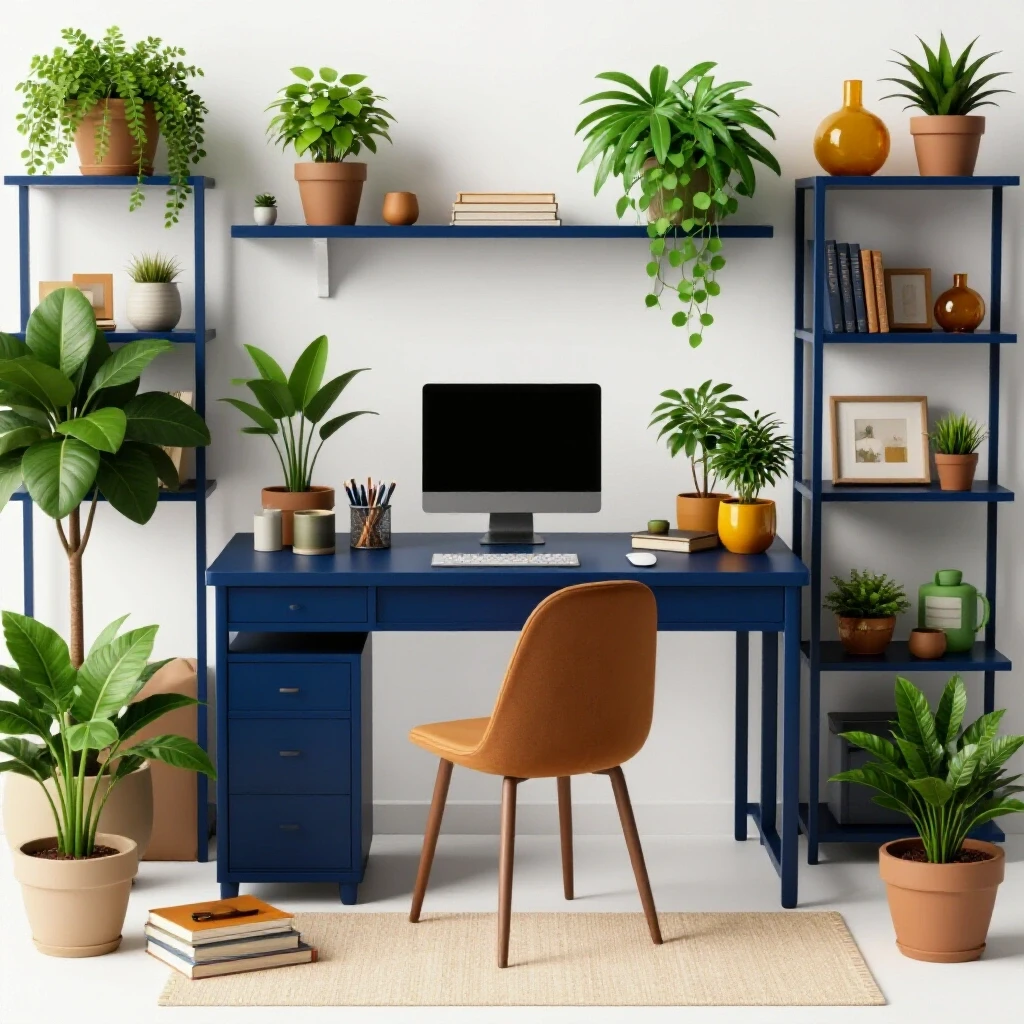
One of the biggest mistakes I see is buying a large, expensive filing cabinet. Most people do not need that much space. Instead, use vertical space. A simple wooden plank supported by two brackets can hold jars of pens, notebooks, and a small plant, keeping your desk surface clear for actual work.
- Vertical Wall Slats: Use leftover wood strips to create a wall grid for hanging tools.
- Repurposed Glass Jars: Clean out food jars to hold small items like paperclips or tacks.
- Fabric Skirts: If you have an open-leg desk, use a tension rod and a piece of fabric to hide boxes stored underneath.
- Drawer Dividers: Cut cereal boxes to fit inside your desk drawers to keep supplies separated.
The Role of “Zones” in Multi-Functional Rooms
If your workspace is in a living room or bedroom, you must define the “work zone” to help your brain switch gears. This can be done with a small rug or even a different wall color. A rug helps define the boundary of your office, signaling to the rest of the family where “work” begins.
A standard rug size for a small desk area is 4 feet by 6 feet. This is large enough to hold the desk and the chair, even when the chair is pulled out. This physical boundary acts as a psychological cue, helping you enter a focused state faster.
Long-Term Adaptation and Maintenance Audits
A functional room layout is not a “set it and forget it” project. Every six months, you should perform a “livability audit.” This involves sitting at your desk and noticing what feels awkward or cluttered. Over time, our needs change, and our furniture placement should change with them.
In retail, we refreshed our floor sets every season. At home, you can do this by swapping items from other rooms. Maybe a lamp from the guest room provides better light, or a basket from the pantry is better for your mail. These zero-cost adjustments keep the space fresh and functional.
- Check for Wear: Tighten screws on your chair and desk every few months.
- Clear the Deck: Every Friday, remove everything from your desk and only put back what you need for Monday.
- Evaluate Lighting: As the seasons change, the light in your room shifts. You may need to move your desk to avoid afternoon glare.
Final Thoughts on Affordable Workspace Enhancements
Creating a space that supports your attention does not require a massive budget or a professional designer. By focusing on simple rearrangements, reducing visual noise, and choosing durable, thrifted materials, you can build a workspace that lasts for years. The key is to prioritize how the room feels and functions during your busiest hours.
Start by looking at what you already own. Can that dining chair be made more comfortable with a cushion? Can that old side table hold your printer? When you focus on practical interior design, you stop seeing what your home lacks and start seeing the potential in what you already have.
Frequently Asked Questions
How can I reduce distractions in a shared family space without buying a room divider?
You can create a “visual shield” using existing furniture. Position your desk so your back is to the room, or place a tall bookshelf perpendicular to the wall to act as a partial barrier. Using a pair of noise-canceling headphones or a simple white noise machine can also help signal to your brain—and your family—that you are in “work mode.”
What is the most durable material for a budget-friendly desk?
Solid wood is the gold standard for long-term home livability. You can often find old dining tables or desks at thrift stores for under $50. Unlike laminate or particle board, solid wood can be sanded, painted, or stained multiple times. It handles the weight of heavy monitors and the “wear and tear” of daily use without sagging.
How much space do I really need for a home office setup?
A functional workspace requires a minimum of about 30 inches of width for a laptop and a notebook. However, the most important measurement is the “clearance zone” behind you. You need at least 30 inches to push your chair back comfortably. If the space is tighter than that, you will likely feel “trapped,” which can negatively impact your focus.
Can I improve my focus just by changing my desk’s position?
Yes. Positioning your desk near a window for natural light—but at a 90-degree angle to avoid glare—can improve your mood and attention. Avoiding “facing the wall” in a dark corner can also prevent the feeling of being “stuck.” Experiment with different angles to see which one makes the room feel more open and less cluttered.
What are some dollar-store items that actually help with organization?
Look for “drawer organizers” in the kitchen aisle, which work perfectly for pens and office supplies. Plastic “dish tubs” can be used as under-desk storage for larger items. You can also find “command-style” hooks for hanging headphones or cables, keeping them off your work surface and reducing visual noise.
Is it worth it to buy a used office chair?
Absolutely, as long as the “bones” are good. Look for chairs with adjustable height and lumbar support. If the fabric is ugly or stained, you can buy a stretchy chair cover for very little money or use a piece of durable fabric and a staple gun to refresh it. This gives you high-end ergonomics at a thrift-store price.
How do I stop my desk from becoming a “clutter magnet” for the rest of the family?
Set a physical boundary. Use a small tray or basket on the corner of your desk for “incoming” items from family members. This keeps the rest of your desk surface as a “sacred” work zone. At the end of every day, take two minutes to clear that tray so you start the next morning with a clean slate.
What is the best way to manage cables on a budget?
You do not need expensive cable boxes. Use “hook and loop” ties (often sold in the garden section for plants) or even simple twist-ties from bread bags. Fasten your cords to the legs of your desk using clear tape or small clips so they are hidden from view. This simple trick drastically reduces the “messy” look of a room.
How can I tell if a paint color will help me focus?
Look for the Light Reflectance Value (LRV) on the back of the paint swatch. A value between 50 and 70 is usually best for a workspace. It reflects enough light to keep the area bright without being so reflective that it causes eye strain. If you are using “oops” paint, try a small patch on the wall near your desk first to see how it looks at different times of day.
What is the “three-item rule” for desk surfaces?
This is a merchandising trick to keep surfaces looking clean but lived-in. Aside from your computer and lamp, try to keep only three items on your desk: one functional (like a pen cup), one personal (like a photo), and one “living” (like a small plant). This provides enough visual interest to feel cozy without creating enough clutter to be distracting.
(This article was written by one of our staff writers, James Whitaker. Visit our Meet the Team page to learn more about the author and their expertise.)