How to Choose Furniture for Awkward Corners (with Examples)

Leaving a lasting impression on a home isn’t about the initial “wow” factor of a showroom floor. During my 15 years as a retail merchandising manager, I saw thousands of families buy pieces that looked stunning in a 50,000-square-foot warehouse but became obstacles in a 150-square-foot living room. I once lived in a 1920s bungalow where a beautiful, oversized armchair sat in a corner, blocking the only natural light path. Within six months, it became a glorified laundry hamper because it was too bulky to be useful. This gap between visual appeal and daily utility is where most decorating decisions fail.
The Environmental Psychology of Underutilized Areas
The psychological impact of room layout is often overlooked, yet it dictates how we feel in our own homes. When corners are left empty or filled with ill-fitting items, they create “dead zones” that can subconsciously increase feelings of clutter and spatial tension. Research in environmental psychology suggests that humans prefer spaces with clear sightlines and defined purposes, as these reduce cognitive load.
Understanding the Stress of Spatial Dead Zones
A dead zone is an area of a room that serves no functional or aesthetic purpose, often leading to a sense of incompleteness. When we leave tight angles or recessed walls empty, the eye tends to get “stuck” in those gaps, making the room feel smaller and more chaotic. Filling these areas with functional room layouts helps anchor the room and provides a sense of psychological security and order.
The Impact of Flow on Long-Term Livability
Long-term home livability depends heavily on how easily we can move through a space without bumping into furniture. In my years of evaluating interior design choices, I’ve found that the “path of least resistance” is the most important metric for happiness. If a corner piece forces you to turn sideways to pass it, that piece is a failure, regardless of how beautiful it looks on Instagram.
Strategic Measurements for Difficult Room Junctions
Before choosing durable home decor for a tight spot, you must understand the physical constraints of your environment. Most people guestimate their space, which leads to the frustration of furniture that is just two inches too wide. I always recommend using a spatial budget, which allocates specific square footage to movement versus stationary objects.
Calculating Necessary Clearance Paths
Clearance paths are the designated walking routes between furniture and walls that allow for comfortable movement. For high-traffic areas, a minimum of 36 inches is standard to allow two people to pass or one person to carry a basket. In secondary areas, such as the space between a corner chair and a coffee table, you can drop to 18–24 inches.
| Room Type | Primary Pathway (Inches) | Secondary Pathway (Inches) | Furniture-to-Wall Gap (Inches) |
|---|---|---|---|
| Living Room | 36 | 18 | 3 |
| Bedroom | 30 | 24 | 2 |
| Home Office | 32 | 18 | 0 (if anchored) |
| Dining Area | 36 | 24 | 36 (for chair pull-out) |
Visual Weight and the Scale of Corner Pieces
Visual weight refers to how much “space” an object seems to take up based on its color, texture, and mass. A solid, dark wood cabinet in a corner has a heavy visual weight and can make a small room feel claustrophobic. Conversely, a glass-fronted unit or a piece with thin metal legs feels lighter, helping to maintain an airy atmosphere while still providing utility.
Selecting Durable Materials for High-Traffic Corners
When you place furniture in a corner, it often becomes a “catch-all” or a high-contact point for kids and pets. Choosing the right materials is vital for ensuring your decorating decisions last more than a few seasons. I look for fabrics and finishes that can withstand the friction of daily life without showing immediate wear.
Fabric Durability and the Wyzenbeek Method
The Wyzenbeek test is a standard industry measurement for fabric abrasion resistance, where a machine rubs a piece of cotton duck back and forth over the test fabric. For a family home, you should look for “heavy duty” ratings. I have seen many “trendy” velvet chairs show bald spots within two years because they only had a 10,000-rub count.
- Light Use: 6,000 to 9,000 double rubs.
- Medium Use: 9,000 to 15,000 double rubs.
- Heavy Use (Family Rooms): 15,000 to 30,000 double rubs.
- Contract Grade: 30,000+ double rubs.
Hardwood vs. Composite in Tight Spaces
In corners where moisture might be an issue—like near a window or an exterior wall—material choice is even more critical. Solid wood is durable but can warp if the corner lacks airflow. High-quality plywood with a hardwood veneer often performs better in fluctuating temperatures, while solid oak or maple is best for pieces that will see heavy physical contact, like a corner desk.
| Material Type | Functional Lifespan | Durability Level | Maintenance Needs |
|---|---|---|---|
| Solid Hardwood | 20+ Years | High | Periodic Polishing |
| Engineered Wood | 10-15 Years | Medium | Low |
| Metal/Glass | 15+ Years | High | Frequent Cleaning |
| Performance Fabric | 7-10 Years | Very High | Occasional Steam Clean |
Real Examples of Functional Furniture Placement
To illustrate how to balance immediate visual appeal with multi-year livability, let’s look at how specific pieces solve common layout problems. These examples are based on my experience managing floor sets and observing how customers interacted with furniture over time.
The L-Shaped Corner Workspace
Many people try to shove a rectangular desk into a corner, leaving a “triangle of wasted space” behind it. An L-shaped desk or a dedicated corner unit utilizes that depth for cable management and peripheral storage. In a study of home office productivity, users reported 20% less visual clutter when using desks that fit the room’s geometry rather than fighting against it.
The Curved Sectional for Softening Angles
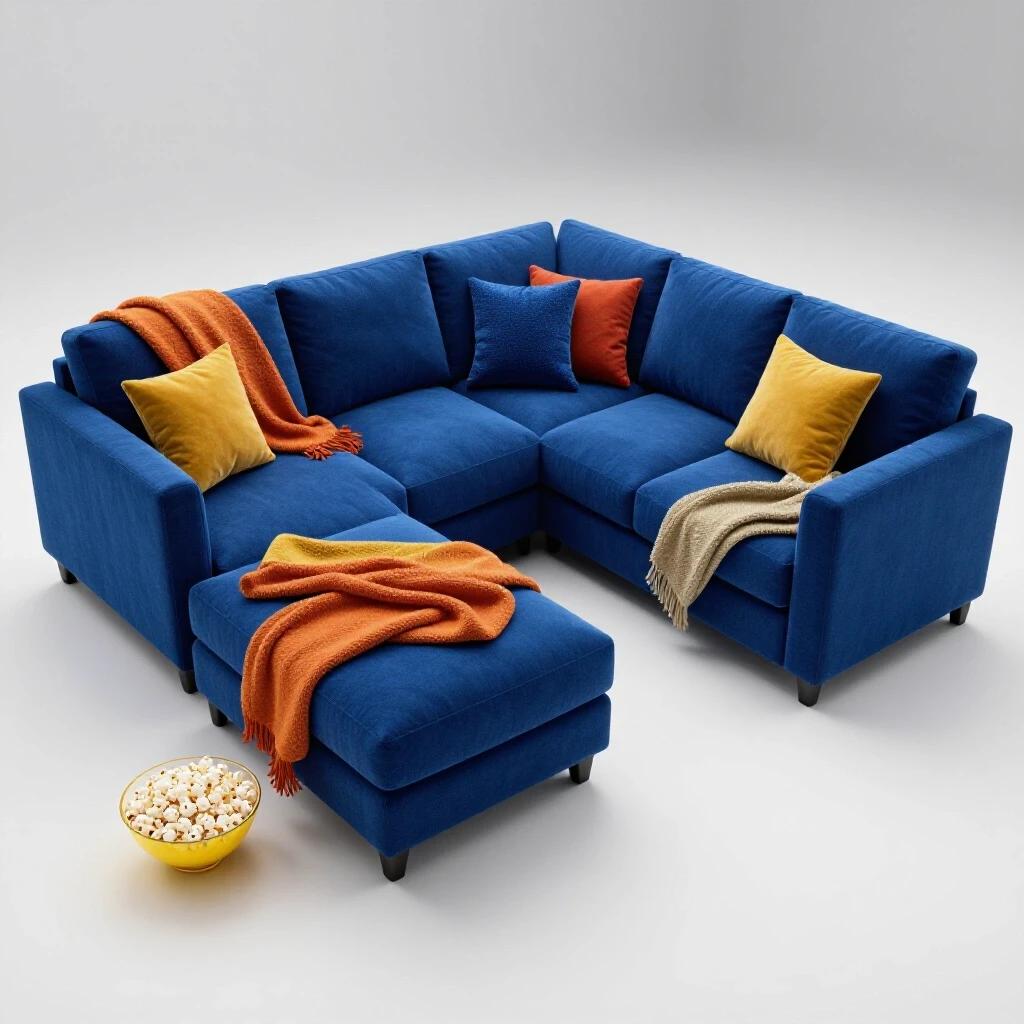
If you have a room with sharp, 90-degree angles, a curved sofa can break the rigidity of the space. While a standard sectional might leave a dark gap in the corner, a curved piece follows the natural flow of conversation. I once recommended a curved settee for a client with a narrow living room; it opened up the walking path by 12 inches while providing the same seating capacity as a bulky sofa.
Integrating Storage into Structural Voids
Effective storage is the backbone of practical interior design. When dealing with difficult corners, the goal is to create storage that looks like it was built for the house, even if it is a freestanding piece. This prevents the “clutter magnet” effect where random items are piled into an unused space.
Floating Shelves vs. Corner Armoires
Vertical storage is a lifesaver in small footprints. Floating shelves that meet in the corner create a seamless look and keep the floor clear, which makes the room feel larger. However, if you need to hide “visual noise”—like toys or electronics—a corner armoire is superior. The key is to ensure the armoire’s height is at least 75% of the wall height to avoid looking like a lonely box in the corner.
The Built-In Illusion
You don’t always need a contractor to get the look of custom cabinetry. By using “fillers” or crown molding on standard corner cabinets, you can create a flush look that eliminates the dust-gathering gaps between the furniture and the wall. This is a strategy I used frequently in retail displays to make modular units look high-end and permanent.
Color and Light Integration for Recessed Areas
A corner can quickly become a “black hole” if the lighting and color aren’t managed correctly. This is where the Light Reflectance Value (LRV) of your paint and the scale of your lamps come into play. LRV is a scale from 0 (black) to 100 (white) that tells you how much light a color reflects.
Balancing LRV in Dark Corners
If you are placing a large piece of furniture in a corner, I recommend painting the wall behind it a color with an LRV of 50 or higher. This ensures that the corner doesn’t feel like a cave. If the furniture itself is dark, use a lamp with a translucent shade to wash the walls with light, which visually pushes the corner back and expands the room.
- Measure the corner’s natural light levels at noon and 4 PM.
- Choose a lamp that stands at least two-thirds the height of the furniture piece.
- Use “Warm White” (2700K to 3000K) bulbs to create an inviting glow rather than a harsh office feel.
A Room-by-Room Assessment Guide
To make the best decorating decisions, you need a systematic approach. Follow this guide to evaluate every corner in your home for its functional potential.
- Identify the Friction Point: Walk through the room quickly. Where do you hesitate? Where do you have to adjust your stride?
- Measure the “True” Footprint: Don’t just measure the wall. Tape out the dimensions of the furniture on the floor using painter’s tape and leave it there for 48 hours.
- Audit the Utility: Ask yourself, “What task is currently missing a home?” Is it a place to put down a drink? A spot to store blankets?
- Check the Sightlines: Sit in your primary seating area. Does the corner look cluttered or intentional?
- Test the Durability: If it’s a high-contact area, ensure the piece has a high Wyzenbeek rating or a scratch-resistant finish.
Long-Term Livability Audits
Every two years, I recommend performing a “livability audit” on your home. Life changes—kids grow, hobbies shift, and our needs for storage evolve. A corner chair that was perfect for nursing a baby might be better replaced by a bookshelf once that child is in elementary school. Being willing to pivot your furniture choices is the hallmark of a truly functional home.
In my 15 years of observing home trends, the most satisfied homeowners aren’t the ones with the trendiest furniture. They are the ones who prioritized movement, durability, and the specific needs of their daily routines. By focusing on measurements, material quality, and the psychology of your space, you can turn every awkward angle into a functional asset.
FAQ
What is the most common mistake when furnishing a corner?
The most frequent error is ignoring the “swing space” of doors or drawers. People often buy a corner cabinet but forget that once the door is open, it blocks the main walkway or hits another piece of furniture. Always measure the piece with all doors and drawers fully extended.
How do I stop a corner from becoming a clutter magnet?
Give the corner a singular, defined purpose. If it’s a “reading nook,” only allow a chair, a lamp, and a small side table. Once you add a basket “for whatever,” it will inevitably fill with items that don’t have a home, breaking the visual and functional flow of the room.
Should I always use a corner-specific piece of furniture?
Not necessarily. Sometimes a round pedestal table works better in a square corner than a triangular unit. The round edges allow for better traffic flow and soften the harsh lines of the walls. It depends on whether you need to maximize storage (triangular) or maximize movement (round).
What is the ideal height for a corner furniture piece?
For visual balance, a corner piece should either be low (below hip height) to keep the space open, or quite tall (above eye level) to draw the eye upward. Mid-height pieces often “cut” the room in half visually and can make the ceiling feel lower than it actually is.
Can I put a TV in a corner?
Yes, but it requires a swivel mount or a specific corner media console. The biggest issue with corner TVs is the viewing angle for people sitting elsewhere in the room. Ensure the screen is at eye level when seated to avoid neck strain, which is a common complaint in poorly planned layouts.
How do I handle corners in a room with a lot of windows?
Avoid tall furniture that blocks the glass. Instead, use low-profile benches or “floating” corner desks that sit below the windowsill. This preserves the LRV of the room by letting in natural light while still utilizing the floor space.
What are the best fabrics for corner seating?
Look for performance polyesters or “crypton” fabrics. Because corner seats are often tucked away, they don’t get as much airflow, which can lead to dust buildup. Synthetic fibers are easier to vacuum and resist the pilling that often occurs in high-friction corner spots.
Is it better to have one large piece or several small ones in a corner?
Generally, one well-scaled piece is better than three small ones. Multiple small items create “visual noise” and make the corner look cluttered. A single, purposeful piece—like a large floor plant or a substantial armchair—anchors the space more effectively.
How much space should I leave between the furniture and the wall?
Aim for a “breathing gap” of about 2 to 3 inches. Pushing furniture directly against the wall can trap moisture, rub the paint off, and actually make the room feel more cramped. A small gap creates a shadow line that gives the piece more definition.
How do I choose a rug for a corner setup?
If you are creating a zone, like a reading corner, use a small round rug to define the area. The rug should be large enough so that all legs of the furniture sit on it. This prevents the “island” effect where a piece of furniture looks like it’s floating aimlessly in the room.
(This article was written by one of our staff writers, James Whitaker. Visit our Meet the Team page to learn more about the author and their expertise.)