Best Small Space Layouts for Improved Function (Expert Guide)

Focusing on trends often leads to short-term satisfaction that evaporates when real life begins. After fifteen years in retail merchandising and analyzing how families interact with their homes, I have seen how a beautiful floor plan can fail if it ignores the way people actually move. True success in a home isn’t about the latest style; it is about how well a room supports your morning coffee, your work-from-home hours, and your evening rest over several years.
When we deal with rooms under 400 square feet, every inch must earn its keep. I remember a specific project early in my career where a client insisted on a deep, plush sectional for a 250-square-foot living area. On day one, it looked like a cozy cloud. By day one hundred, the family was frustrated because they had to turn sideways just to walk past it to the kitchen. This experience solidified my belief that practical interior design must prioritize movement over mass.
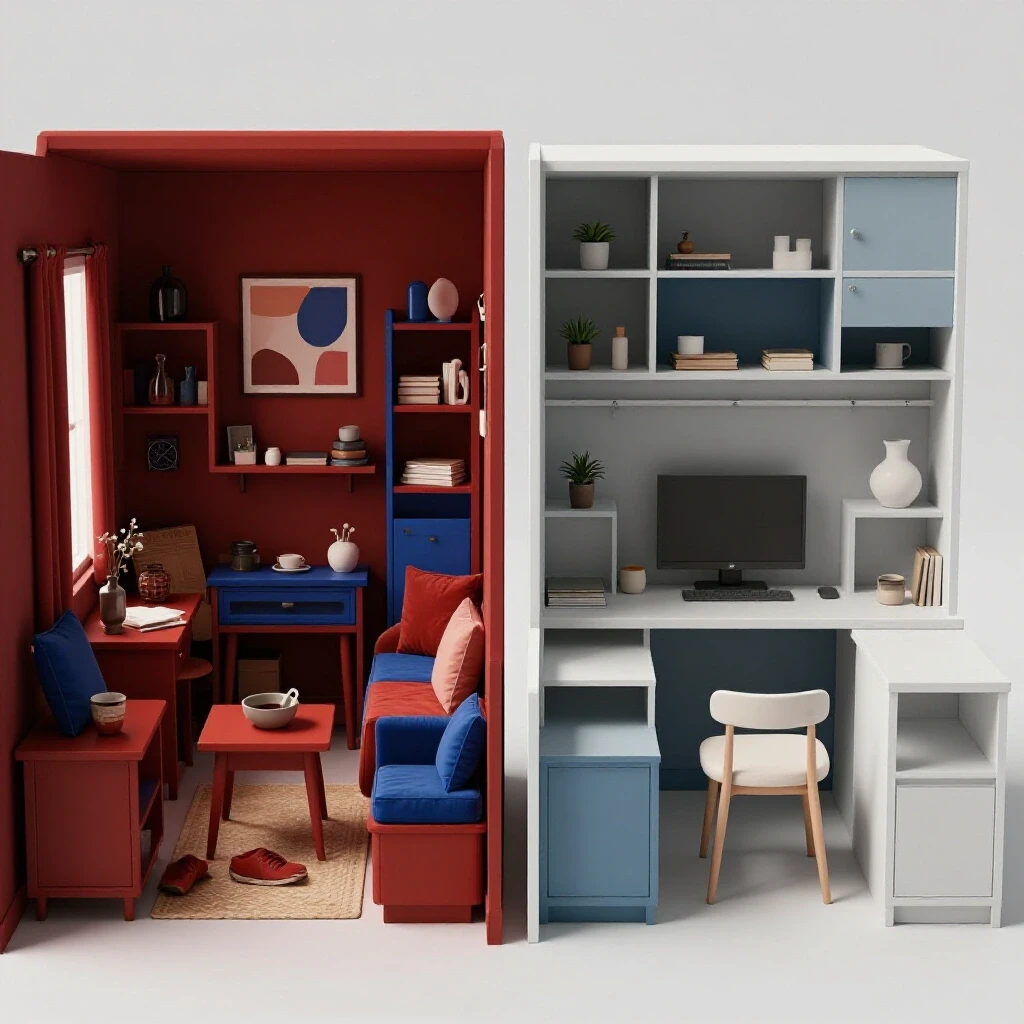
The goal of optimizing tight floor plans is to create a sense of ease. When a room is crowded, our brains register it as a series of obstacles, which can actually increase cortisol levels. By shifting our focus from “what fits” to “how we move,” we can transform a cramped apartment into a high-functioning sanctuary.
The Psychology of Compact Living and Spatial Flow
Environmental psychology examines how our physical surroundings influence our moods and behaviors. In limited square footage, the primary goal is to reduce cognitive load by eliminating physical bottlenecks and visual clutter. A well-planned room allows the eye to travel across the space without hitting “hard stops,” which makes the area feel larger and more serene.
In my fifteen years of observing home layouts, I’ve noticed that the most successful compact rooms utilize “zoning.” This means defining specific areas for specific activities without using solid walls. For example, a rug can define a seating area, while a different lighting fixture defines a dining nook. This creates mental boundaries that help a single room serve multiple purposes without feeling chaotic.
Longitudinal studies on user satisfaction show that people feel more comfortable when they have a clear “line of sight” to the door and windows. This is known as prospect-refuge theory. Even in a small studio, positioning your main seating so you can see the entrance and the outdoors provides a subconscious sense of security and openness.
Why High-Traffic Pathways Fail and How to Calculate Clearance
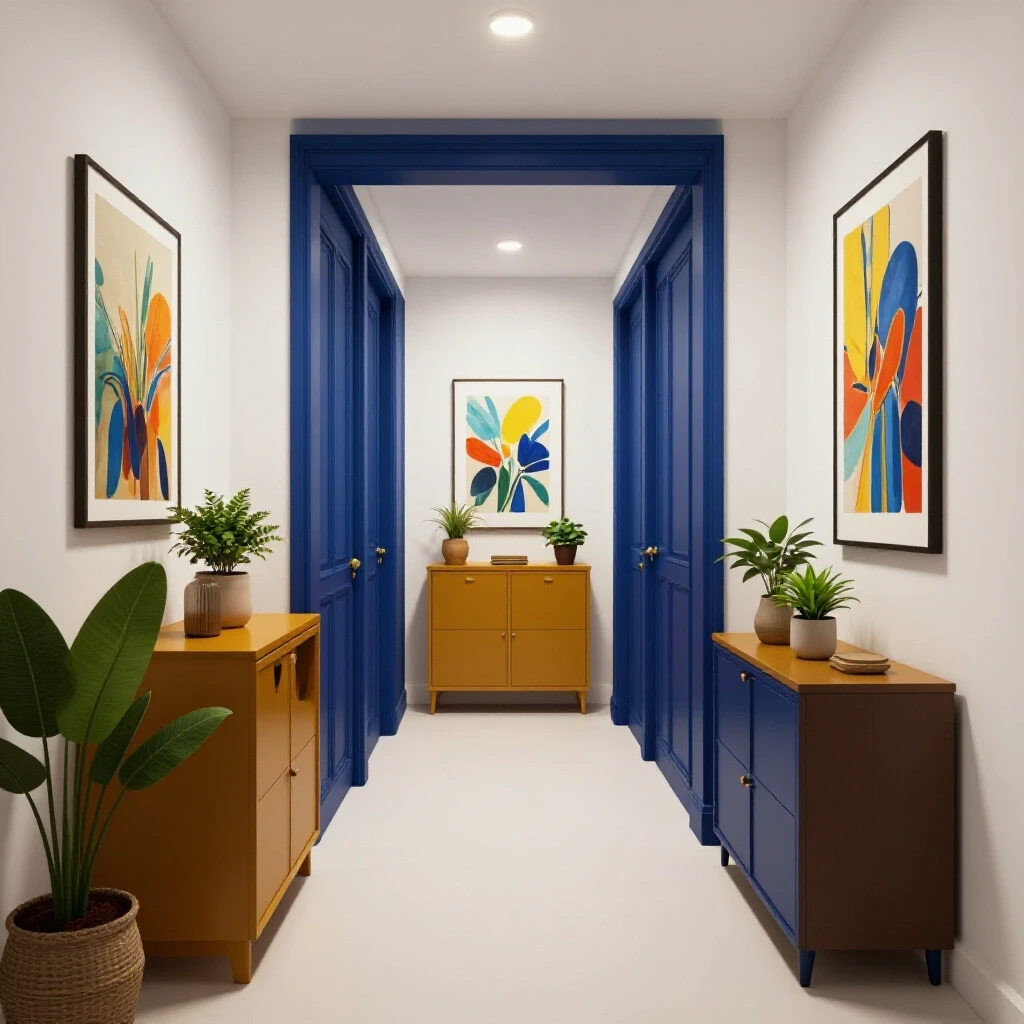
Clearance paths are the “roads” of your home, and they are the most common casualty of poor decorating decisions. A clearance path is the empty space required to move comfortably between furniture pieces or through a room. If these paths are too narrow, the room feels “tight” and becomes physically exhausting to inhabit.
- Main Traffic Arteries: These should be at least 36 inches wide. This allows two people to pass each other or one person to carry a basket of laundry without bumping into walls.
- Secondary Paths: Areas between a coffee table and a sofa or between a bed and a dresser can be narrower, usually between 18 and 24 inches.
- The “Push-Back” Rule: In a dining area, you need 32 inches from the table edge to the wall to allow someone to pull out a chair and sit down comfortably.
| Room Area | Recommended Clearance | Functional Impact |
|---|---|---|
| Main Walkways | 36″ | Prevents “bottleneck” frustration in high-traffic zones. |
| Sofa to Coffee Table | 16″ – 18″ | Allows for legroom while keeping items within reach. |
| Bed to Wall/Furniture | 24″ | Ensures enough space to make the bed and walk around. |
| Dining Table to Wall | 32″ | Permits easy movement behind seated guests. |
Structural Durability Standards for Everyday Furniture
Furniture in a compact home often works twice as hard as furniture in a larger house. A sofa isn’t just for watching TV; it might be a home office, a guest bed, and a dining spot. Because of this high utility, understanding structural standards is vital for long-term home livability.
When I was a merchandising manager, I looked closely at the “bones” of a piece. For a sofa to last ten years in a busy household, it needs a kiln-dried hardwood frame and sinuous springs or eight-way hand-tied coils. Avoiding “ready-to-assemble” furniture made of thin particle board is a key step in functional room layouts. These pieces often fail at the joints within twenty-four months of heavy use.
Fabric Durability and the Wyzenbeek Method
Choosing durable home decor starts with the fabric. The Wyzenbeek test is a standard industry measurement where a machine rubs a piece of cotton duck fabric back and forth over the test fabric until it shows noticeable wear. Each back-and-forth motion is called a “double rub.”
- Light Use: 6,000 to 9,000 double rubs. Fine for decorative pillows.
- Medium Use: 9,000 to 15,000 double rubs. Suitable for formal living rooms. | Heavy Duty (Family Grade): | 15,000 to 30,000 double rubs. Necessary for main seating. | | Contract Grade: | 30,000+ double rubs. Ideal for homes with pets and active children. |
Interestingly, many performance fabrics now offer 50,000+ double rubs while remaining soft to the touch. These materials are often solution-dyed, meaning the color goes all the way through the fiber. This allows you to clean spills with a mild bleach solution without ruining the aesthetic.
Strategic Color Selection and Light Reflectance Value
Color is more than an aesthetic choice; it is a tool for manipulating the perception of space. Light Reflectance Value (LRV) is a scale from 0 to 100 that measures the percentage of light a paint color reflects. In efficient furniture arrangements, LRV plays a massive role in how “heavy” or “airy” a room feels.
A paint with an LRV of 60 or higher will bounce light around the room, making the walls feel like they are receding. Conversely, a low LRV (under 20) absorbs light. While dark colors are trendy, they can make a 300-square-foot room feel like a cave if not balanced correctly. I recommend using high LRV colors on the largest surfaces—the walls and ceiling—and saving the lower LRV colors for accents or “grounding” furniture like a rug.
The 60-30-10 Rule for Visual Balance
To maintain a cohesive room that doesn’t feel cluttered, I suggest the 60-30-10 rule. This is a classic decorating principle that helps balance color and visual weight.
- 60% Dominant Color: Usually the walls, large rugs, or the largest piece of furniture. This should be a neutral or high-LRV color in small spaces.
- 30% Secondary Color: This provides contrast. Think of your upholstery, curtains, or a painted accent piece.
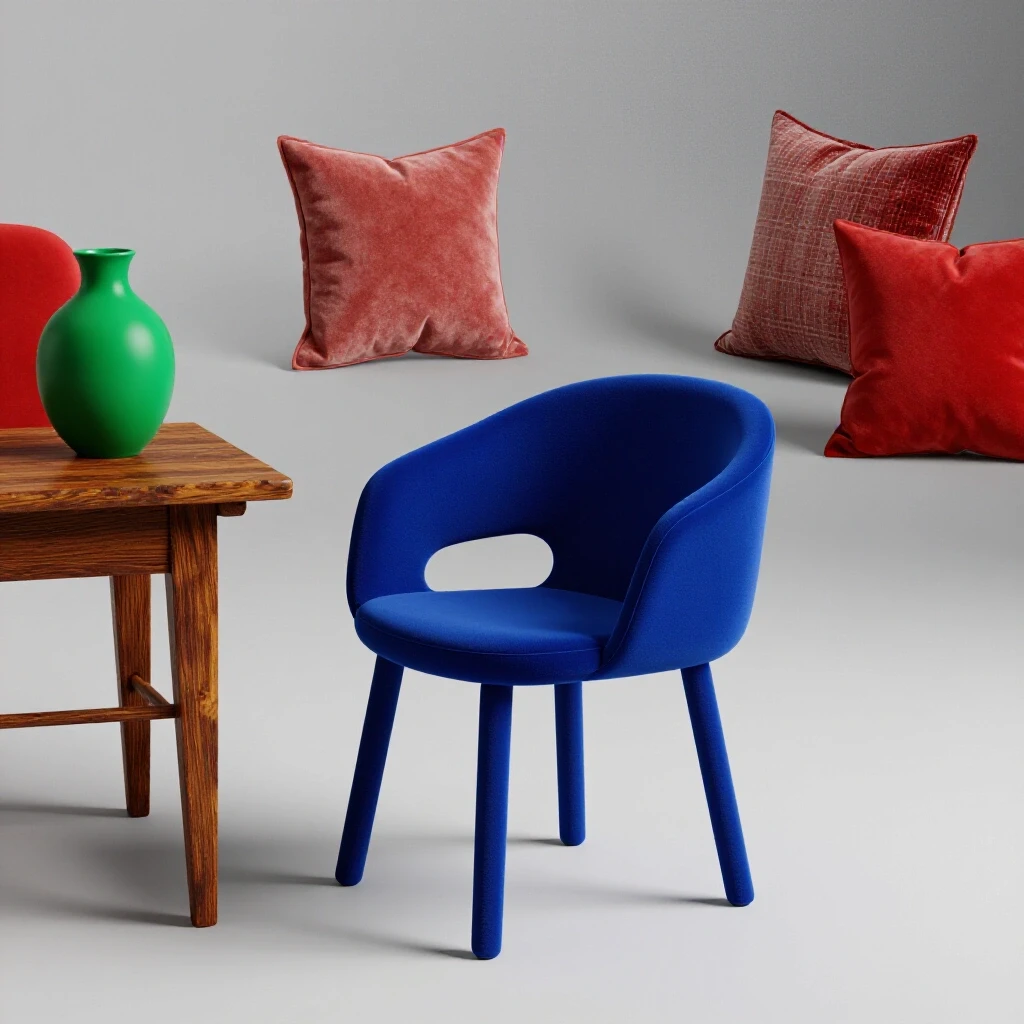
- 10% Accent Color: This is your “pop” of color found in pillows, artwork, or small decor.
Building on this, using “low-contrast” color schemes—where the furniture color is similar to the wall color—can make a room feel significantly more spacious. When a sofa matches the wall behind it, the eye doesn’t stop at the sofa; it perceives the entire wall as a single, continuous plane.
Integrated Storage and Vertical Plane Management
In compact living, the floor is your most valuable resource. To keep it clear, we must look to the vertical planes—your walls. Integrated storage design is about finding “hidden” space that doesn’t eat into your walking paths.
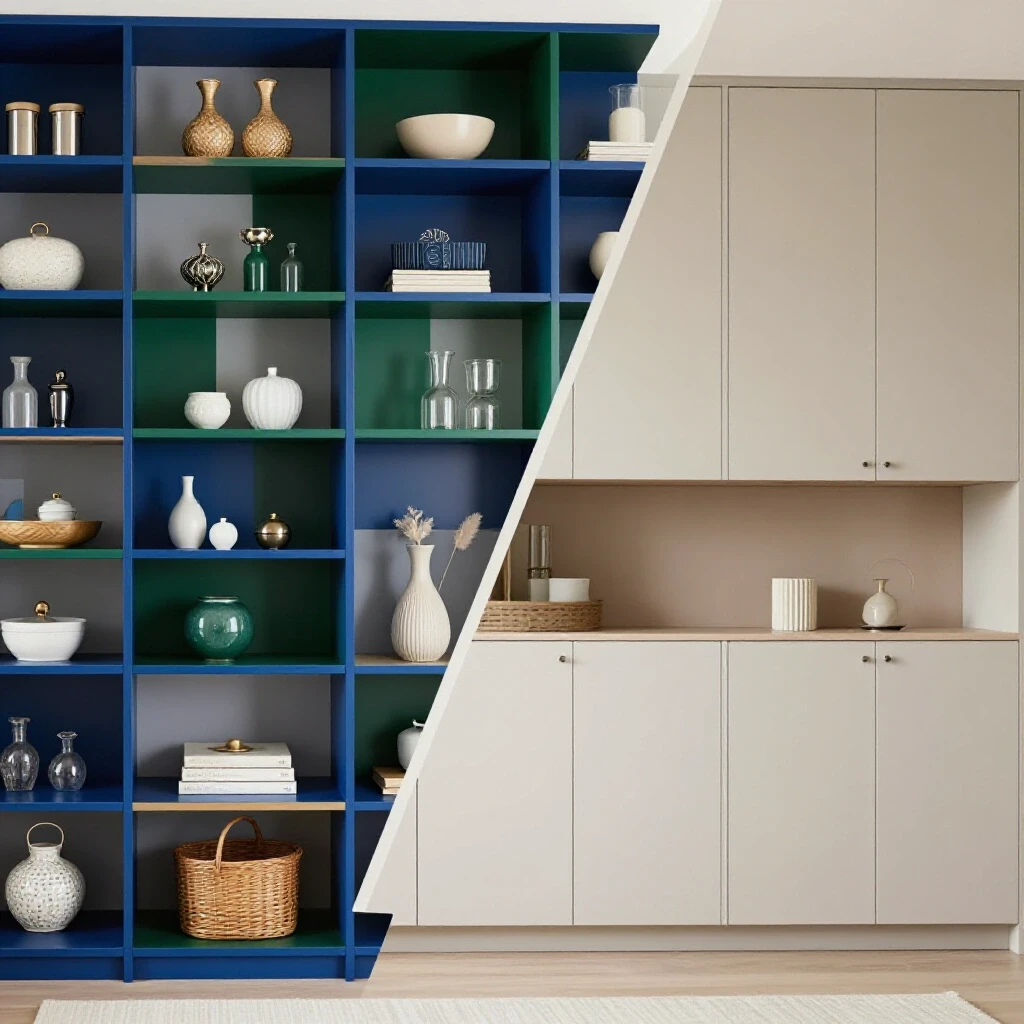
One of the most effective strategies I’ve seen is the use of “built-ins” or modular wall units that go from floor to ceiling. By taking storage all the way up, you draw the eye upward, which emphasizes the height of the room rather than the limited floor area.
- Floating Shelves: These provide storage without the “visual weight” of a bulky bookcase.
- Furniture with a Footprint: Look for pieces that offer storage within their own dimensions, such as ottomans with lids or beds with drawers.
- The 20% Buffer: A common mistake is filling every shelf to capacity. For a room to feel “breathable,” try to leave 20% of your shelf space empty. This “white space” prevents the room from feeling cluttered.
| Storage Type | Best For | Functional Benefit |
|---|---|---|
| Floor-to-Ceiling Shelving | Books, Media, Decor | Maximizes vertical space; draws eye upward. |
| Storage Ottomans | Blankets, Toys, Games | Provides extra seating and hidden storage. |
| Wall-Mounted Desks | Home Office | Eliminates leg clutter; can be folded away. |
| Under-Bed Drawers | Seasonal Clothing | Utilizes “dead” space effectively. |
Tactical Layout Rules: Managing Visual Weight
Visual weight refers to how much “attention” a piece of furniture demands. A heavy, dark wood coffee table has a lot of visual weight. A glass or acrylic table of the same size has very little. In tight quarters, balancing visual weight is the secret to making a room feel furnished but not stuffed.
When selecting furniture, I always look for “legged” pieces. A sofa that sits on tall, thin legs allows you to see the floor underneath it. When your brain can see the floor extending under the furniture, it perceives the room as being larger. This is a simple but powerful trick for enhancing livability.
The Scale and Proportion Guide
Scale is the size of an object compared to the room, while proportion is the size of an object compared to other objects. A common error is buying small furniture for a small room. This often results in a “dollhouse” effect where nothing feels substantial or comfortable.
Instead, I recommend using fewer, larger pieces. One appropriately scaled sofa is better than three small chairs. A large rug that tucks under all the furniture legs will ground the room better than a small “postage stamp” rug that floats in the middle of the floor.
- Measure the Room: Use a digital floor planner or graph paper.
- Tape it Out: Use painter’s tape on the floor to “test drive” the size of a potential sofa or table.
- Check the Vitals: Ensure you have your 36-inch pathways and 18-inch legroom gaps.
Long-Term Livability Audits: The Day 1,000 Test
A livability audit is a process of evaluating your home design after you have lived with it for several months. What looked good on day one might be a nuisance on day one thousand. I suggest doing this every six months to ensure your home still serves your needs.
Ask yourself: * Is there a “clutter magnet” area where mail and keys always pile up? (This usually means you need a dedicated “landing strip” near the door.) * Do I find myself constantly moving a chair to get to a cabinet? (This indicates a clearance path failure.) * Is the fabric on the main sofa holding up to daily use?
By being honest about these friction points, you can make small adjustments—like swapping a bulky chair for a sleek one or adding a wall hook—that significantly improve your daily experience.
Actionable Design Planner for Compact Rooms
To help you apply these concepts, follow this step-by-step assessment guide for any room under 400 square feet.
- Identify the Primary Function: Is this room for sleeping, working, or socializing? Choose one main “hero” piece of furniture that supports this function.
- Map the Traffic: Draw the shortest lines between the doors and the most-used items (like the fridge or the bed). Keep these lines clear of any furniture.
- Select Multi-Functional Pieces: Choose a dining table that can double as a desk, or a guest chair that is comfortable enough for long reading sessions.
- Audit the Materials: Check the Wyzenbeek rub counts on upholstery and the LRV on paint swatches.
- Utilize Vertical Space: Install hooks, floating shelves, or tall cabinets to move items off the floor.
By following these metrics and focusing on the “why” behind every piece, you can create a home that is both beautiful and resilient. It isn’t about having more space; it is about making the space you have work harder for you.
Frequently Asked Questions
How do I choose a sofa that won’t overwhelm a small living room? Look for a sofa with “clean lines” and exposed legs. Avoid overstuffed arms or high backs, which add unnecessary visual weight. Ensure the depth is around 34-36 inches rather than the standard 40+ inches found in larger furniture.
What is the best way to divide a studio apartment without using walls? Use “visual anchors” like a large area rug to define the living zone. An open-backed bookshelf can also act as a divider, providing storage while still allowing light to pass through.
Is it better to have many small storage pieces or one large one? One large, floor-to-ceiling unit is almost always better. It creates a cleaner look and utilizes vertical space that would otherwise go to waste. Multiple small pieces often create “visual noise” and clutter the floor.
Can I use dark colors in a compact room? Yes, but use them strategically. A dark “accent” wall can add depth, making the wall seem further away. However, keep the ceiling light to avoid a “closing in” feeling. Balance dark colors with plenty of natural light and mirrors.
What is the most durable fabric for a family with pets in a small home? Look for “Performance” fabrics, typically made of polyester or acrylic blends. These often have a Wyzenbeek rating of 30,000+ double rubs and are treated for stain resistance. Avoid delicate weaves like silk or loose linens.
How much space do I really need between a coffee table and a sofa? The standard is 16 to 18 inches. This is enough space to walk through comfortably but close enough to reach your drink or a book while sitting.
Why does my room still feel cluttered even though I have storage? You may be a victim of “visual clutter.” If your storage is open (like bookshelves), the variety of colors and shapes can look messy. Try using matching baskets or bins on shelves to create a uniform, calm appearance.
How do mirrors help in tight layouts? Mirrors reflect light and the view of the room, tricking the brain into thinking there is more depth. For the best effect, place a large mirror opposite a window to “double” the amount of natural light.
What is a “Light Reflectance Value” and why should I care? LRV measures how much light a paint color reflects. A high LRV (above 60) makes a room feel brighter and more open. A low LRV (below 20) makes it feel darker and more enclosed.
How can I make a multi-functional room feel cohesive? Stick to a consistent color palette across all furniture and decor. Use the 60-30-10 rule to ensure the colors are balanced, which helps the different “zones” of the room feel like they belong together.
(This article was written by one of our staff writers, James Whitaker. Visit our Meet the Team page to learn more about the author and their expertise.)