How to Maximize a Small Hallway Without Renovation (Step-by-Step)

The smallest room in a house often carries the heaviest functional burden. We treat the entry corridor as a mere passthrough, yet it is the first space to greet us and the last one we see before leaving. This paradox—that our most neglected square footage is also our most psychologically impactful—is where many homeowners struggle to find a balance between beauty and utility.
During my 15 years as a retail merchandising manager, I learned that the first ten feet of a store determine a customer’s entire experience. If that “decompression zone” is cluttered or dark, people feel rushed and stressed. Our homes operate on the same principle. I have lived in five different houses, ranging from wide-open suburban layouts to a 1920s cottage with a hallway so narrow you couldn’t open the front door and a closet door at the same time. I’ve seen what looks good in a staged photo fail miserably by day one thousand. True long-term home livability doesn’t come from a sledgehammer; it comes from understanding how we move through a space and selecting materials that can survive the friction of daily life.
Decoding the Psychology of Cramped Entryways
Environmental psychology suggests that narrow, dark spaces can trigger a subtle “flight” response, making us feel hurried in our own homes. When walls feel too close, our peripheral vision is restricted, which can increase cortisol levels over time. Understanding these spatial triggers helps us choose decor that opens the area mentally.
In my experience, the “why” behind a frustrating hallway is usually a conflict between human scale and physical boundaries. Proxemics, the study of human use of space, tells us that we need a certain amount of “buffer” to feel comfortable. When we lack this buffer, we tend to drop our belongings in a heap rather than putting them away. This leads to a cycle of clutter that reinforces the feeling of being trapped. By using visual tricks like light-colored paint and strategically placed mirrors, we can trick the brain into perceiving a wider “personal zone,” reducing that immediate sense of tension when walking through the door.
The Impact of Visual Weight and Sightlines
Visual weight refers to how much “space” an object seems to take up based on its color, shape, and density. In a confined corridor, heavy, dark furniture acts like a physical anchor, dragging the eye down and making the path feel even tighter.
When I evaluated floor sets in retail, we avoided placing solid-to-the-floor units in narrow aisles. Instead, we used “leggy” furniture or floating elements. This allows the eye to see the floor extending all the way to the wall, which creates a psychological sense of openness. If you can see the floorboards under a console table, the room feels larger than if a solid cabinet blocks that view. This is a core principle of practical interior design that prioritizes mental ease over purely aesthetic trends.
Mapping Traffic Flow in Narrow Passageways
Functional room layouts depend on clear walking paths that accommodate the widest point of the human body plus a small margin for error. In a hallway, this means calculating the “effective width” after furniture is placed to ensure two people can pass or one person can carry groceries.
Standard residential codes often require a 36-inch width for hallways, but many older homes or apartments fall short of this. If your space is already tight, every inch of furniture depth matters. I recommend using painter’s tape to mark out potential furniture on the floor for at least 48 hours. This allows you to experience the “pinch points” during your morning rush. If you find yourself bumping into a taped-off corner while carrying a laundry basket, that piece of furniture is too deep for long-term home livability.
| Space Type | Ideal Clearance | Minimum Functional Clearance | Impact of Encroachment |
|---|---|---|---|
| Main Entry Path | 42 inches | 32 inches | High stress; difficult to carry bags. |
| Secondary Hallway | 36 inches | 30 inches | Moderate stress; single-file traffic only. |
| Near Door Swings | 48 inches | 36 inches | Risk of door collisions; furniture damage. |
Calculating True Clearance Paths
To determine if a decorating decision is functional, you must measure from the furthest protruding point. This includes drawer pulls, coat hooks, or even the thickness of a framed mirror. A console might be 10 inches deep, but if the knobs add another 2 inches, your 36-inch hallway just shrank to 24 inches.
- The Elbow Rule: Stand in the center of your hallway and put your hands on your hips. If your elbows touch the walls or furniture, the space will feel restrictive for daily tasks.
- The Pivot Point: Ensure there is a 42-inch diameter circle of clear space near the primary entrance to allow for the “landing” of bags and the removal of shoes.
Non-Permanent Storage for Busy Families
Storage in a narrow corridor must be vertical and shallow to maintain a functional layout without requiring structural changes. By utilizing wall-mounted systems and multi-functional furniture, you can organize daily essentials while keeping the floor clear for foot traffic.
I have found that the most durable home decor for families often involves “open” storage. While hidden storage looks cleaner in photos, the friction of opening a door or drawer often leads to items being left on top of the unit instead of inside it. In my previous home, we replaced a deep chest of drawers with a series of sturdy, wall-mounted hooks at different heights. This simple change reduced the “floor clutter” by 60% because it was easier for my children to hang their bags than to tuck them away.
Vertical Integration Strategies
- Floating Shelves: Use shelves with a depth of no more than 6 to 8 inches. Place them above eye level to store items that aren’t needed daily, keeping the “active zone” clear.
- Staggered Hooks: Instead of a single row, stagger hooks vertically. This prevents coats from bunching out into the walking path.
- Over-the-Door Organizers: These are excellent for renters. They provide storage for shoes or mail without taking up a single inch of floor space.
Visual Depth and Light Reflectance Strategies
The Light Reflectance Value (LRV) of paint measures how much light a color reflects versus how much it absorbs. In a windowless or narrow space, choosing colors with a high LRV can significantly alter the perceived dimensions of the room without any demolition.
When I consulted on store lighting, we always looked at the “bounce” of the light. A dark hallway absorbs light, making it feel like a tunnel. To counter this, I suggest choosing paint with an LRV of 60 or higher. This doesn’t mean you are limited to stark white. Many soft greys, beiges, and even pale blues have high LRV ratings. When light bounces off the walls, the shadows that define the corners of the room soften, making the boundaries feel less rigid.
Using Mirrors to Double the Space
Mirrors are the most effective non-structural tool for improving corridor flow. A large mirror placed opposite an open doorway can “borrow” light and views from an adjacent room, creating the illusion of a cross-hallway or a window.
- Placement: Position mirrors so they reflect a source of light or a piece of art, rather than a cluttered corner.
- Scale: One large mirror usually performs better than a gallery of small ones. A single large surface creates a continuous reflection, which is less visually distracting for the brain to process.
Selecting Rugs and Finishes for High-Impact Use
Durability is the cornerstone of long-term home livability, especially in high-traffic zones where shoes, pets, and moisture are constant factors. Materials must be chosen based on their ability to withstand thousands of “rubs” and frequent cleaning without losing their aesthetic appeal.
In retail, we used the Wyzenbeek method to test fabric durability. This involves a machine rubbing a piece of fabric back and forth until it shows wear. For a hallway rug or runner, you want materials that can handle the equivalent of “heavy duty” residential use. I’ve seen many families buy beautiful, plush Moroccan rugs for their entryways, only to find them matted and stained within six months. A low-pile synthetic or a flat-weave natural fiber like sisal is far more practical for a space that sees constant movement.
| Material Type | Durability Rating | Cleaning Ease | Best Use Case |
|---|---|---|---|
| Polypropylene | High | Excellent | Households with pets and heavy mud. |
| Wool (Low Pile) | High | Good | High-traffic areas where comfort is a priority. |
| Jute/Sisal | Medium | Difficult | Low-moisture areas; adds organic texture. |
| Cotton Flatweave | Low | Moderate | Low-traffic apartments; easy to wash. |
Wall Finishes and Protection
Since hallway walls are frequently bumped by bags and shoulders, the paint finish is just as important as the color. A “flat” or “matte” finish is difficult to clean and will show every scuff. I recommend a “satin” or “eggshell” finish. These have a slight sheen that reflects more light (improving the LRV) and allows you to wipe away marks with a damp cloth.
- Scrub Test: Before painting, apply a sample to the wall and wait 48 hours. Try to scuff it with a shoe and then clean it. If the paint comes off, it’s not durable enough.
- Corner Guards: For very tight corners, consider clear, low-profile adhesive guards. They are nearly invisible but prevent the drywall from chipping over time.
The Long-Term Livability Audit
A successful decorating decision is one that still works three years later. To achieve this, I use a “livability audit” to evaluate how a space handles the changing needs of a family. This involves observing behaviors and adjusting the layout to match reality rather than an idealized version of home life.
During my years of analyzing home design choices, I noticed that the most frustrated homeowners were those who tried to force a “Pinterest-perfect” habit. If your family naturally drops mail on the first available surface, don’t buy a tiny, decorative bowl that overflows in two days. Instead, find a slim, wall-mounted mail sorter that can hold a week’s worth of paper. Practical interior design is about reducing the “path of least resistance” to organization.
Steps for a 1000-Day Audit
- Identify the “Drop Zone”: Where does the clutter naturally land? Move your storage solutions to that exact spot instead of trying to change your family’s habits.
- Check for “Friction”: Are there any items you have to move to get to something else? (e.g., moving a decorative vase to reach the car keys). If yes, remove the decorative item.
- Evaluate Wear: Look at the floor. Is the rug sliding? Is the paint scuffed? Replace or reinforce these areas with more durable materials.
Actionable Design Tools for Small Spaces
Before making any purchases, use these tools to ensure your plan will function in the real world.
- Laser Distance Measurer: More accurate than a tape measure for long, narrow halls.
- Painter’s Tape (1-inch width): Use this to “build” your furniture on the floor and walls.
- LRV Color Swatches: Most paint brands list the LRV on the back of the swatch or their website. Aim for 60+.
- Fabric Samples: Perform a “stain and scrub” test on any runner or upholstery you plan to use.
Essential Metrics for Hallway Planning
To maintain a balance between visual appeal and multi-year livability, keep these benchmarks in mind:
- Minimum Walking Width: 32 inches (36 inches preferred).
- Console Table Depth: 8 to 12 inches is the “sweet spot” for narrow paths.
- Hook Height (Adults): 60 to 66 inches from the floor.
- Hook Height (Children): 36 to 42 inches from the floor.
- Rug Width: Ensure at least 3 inches of floor is visible on either side of a runner to prevent the space from looking “choked.”
By focusing on these non-structural improvements—light, flow, and material durability—you can transform a cramped passthrough into a functional, welcoming part of your home. The goal isn’t to create a showroom; it’s to create a space that supports your daily life without adding to your stress.
Frequently Asked Questions
How can I make a windowless hallway feel less claustrophobic? Focus on the Light Reflectance Value (LRV) of your paint. Choose colors with an LRV above 60 to maximize the light from adjacent rooms. Additionally, use large mirrors to create visual depth and replace standard solid doors with those featuring frosted glass panels to allow light to filter through without sacrificing privacy.
What is the best rug for a hallway with heavy foot traffic and pets? Polypropylene or low-pile wool runners are the most durable home decor options. Polypropylene is synthetic, moisture-resistant, and can often be cleaned with mild soap and water. Wool is naturally resilient and hides dirt well due to its fiber structure. Avoid high-pile or “shag” rugs, as they trap allergens and flatten quickly under heavy use.
How deep should a console table be in a narrow entry? For a standard hallway, look for “slim” or “entryway” consoles that are between 8 and 12 inches deep. If your hallway is exceptionally narrow (less than 36 inches wide), consider a floating shelf instead of a table to keep the floor clear, which visually expands the space.
Are wall-mounted hooks better than a coat rack? In small spaces, wall-mounted hooks are superior because they have a zero-floor-space footprint. Traditional coat racks often become top-heavy and tip over, or they take up valuable corner space that could be used for movement. Staggering hooks at different heights also allows for more items to be hung without protruding too far into the walking path.
How do I stop my hallway runner from sliding? Use a high-quality, rubberized rug pad that is slightly smaller than the rug itself. For maximum safety in high-traffic zones, look for “grip” pads specifically designed for hard floors. This prevents “waves” in the rug that can cause tripping hazards and protects the floor finish from the rug’s backing.
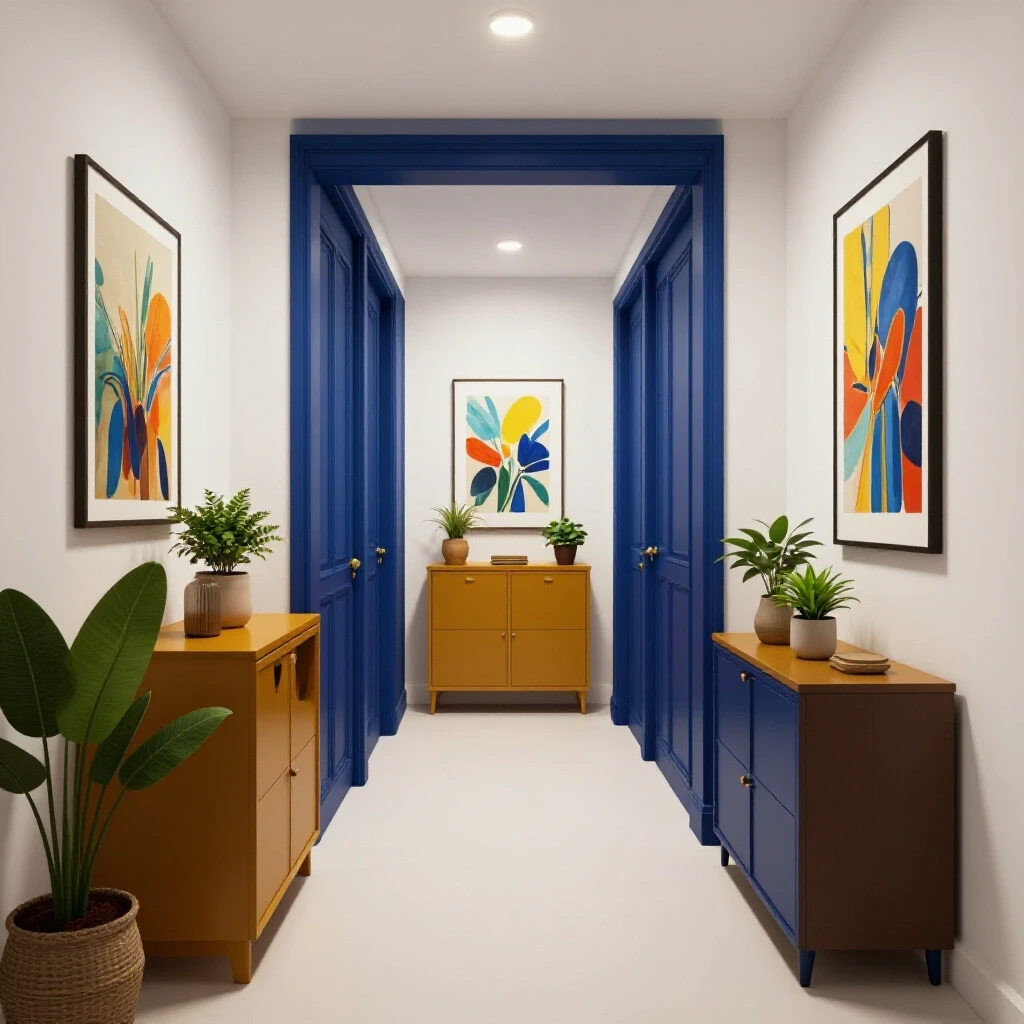
Can I use dark colors in a small hallway? You can, but it requires a strategic approach. If you use a dark color, apply it to the end wall of a hallway to create a “focal point” that draws the eye forward, making the hall feel shorter and wider. If you paint the side walls dark, ensure you have excellent lighting and use mirrors to prevent a “tunnel” effect.
What is the “One Thousand Day” rule in design? It is a mindset focused on long-term home livability. Instead of asking if a piece of decor looks good today, ask how it will look after 1,000 days of being bumped, touched, and cleaned. This encourages the selection of durable materials and functional layouts over fleeting, impractical trends.
How high should I hang artwork in a narrow corridor? Hang art so the center point is at eye level, roughly 57 to 60 inches from the floor. In a narrow space, avoid bulky, deep frames that could be knocked off the wall. Slim frames or “canvas wraps” are safer and keep the visual path clear.
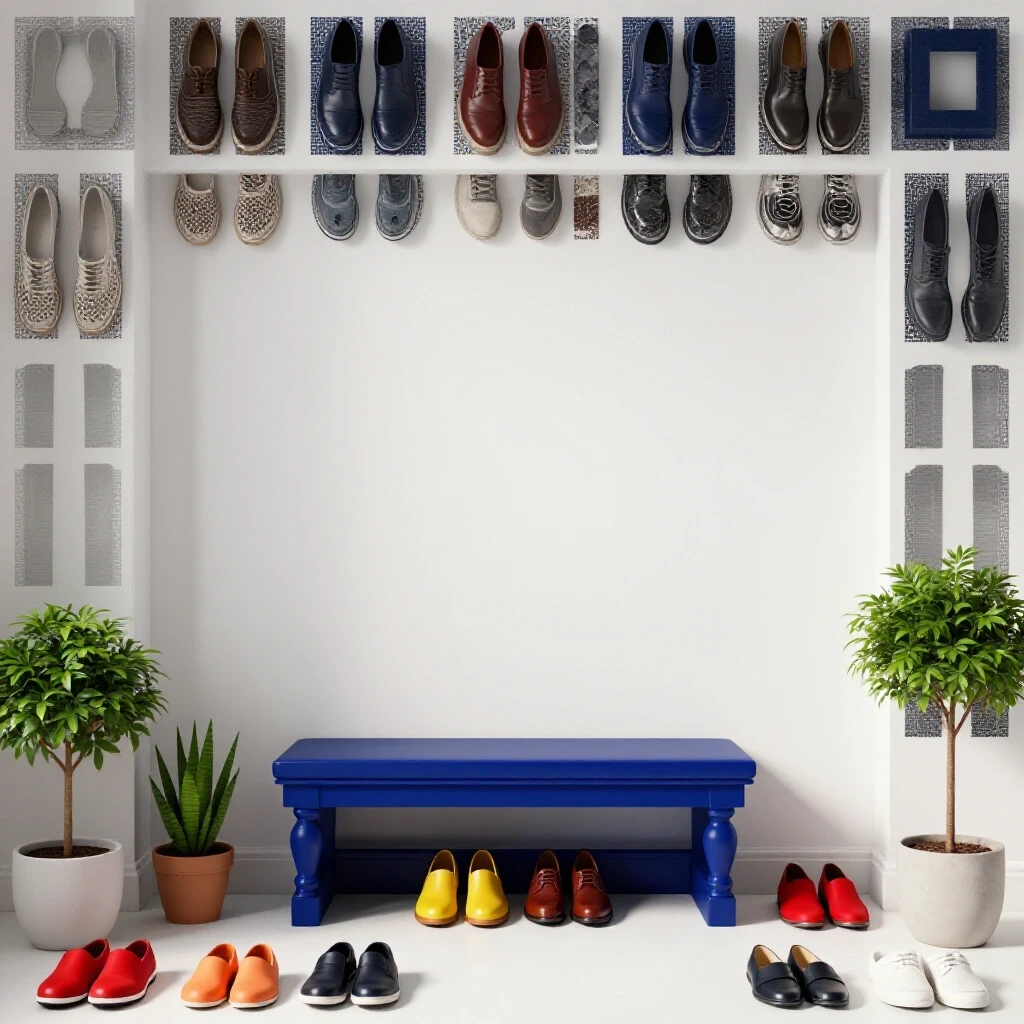
How do I manage shoes in an entry with no closet? Use a slim, “flip-down” shoe cabinet. These units are often only 6 to 9 inches deep and hide shoes vertically. This keeps the floor clear and prevents the “shoe pile” that often creates a physical and visual bottleneck in narrow entries.
Is lighting more important than paint color? They work together. Even the best paint color will look dull without proper lighting. In a hallway, use “layered” lighting—such as a flush-mount ceiling light combined with a small lamp on a console—to eliminate shadows in the corners, which is the key to making a space feel larger.
(This article was written by one of our staff writers, James Whitaker. Visit our Meet the Team page to learn more about the author and their expertise.)