Best Sofa Fabric for Families With Kids: Durable Choices (Guide)

Investing in high-quality, resilient materials isn’t just about style; it’s a strategy for long-term savings. When we choose furniture based on how it handles a Tuesday night with a toddler rather than how it looks in a filtered photo, we stop the cycle of expensive replacements. Over a decade, the cost of replacing a mid-range sofa twice far exceeds the initial investment in a single piece of high-performance furniture.
In my fifteen years managing retail merchandising and living in three different family homes, I’ve seen countless “dream” sofas become nightmares within eighteen months. I remember a specific sectional I once recommended to a friend. It was beautiful, soft, and trendy. A year later, after two kids and a dog, the fabric had pilled so badly it felt like sandpaper, and the light color had absorbed every juice box spill like a sponge. That experience shifted my focus. I stopped looking at what was popular and started looking at what survived. Truly practical interior design is about closing the gap between day one and day one thousand.
Why Material Longevity Dictates Long-Term Home Livability
Material longevity refers to the ability of a product to maintain its structural integrity and aesthetic appeal despite heavy daily use. In a family setting, this means choosing items that resist physical breakdown, staining, and fading over several years.
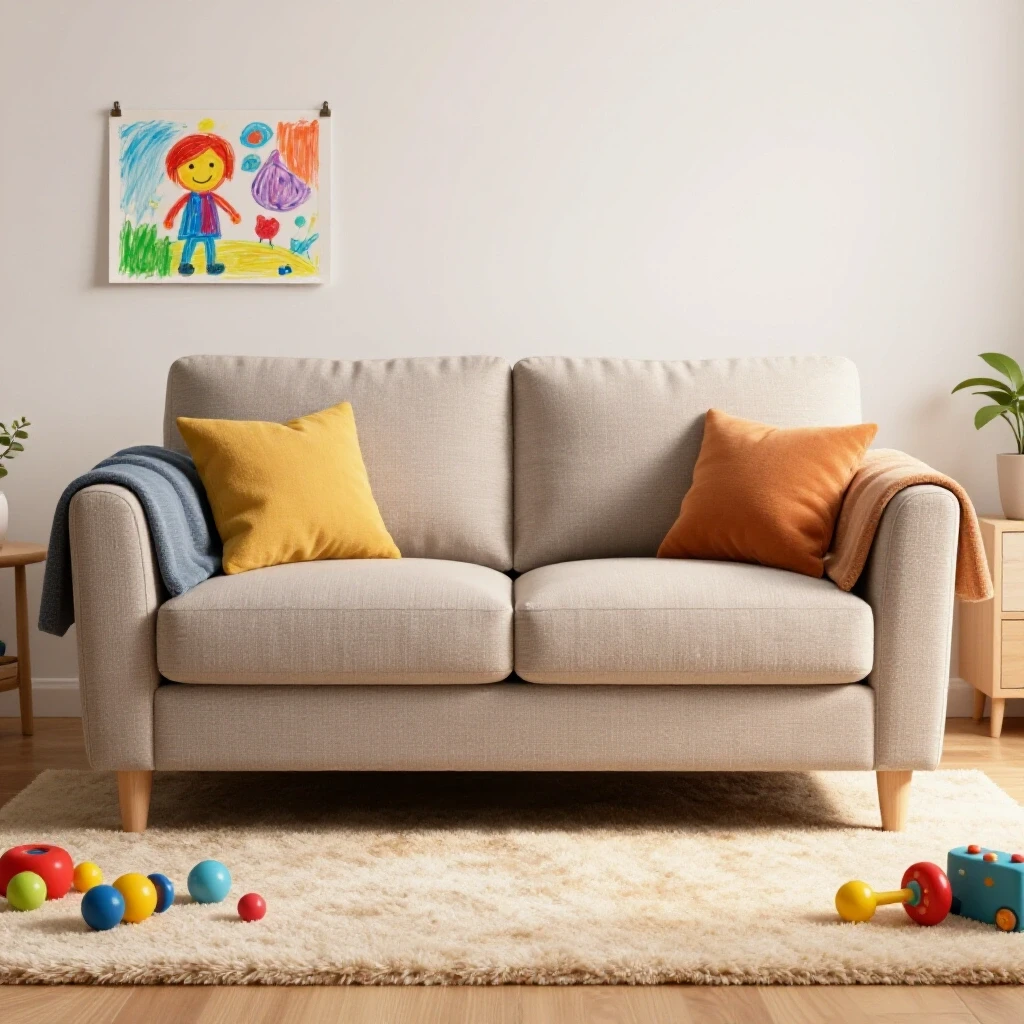
When we talk about long-term home livability, we are really talking about the psychological peace that comes from not worrying about your furniture. If you are constantly hovering over a guest with a glass of red wine or chasing a child away from the couch with a crayon, the room isn’t functional. It’s a museum. My goal is always to help families create spaces where the decorating decisions support life rather than restrict it.
The Environmental Psychology of High-Traffic Spaces
Environmental psychology in the home examines how our physical surroundings influence our stress levels, social interactions, and overall well-being. A well-designed room can reduce “visual noise” and promote a sense of calm and order.
Studies in environmental psychology suggest that cluttered or damaged environments increase cortisol levels. When a sofa looks worn out or stained, it contributes to a sense of chaos in the home. By selecting durable home decor, we are essentially protecting our mental space. A room that stays looking “new” longer helps maintain a positive emotional connection to the home, making it a place of rest rather than a source of chores.
Decoding Textile Durability for Active Households
Textile durability is the measure of a fabric’s resistance to various types of wear, including abrasion, pilling, and staining. For families, this involves looking beyond the “hand-feel” to the technical specifications of the fibers.
Through my years in merchandising, I learned that the most expensive fabric is rarely the most durable. I’ve seen high-end silks fail in weeks, while certain engineered synthetics look pristine after five years of heavy use. The key is understanding how the fabric is constructed. A tight weave is almost always superior to a loose one, as it prevents claws and toys from snagging the threads.
Understanding the Wyzenbeek Method and Double Rubs
The Wyzenbeek method is a standard industry test that determines a fabric’s abrasion resistance by rubbing a piece of cotton duck back and forth over the test material. Each back-and-forth motion is called a “double rub.”
For a family room sofa, you should never settle for less than 15,000 double rubs, which is considered “heavy-duty residential.” However, if you have multiple children or pets, aiming for the “contract grade” of 30,000 to 50,000 double rubs is a much safer bet. This ensures the fabric won’t thin or tear at the seams after a few years of movie nights and fort-building.
Fabric Durability Benchmarks
| Fabric Type | Double Rub Count | Best Use Case | Maintenance Level |
|---|---|---|---|
| Light Residential | 3,000 – 9,000 | Formal rooms, low use | High |
| Heavy Residential | 15,000 – 25,000 | Daily family use | Moderate |
| Contract Grade | 30,000 – 50,000 | High-traffic, kids, pets | Low |
| Ultra-High Performance | 100,000+ | Commercial, extreme use | Very Low |
Selecting Resilient Upholstery for Real Life
Resilient upholstery involves choosing fabrics engineered to repel liquids and resist odors at the molecular level. These materials are often referred to as performance fabrics and are designed to be cleaned with simple household solutions.
In my own home, I transitioned away from natural blends to 100% solution-dyed acrylics and high-quality polyesters. The difference was immediate. Solution-dyed means the color goes all the way through the fiber, like a carrot, rather than just being on the outside, like a radish. This makes the fabric incredibly resistant to fading from sunlight and allows for more aggressive cleaning when necessary.
The Rise of Performance Synthetics
Performance synthetics are man-made fibers like polyester, nylon, and acrylic that have been treated or woven specifically to provide stain resistance and durability. They mimic the look of natural linens and wools without the fragility.
Interestingly, many people avoid synthetics because they fear a “plastic” feel. However, modern textile technology has advanced significantly. You can now find performance fabrics that feel as soft as chenille but have the liquid-repelling properties of an outdoor umbrella. When making decorating decisions, always request a swatch and perform a “spill test” at home. If the water beads up, you’re on the right track.
- Look for “Solution-Dyed”: Ensures color fastness and bleach-cleanability.
- Check the Pile: Flat weaves are generally more durable than high-pile fabrics like velvet for households with pets.
- Avoid “Finish-Only” Treatments: Some fabrics are just sprayed with a protector that wears off; look for inherent performance qualities.
Designing Functional Room Layouts for Growing Families
Functional room layouts are floor plans designed to facilitate easy movement while protecting furniture from unnecessary wear. This involves calculating clearance paths and ensuring every piece of furniture has a clear purpose.
A common mistake I see is cramming too much furniture into a room, which forces people to squeeze past sofas and chairs. This constant physical contact wears down the upholstery on the corners and arms much faster. By allowing for proper “clearance paths,” you reduce the physical toll on your furniture and make the room feel more spacious and inviting.
Calculating True Clearance Paths
Clearance paths are the designated walking areas between furniture pieces or between furniture and walls. These paths should be wide enough to accommodate two people passing each other or a parent carrying a child.
In a high-traffic living room, you should aim for a primary walkway of at least 36 inches. Between a sofa and a coffee table, a gap of 16 to 18 inches is the standard for comfort. This prevents people from knocking their shins or spilling drinks as they sit down. If your layout is too tight, you’ll find that the “visual weight” of the room feels heavy, leading to a cluttered and stressful environment.
Space Clearance Guidelines
| Area | Minimum Clearance | Ideal Clearance | Why It Matters |
|---|---|---|---|
| Primary Walkway | 30 inches | 36 inches | Prevents collisions |
| Sofa to Coffee Table | 14 inches | 18 inches | Leg room and reach |
| Furniture to TV | 1.5x Screen Size | 2.5x Screen Size | Eye strain and flow |
| Behind Dining Chairs | 24 inches | 36 inches | Ease of movement |
Color Selection and the Impact of Light Reflectance Values
Color selection in durable home decor isn’t just about aesthetics; it’s about camouflage. Light Reflectance Value (LRV) measures the percentage of light a color reflects, which affects how much dirt and wear are visible.
A stark white sofa (high LRV) will show every smudge, while a jet-black sofa (low LRV) will show every speck of lint and pet hair. I’ve found that the “sweet spot” for family furniture is a mid-range LRV, typically between 30 and 50. Colors like heathered grey, warm taupe, or denim blue are excellent at hiding the inevitable “patina” of family life.
The Power of Mottled and Heathered Tones
Mottled or heathered tones are fabrics that use multiple shades of thread in the weave. This creates a visual texture that disguises small stains or wear patterns much better than a solid, flat color.
When I look at a fabric sample, I look for at least three different shades of yarn. This multi-tonal approach acts like a natural camouflage. If a child drops a crumb or a pen leaves a small mark, it often blends into the varied tones of the fabric rather than standing out as a glaring eyesore. This is a key component of making decorating decisions that last for years.
Integrated Storage and Its Role in Furniture Protection
Integrated storage refers to furniture pieces that serve a dual purpose, such as ottomans with hidden compartments or sofas with built-in shelving. This reduces the need for extra clutter-catching surfaces in a room.
The more clutter you have in a room, the more likely furniture is to be moved, bumped, or used in ways it wasn’t intended. For example, using a large, sturdy storage ottoman instead of a glass coffee table provides a soft place for feet, extra seating, and a place to hide toys. This single choice protects your shins, your floor, and your sanity.
- Multi-functional Ottomans: Replace sharp-edged tables with soft, fabric-covered storage units.
- Built-in Cabinetry: Use vertical space to keep breakables away from floor-level activity.
- Hidden Bins: Ensure every family member has a “five-minute tidy” spot to prevent floor clutter.
Long-Term Livability Audits: A Room-by-Room Assessment
A livability audit is a periodic review of how a space is functioning for the people living in it. It involves identifying “pain points” where the design is failing to meet daily needs.
I recommend doing this every six months. Walk into your room and look for where the “flow” breaks down. Are there shoes piled near the sofa? Is there a stain that won’t come out? Is the fabric pilling? By identifying these issues early, you can make small adjustments—like adding a rug or changing a cleaning solution—before the damage becomes permanent.
- Check the Seams: Look for pulling or thinning in high-pressure areas.
- Test the “Sit”: Ensure cushions are retaining their shape; flip them if they are reversible.
- Evaluate the Pathway: Move any furniture that people are consistently bumping into.
- Review the Lighting: Ensure your durable materials aren’t being degraded by direct, harsh UV sunlight.
Actionable Steps for Choosing Your Next Family Sofa
When you are ready to make a purchase, follow these steps to ensure you are selecting a piece that balances visual appeal with multi-year functionality.
- Request a Large Swatch: Small squares don’t show the full color variation or weave.
- The Stain Test: Apply ketchup, chocolate, or mud to the swatch. Let it sit for an hour, then try to clean it using only water and a mild soap.
- The Snag Test: Take a paperclip or a key and gently rub it against the fabric to see if it pulls the threads.
- Verify the Rub Count: Ask the salesperson specifically for the Wyzenbeek or Martindale rating.
- Measure Twice: Ensure the piece fits your 36-inch clearance path rule.
Conclusion: Building a Home That Lasts
Creating a beautiful home shouldn’t feel like a constant battle against the people living in it. By focusing on technical durability, spatial psychology, and smart material choices, we can design rooms that remain vibrant and functional for years. The goal is to move away from “disposable” decor and toward a more sustainable, practical interior design philosophy. Start by looking at your highest-traffic piece of furniture and asking if its material truly matches your lifestyle. If it doesn’t, your next decorating decision should be grounded in the data of durability.
Frequently Asked Questions
What is the best fabric for families with both kids and pets?
High-quality performance polyesters or solution-dyed acrylics are generally the most successful. These materials are engineered to be non-absorbent, meaning stains stay on the surface rather than soaking into the core of the fiber. They also tend to have a tighter weave, which prevents pet claws from snagging and creates a barrier against pet hair.
How do I know if a fabric is truly “performance” grade?
Look for technical specs rather than just a label. A true performance fabric will often list its “double rub” count (aim for 30,000+) and will specify if it is “solution-dyed” or has an “inherent” stain resistance. If the salesperson says it is “treated,” ask how many cleanings the treatment lasts before it needs to be reapplied.
Can I have a light-colored sofa with young children?
Yes, but only if the material is a high-grade performance synthetic. Many modern fabrics allow for cleaning with a diluted bleach solution (check the manufacturer’s guide first), which makes maintaining a light grey or taupe sofa much more realistic than it was twenty years ago.
What is the Wyzenbeek test exactly?
It is a mechanical test used in North America where a machine rubs a piece of abrasive material back and forth over a fabric sample. Each “back and forth” is one double rub. It simulates years of someone sitting down and standing up to see how long it takes for the fabric to show significant wear or break a thread.
Why does the “weave” of the fabric matter so much?
The weave determines how much dirt can get trapped inside the fabric and how easily it can be damaged. A loose, chunky weave (like some linens or bouclés) has large gaps where crumbs and dust can settle. A tight, flat weave is easier to vacuum and less likely to be ruined by a stray toy or a cat’s claw.
How often should I clean my performance fabric sofa?
For daily maintenance, a quick vacuum with an upholstery attachment once a week is ideal to remove abrasive dust. For deeper cleans, most performance fabrics only need a damp cloth for spots. You should avoid harsh chemicals unless the manufacturer specifically recommends them, as they can sometimes break down the fiber’s protective qualities.
Does a higher price always mean better durability?
Not necessarily. In the world of textiles, price is often driven by the rarity of the fiber (like silk or fine wool) or the complexity of the pattern. For a family home, a mid-priced, high-tech synthetic will almost always outperform a high-priced natural luxury fiber in terms of longevity and ease of care.
What is LRV and why should I care?
Light Reflectance Value (LRV) tells you how much light a color reflects on a scale of 0 (black) to 100 (white). For furniture, an LRV between 30 and 50 is the “forgiveness zone.” It’s dark enough to hide small stains but light enough that it won’t show every bit of light-colored lint or dust.
How do I fix pilling on my sofa?
Pilling occurs when loose fibers migrate to the surface and form small balls. While some pilling is normal initially, you can remove it with a battery-operated fabric shaver. However, choosing a fabric with a high “pilling resistance” rating (usually graded 1 to 5, with 5 being the best) can prevent this from happening in the first place.
Is leather a good choice for families?
Top-grain, protected leather can be very durable because it is easy to wipe down. However, it can be scratched by pets and can feel cold in the winter or sticky in the summer. If you go with leather, ensure it is “pigmented” or “protected” rather than “aniline,” as aniline leather stains very easily.
What is the most common mistake people make when buying a family sofa?
Buying for the “look” without checking the “specs.” People often fall in love with a texture or a color in a showroom and forget to ask about the rub count or the cleaning code. Always prioritize the technical performance of the material to ensure the sofa still looks good three years later.
(This article was written by one of our staff writers, James Whitaker. Visit our Meet the Team page to learn more about the author and their expertise.)