Wine Cellar Conversion Regrets & Solutions (Renovation Guide)

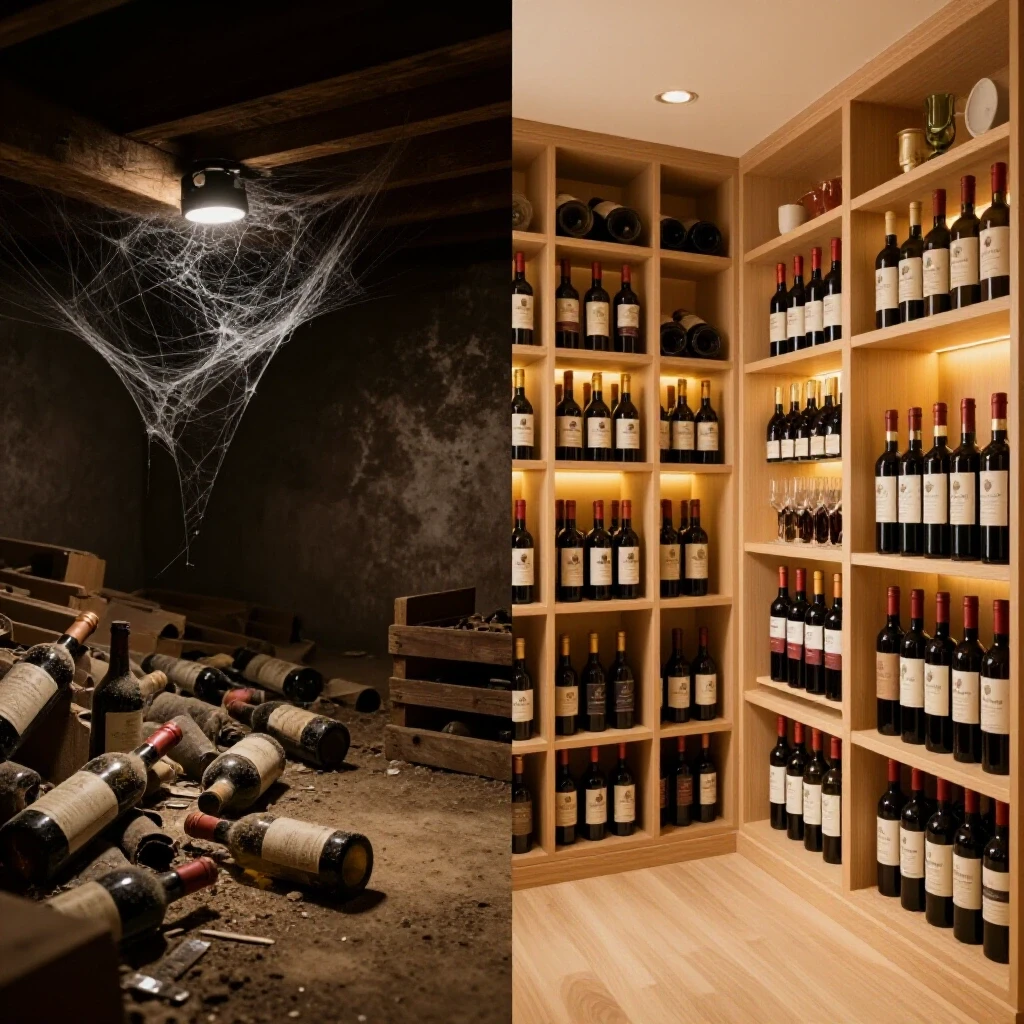
The silence of a finished basement is often deceptive. You stand in the newly converted space, admiring the custom cedar racks and the soft glow of the recessed lighting, feeling a sense of accomplishment. Then, three months later, you notice a faint buckling in the drywall or a persistent hum from a cooling unit that never seems to rest. The realization hits like a cold draft: a critical step in the thermal envelope was missed, or the shelving layout was designed for aesthetics rather than actual workflow. These are the moments that define the “regret” phase of a specialty remodel, where the gap between a beautiful blueprint and a functional reality becomes painfully clear.
Residential Renovation Planning for Specialty Storage
Residential renovation planning involves the systematic coordination of design, budgeting, and labor to transform an existing space into a specialized environment. For projects like repurposing a closet or basement for wine storage, this process requires balancing the physical constraints of the home with the technical needs of a climate-controlled room.
In my 18 years of oversight, I have seen that the most successful projects begin with a clear understanding of the “why” before the “how.” When homeowners skip the deep planning phase, they often end up with a room that looks great but fails to perform. For instance, a common home remodeling tip is to treat a specialty storage area like a miniature house within a house. It needs its own insulation, its own climate control, and its own structural support. If you treat it like just another closet, you are setting yourself up for future repairs that could cost double the original budget.
Defining the Scope of Work for Climate-Controlled Spaces
A scope of work is a detailed document that describes every task, material, and deadline involved in a construction project. It serves as the master map for both the homeowner and the contractor, ensuring that everyone agrees on what “finished” actually looks like before any walls are opened.
When I managed a basement project in a 1920s Tudor, the scope of work was our only defense against scope creep. Scope creep happens when small additions—like “let’s just add one more light fixture”—slowly inflate the budget. In that project, we discovered that the original foundation walls were weeping moisture. Because our scope of work specifically defined the “moisture barrier installation,” we were able to address the issue immediately rather than arguing over whose job it was to fix the dampness.
Key Takeaways for Scope Definition: – Document the exact type of insulation (e.g., closed-cell spray foam vs. rigid foam board). – Specify the shelving material and the method of attachment to the wall studs. – Include a line item for a dedicated electrical circuit to prevent power surges.
Budgeting and Cost Estimation Realities
Budgeting for a specialty remodel requires a blend of historical data and local market rates to create a realistic financial plan. It involves moving beyond “ballpark” figures to itemized estimates that account for materials, labor, and the inevitable surprises that occur when renovating an older residential structure.
Using data from RSMeans construction estimating resources, we can see that specialized storage conversions often have higher costs per square foot than standard room additions. This is due to the high-performance materials required for temperature and humidity regulation. A common kitchen remodel budget might allocate funds for cabinets and countertops, but a storage conversion must prioritize the “invisible” components like vapor barriers and specialized cooling systems.
RSMeans-Derived Cost Estimations vs. Real-World Bids
| Component | RSMeans National Average (Per Sq. Ft./Unit) | Real-World Bid Range (High-Cost Areas) | Why the Difference? |
|---|---|---|---|
| Closed-Cell Spray Foam | $3.50 – $5.00 | $6.00 – $8.50 | Small spaces often trigger “minimum trip charges” from installers. |
| Custom Hardwood Shelving | $150 – $250 per lin. ft. | $300 – $500 per lin. ft. | Labor for intricate joinery in tight spaces is significantly higher. |
| Dedicated Cooling Unit | $2,500 – $4,500 | $5,000 – $7,500 | Includes specialized HVAC labor and exterior venting requirements. |
| Vapor Barrier (6-mil Poly) | $0.75 – $1.25 | $2.00 – $3.50 | Detailed sealing around outlets and studs requires meticulous labor. |
Contingency Buffers for Structural Surprises
A contingency buffer is a set percentage of the total budget reserved for unexpected costs that arise during construction. Rather than being “extra money,” it is a necessary financial tool used to manage risks like hidden rot, outdated wiring, or structural shifts that only become visible once the drywall is removed.
I recommend a sliding scale for these buffers based on the age of your property. In my own first home renovation—a 1950s ranch—we hit a snag when we found that a previous owner had cut through a load-bearing joist to run a drain pipe. That “surprise” cost us $2,800 in structural steel and labor. If we hadn’t had a 20% contingency, the project would have stalled right there.
Contingency Buffer Allocations by Property Age: – New Construction (0–10 years): 10–12% buffer. – Mid-Century/Modern (11–50 years): 15–20% buffer. – Historic (51+ years): 25–30% buffer.
Contractor Vetting and Management Guide
Contractor management is the process of selecting, hiring, and supervising professional tradespeople to ensure the project meets quality standards. This guide focuses on identifying contractors who understand the specific physics of climate-controlled environments rather than generalists who might overlook critical insulation details.
A major regret many homeowners face is hiring a contractor based solely on the lowest bid. In the world of specialty storage, a low bid often means the contractor is planning to cut corners on the vapor barrier or the insulation. When vetting, ask to see photos of a “rough-in” phase of a previous project, not just the finished “glamour shots.” You want to see how they seal the envelope, not just how they hang the shelves.
Managing Subcontractor Milestones
Subcontractor milestones are specific, pre-defined points in the construction schedule where a particular phase of work is completed and verified. These milestones are often tied to a payment schedule, ensuring that you only pay for work that has been performed to your satisfaction.
One tool I always use is a “Lien Waiver.” This is a document signed by the subcontractor stating they have been paid and waive their right to put a lien on your property. Never release a milestone payment until you have a signed waiver from every sub who worked on that phase. It is a simple step that prevents massive legal headaches later.
Standard Subcontractor Payment Schedule: 1. Deposit: 10% (to secure the date). 2. Post-Demolition/Site Prep: 20%. 3. Rough-in Completion (Electrical/HVAC): 25%. 4. Insulation/Drywall Close-in: 25%. 5. Final Punch-List/Completion: 20%.
Construction Sequencing and Critical Path
Construction sequencing is the logical order in which tasks must be performed to ensure the project moves forward without delays. The “critical path” is the sequence of stages that determines the minimum time needed to complete the project; if one task on this path is delayed, the whole project is pushed back.
In a storage conversion, the critical path usually runs through the HVAC and insulation phases. You cannot hang shelving until the walls are closed, and you cannot close the walls until the vapor barrier is inspected and the cooling lines are pressure-tested. Misunderstanding this sequence is a common source of contractor disputes.
Rough-in vs. Finish Phases in Specialty Remodels
The “rough-in” phase refers to the stage where all the internal components—like electrical wires, plumbing lines, and cooling ducts—are installed but not yet connected to their final fixtures. The “finish” phase occurs after the walls are closed and painted, involving the installation of shelving, lighting trims, and the cooling unit faceplate.
A common regret is not taking enough photos during the rough-in. Once the insulation and drywall are up, you lose the ability to see where the studs are or where a wire might be pinched. I tell every homeowner I work with: “Take 100 photos of the open walls. You will never regret having them, but you will definitely regret not having them if a leak develops.”
Renovation Phase Sequencing Table:
| Phase | Primary Tasks | Critical Quality Check |
|---|---|---|
| Demolition | Removing old drywall, flooring, and debris. | Check for mold or structural rot in the subfloor. |
| Rough-in | Running electrical and HVAC lines. | Verify dedicated circuit and drain line slope. |
| Envelope | Installing vapor barrier and insulation. | The “Light Test”: Ensure no gaps in the seal. |
| Close-in | Hanging “green board” or water-resistant drywall. | Confirm all seams are taped and mudded. |
| Finishing | Painting, shelving, and unit installation. | Leveling of racks and airflow clearance. |
Common Oversight Areas and Functional Regrets
This section examines the specific technical failures that often lead to post-renovation dissatisfaction. These regrets usually center on the “thermal envelope”—the physical separator between the conditioned storage space and the unconditioned rest of the house—and how it handles air and moisture.
Interestingly, the biggest regret I hear isn’t about the color of the wood or the style of the door. It is about the noise of the cooling system or the fact that the shelves are too close together to fit larger bottles. These are design errors that could have been caught with a more thorough structural inspection checklist during the planning stage.
Thermal Envelope Adjustments
The thermal envelope is the combined system of insulation, windows, doors, and vapor barriers that controls the flow of heat and moisture into a space. In a residential storage conversion, this envelope must be airtight to prevent the cooling unit from working overtime, which leads to premature equipment failure.
Many homeowners regret using standard fiberglass batt insulation. In a high-humidity environment, fiberglass can act like a sponge if the vapor barrier is breached. I always recommend closed-cell spray foam for these projects. It provides a high R-value (insulating power) per inch and acts as its own vapor barrier, which is essential when you are repurposing a small space like a utility room or a closet.
Functional Oversight Checklist: – Insulation Gaps: Did you seal the “rim joist” where the wall meets the ceiling? – Door Seals: Is there a sweep at the bottom of the door to prevent air leakage? – Vibration Dampening: Is the cooling unit mounted with rubber pads to reduce noise transfer through the wall? – Airflow: Is there at least 2 inches of clearance between the shelving and the back wall?
Change Order Impact Analysis
A change order is a formal amendment to the original contract that outlines a change in the scope of work, the price, or the timeline. While they are sometimes necessary, frequent change orders are a sign of poor initial planning and are the primary cause of budget overruns.
In a project I coordinated last year, the homeowner decided to change the shelving layout after the walls were already closed. This required opening the drywall to add extra “blocking” (horizontal wood supports between studs) to hold the weight of the new racks. What would have been a $50 addition during the framing phase turned into a $1,200 change order.
Change Order Benchmarks: – Minor (Paint/Trim): Typically 1–2% budget impact. – Moderate (Layout/Electrical): 5–10% budget impact. – Major (Structural/HVAC): 15% or more budget impact.
Post-Occupancy Evaluations and Final Punch-Lists
A post-occupancy evaluation is a systematic process of assessing a building’s performance after the inhabitants have moved in. For a remodel, this means checking the room’s functionality 30, 60, and 90 days after completion to ensure the systems are performing as designed.
The “punch-list” is the final list of small tasks that must be completed before the final payment is made. This might include touching up paint, tightening a loose shelf, or adjusting a door hinge. My rule is simple: never make the final 10% payment until every single item on that punch-list is checked off. Once the contractor leaves the site with the final check, your leverage to get them back for small fixes drops to zero.
The “Regret-Proof” Final Walkthrough: 1. The Temperature Check: Use an independent thermometer to verify the cooling unit’s accuracy. 2. The Door Swing: Ensure the door closes and seals tightly without being forced. 3. The Light Leak: Turn off the lights inside the room and look for light entering from the outside (indicates a poor seal). 4. The Vibration Test: Feel the walls while the cooling unit is running to check for excessive vibration.
Project Management Tools and Resources
To manage a renovation effectively, you need more than just a notebook. Modern tools can help you track every dollar and every day of the schedule.
- Gantt Chart Software: Use tools like TeamGantt or even a simple Excel template to visualize the sequence of tasks and identify the critical path.
- Estimation Calculators: Leverage online RSMeans-based calculators to get a baseline for material costs before talking to contractors.
- Digital Blueprints: Apps like Magicplan allow you to create accurate 2D and 3D floor plans using your phone’s camera, which is invaluable for shelving layout.
- Contract Templates: Utilize NARI-approved contract templates that include specific clauses for specialty storage requirements.
Building a specialized storage space is a complex puzzle. It requires you to be part designer, part accountant, and part site manager. By focusing on the thermal envelope, maintaining a strict contingency fund, and vetting your contractors for technical expertise rather than just price, you can navigate the renovation process with confidence. The goal isn’t just to finish the project; it’s to finish it without the “what if” or “I wish we had” lingering in the back of your mind every time you walk into the room.
Frequently Asked Questions
What is the most common functional regret in these conversions?
The most frequent regret is inadequate insulation or the lack of a proper vapor barrier. Homeowners often try to save money by using standard home insulation, which can lead to moisture building up inside the walls. This eventually causes the cooling system to fail or requires a complete “gut” renovation to fix the hidden damage.
How do I know if my contractor actually understands specialty storage?
Ask them to explain the difference between a standard AC unit and a specialized cooling system. If they say a “window unit” or a “standard mini-split” is fine without mentioning humidity control or the need for a vapor barrier, they likely lack the specific expertise required for this type of residential renovation.
Why is closed-cell spray foam recommended over fiberglass?
Closed-cell foam provides a higher R-value per inch, which is vital in small spaces like closets. More importantly, it acts as a vapor barrier and an air seal simultaneously. Fiberglass batts allow air to move through them, which can lead to condensation and mold if the temperature difference between the rooms is significant.
What is “blocking” and why does it matter for shelving?
Blocking refers to horizontal pieces of lumber installed between the vertical wall studs. Because wine is heavy—a full rack can weigh hundreds of pounds—you cannot rely on standard drywall anchors. Blocking provides a solid wood surface to screw the racks into, preventing the shelves from pulling away from the wall over time.
How much should I really set aside for a contingency fund?
For most residential renovations involving older homes, 20% is the gold standard. While it seems like a lot, specialty projects often reveal hidden electrical issues or structural rot that must be fixed before the storage components can be installed. It is better to have the money and not need it than to stop the project halfway through.
Can I use a regular interior door for the storage room?
No, and this is a major regret for many. A standard interior door is hollow and has no seal. You need an exterior-grade, insulated door with a solid core and full weatherstripping. This ensures the cold air stays inside and the warm, humid air stays out.
What is a “dedicated circuit” and why is it necessary?
A dedicated circuit is an electrical line that runs directly from your breaker panel to the cooling unit without sharing power with any other outlets or lights. This prevents the breaker from tripping when the compressor kicks on and protects the expensive cooling equipment from power fluctuations.
How long should the “float time” be in my project schedule?
“Float time” is the extra padding you build into a schedule to account for delays. I recommend adding 2 days of float for every 10 days of active construction. If a material delivery is late or a subcontractor gets sick, this buffer prevents the entire project timeline from collapsing.
Is custom shelving always better than pre-made kits?
Not necessarily, but the regret often stems from the “fit.” Pre-made kits are cheaper but often leave awkward gaps in the room. Custom shelving maximizes the square footage. If you use a kit, ensure you have a plan for “trimming out” the gaps so the project doesn’t look unfinished.
What should I check during the “rough-in” inspection?
Verify that the vapor barrier is continuous and taped at all seams. Ensure the electrical outlets are positioned exactly where the lighting and cooling unit will be. Finally, check that any drain lines for the cooling unit are sloped correctly so water doesn’t back up into the wall.
(This article was written by one of our staff writers, David Langford. Visit our Meet the Team page to learn more about the author and their expertise.)