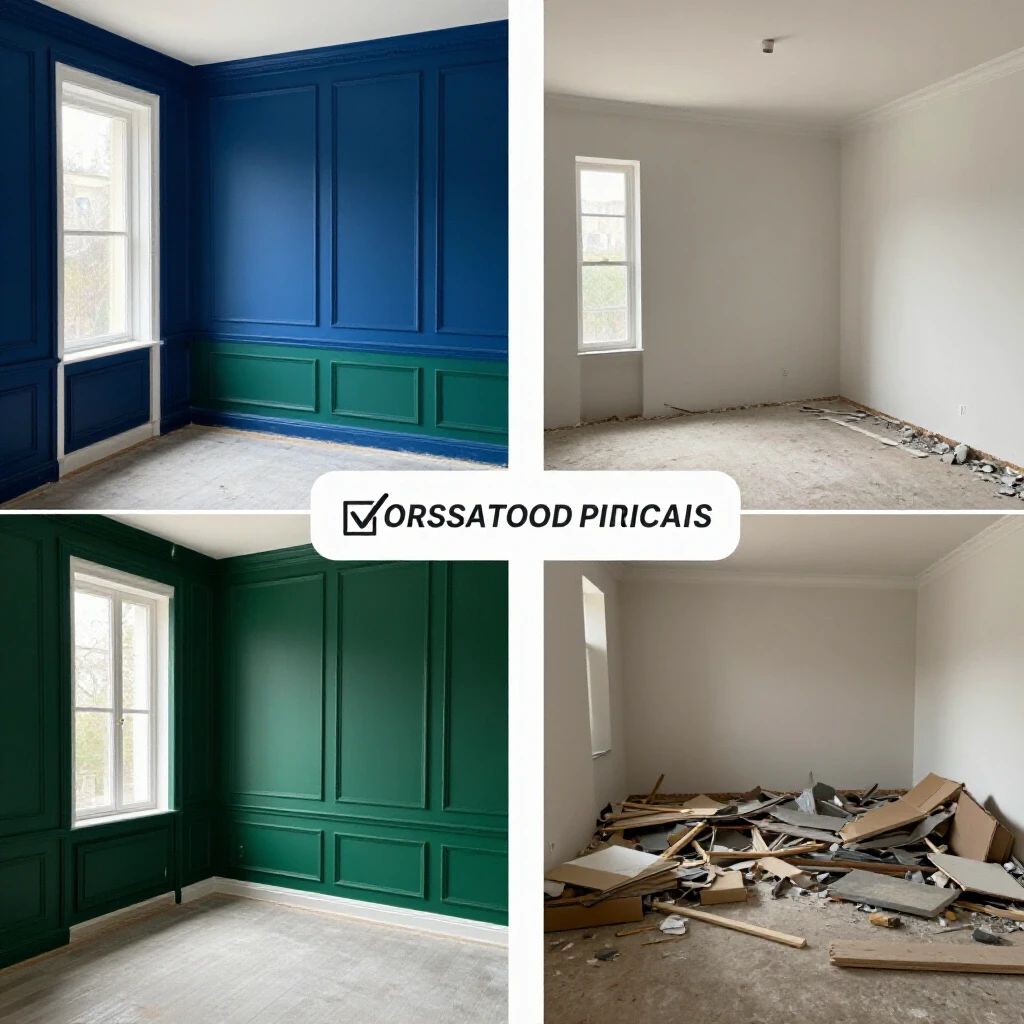
How to Fix the Wrong Paint Sheen in Renovations (Step-by-Step)

Before you sign off on your final construction payments, you must realize that a single error in surface finish can derail your entire project timeline and budget. I have spent 18 years as a project coordinator, and I have seen how a simple misunderstanding about light reflection can lead to a costly, full-room correction. If the gloss level on your walls does not match the functional needs of the space, you are looking at a complete redo that involves more than just a quick second coat.
Why Surface Gloss Levels Define Your Renovation Quality
Surface gloss refers to how much light bounces off a painted wall or trim piece once it is dry. This visual property is measured on a scale from flat to high gloss, and choosing the wrong one can highlight every structural flaw in your home.

In residential renovation planning, the finish you choose dictates how the room feels and how long the walls last. A flat finish absorbs light, making it great for hiding bumps in old drywall, but it is hard to clean. A high-gloss finish reflects light like a mirror, making it very durable but showing every single brush stroke or uneven patch. When these levels are mismatched—such as putting a shiny finish on a wavy wall—the result often requires a full sand-down and repainting.
The Science of Light Reflection in Interior Spaces
Light reflection, or “sheen,” is created by the ratio of resins to pigments in the paint. Resins create a smooth, plastic-like surface that reflects light, while pigments provide the color and a rougher texture that scatters light.
Understanding this balance is vital for home remodeling tips. If you use a high-resin finish in a room with a lot of natural light, you might experience “flashing,” where certain spots look much shinier than others. This often happens if the paint was applied unevenly or if the wall was not primed correctly. During my own first home renovation, I ignored this and ended up with a living room that looked like a patchwork quilt every time the sun hit the walls.
Planning for Finish Consistency in Your Budget
Budgeting for a renovation requires looking past the initial labor and material costs to include a safety net for corrections. Most homeowners forget to account for the labor-intensive process of fixing a surface that has the wrong reflectivity.
According to RSMeans construction estimating resources, the cost of a standard two-coat interior paint job ranges from $2.50 to $4.50 per square foot. However, if you have to repaint because the finish is too shiny or too dull, that cost can jump by 60%. This is because the contractor must sand the previous layer to ensure the new paint sticks, which adds hours of prep work. I always recommend a 15–25% contingency fund to cover these types of “visual” structural surprises.
RSMeans-Derived Cost Comparison: Initial vs. Corrective Work
| Project Phase | Initial Estimated Cost (per sq. ft.) | Corrective Repaint Cost (per sq. ft.) | Reason for Increase |
|---|---|---|---|
| Standard Wall Painting | $3.50 | $5.75 | Sanding and Deglossing |
| Trim and Baseboards | $4.25 | $7.50 | Detailed Hand-Sanding |
| High-Moisture Areas | $4.00 | $6.50 | Specialized Primer Needs |
Sequencing the Finish Phase in Your Project Schedule
Construction sequencing is the order in which tasks are completed to ensure the most efficient workflow. Painting is usually one of the last steps, but it is also the most vulnerable to scheduling shifts.
In a kitchen remodel budget, the paint finish is often decided months before it is applied. However, if your cabinets arrive with a satin finish and you accidentally painted your trim with a high-gloss finish, the visual clash can be jarring. I suggest scheduling a “finish mock-up” after the rough-in plumbing and electrical are done but before the final flooring is installed. This allows you to see how the light interacts with the wall texture before the entire house is finished.
Managing the Critical Path to Avoid Delays
The “critical path” is the sequence of tasks that determines the project’s end date. If you have to repaint a major area because the gloss level is incorrect, you can push your move-in date back by a week or more.
- First, ensure all drywall sanding is complete and inspected with a high-intensity light.
- Second, apply a dedicated primer to seal the surface.
- Third, apply a test patch of the chosen finish in a 3×3 foot area.
- Fourth, observe the test patch at noon and at 6:00 PM to check for glare.
Contractor Management Guide for Surface Finishes
To avoid disputes, your contract must be specific about the gloss levels for every room. Vague terms like “shiny” or “matte” are not enough to hold a contractor accountable.
When vetting a pro, ask for a “Scope of Work” document that lists the specific finish for walls, ceilings, and trim separately. In my 18 years of oversight, the most common contractor disputes happened because the homeowner thought “eggshell” meant one thing, while the painter used a different standard. Using a written specification ensures that if the wrong finish is applied, the cost of repainting falls on the contractor, not you.
Essential Questions for Your Painting Subcontractor
- How do you handle “flashing” or uneven gloss levels on large walls?
- Will you provide a written guarantee that the finish will be consistent across all rooms?
- What is your process for preparing a surface if we decide the gloss level needs to be changed after the first coat?
- Do you use a “level 5” drywall finish for surfaces where high-gloss paint is requested?
Why Hidden Structural Issues Affect Your Paint Finish
Many homeowners think a coat of paint can hide old problems, but the opposite is often true. High-gloss finishes act like a magnifying glass for hidden structural issues.
If you have outdated wiring that was poorly patched or mold that was simply wiped away, a reflective finish will make those bumps and stains stand out. During a whole-house remodel I managed, we found rot behind a bathroom wall. After the repair, the contractor used a semi-gloss finish. Because the new drywall wasn’t perfectly flush with the old, the light hitting the shiny paint created a visible line that looked like a crack. We had to sand the entire wall and move to a lower-gloss finish to hide the transition.
Structural Inspection Checklist Before Finishing
- Check for “nail pops” or screws that have pushed through the drywall.
- Ensure all joints are feathered out at least 12 inches to minimize shadows.
- Verify that there are no moisture leaks; dampness can cause a gloss finish to peel or bubble.
- Use a flashlight held parallel to the wall to find hidden dips or ridges.
The Corrective Process: How We Repainted Incorrect Finishes
When a finish is wrong, you cannot simply paint over it. The process of correction is a multi-step journey that requires patience and the right tools.
The first step is “de-glossing.” If you put a low-gloss paint over a high-gloss surface without prep, the new layer will slide right off. You must sand the surface to create “tooth”—tiny scratches that help the new paint bond. In one of my personal projects, we had to repaint a kitchen because the “satin” finish looked more like “semi-gloss.” We spent two days just sanding and vacuuming dust before we could even open a new can of paint.
Steps for a Successful Finish Correction
- Surface Cleaning: Remove all oils and dust that might interfere with bonding.
- Mechanical Sanding: Use a fine-grit sandpaper (220 grit) to dull the existing shine.
- Tack Cloth Wipe-Down: Ensure every speck of dust is gone, as dust is highly visible in any finish.
- Transition Primer: Use a primer specifically designed to stick to glossy surfaces.
- Re-application: Apply the new finish in long, even strokes to avoid overlap marks.
Change Order Impact Analysis: The Cost of Changing Your Mind
A change order is a formal amendment to your construction contract. If you decide to change your paint finish after the work has started, it will trigger a change order that impacts both your budget and your timeline.
I have seen change orders for repainting add $2,000 to a simple bathroom remodel. This isn’t just for the paint; it’s for the “float time” in the schedule. While the painters are re-doing the walls, the electricians and flooring installers cannot work. This ripple effect can lead to subcontractors moving on to other jobs, leaving your project stalled for weeks.
Analysis of Repainting Delays
| Change Requested | Time Delay | Labor Impact | Material Waste |
|---|---|---|---|
| Change from Gloss to Flat | 2-3 Days | High (Sanding required) | Moderate |
| Change from Flat to Gloss | 3-5 Days | Very High (Wall smoothing) | High |
| Correcting Mismatched Trim | 1-2 Days | Moderate | Low |
Practical Tools for Managing Your Remodel
To keep your project on track and ensure your finishes are exactly what you expected, use modern project management tools. These help you track decisions and share them with your team in real-time.
- CoConstruct or Buildertrend: These apps allow you to upload photos of the exact finish you want and get digital signatures from your contractor.
- Digital Light Meters: You can use these to measure the Actual Reflectance Value (ARV) of a surface to ensure it matches the manufacturer’s specs.
- Gantt Chart Templates: Use these to see how a three-day repainting delay will push out your final inspection and move-in date.
- RSMeans Data Online: Access real-time labor costs in your zip code to ensure your contractor’s quote for repainting is fair.
Final Quality Control Benchmarks
Before you make the final milestone payment, you need a clear checklist for your paint finishes. This is your last chance to catch errors before the contractor leaves the site.
A “punch-list” is a document listing all the small tasks that need to be finished or corrected. Your punch-list should include a specific section for surface consistency. Walk through each room with the lights on and off. Look at the walls from a side angle. If you see “holidays”—spots where the finish is thin—or “ropiness”—where the paint is too thick—mark them with blue painter’s tape.
- Ensure all trim has the same level of shine throughout the house.
- Verify that the ceiling finish is uniform and does not have “lap marks” from the roller.
- Check that the paint behind toilets and inside closets matches the rest of the room.
- Confirm that no paint has dripped onto the floors or hardware, as cleaning these later can damage the finish.
Moving Forward with Confidence
Navigating a major residential renovation is a test of your planning and patience. By focusing on the technical details of surface finishes early in the process, you can avoid the frustration of a project that looks “almost” right but fails under the light.
Start by defining your gloss levels in your initial scope of work. Use the data from RSMeans to set a realistic budget that includes a contingency for corrections. Most importantly, manage your contractor with clear, written expectations. If you find yourself needing to repaint, follow the proper steps of sanding and priming to ensure the second attempt is the final one. Your home is a major investment; ensuring the final layer is perfect is the best way to protect that value.
FAQ: Frequently Asked Questions About Correcting Paint Finishes
What happens if I put a flat finish over a semi-gloss finish without sanding?
The new paint will likely fail to bond. Because semi-gloss is non-porous and smooth, the flat paint has nothing to “grip.” Over time, the new layer may peel off in large sheets, especially in humid areas like bathrooms. You must always sand or use a chemical de-glosser first.
Why does my paint look shinier in some spots than others?
This is known as “flashing.” It usually happens because the surface was not primed evenly, or the paint was applied at different thicknesses. It can also happen if the contractor “touched up” a spot after the main coat had already started to dry. Correcting this usually requires a full top-to-bottom coat on the entire wall.
Can I just add a “matting agent” to my leftover shiny paint?
While matting agents exist, they are difficult to mix perfectly outside of a factory setting. For a residential renovation, it is much safer and more consistent to buy a new can of paint in the correct gloss level. Trying to “hack” the finish often leads to streaks and an uneven look.
How do I know which gloss level is right for a high-traffic hallway?
For hallways, a satin or eggshell finish is usually best. These provide a balance between hiding wall bumps and being scrubbable. A flat finish will show every fingerprint, while a high-gloss finish will make the hallway feel like a hospital corridor and show every dent from moved furniture.
Does the brand of paint change how the gloss level looks?
Yes. One company’s “eggshell” might be as shiny as another company’s “satin.” This is why it is vital to stick to one brand throughout a project and always do a test patch on your specific walls before committing to the whole house.
How long should I wait before deciding to repaint a finish I don’t like?
Wait at least 48 to 72 hours. Paint goes through a curing process where the gloss level can change slightly as the moisture evaporates. What looks too shiny when wet might dull down to the perfect level once it is fully cured.
Will a darker color make a finish look glossier?
Darker pigments often require more resin, which can naturally increase the perceived shine of the paint. If you are using a deep navy or charcoal, you might want to drop down one level of gloss (e.g., from satin to eggshell) to get the look you want.
Is it cheaper to repaint just one wall or the whole room?
If you are changing the gloss level, you must repaint the entire “plane” or wall from corner to corner. If you only do a portion, the break in the finish will be highly visible. Usually, for consistency, repainting the whole room is the only way to ensure the light reflects the same way on every surface.
What is a “Level 5” drywall finish and do I need it?
A Level 5 finish is the highest grade of drywall smoothing, involving a thin skim coat over the entire surface. You only need this if you are planning to use a high-gloss or semi-gloss finish on walls, as these finishes reveal every minor imperfection in the drywall work.
How do I handle a contractor who used the wrong finish?
Refer back to your signed Scope of Work. If the contract specifies “Satin” and they used “Semi-Gloss,” they are contractually obligated to fix it at their expense. This is why having specific gloss levels written in the contract is your best defense against budget overruns.
(This article was written by one of our staff writers, David Langford. Visit our Meet the Team page to learn more about the author and their expertise.)