Best Art Supply Storage Solutions for Easy Access (Ideas Inside)

The more storage containers we buy, the messier our homes often become. It seems like a contradiction, but in my 11 years as an operations professional, I have seen this happen in warehouses and living rooms alike. We try to solve the problem of messy markers and scattered papers by buying complex kits. Yet, within a week, the kitchen table is buried again. The issue is rarely a lack of containers. Instead, it is usually a system that requires too much effort to maintain during a busy Tuesday afternoon.
I have spent over a decade applying logistics principles to my own family home. My background in spatial management taught me that a system is only as good as its weakest link. For most families, that link is “retrieval friction.” This is the number of steps it takes to get an item out and, more importantly, put it back. If a child has to unstack three boxes to find a crayon, they will likely leave it on the floor when they are done. I have redesigned our creative zones multiple times, moving away from “pretty” solutions toward systems that actually survive daily use.
Why Visual Overload and High-Friction Systems Fail Families
Visual overload occurs when our brains receive too much information from a cluttered environment, leading to stress. High-friction systems are storage methods that require multiple physical steps to access or store items. Both factors make it nearly impossible to keep a home tidy.
In logistics, we look at “touch points.” Every time you touch an object, you use energy. If your paints are in a box, with a lid, inside a closet, that is three touch points just to start. To clean up, you have to repeat those steps in reverse. When you are tired after work, those six touches feel like a mountain. This is why many home organization systems fail. They look great in photos but ignore the reality of human fatigue.
Research in environmental psychology shows that physical clutter competes for our attention. When your child’s drawing tools are scattered, your brain cannot fully relax. This is why we feel mental fatigue in a messy room. To solve this, we must reduce the “cost” of cleaning up. We do this by lowering the friction of our storage.
The Hidden Impact of Spatial Capacity Limits
Spatial capacity is the maximum amount of material a designated area can hold before it becomes difficult to use. When we exceed this limit, we lose the ability to see what we own, leading to duplicate purchases and more mess.
I once tracked how long it took my kids to find a specific blue marker. In a crowded bin, it took nearly two minutes. After we applied capacity limits and sorted by type, it took five seconds. We often think we need more space, but we actually need better flow. If the “inflow” of new paper and pens is higher than the “outflow” of dried-up markers, the system will always break.
| Storage Type | Steps to Access | Steps to Store | Friction Level |
|---|---|---|---|
| Open Wall Rack | 1 | 1 | Very Low |
| Clear Open Bin | 1 | 1 | Low |
| Drawer with Dividers | 2 | 2 | Medium |
| Lidded Box | 2 | 3 | High |
| Stacked Lidded Bins | 4 | 5 | Extreme |
Implementing a Low-Friction Sorting Framework
A sorting framework is a logical method for grouping items based on how often they are used. This process ensures that the most common tools are the easiest to reach, while rarely used items are moved to the periphery.
When I started our last home project, I used a “Frequency of Use” audit. I watched my family for one week and noted which items they touched daily. Markers, plain paper, and pencils were the winners. Paints and glitter were used maybe once a month. In a standard logistics setup, you never put your top-moving stock at the back of the warehouse.
We moved the daily items to open-top containers on the table. The monthly items went into lidded bins on a higher shelf. This simple change reduced our daily cleanup time by 60 percent. By prioritizing “retrieval speed” for daily items, we stopped the “clutter creep” that usually happened by Wednesday.
High-Speed Zoning for Creative Materials
Zoning is the practice of dividing a room into specific areas based on activity. High-speed zoning focuses on making the transition between “activity” and “cleanup” as fast as possible to prevent piles from forming.
- Zone 1 (The Hot Zone): This is the immediate reach area. It should hold only what is used every single day. For us, this meant a rotating caddy for markers and a vertical slot for paper.
- Zone 2 (The Reach Zone): This is for items used weekly. Think of things like glue sticks or scissors. These should be in drawers or bins that do not have lids.
- Zone 3 (The Deep Zone): This is for messy or occasional items like acrylic paints. These can be in lidded bins because the effort to get them out is part of a planned activity.
By using these zones, we managed our spatial capacity better. We stopped trying to fit everything onto the main desk. This reduced the visual noise and made it easier for the kids to know exactly where things belonged.
Selecting Functional Gear Over Aesthetic Containers
Functional gear refers to storage units chosen for their ease of use and durability rather than their appearance. This approach focuses on how a container works in a “high-traffic” family environment.
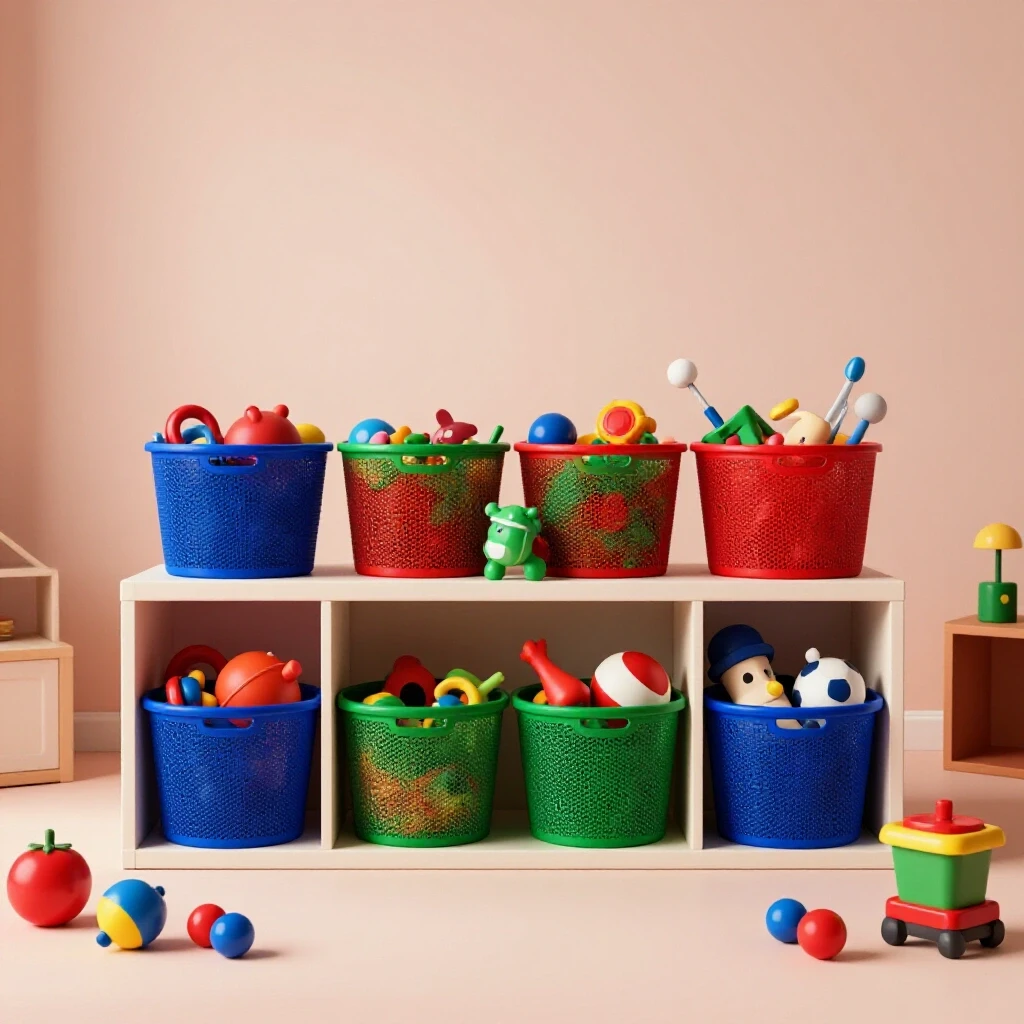
I have made the mistake of buying beautiful woven baskets for markers. They looked great for a day. Then, the bottom got stained with ink, and we couldn’t see what was inside. We switched to clear, heavy-duty plastic bins and wall-mounted pegboards. Clear bins allow for “visual scanning.” You can see the colors without digging.
Wall-mounted systems are especially effective for keeping surfaces clear. By moving the “footprint” of the clutter from the table to the wall, we reclaimed our dining space. This is a common tactic in industrial tool rooms. If a tool has a specific “home” on a wall, it is much more likely to be returned there.
The Role of Vertical Storage in Reducing Surface Clutter
Vertical storage utilizes wall space or tall shelving to keep items off flat surfaces. This is a key principle in logistics because floor and table space are the most expensive “real estate” in any building.
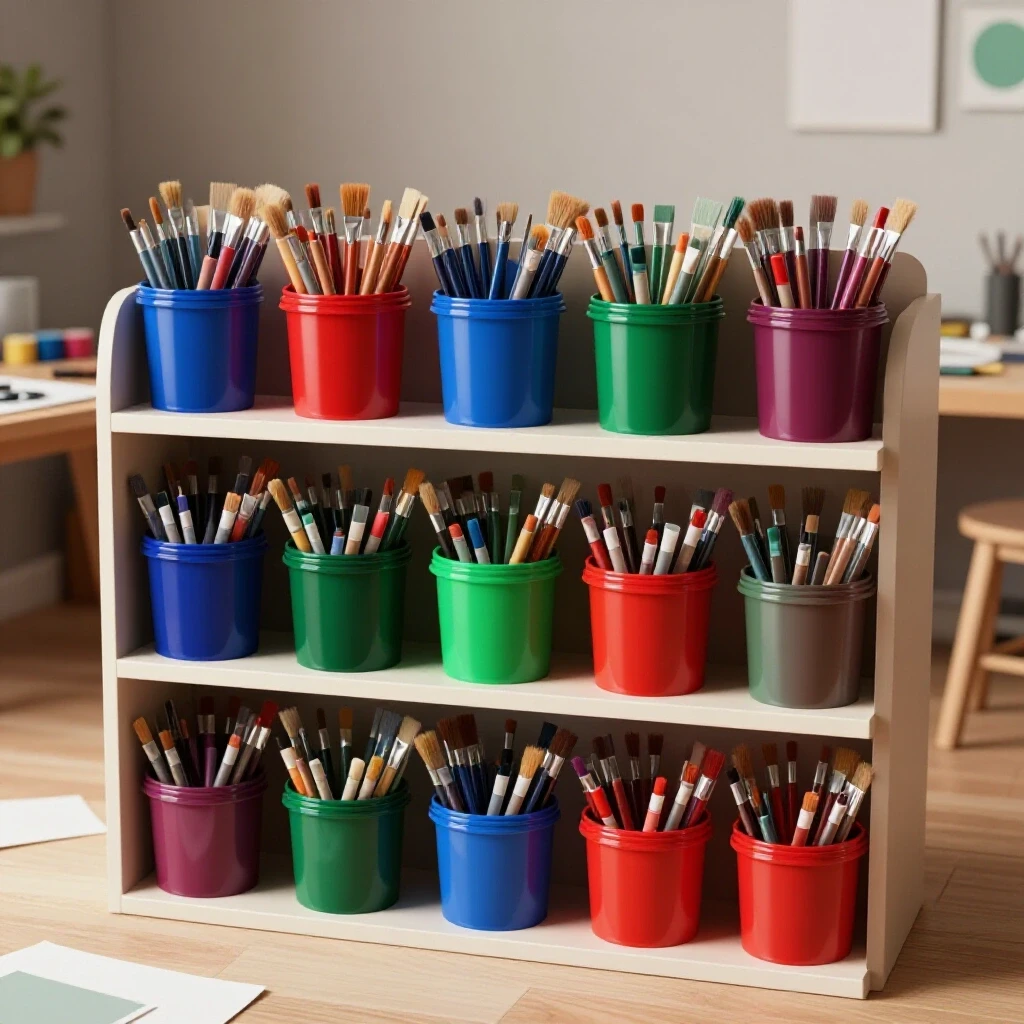
- Wall-Mounted Cups: These are excellent for pens and brushes. They keep the table clear for actual work.
- Tiered Rolling Carts: These provide mobile vertical storage. You can roll the materials to the table and then roll them back into a corner when finished.
- Vertical Paper Sorters: Laying paper flat in a pile is a recipe for a mess. Standing it up in a sorter makes it easy to grab one sheet without disturbing the rest.
- Pegboards: These are the gold standard for flexibility. As your needs change, you can move the hooks and bins around.
When we moved our paper to a vertical sorter, the “paper landslides” stopped immediately. It took up 70 percent less surface area and made it easier for the kids to see the different colors available.
Building Sustainable Habit Loops for the Whole Family
A habit loop is a three-part process: a cue, a routine, and a reward. In home organization, the cue is the end of an activity, the routine is the cleanup, and the reward is a clear space for the next day.
To make this work, the system must be so simple that it requires zero “decision energy.” If a child has to decide which of five bins a pencil goes into, they will hesitate. If there is one big bin labeled “Pencils,” they will do it. We used clear labels with both words and pictures. This removed the mental load of sorting for our youngest child.
We also implemented a “Five-Minute Reset” every evening. Because our containers were low-friction (mostly open-top), the kids could clear the table in under three minutes. We tracked this on a simple chart for the first month. Once they saw how easy it was, the resistance faded.
Metrics for a Functional Creative Space
To know if a system is working, you need to measure it. In logistics, we use “cycle times.” In a home, we can use “cleanup duration” and “item density.”
- Cleanup Duration: It should take no more than 5 minutes to clear a standard creative mess.
- Item Density: A bin should never be more than 80 percent full. This allows for “hand room” to move things around.
- Search Time: You should be able to find any specific tool (like a red marker or a glue stick) in under 15 seconds.
- Sorting Speed: A person should be able to sort a mixed pile of 20 items into their correct homes in under 2 minutes.
If your current setup takes longer than these metrics, the friction is too high. You likely need to remove lids, reduce the number of items, or move things to a more accessible zone.
Common Mistakes in Managing Craft Materials
Many families fall into the same traps when trying to organize their creative tools. Recognizing these mistakes is the first step toward a more sustainable system.
- Over-Categorizing: Creating a separate bin for “washable markers,” “permanent markers,” and “scented markers” is too complex. One bin for “Markers” is usually enough.
- Using Opaque Bins: If you can’t see it, you won’t use it—or you’ll buy more of it.
- Buying the Containers First: Never buy bins until you have sorted your items and measured your space.
- Prioritizing Aesthetics: A system that looks “minimalist” but requires 10 steps to put a pen away will fail in a week.
In our home, we once tried a color-coded drawer system. It was beautiful. However, it took the kids forever to find the right drawer for every single crayon. We eventually switched to a single large bin for all crayons. The “aesthetic” suffered slightly, but the floor stayed clean.
Maintaining Order Over the Long Term
Sustainability is the most important part of any home organization system. A system that works for a week is a failure. A system that works for six months is a success.
We perform a “spatial audit” every three months. We check for dried-up markers, scraps of paper, and items that haven’t been touched. This keeps our “inflow and outflow” in balance. If the bins are getting too full (exceeding that 80 percent density rule), we know it is time to purge.
By focusing on flow and friction rather than “perfection,” we have created a space that stays functional even during busy school weeks. The goal isn’t to have a home that looks like a magazine. The goal is to have a home where you can start a project without stress and finish it without a headache.
Frequently Asked Questions
Why do my storage bins always end up filled with random junk? This usually happens because the bins are too deep or the categories are too broad. When a container is deep, items at the bottom become “invisible,” and we tend to toss random things on top. To fix this, use shallow bins or dividers. Also, ensure every bin has a clear, specific label so there is no doubt about what belongs inside.
How can I get my children to put their markers and paints back? The key is to reduce the number of steps. If they have to put a lid on a box and then slide that box onto a shelf, they might not do it. If they can just drop the marker into an open cup on the table, they are much more likely to comply. Make the “home” for the item as close to the “action” as possible.
What is the best way to store large sheets of paper without them wrinkling? Vertical sorters or “slotted” organizers are best for paper. Stacking paper horizontally leads to digging, which causes wrinkles and tears. By standing the paper up, you can pull out one sheet at a time. For very large sheets, consider a wall-mounted roll or a dedicated portfolio kept in a “Zone 3” area.
Are expensive modular systems worth the investment? Only if they solve a specific friction problem. You don’t need a high-end system to be organized. Simple clear bins and a basic pegboard often work better because they are easier to adapt. Start with low-cost options to test your “zoning” and “flow” before investing in permanent furniture.
How do I handle “messy” supplies like glitter or paint in a tidy home? Keep these in “Zone 3.” They should be in lidded, latched containers that require an adult’s help to access. This prevents “unauthorized” use and ensures that the mess is contained. Because these are not daily items, the higher friction of a latched lid is actually a benefit.
What should I do when our collection of materials outgrows the space? You must enforce a “one-in, one-out” rule. If you buy a new set of markers, the old, dried-out ones must go. If the space is physically full, you have reached your spatial capacity. Adding more bins will only increase the clutter. You must reduce the volume to maintain the system’s flow.
How do I label things so they stay organized? Use a high-contrast label maker or clear printed tags. For younger children, use a picture of the item alongside the word. Place the label on the front of the bin where it is clearly visible. If you use a pegboard, you can even draw an outline of the tool on the board so it is obvious where it returns.
Is it better to store items by color or by type? For most families, storing by type (e.g., all markers together) is more sustainable. Sorting by color looks great, but it adds an extra “decision step” during cleanup. This increases friction and makes it harder for busy parents and kids to maintain the system over time.
What is the “80 percent rule” in storage? This rule states that a container should never be more than 80 percent full. This extra 20 percent of “white space” allows you to see everything in the bin and reach for an item without knocking others out. Once a bin hits 100 percent, the system begins to fail because retrieval becomes difficult.
How often should I declutter our creative supplies? A quick “reset” should happen daily, but a deep sort should occur every three to six months. This is when you test markers, check for empty glue bottles, and remove projects that are no longer wanted. Regular maintenance prevents the system from becoming overwhelmed by “dead stock.”
(This article was written by one of our staff writers, Christopher Bennett. Visit our Meet the Team page to learn more about the author and their expertise.)