How to Make a Whole-Home Reset Last: 3 Simple Rules (Guide)

Imagine waking up to a home that does not demand an hour of tidying before you can even make coffee. For many of us, the cycle of cleaning on Saturday only to see the house fall apart by Tuesday is a source of deep mental fatigue. After 11 years in operations and logistics, I realized that my home was failing for the same reasons a disorganized warehouse fails: the systems were designed for how I wanted things to look, not for how my family actually moves. By applying spatial management principles, we finally created a living space that stays functional through the busiest weeks.

Why Traditional Organizing Methods Fail Busy Families
Traditional methods often focus on how a space looks rather than how it functions. This creates a gap between the “ideal” state and the reality of daily life, leading to a quick return to clutter when time is short or energy is low.
When we focus solely on aesthetics, we often buy matching opaque bins or complex filing systems that look great on a shelf but require too much effort to use. In environmental psychology, this is known as visual processing overload. When a system is too complex, our brains subconsciously avoid it. For a busy parent, a lid is not just a lid; it is a barrier to tidiness. If it takes four steps to put a toy away—open the closet, pull out the bin, remove the lid, and drop the toy—that toy will likely stay on the floor.
My family’s turning point came when I stopped looking for “pretty” solutions and started looking for “low-friction” ones. We shifted our focus from hiding our belongings to managing the flow of items through our home. This change in perspective allowed us to move away from the constant cycle of resetting and toward a sustainable state of order.
Rule 1: Minimizing Friction in Daily Retrieval and Storage
Retrieval friction is the number of physical movements required to put an object back in its designated spot or take it out for use. Lowering this friction ensures that even tired family members can maintain the system without extra mental effort.
In the world of logistics, “pick paths” are designed to be as short and simple as possible. I applied this to our home by measuring how many steps it took to clear the kitchen counter or put away laundry. We found that any task requiring more than two or three steps was likely to fail. To fix this, we moved toward open-top bins for high-frequency items like shoes, dog leashes, and daily-use toys.
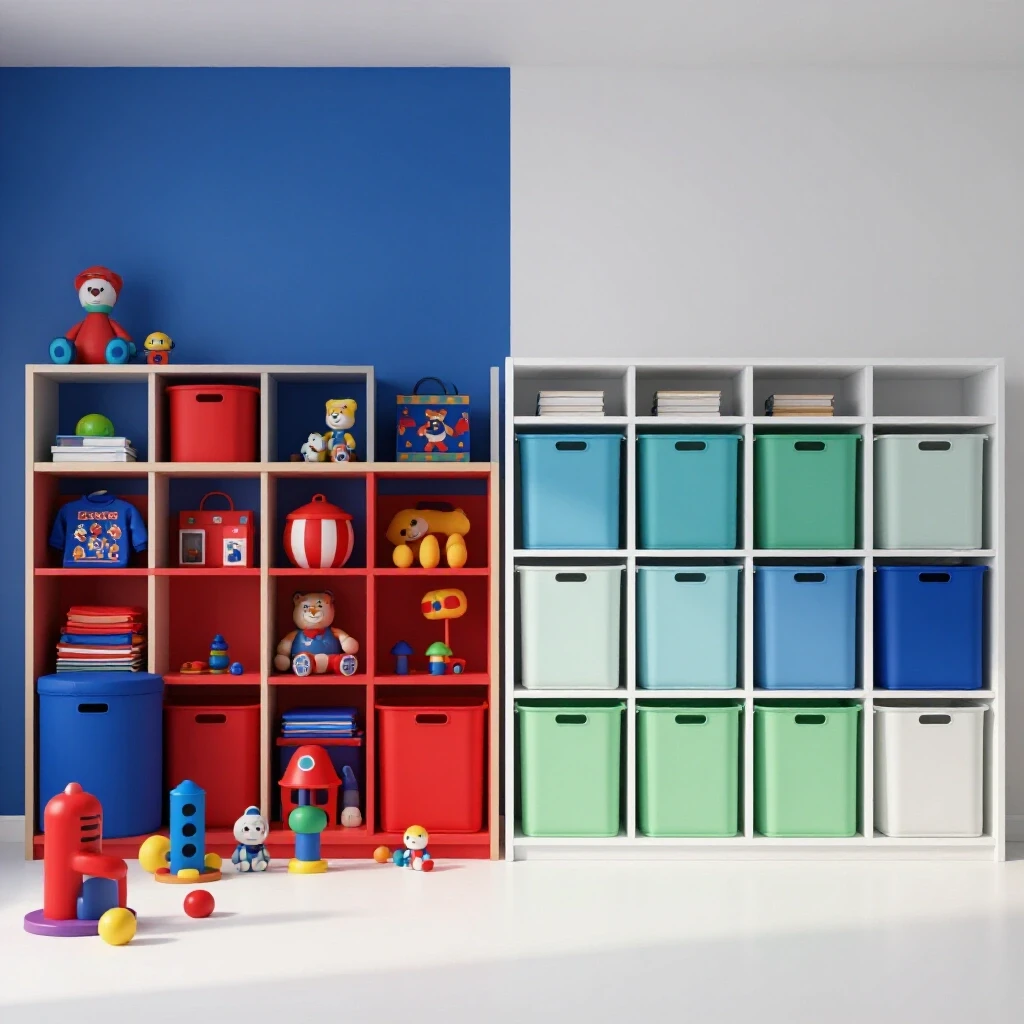
The goal is to make the right choice the easiest choice. When we replaced a heavy, lidded toy chest with three open baskets, the time spent cleaning the living room dropped by 60%. We weren’t just “cleaning”; we were executing a high-speed sorting process that felt effortless.
Comparing Storage Friction by Container Type
The following table illustrates how different storage choices impact the speed of daily maintenance. A higher friction score indicates a system that is more likely to fail over time.
| Container Type | Steps to Store | Steps to Retrieve | Friction Score (1-10) | Best Use Case |
|---|---|---|---|---|
| Open Basket | 1 (Drop) | 1 (Grab) | 2 | Toys, Shoes, Mail |
| Clear Bin (No Lid) | 1 (Drop) | 1 (See & Grab) | 3 | Pantry, Craft Supplies |
| Lidded Tote | 3 (Lift, Drop, Replace) | 3 (Lift, Grab, Replace) | 7 | Seasonal Decor |
| Opaque Drawer | 2 (Open, Drop) | 2 (Open, Grab) | 5 | Clothes, Tools |
| Stacked Bins | 5+ (Unstack, Open…) | 5+ (Unstack, Open…) | 10 | Long-term Archiving |
Why High-Friction Bins Lead to Rapid Clutter Reversion
High-friction storage systems fail because they ignore the reality of human fatigue and decision-making limits. When we are tired after a long workday, our brains prioritize the path of least resistance, leading to items being left on “flat surfaces” rather than put away.
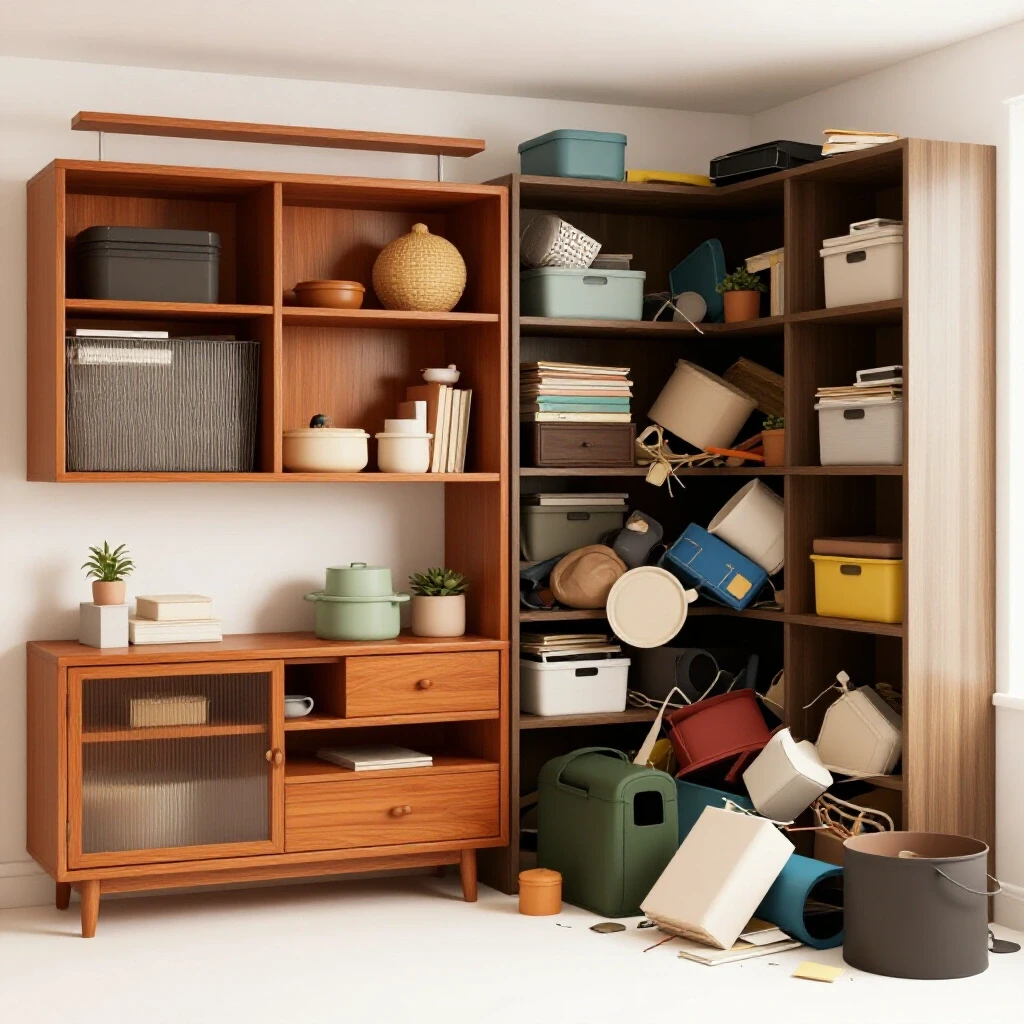
We often think that more storage is the answer, but more storage usually just means more lids and more layers. In our house, we removed the closet doors in the mudroom. It sounds counter-intuitive to show the “mess,” but by removing that one barrier, jackets actually ended up on hooks instead of on the bench. We traded a hidden mess for a visible, functional system.
Rule 2: Implementing Hard Spatial Boundaries
Spatial boundaries are physical limits, like a shelf or a bin, that dictate exactly how much of a specific category can be owned. When the container is full, the system triggers a necessary outflow of items, preventing the slow creep of excess inventory.
In logistics, we call this “fixed-location capacity.” You cannot put more pallets in a rack than there are slots available. In a home, we often treat our shelves as infinite resources, squeezing one more book or one more kitchen gadget into a space that is already at 100% capacity. This leads to “item drift,” where things begin to spill over onto counters and tables.
By setting a rule that a category must fit within its designated bin, we removed the need for constant “decluttering marathons.” If the “Lego bin” is full, we don’t buy a second bin; we sort through the current one and donate the pieces that are no longer used. This creates a natural feedback loop that keeps the home’s volume in check.
The 80% Capacity Principle for Sustainable Order
The 80% capacity principle suggests that a storage space should never be more than 80% full to allow for easy movement and visibility. When a shelf is packed tight, removing one item causes others to fall, increasing the “frustration index” of the space.
- Visibility: You can see what you have without moving other items.
- Access: You can reach in and grab an item with one hand.
- Expansion: It provides a small buffer for new items before a purge is required.
- Stress Reduction: Open space on a shelf provides a visual “rest” for the eyes, reducing the feeling of being overwhelmed.
Managing Inflow and Outflow with a Sorting Log
Maintaining a home requires a balance between what comes in and what goes out. Using a simple log can help families visualize whether they are accumulating or maintaining their space.
| Week | Items In (New Purchases) | Items Out (Donated/Tossed) | Net Change | System Status |
|---|---|---|---|---|
| 1 | 12 | 15 | -3 | Improving |
| 2 | 8 | 8 | 0 | Stable |
| 3 | 20 | 5 | +15 | Warning |
| 4 | 5 | 25 | -20 | Resetting |
Rule 3: Mapping Storage to Behavioral Zones
Zoning involves placing items at the exact point of use to reduce travel time and “item drift.” This aligns the home’s layout with the family’s natural movement patterns throughout the day, ensuring that items are stored where they are actually used.
Spatial ergonomics studies show that we are much more likely to maintain a habit if the tools required are within arm’s reach of the activity. I mapped our home’s “high-traffic zones” and realized our primary storage for school bags was 20 feet away from the door where the kids entered. By moving a simple hook system to the actual entry point, we eliminated the daily pile of backpacks on the kitchen island.
We also looked at “micro-zones” within rooms. For example, all coffee-related items—mugs, beans, spoons, and filters—were moved to a single cabinet directly above the coffee maker. This reduced the steps required to make coffee from 12 down to 3. Over a year, these small logistical wins save hours of time and significant mental energy.
Creating High-Efficiency Zoning Maps
A zoning map is a mental or physical layout of your home that identifies where specific activities happen and ensures all related supplies are stored in that exact location.
- Identify the Activity: For example, “Opening Mail and Paying Bills.”
- Observe the Location: Where does this actually happen? (Usually the kitchen counter).
- Audit the Supplies: Where are the pens, stamps, and shredder? (Often in a distant office).
- Relocate: Move a small “mail kit” to the kitchen drawer.
- Test: Measure if the mail pile stays smaller over seven days.
Reducing Decision Fatigue Through Categorization
Decision fatigue occurs when we have to think too hard about where something goes. By creating clear, logical zones, we remove the “where does this go?” question from the daily routine.
- Zone 1: Immediate Action. Items used every day (keys, wallets, shoes).
- Zone 2: Frequent Use. Items used 2-3 times a week (gym bags, specific cooking tools).
- Zone 3: Occasional Use. Items used once a month (baking supplies, extra linens).
- Zone 4: Archival. Items used once a year (holiday decor, tax records).
Building Systematic Habit Loops for Long-Term Maintenance
A habit loop is a three-part process consisting of a cue, a routine, and a reward. In a home setting, these loops turn maintenance from a chore into an automatic behavior that requires very little willpower.
In our house, we established a “10-minute transition” every evening before the kids go to bed. The cue is the kitchen timer. The routine is a low-friction “sweep” where everyone puts items back into their designated open bins. The reward is a clean environment to wake up to the next morning. Because our storage is low-friction and zoned correctly, this 10-minute block is enough to keep the house stable.
We also use “habit stacking,” a concept from organizational behavior studies. We stack a maintenance task onto an existing habit. While the coffee brews, I empty the dishwasher. While the kids are brushing their teeth, I wipe down the bathroom counter. These micro-habits prevent the “clutter creep” that usually leads to a total system collapse.
Daily Maintenance Timeline by Family Size
The amount of time required to maintain a functional system varies by the number of people in the home. However, with low-friction systems, these times remain manageable.
- 2 Adults: 10-15 minutes per day.
- 2 Adults + 1 Child: 20 minutes per day.
- 2 Adults + 2-3 Children: 30 minutes per day.
- Multi-Generational (5+ people): 45 minutes per day, split among members.
Selecting Low-Maintenance Storage Gear
The right tools are essential for any logistics operation. In a home, “low-maintenance” means gear that is durable, easy to clean, and simple to interact with.
- Clear Modular Bins: These allow for high visibility, reducing the time spent searching for items.
- Heavy-Duty Hooks: Hooks are much lower friction than hangers. We use them for everything from towels to jeans.
- Labeling Systems: Use a simple label maker or chalk markers. Labels aren’t just for you; they are a “map” for other family members who might not know where things go.
- Drawer Dividers: These prevent “junk drawers” by creating fixed boundaries for small items like batteries or pens.
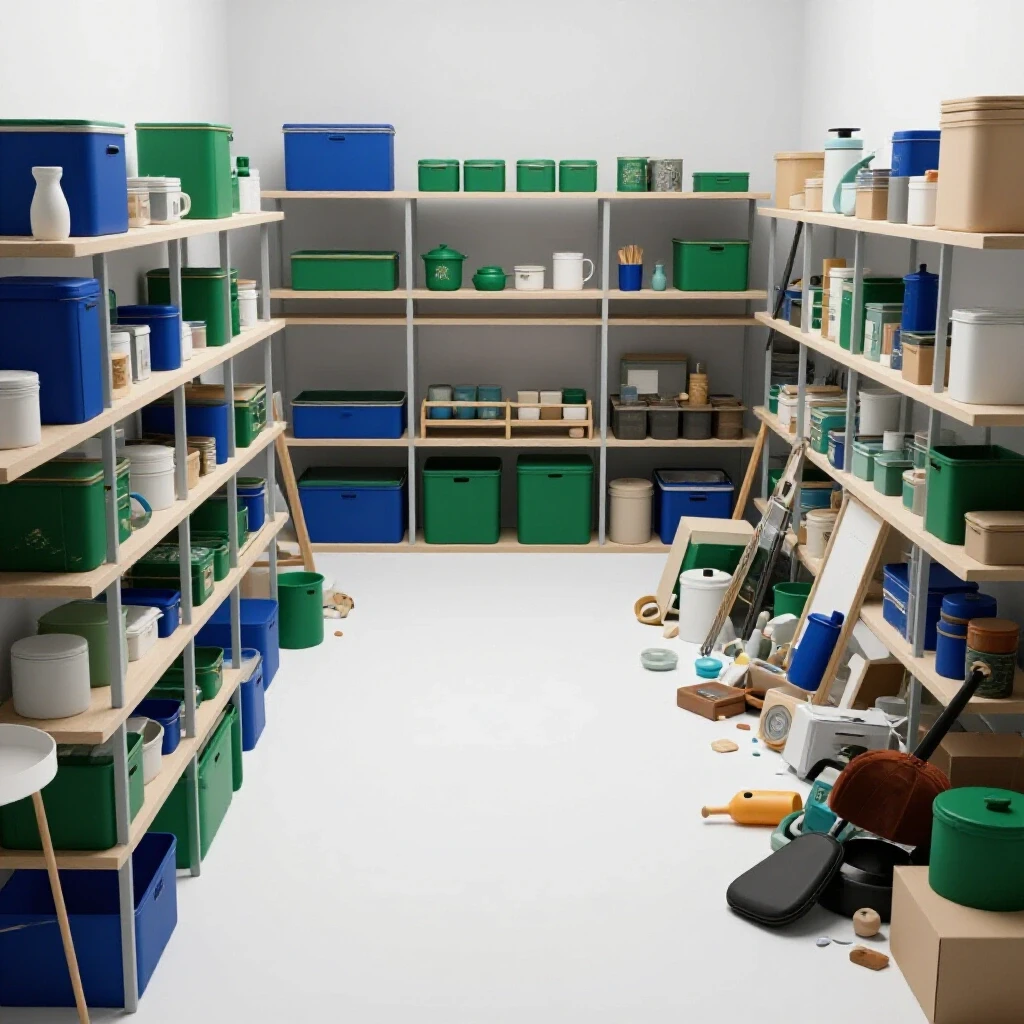
- Digital Inventory Apps: For Zone 4 (archival) storage, we use a simple app to track what is in which box in the garage, so we never have to dig through five totes to find the Christmas lights.
Conclusion: Practical Next Steps for Your Home
The reason many organizing attempts fail is that they are built on a foundation of “perfect” behavior rather than realistic logistics. By focusing on reducing friction, honoring spatial boundaries, and zoning your home according to how you actually live, you can break the cycle of constant resetting.
Start small. Choose one high-traffic area, like the entryway or the kitchen “command center.” Apply the three rules: make it easy to put things away, set a hard limit on how much can stay there, and ensure everything you need for that area is within reach. You will likely find that the mental fatigue of managing that space disappears almost immediately.
Order is not a destination you reach once; it is a flow you manage. When the systems match the speed of your life, the home stops being a source of stress and starts being a place of rest.
FAQ: Sustainable Home Organization
How do I get my kids to follow these rules? Focus on Rule 1: Friction. If a child has to open a lid and a drawer to put a toy away, they won’t do it. Use open floor baskets and hooks at their height. When the system is easier than leaving the item on the floor, they are more likely to participate.
What if I have a very small home with limited storage? Rule 2 (Spatial Boundaries) is even more critical in small spaces. You must treat your square footage like a high-value warehouse. If a new item comes in, an old one must go out. Use vertical space with shelving, but keep the 80% capacity rule to avoid a “cluttered” feeling.
How often should I audit my systems? I recommend a “logistics check” every three months. Ask yourself: “Is this bin overflowing?” or “Are we still leaving mail on this counter?” If a space is reverting to clutter, the friction is likely too high or the zone is wrong. Adjust the system, don’t blame the people.
Do I need to buy expensive containers? No. In fact, many “luxury” containers are high-friction because they have complex latches or are opaque. Cardboard shoe boxes (with the lids removed) or simple plastic bins from a hardware store are often more effective for daily use.
What is the best way to start when I’m overwhelmed? Start with the “Point of Entry.” The mudroom or entryway is where most clutter enters the home. If you can control the inflow at the door using Rule 3 (Zoning), you prevent the rest of the house from becoming a dumping ground.
How do labels help if I already know where things are? Labels are for everyone else. They serve as a visual contract for the family. When a bin is labeled “Batteries,” it’s much harder for someone to justify throwing a random screwdriver in there.
Is it okay to have a “junk drawer”? Yes, but it must have a boundary. One drawer is a system; three drawers is a problem. Use dividers within that drawer so the “junk” is still categorized (e.g., a spot for pens, a spot for tape).
Why does my home look messy even when everything is put away? This is often due to “visual noise.” Even if things are “away,” if they are stored in a variety of mismatched, open containers, it can look busy. Try using consistent colors for your bins to reduce visual processing overload.
How do I handle sentimental items that don’t fit the rules? Sentimental items belong in Zone 4 (Archival). They should not be competing for space in your high-traffic daily zones. Give yourself one “memory box” per family member. When it’s full, you must curate it.
What if my spouse doesn’t want to follow the system? Design the system around their existing “bad” habits. If they always drop their keys on the counter, put a small bowl exactly where they drop them. That is Rule 3 (Zoning) in action. You are aligning the system with their natural movement.
(This article was written by one of our staff writers, Christopher Bennett. Visit our Meet the Team page to learn more about the author and their expertise.)