Family Cleanup Checklist for Kids: Easy Home Organization (Guide)

I once watched my three-year-old attempt to put a large stuffed giraffe into a tiny shoebox. He was determined, pushing and shoving until the box finally split down the side. I stood there, a professional logistics manager with a decade of experience, realizing my own home organization systems were just like that shoebox. They were too small, too rigid, and completely ignored the reality of how people actually move through a room. We often treat our homes like museums where everything has a “perfect” spot, but a lived-in house is more like a busy distribution center. If the workers (your family) find the system too hard to use, they will simply drop the “packages” on the floor and walk away.
The Logistics of Household Spatial Flow
Household spatial logistics involves the movement and storage of physical items within a home environment. It focuses on reducing the energy and time required to find, use, and return objects to their designated places. By treating a home like a small-scale warehouse, families can create systems that prioritize efficiency over visual perfection.
In my professional life, I look for bottlenecks where items get stuck. In my home, the bottleneck was the entryway. We had a beautiful, narrow console table with tiny drawers. It looked great in photos, but it had a high “retrieval friction.” This is a logistical term for how many steps it takes to get something or put it away. If a child has to open a closet, find a specific bin, remove a lid, and then place a toy inside, they won’t do it.
Environmental psychology journals often discuss “affordance,” which is the idea that an object’s design should tell you how to use it. A wide, open basket “affords” tossing a ball inside. A lidded box with a latch “affords” keeping things out, which actually discourages kids from tidying up. We shifted our focus from “hiding” things to “staging” them for easy access and quick return.
Understanding Retrieval Friction in Shared Spaces
Retrieval friction is the measurable resistance encountered when trying to access or store an item. In a family home, high friction leads to “item drift,” where objects stay where they were last used because the effort to return them is too high. Reducing this friction is the key to sustainable decluttering.
I measured the “step count” for my kids to put away their shoes. It took seven steps: walk to the closet, open the door, move a bag, find the shoe rack, slide the shoes in, close the door, and walk back. By placing an open-top cubby directly next to the rug, I reduced it to two steps. The “clutter” disappeared almost instantly.
- High Friction: Lidded bins, stacked containers, items behind other items.
- Low Friction: Open baskets, wall hooks, single-layer storage.
- Zero Friction: Designated “drop zones” for high-frequency items.
Why Aesthetic Systems Often Fail Busy Families
Functional home storage differs from visual organization because it accounts for human behavior rather than just appearance. Aesthetic systems often rely on “micro-sorting,” which requires high cognitive load and time. Functional systems prioritize “macro-sorting,” allowing for faster cleanup and easier maintenance by every family member regardless of their age.
We once tried a system where every LEGO brick was sorted by color. It lasted exactly forty-eight minutes. The cognitive load—the mental effort required to make a decision—was too high for a child after a long day at school. Research in organizational behavior suggests that when a system requires too many decisions, people experience “decision fatigue” and revert to the easiest path, which is usually leaving the mess on the table.
The Impact of Visual Processing Overload
Visual processing overload occurs when the brain is forced to manage too many competing stimuli in a single environment. In a cluttered home, every stray object sends a signal to the brain, leading to increased cortisol levels and mental fatigue. Simple, cohesive storage reduces this noise and creates a calmer atmosphere.
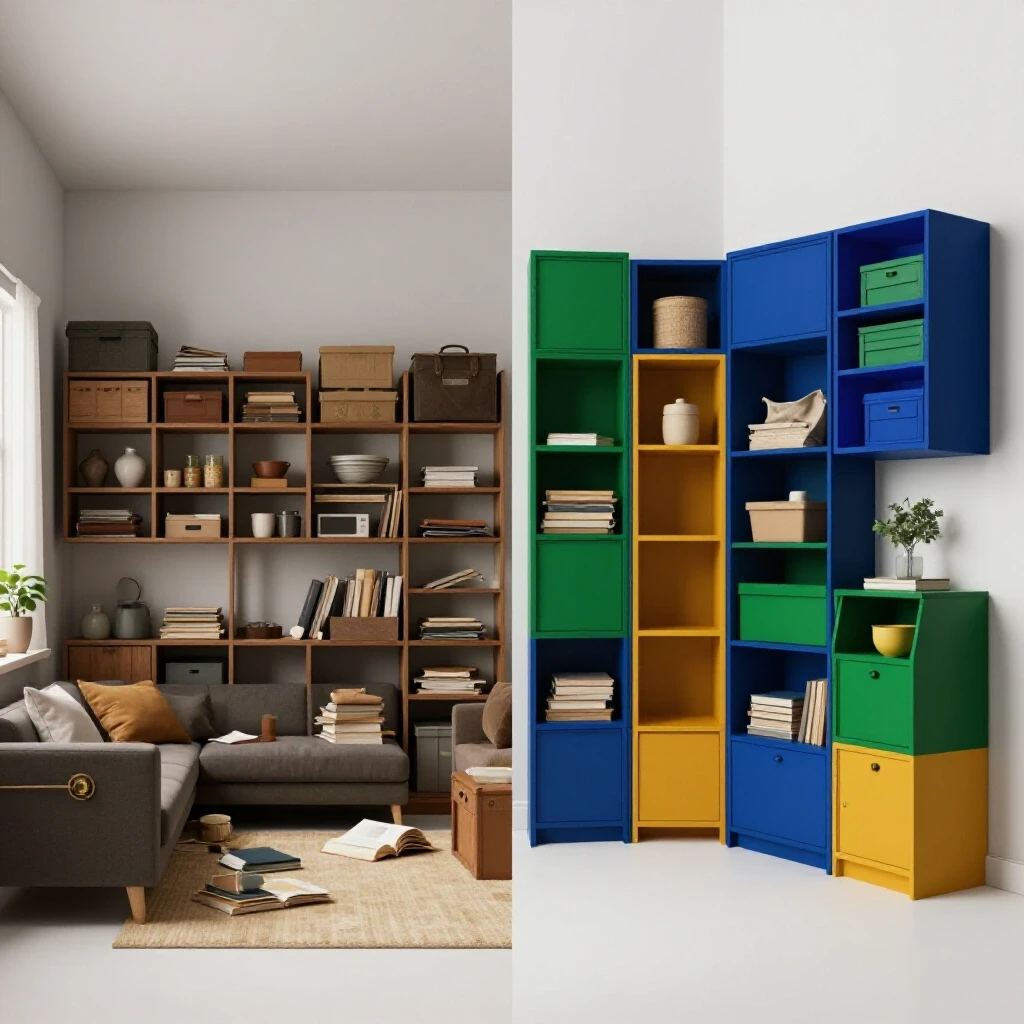
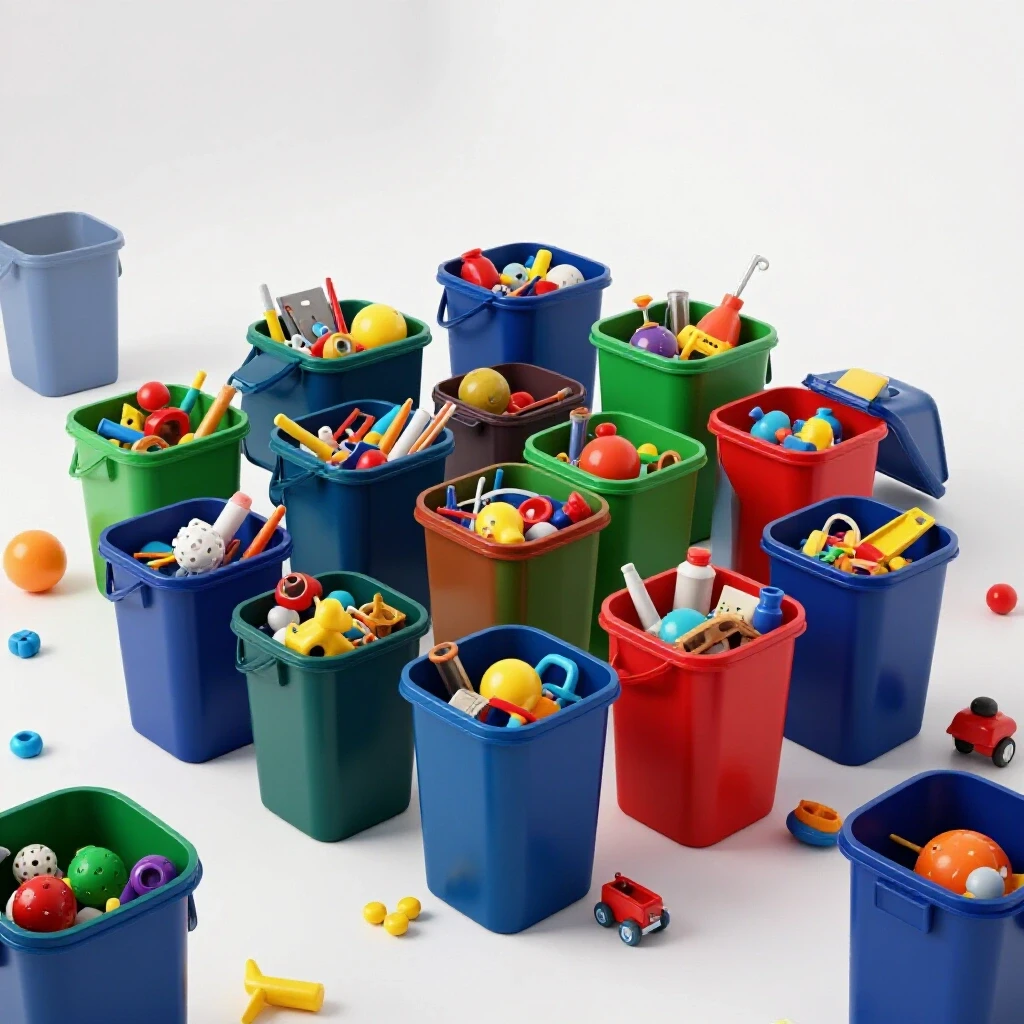
When my living room was filled with mismatched bins and piles, I felt a low-grade hum of anxiety. This isn’t just a feeling; it is a documented psychological response to “visual noise.” By switching to uniform, opaque bins, we reduced the number of visual signals our brains had to process. The room felt “cleaner” even if the bins were full of toys, simply because the visual field was simplified.
| Storage Type | Friction Level | Maintenance Ease | Best Use Case |
|---|---|---|---|
| Open Baskets | Low | High | Daily toys, shoes, blankets |
| Lidded Totes | Medium | Medium | Seasonal clothes, keepsakes |
| Clear Drawers | Medium | High | Craft supplies, office items |
| Stacked Bins | High | Low | Long-term garage storage |
Designing High-Speed Zoning Maps
A zoning map is a strategic layout of the home that assigns specific activities and items to designated areas. This prevents “functional creep,” where items from one category bleed into another space. Effective zoning creates a predictable environment that helps the whole family understand where things belong without constant reminders.
In logistics, we call this “Slotting Optimization.” You place the most frequently used items in the “Golden Zone”—the area between your shoulders and knees. In our house, the kids’ daily gear moved to the lower shelves, while my heavy tools moved to the garage. We mapped the house based on “frequency of use” rather than just “category.”
Creating a High-Frequency Drop Zone
A drop zone is a specific area designed to catch items that enter the home daily, such as bags, mail, and coats. By concentrating these items in one high-capacity, low-friction area, you prevent them from spreading to kitchen counters or dining tables. It serves as a buffer between the outside world and the home.
- Entryway: Hooks at kid-height (approx. 36-42 inches).
- Kitchen: A single tray for “active” paperwork.
- Living Room: One “reset basket” for items that don’t belong there.
The Sorting Framework for Sustainable Decluttering
Sustainable decluttering is the process of removing excess items while building a system that prevents future accumulation. It relies on a logical “inflow and outflow” model to ensure the home’s volume capacity is never exceeded. This framework moves away from “marathon cleaning” and toward consistent, small-scale adjustments that maintain balance.
I used to spend my entire Saturday “cleaning.” Now, I use a sorting log. We track what comes into the house. If a new toy comes in, an old one must go out. This is “Linear Flow Control.” We maintain a 1:1 ratio to ensure our storage volume stays at roughly 80% capacity. A 100% full shelf is a broken shelf because you can’t easily put things back.
The Three-Pile Sorting Method
The three-pile sorting method is a high-speed logistical tool used to categorize items during a decluttering sprint. By limiting choices to three distinct categories—Keep, Relocate, or Remove—you reduce decision fatigue and increase sorting speed. This method allows families to process large volumes of clutter in short, timed intervals.
- Keep: Items used in the last 6 months that have a designated “home.”
- Relocate: Items that belong in a different room or zone.
- Remove: Items for donation, recycling, or disposal.
Reducing Household Clutter Through Habit Loops
A habit loop is a psychological pattern consisting of a cue, a routine, and a reward. In the context of home maintenance, building these loops ensures that tidying becomes an automatic behavior rather than a chore. Consistent, small actions performed daily prevent the accumulation of clutter and reduce the need for deep cleaning.
My family uses a “15-Minute Reset” every evening before dinner. The cue is the oven timer. The routine is moving through the “Zoning Map” to return items to their spots. The reward is a clear table for our meal. This isn’t about deep cleaning; it’s about “resetting the stage” for the next day.
Establishing the Daily Reset Routine
A daily reset routine is a brief, timed period where the family works together to return the home to a baseline level of order. It focuses on high-traffic areas and common surfaces rather than deep organizing. This practice reduces the mental weight of a “to-do” list and ensures the home remains functional.
- Morning (5 mins): Clear the dishwasher and make beds.
- Afternoon (5 mins): Clear the “Drop Zone” after school/work.
- Evening (15 mins): Clear all flat surfaces (counters, tables).
| Task Category | Frequency | Time Estimate | Primary Responsible |
|---|---|---|---|
| Surface Clear | Daily | 10 Minutes | Everyone |
| Zone Reset | Weekly | 20 Minutes | Parents |
| Deep Sort | Quarterly | 60 Minutes | Family |
Selecting Functional Home Storage Units
Functional home storage units are selected based on their ability to facilitate quick item retrieval and easy replacement. They should be durable, appropriately sized for the space, and accessible to all users. Choosing the right gear involves evaluating the physical constraints of the room and the specific needs of the items being stored.
I stopped buying “cute” wicker baskets. They snagged clothes and were hard to clean. We switched to heavy-duty, stackable plastic bins for the garage and soft, washable fabric bins for the playroom. We measured our shelf depth (usually 12 or 16 inches) and bought bins that used 90% of that depth. This maximized our “Space Utilization Percentage.”
The Importance of Labeling for All Ages
Labeling is a communication system that identifies the contents of a storage unit, reducing the mental effort needed to find or store items. For families, labels can include text, icons, or color-coding to ensure everyone can follow the system. Clear labels eliminate the “Where does this go?” question that often stalls cleanup.
- Text Labels: Best for adults and older children.
- Icon/Picture Labels: Essential for pre-readers to encourage independence.
- Color-Coding: Useful for assigning specific bins to specific family members.
- Smart Labels: QR codes that link to a digital inventory for long-term storage bins.
Overcoming the “Clutter Boomerang” Effect
The “clutter boomerang” describes the phenomenon where a space is organized but returns to a messy state within days. This usually happens when the system is too complex or doesn’t align with the family’s natural habits. Overcoming this requires analyzing why the system failed and adjusting the “friction” to make tidying easier.
In our house, the “boomerang” was the “junk drawer.” It would be clean on Monday and overflowing by Friday. I realized the drawer was a “catch-all” because we didn’t have a specific spot for batteries or stamps. Once we created “Micro-Zones” within the drawer using small dividers, the boomerang stopped. Every item finally had a “fixed address.”
Analyzing System Failure Points
Analyzing system failure points involves identifying exactly where a storage routine breaks down. By observing where clutter accumulates, you can determine if the problem is a lack of space, too much friction, or a behavioral mismatch. Fixing the root cause ensures the organization system lasts longer than a few days.
- Observation: Where is the pile forming?
- Question: Is the bin too far away?
- Action: Move the storage to the point of use.
- Metric: Does the pile reappear in 48 hours?
Practical Metrics for a Tidy Home
Practical metrics are measurable benchmarks used to evaluate the efficiency and sustainability of a home organization system. By tracking data like sorting time or item density, families can make objective decisions about their space. These metrics move the focus from “feelings” about clutter to “facts” about spatial management.
- The 3-Step Rule: Any daily-use item should be retrievable in 3 steps or fewer.
- 80% Capacity Rule: Never fill a shelf or bin more than 80% to allow for easy movement.
- The 1-Minute Rule: If a task takes less than a minute (like hanging a coat), do it immediately.
- Sorting Speed: A family of four should be able to “reset” a living room in under 10 minutes.
Common Mistakes in Family Storage Systems
Common mistakes in family storage systems often stem from over-complicating the process or ignoring the physical limitations of the users. These errors lead to frustration and a quick return to a cluttered environment. Recognizing these pitfalls allows for the creation of more resilient and low-maintenance organization habits.
One of my biggest mistakes was buying a “system” before I had a “process.” I bought twenty bins without knowing what was going in them. I ended up with “empty bin syndrome,” where the bins themselves became clutter. Always declutter first, then measure, then buy.
- Mistake 1: Buying containers before sorting.
- Mistake 2: Using lids on daily-use toy bins.
- Mistake 3: Placing items too high for children to reach.
- Mistake 4: Trying to organize “clutter” (items you don’t actually need).
Next Steps for a Low-Maintenance Home
Maintaining a functional home is an ongoing logistical process rather than a one-time event. It requires regular “audits” of your systems and a willingness to adjust when life changes. By focusing on low-friction habits and simple storage, you can create a space that supports your family’s lifestyle instead of adding to your stress.
Start with one “Zone.” Don’t try to fix the whole house in a weekend. Pick the area that causes the most “mental noise”—usually the kitchen counter or the entryway. Apply the low-friction principles, set up a 5-minute daily reset, and watch how that one small change ripples through the rest of your day.
Frequently Asked Questions
How do I get my family to actually use the bins I bought? The key is reducing “retrieval friction.” If a bin has a lid or is tucked behind other items, it won’t be used. Remove the lids and place the bins in the exact spot where the clutter usually piles up. If they are already dropping toys in a specific corner, put an open basket in that corner.
What is the best way to handle “sentimental” clutter? Sentimental items should be moved out of “high-value” daily real estate. Use a “Memory Box” system where each family member has one large, lidded tote in a closet or attic. If the box gets full, you must choose what to keep to make room for new memories. This creates a physical limit on sentimental volume.
How often should we be decluttering? A “maintenance sort” should happen seasonally (every 3 months). This aligns with changes in clothing and activities. However, a “daily reset” is the most important habit for preventing the need for a massive, exhausting decluttering marathon later on.
What if my house doesn’t have enough built-in storage? Focus on “Vertical Space Utilization.” Use tall shelving units or over-the-door organizers to move items off the floor. In logistics, we call this “increasing the footprint efficiency.” Always use the full height of a closet or wall before taking up more floor space.
Is it better to organize by person or by category? For shared items (like tools or games), organize by category. For personal items (like shoes or school bags), organize by person. This creates “ownership” and makes it clear who is responsible for resetting a specific “Zone” at the end of the day.
How do I stop paper clutter from taking over the kitchen? Establish a “One-Touch Rule” for mail and school papers. As soon as a paper enters the house, it is either recycled, filed in a single “Action Tray,” or handled immediately. Never let paper sit in a “to-be-sorted” pile, as these piles grow exponentially.
Why does my house look messy even after I clean? This is often due to “Visual Noise.” Even if things are “away,” having too many different colors, labels, and open shelves can make a room feel chaotic. Try using uniform containers and clearing off “flat surfaces” like counters and tables to give your eyes a place to rest.
What is the “80% Rule” in home organization? In logistics, a warehouse is considered “full” at 80% capacity. This is because you need the remaining 20% “buffer space” to move items around and put things back easily. If your shelves are 100% full, the friction of putting an item back becomes too high, and clutter starts to build elsewhere.
How can I make tidying up feel less like a chore? Link the “routine” to something enjoyable. We listen to a specific “cleanup playlist” that lasts exactly 10 minutes. When the music stops, we stop. This turns a vague, never-ending task into a timed “sprint” with a clear beginning and end.
What is the most durable type of storage for a family home? Avoid fragile materials like thin plastic or wicker. Look for “Industrial Grade” polypropylene bins or heavy-duty fabric cubes with reinforced bases. These can handle the “impact” of daily use by children and are easy to wipe down or wash when they get dirty.
(This article was written by one of our staff writers, Christopher Bennett. Visit our Meet the Team page to learn more about the author and their expertise.)