Best Way to Start Decluttering: Begin With the Floor (Step-by-Step)

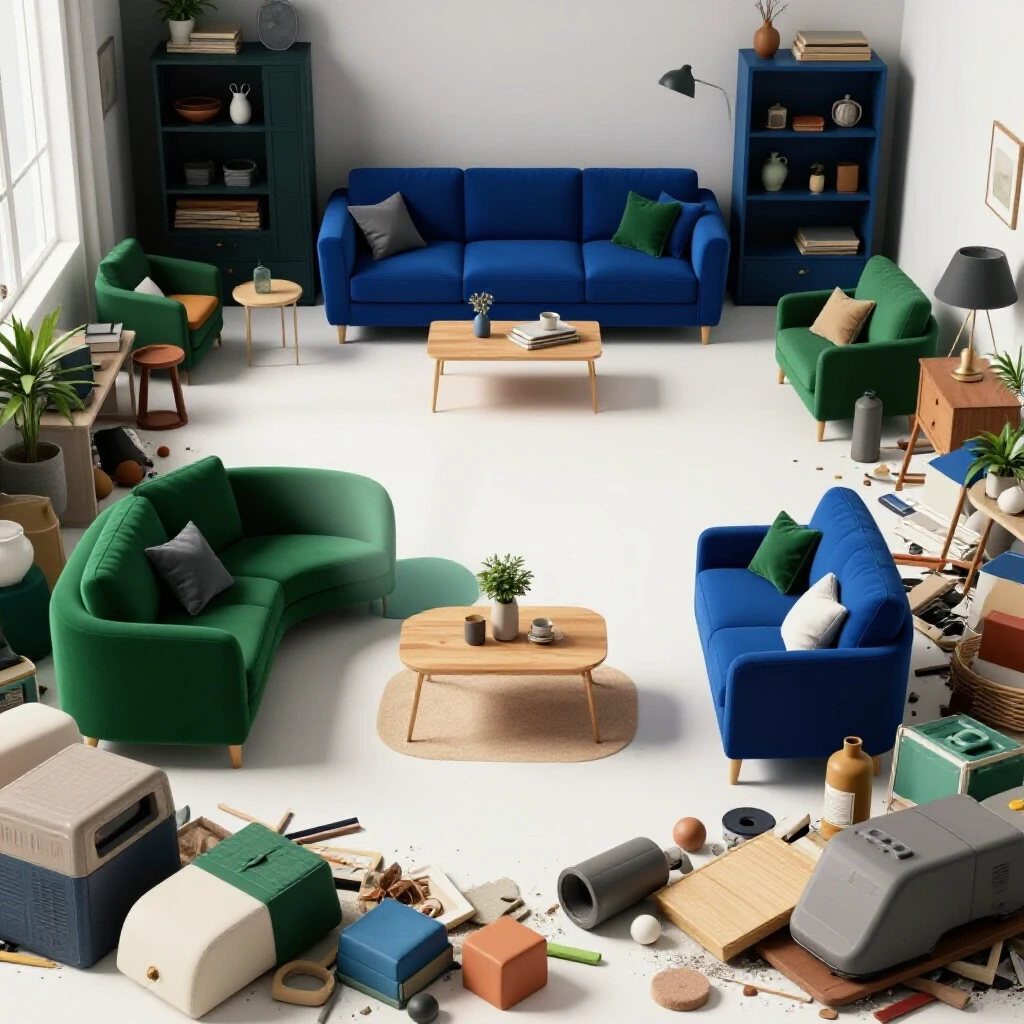
Why did the parent cross the living room? They didn’t; they got lost in the pile of laundry and stray building blocks halfway through. If you have ever felt like a guest in your own home because the carpet has been replaced by a layer of “stuff,” you are not alone. In my eleven years managing complex supply chains and logistics, I have learned that the most efficient way to fix a bottleneck is to clear the primary path of travel first.
In our house, the floor is that primary path. When the ground is covered, every other task—from putting away groceries to folding laundry—becomes twice as hard because you are physically navigating an obstacle course. This creates a high-friction environment where even simple chores feel exhausting. By focusing on clearing the lowest horizontal surfaces first, we can quickly restore the flow of the room and create the physical space needed to tackle more complex storage problems.
Why Clearing the Ground Level Reclaims Immediate Control
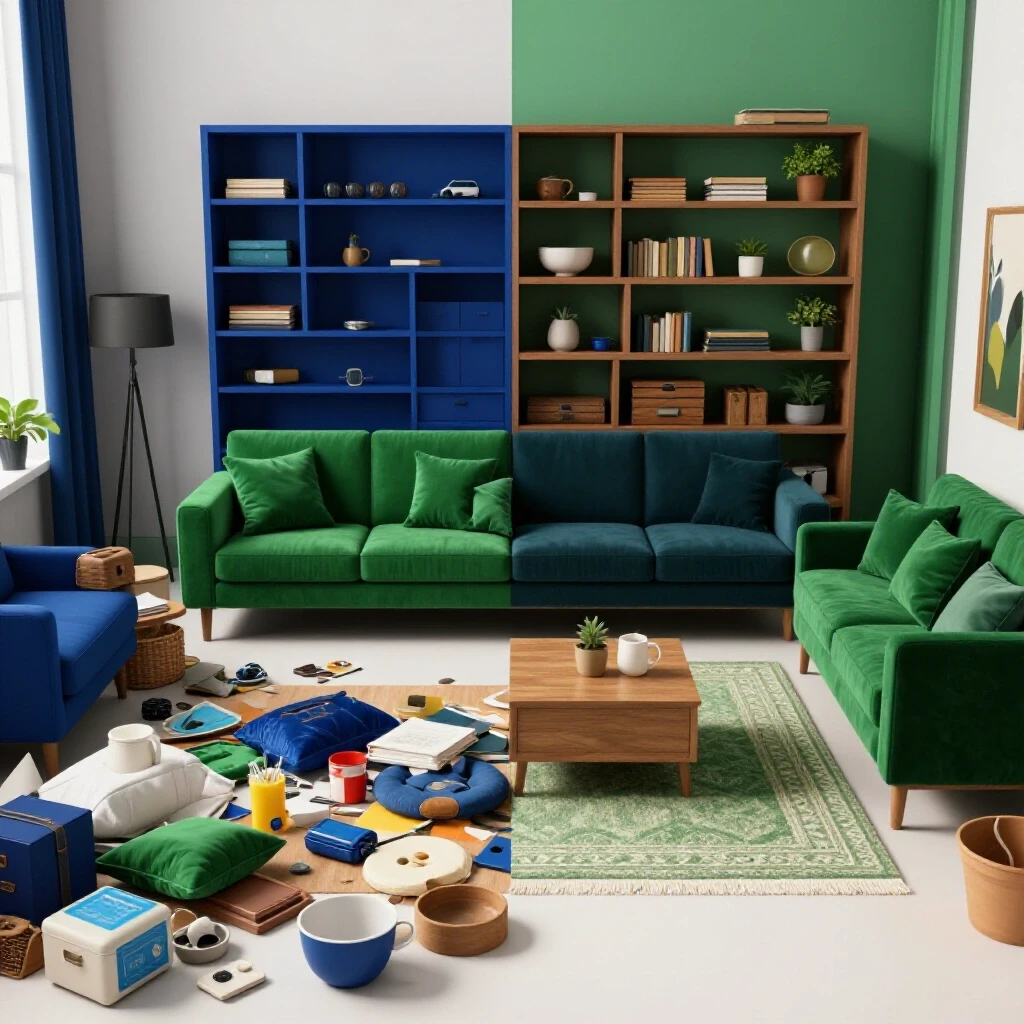
Focusing on the lowest horizontal surfaces allows for immediate movement recovery and reduces visual noise, which acts as a catalyst for deeper organization. When the floor is clear, the brain stops registering the environment as a “hazard zone,” which lowers cortisol levels and provides the mental clarity needed to make better sorting decisions.
In logistics, we call this “clearing the aisles.” If a warehouse floor is cluttered, the forklifts can’t move, and the entire system breaks down. Your home works the same way. When I first started applying these principles at home, my living room was a graveyard of half-finished projects and toys. I realized that by focusing on the floor first, I wasn’t just cleaning; I was restoring the “flow rate” of our daily lives.
Environmental psychology research suggests that visual clutter competes for our attention. When your peripheral vision is constantly hitting objects on the floor, your brain is working overtime to process those items. Clearing the ground provides an immediate “visual win.” This win builds the momentum necessary to move on to shelves, drawers, and closets without feeling defeated before you even begin.
Analyzing Spatial Capacity and Retrieval Friction
Spatial capacity refers to the total volume of items a room can hold without losing its function, while retrieval friction is the effort required to get an item out or put it away. When items migrate to the floor, it is a clear signal that your current storage solutions have reached their capacity or have too much friction for daily use.
I once tracked how long it took my kids to put away their shoes. We had a beautiful wooden cabinet with doors and individual cubbies. It looked great, but the “retrieval friction” was too high. The kids had to open a door, find their slot, and push the shoes in. As a result, the shoes always ended up on the floor. We replaced the cabinet with a low, open-top bin. The “sorting speed” increased instantly because the friction was removed.
Understanding the relationship between where an item lives and how hard it is to put away is the key to sustainable decluttering. If a system requires more than two steps to return an item to its home, that item will eventually end up on a flat surface—usually the floor.
Table 1: Storage Friction Index by Bin Type
| Storage Type | Steps to Store | Friction Level | Sustainability Score |
|---|---|---|---|
| Lidded Box on High Shelf | 5+ Steps | Very High | Low |
| Drawer with Dividers | 3 Steps | Medium | Medium |
| Open-Top Floor Bin | 1 Step | Very Low | High |
| Wall-Mounted Hooks | 1 Step | Very Low | High |
Why High-Friction Bins Lead to Rapid Clutter Reversion
High-friction storage systems are those that require significant physical or mental effort to use, such as heavy lids, complex labeling, or stacking containers. When these systems are too difficult for the youngest or busiest family member to follow, the home quickly reverts to a cluttered state within days of a major cleanup.
In my professional experience, the most durable systems are the simplest ones. We often make the mistake of buying “pretty” containers that actually make our lives harder. If you have to move three boxes to get to the one you need, you are less likely to put it back correctly. This is why I advocate for “one-motion” storage for high-frequency items.
When we redesigned our mudroom, I measured the “sorting time-box.” I found that if it took more than ten seconds to put away a coat and bag, the items stayed on the floor. By switching to heavy-duty wall hooks (one motion) instead of hangers in a closet (three motions), we reduced floor clutter by nearly 80% over a month.
The Sorting Framework: Rapid Ground-Level Clearance
A sorting framework is a logical sequence used to categorize and move items from a disorganized state to their proper zones. By focusing on the floor first, you create a staging area that allows you to sort items by their “destination zone” rather than their “item type,” which speeds up the process.
When I tackle a room, I use a three-zone map. Zone A is for items that live in that specific room. Zone B is for items that belong elsewhere in the house. Zone C is for items leaving the house (trash, recycling, or donation). This prevents the “shuffling” effect, where you move a pile from the floor to the sofa just to clear the walking path.
- Step 1: The Perimeter Sweep. Move along the walls and clear everything touching the floor that doesn’t belong there.
- Step 2: The Center Clearing. Move toward the middle of the room, creating a clear “path of travel” first.
- Step 3: Categorization. Group floor items into “Like with Like” piles before moving them to their permanent storage solutions.
Custom Zoning Maps for Busy Households
Zoning maps are visual or conceptual layouts that assign specific functions to different areas of a room to prevent “item creep.” By defining where certain activities happen, you can place the necessary storage solutions exactly where the clutter naturally tends to accumulate on the floor.
In our home, we noticed a “clutter magnet” near the back door. Bags, mail, and shoes were constantly piling up. This was a “logistics bottleneck.” We created a “Transition Zone” with dedicated floor-level baskets for each family member. This didn’t just hide the clutter; it gave it a logical home that aligned with our natural behavior of dropping things as soon as we walked inside.
Table 2: Daily Maintenance Timelines by Family Size
| Family Size | Floor Clearing (Daily) | Zone Reset (Weekly) | Monthly Audit |
|---|---|---|---|
| 2 Adults | 5 Minutes | 15 Minutes | 30 Minutes |
| 2 Adults + 1 Child | 10 Minutes | 30 Minutes | 60 Minutes |
| 2 Adults + 3+ Children | 20 Minutes | 45 Minutes | 90 Minutes |
Reducing Household Clutter Through Sensory Design
Sensory design involves organizing a space to reduce visual and auditory “noise,” which helps lower the cognitive load on the inhabitants. When floors are clear, the visual weight of the room drops significantly, making the space feel larger and more functional even if the shelves are still full.
Occupational therapy studies often discuss “visual processing overload.” When a parent walks into a room where the floor is covered, their brain has to identify every single object to avoid stepping on it. This leads to “decision fatigue.” By clearing the floor first, you remove the most immediate source of sensory overwhelm, which makes the rest of the decluttering journey feel manageable rather than impossible.
Selecting Low-Maintenance Storage Gear for Families
Low-maintenance storage gear includes durable, easy-to-access containers that do not require perfect alignment or complex lid-latching to function. For families, the best storage solutions are those that can survive heavy use and allow for “toss-in” tidying rather than meticulous arrangement.
When choosing gear, look for “item density.” How many items can this bin hold while still remaining easy to carry? In our garage, we use heavy-duty modular units with open-front bins. This allows us to see the inventory without pulling the bin off the shelf. For indoor use, I recommend soft-sided baskets for toys and rigid, stackable bins for seasonal items.
- Open-Top Baskets: Best for daily-use items like toys, shoes, and blankets.
- Clear Plastic Tubs: Ideal for long-term storage where visibility is key.
- Wall-Mounted Tracks: Excellent for keeping large items (bikes, brooms) off the floor.
- Labeling Systems: Use simple text or icons that every family member understands.
Building Systematic Habit Loops for Floor Maintenance
A habit loop is a three-part process consisting of a cue, a routine, and a reward that helps automate daily tasks. To maintain clear floors, you must establish a “reset routine” that triggers at the same time every day, ensuring that clutter does not have the chance to accumulate.
Our family uses the “Post-Dinner Reset.” The cue is finishing the dishes. The routine is a 10-minute “floor sweep” where everyone grabs five items that don’t belong on the ground and puts them away. The reward is a clean, relaxing space to spend the evening. This simple system prevents the “reversion effect” where a home becomes messy again within 48 hours of a deep clean.
- The “One-Touch” Rule: If you pick something up, put it in its final home, not just another temporary spot.
- The “Path-of-Travel” Check: Never leave a room empty-handed if there is something on the floor that belongs where you are going.
- Weekly Capacity Audits: If a floor bin is overflowing, it’s time to remove items, not buy a bigger bin.
Actionable Metrics for Sustainable Decluttering
To track progress, use measurable data points rather than subjective feelings of “neatness.” By monitoring things like sorting time and item density, you can identify which areas of your home are succeeding and which need a system redesign.
In my logistics work, we use “Key Performance Indicators” (KPIs). At home, our primary KPI is the “Daily Cleanup Duration.” If it takes more than 15 minutes to clear the common area floors, our system has failed, and we need to reduce the total volume of items in that room.
- Standard Item Density: Aim for bins to be no more than 80% full to allow for easy retrieval.
- Sorting Time-Box: Set a timer for 15 minutes; whatever you can’t clear from the floor in that time indicates a need for better zoning.
- Retrieval Step Count: Aim for 1-2 steps for daily items and 3-5 steps for occasional items.
Conclusion: The Path to a Functional Home
Maintaining a tidy home isn’t about achieving a magazine-perfect look; it’s about reducing the friction of daily life. By consistently starting your efforts at the ground level, you address the most significant logistical bottleneck in your home. This approach provides immediate physical relief, clears the way for more detailed organization, and builds the momentum needed to sustain a functional living space. Remember, the goal is a system that works for your family’s real-life habits, not one that requires you to change who you are.
FAQ: Common Questions on Ground-Level Organization
Why is the floor more important than surfaces like countertops? The floor is the foundation of movement. While a cluttered counter is annoying, a cluttered floor stops the flow of the entire house. Clearing the floor restores the “aisles” of your home, making every other task easier to complete.
How do I get my kids to stop leaving things on the ground? Reduce the friction. If they have to open a closet and use a hanger, the coat will stay on the floor. If there is a sturdy hook at their eye level, they are much more likely to use it. Make the right choice the easiest choice.
What if I have too much stuff to fit in my current bins? This is a “spatial capacity” issue. You have two choices: reduce the volume of items (declutter) or increase the storage efficiency (better shelving). Usually, a combination of both is required, but start by removing items you haven’t used in six months.
Is it better to organize room-by-room or by item type? When starting with the floor, room-by-room is more effective. It provides a “completed zone” that offers immediate psychological and physical benefits, which helps you stay motivated for the next room.
How do I handle “sentimental” items found on the floor? Move them to a “Decision Box.” Don’t let sentimental attachment slow down your floor-clearing momentum. Put them in a box and set a specific time later in the week to process them when you aren’t in the middle of a logistics sprint.
What are the best types of bins for floor-level storage? Look for open-top, sturdy containers with handles. Avoid lids for daily-use items. Baskets made of natural fibers or heavy-duty plastic work well because they can withstand being moved around frequently.
How often should I do a “floor reset”? Ideally, once a day. A quick 10-minute sweep before bed or after dinner prevents the “compounding effect” where a few items turn into a mountain of clutter over a week.
What is the “two-minute rule” in home logistics? If an item on the floor can be put in its proper home in less than two minutes, do it immediately. This prevents small tasks from piling up into a major project.
Why do my storage systems keep failing? Most systems fail because they are too complex. If a system requires you to be “perfectly organized” to maintain it, it isn’t sustainable for a busy family. Simplify the steps required to put things away.
Can I use technology to help with home organization? Yes. Use digital inventory apps to track what is in lidded bins in the garage or attic. This reduces the need to “dig” through boxes, which often leads to more floor clutter during the search process.
(This article was written by one of our staff writers, Christopher Bennett. Visit our Meet the Team page to learn more about the author and their expertise.)