How to Do a Morning Reset for Home Organization (Step-by-Step Guide)

The first five minutes of your day often dictate the next fourteen hours. When you wake up and navigate a home that feels like an obstacle course, your brain begins the day in a state of “high-alert” processing. My background in operations and logistics taught me that every physical bottleneck in a warehouse leads to a delay in shipping. In a family home, those same bottlenecks lead to mental fatigue and a sense of losing control over your environment.
I have spent eleven years applying the same principles used in massive distribution centers to my own chaotic household. My family and I have navigated the cycle of cleaning on Saturday only to find the living room buried by Tuesday. What we discovered is that most home organization systems fail because they are designed for how we wish we lived, not how we actually move through our spaces. By evaluating how our homes transition from the evening’s mess to the morning’s calm, we can build systems that actually stick.
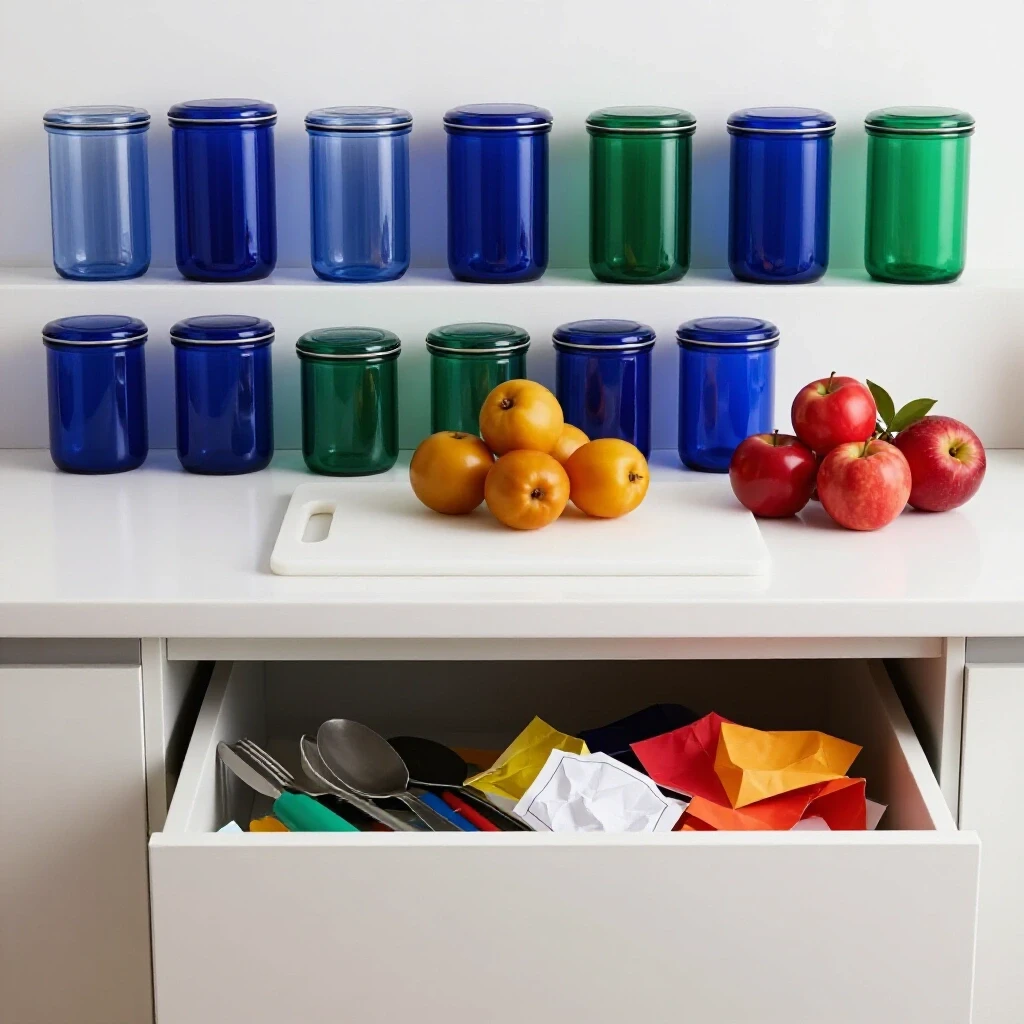
The Science of Spatial Logistics and Visual Overload
Spatial logistics is the study of how people and objects move through a defined area to achieve maximum efficiency. In a home, this means analyzing the path of a backpack from the front door to the bedroom or the journey of a coffee mug from the cupboard to the sink. Understanding these paths helps us identify why clutter builds up in specific “hot zones.”
When your surfaces are covered in miscellaneous items, your brain suffers from visual processing overload. Every object you see represents a “micro-task” or a decision that needs to be made. “Where does this go?” “Do I need to fix this?” “Is this trash?” Environmental psychology studies show that a high density of objects in a living space can increase cortisol levels, especially in women. This is why a cluttered home feels physically exhausting. It is not just about the mess; it is about the constant demand on your cognitive resources.
Understanding Retrieval Friction and System Failure
Retrieval friction is the amount of physical and mental effort required to put an item away or take it out. If you have to move three other boxes to get to a specific bin, that is high friction. Most families fail at sustainable decluttering because their storage solutions for families require too many steps.
In my home, we used to store the kids’ shoes in a beautiful, lidded wooden chest in the hallway. It looked great in photos. However, the shoes always ended up in a pile on top of the chest or scattered across the floor. The friction was too high: they had to lift a heavy lid, place the shoes inside, and close it. When we switched to open-front cubbies, the shoes stayed put. We reduced the retrieval steps from three to one.
| Storage Type | Retrieval Steps | Friction Level | Success Rate |
|---|---|---|---|
| Open Bins/Hooks | 1 Step (Drop/Hang) | Very Low | 95% |
| Clear Drawers | 2 Steps (Pull, Drop) | Low | 80% |
| Lidded Bins | 3 Steps (Lift, Drop, Close) | Medium | 50% |
| Stacked Totes | 5+ Steps (Move, Lift, Drop…) | Very High | 15% |
Designing Simple Daily Restoration Systems
A daily restoration system is a set of low-maintenance habits and tools that allow a home to return to a functional state in under fifteen minutes. Instead of aiming for a “perfect” home, the goal is to reduce the time it takes to clear surfaces so that the next morning begins with a clean slate.
To build a functional home storage plan, you must first conduct a spatial audit. This involves walking through your home and noting where items naturally pile up. These piles are not signs of laziness; they are data points. They tell you exactly where a storage solution is missing. If mail always lands on the kitchen island, that is where your “inflow control” station needs to be.
Establishing Visual Anchors for a Calmer Transition
Visual anchors are specific, consistently tidy areas that provide a sense of order even when the rest of the room is busy. A clear entryway table or a clean kitchen counter acts as a psychological reset point. When you see these clear spaces first thing in the morning, it signals to your brain that the environment is under control.
Small-scale DIY interventions can create these anchors. For example, we used a simple wooden tray on our entry console. All keys, wallets, and “pocket clutter” must land in that tray. By containing the chaos to a six-inch boundary, the rest of the surface stays clear. This reduces the mental fatigue caused by seeing items scattered across a large area.
- Identify your “First Sight” zones: Areas you see immediately upon waking or entering a room.
- Apply the “One-Touch” rule: Aim to put items in their final home the first time you handle them.
- Use tray containment: Use low-profile trays to group related items on flat surfaces.
High-Speed Zoning and Sorting Frameworks
Zoning is the practice of grouping items based on their frequency of use and the location where they are most needed. In industrial logistics, high-velocity items are kept at eye level and near the shipping dock. In your home, your high-velocity items—like daily shoes, school bags, and coffee supplies—should be in the most accessible zones.
A sustainable decluttering journey starts with a sorting framework that avoids “decision paralysis.” When we organize our family’s “command center,” we used a sorting log to track how often we actually touched items. We realized that 40% of the paperwork we were “organizing” was actually trash or items that could be digitized.
How to Create a Custom Household Zoning Map
A zoning map is a mental or physical layout of your home that dictates where items “live” based on their usage frequency. Zone 1 is for daily use, Zone 2 is for weekly use, and Zone 3 is for seasonal or long-term storage. Most clutter happens when Zone 3 items (like holiday decor or old tax returns) migrate into Zone 1 spaces.
- Zone 1 (Daily): Countertops, entryway hooks, and top drawers. These must be kept at 50% capacity to allow for easy movement.
- Zone 2 (Weekly): Lower cabinets, closet shelves, and laundry room storage.
- Zone 3 (Monthly/Seasonal): High shelves, garage, or under-bed storage.
- Zone 4 (Archive): Attic or off-site storage for items kept for sentimental or legal reasons.
Reducing Household Clutter Through Behavior Alignment
Behavior alignment is the process of designing storage systems that match the natural habits of your family members. If your spouse always drops their coat on the back of a chair, putting a coat rack behind that chair is a behavior-aligned solution. Fighting natural habits with “better” systems usually leads to frustration and system abandonment.
In our home, we struggled with “toy creep.” Toys would start in the playroom and end up in every corner of the house. We implemented “transition bins”—small, portable baskets in each room. At the end of the day, any toy not in its home goes into the basket. This makes the evening cleanup a five-minute task rather than a thirty-minute chore.
Why Low-Maintenance Storage Gear Prevents Reversion
The best home organization systems use gear that requires zero thought to operate. This is why I often recommend open bins over complex filing systems. For a busy parent, a filing cabinet is a “black hole” where papers go to be forgotten. A simple tiered tray on a desk is much more likely to be used because it is visible and easy to access.
- Transparency: Use clear bins so you can see the contents without opening them.
- Accessibility: Choose bins without lids for items used daily.
- Durability: Select heavy-duty materials for high-traffic areas like the mudroom.
- Labeling: Use large, clear text or icons (for children) so everyone knows exactly where things go.
| Metric | Target Value | Why It Matters |
|---|---|---|
| Surface Utilization | < 30% | Keeps rooms feeling open and reduces visual noise. |
| Sorting Time-Box | 10 Minutes | Prevents burnout and keeps the habit sustainable. |
| Retrieval Step Count | < 3 Steps | Ensures items actually get put away by all family members. |
| Item Density | 70% Capacity | Leaves “breathing room” in bins for easy searching. |
Maintaining Order Over Months: The Feedback Loop
A feedback loop in logistics is a system that checks for errors and makes adjustments. In a home, your feedback loop is your morning assessment. If you wake up and find that a specific area is consistently messy, the system in that area has failed. It is not a personal failure; it is a mechanical one.
We found that our “drop zone” by the garage door failed every winter. Why? Because winter coats are bulkier than summer jackets, and the hooks were too close together. We adjusted the spacing by four inches, and the clutter disappeared. This kind of small, data-driven adjustment is the key to reducing household clutter long-term.
Actionable Steps for a Successful Household Reset
To maintain a tidy, functional living space, you need a routine that feels like second nature. This isn’t about deep cleaning; it’s about “resetting the stage” for the next day’s performance.
- The 10-Minute Sweep: Set a timer before bed. Everyone in the family picks up five items and puts them in their Zone 1 or Zone 2 homes.
- Clear the Launchpad: Ensure the entryway is clear of obstacles. This reduces friction during the morning exit.
- Visual Audit: Stand in the doorway of each main room. If any surface is more than 50% covered, move three items to their correct zones.
- Update the Labels: If you find yourself constantly asking “where does this go?”, it needs a clearer label or a more logical home.
Frequently Asked Questions
Why does my house get messy again just days after I organize it?
Most organization systems focus on how things look rather than how they are used. If your system has “high retrieval friction”—meaning it takes too many steps to put something away—your family will naturally leave items on flat surfaces. To fix this, simplify your storage by removing lids, adding hooks, and placing bins exactly where the clutter naturally accumulates.
How do I get my kids to follow an organization system?
Kids respond best to “one-step” storage. Use open baskets on the floor for toys and low hooks for backpacks and coats. If a child has to open a drawer or use a hanger, the item is more likely to end up on the floor. Labeling bins with pictures instead of words also helps younger children take ownership of the process.
What is the “3-second rule” in home organization?
The 3-second rule suggests that if it takes longer than three seconds to put an item away, the system is too complex. For daily-use items like keys, shoes, and mail, the “put-away” action should be nearly instantaneous. If you have to move other items or navigate a complex latch, you will eventually stop using the system.
How can I reduce mental fatigue caused by clutter?
Clutter creates “competing stimuli,” which means your brain is constantly distracted by the things around you. To reduce this fatigue, focus on clearing your “visual anchors”—the surfaces you see most often, like the kitchen island or the bedside table. Even if the closets are messy, keeping these key surfaces clear can significantly lower your stress levels.
What are the best types of containers for a busy family?
Clear, stackable, and open-topped containers are usually the most effective. Clear bins reduce the “mental load” of remembering what is inside. Open-topped bins are perfect for high-traffic items because they have the lowest possible friction. Avoid decorative baskets that are opaque or have complicated lids for items you use every day.
How do I handle “paper clutter” without a complex filing system?
Use a “vertical sorting” method. Instead of a deep filing cabinet, use a desktop file sorter with three categories: “Action Required,” “To File,” and “Recycle.” Most household paper is temporary. By keeping it visible and categorized by the action needed, you prevent the “paper pile” from growing on your counters.
What is “space utilization percentage” and why does it matter?
This refers to how much of a storage area is filled. In logistics, we aim for about 70-80% capacity. If a shelf or bin is 100% full, it becomes difficult to remove or return items, which increases friction. Leaving 20-30% “white space” in your cabinets and bins makes the system much easier to maintain over time.
How do I start decluttering when I feel completely overwhelmed?
Start with a “spatial audit” of just one small zone, like the entryway. Don’t try to organize the whole house at once. Fix the one area that causes the most friction in your morning routine. Once that system is running smoothly and you feel the psychological benefit of a clear space, move on to the next zone.
Are digital inventory systems worth the effort for home use?
For most daily items, no. They add too much friction. However, for “Zone 3” or “Zone 4” items—like holiday decorations or long-term archives kept in the garage—a simple QR code system or a photo-based app can be very helpful. It prevents you from buying duplicates and helps you find seasonal items quickly.
What is the difference between functional and visual organization?
Visual organization focuses on aesthetics, like color-coding books or using matching opaque jars. Functional organization focuses on the “flow rate” of items and how easily they can be accessed. For a busy family, functional organization is always more sustainable. A system can be functional without being “magazine-perfect,” but a “perfect” looking system that is hard to use will always fail.
(This article was written by one of our staff writers, Christopher Bennett. Visit our Meet the Team page to learn more about the author and their expertise.)