Organizing Kids’ Spaces: Adapting Home Design for Their Habits (Guide)

Have you ever wondered why your home returns to a state of chaos just forty-eight hours after a deep clean? It is a frustrating cycle that many parents and professionals face. You spend your weekend sorting, labeling, and boxing, only to find the same piles of shoes and toys reappearing by Tuesday. After eleven years in operations and logistics, I realized that the problem was not my family’s lack of discipline. The problem was that my home organization systems were designed for a catalog, not for the way my children and I actually live.
In my professional life, I manage supply chains where efficiency is measured by how quickly an item moves from point A to point B. When I began applying these same spatial management principles to my home, everything changed. I stopped trying to force my family to fit into a “perfect” system and started building systems that fit their natural habits. This shift from visual aesthetics to functional logistics reduced our daily stress and made our home much easier to manage.
Analyzing the Spatial Logistics of a Lived-In Home
Spatial logistics refers to the study of how objects move within a defined environment and the efficiency of their storage locations. By analyzing the flow of family members and the frequency of item use, we can create a layout that minimizes physical effort and reduces the likelihood of clutter accumulation.
When I first looked at our cluttered living room, I saw it through the lens of a logistics bottleneck. Items were piling up because the “cost” of putting them away was too high. In environmental psychology, this is known as visual processing overload. When a space is filled with too many items or complex storage systems, our brains feel fatigued. This fatigue makes us more likely to leave an item on the counter rather than opening a closet, finding a bin, and placing the item inside.
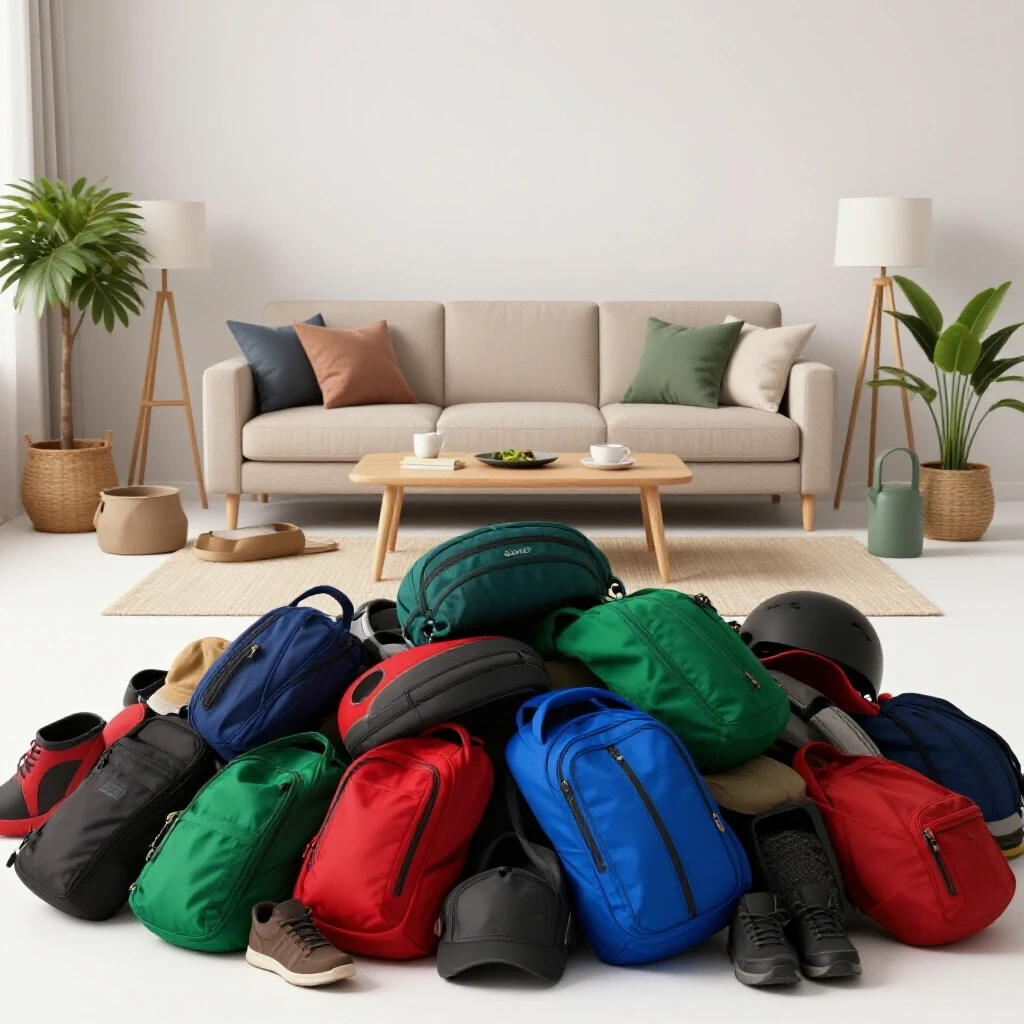
I tracked our family’s movements for a week and noticed a pattern. My kids would drop their backpacks the moment they walked through the door. My previous system required them to walk ten feet to a closet, open a heavy door, and hang the bag on a high hook. The “retrieval friction” was too high. To fix this, I installed low-profile hooks exactly where they were already dropping their bags. The clutter disappeared instantly because the system finally matched their natural behavior.
Reducing Retrieval Friction for Sustainable Order
Retrieval friction is the number of physical steps or cognitive decisions required to access or store an item. Lowering this friction ensures that even tired parents and young children can maintain the system without excessive mental effort. By reducing the number of actions needed to put something away, we increase the success rate of our organization.
In logistics, we try to minimize “touches.” Every time someone has to touch an object to get to another object, the system slows down. I found that my children were failing to use storage bins because of lids. A lid adds two extra steps: removing it and replacing it. While a lidded bin looks neater on a shelf, an open-topped basket is far more effective for reducing household clutter.
To measure this, I developed a Storage Friction Index. This helps determine which containers are best for specific items based on how often they are used.
Table 1: Storage Friction Index by Bin Type
| Container Type | Steps to Store | Friction Level | Ideal Use Case |
|---|---|---|---|
| Open Basket | 1 (Drop) | Very Low | Daily toys, shoes, frequently used blankets |
| Drawer | 2 (Pull, Drop) | Low | Socks, kitchen utensils, craft supplies |
| Lidded Bin | 3 (Lift, Drop, Replace) | Medium | Seasonal clothes, holiday decor |
| Latched Tote | 5 (Unlatch, Lift, Drop, Replace, Latch) | High | Long-term garage storage, archival papers |
By moving our most-used items to “Level 1” friction zones, we cut our evening cleanup time by nearly 40%. We stopped fighting the kids to “clean up” and instead made it so easy that they did it without thinking.
Mapping Your Home with High-Efficiency Zoning
Zoning involves dividing the home into specific areas based on the frequency of use and the person responsible for the items. Effective maps prioritize “prime real estate” for daily essentials while moving long-term storage to the periphery. This strategy ensures that high-traffic areas remain functional and uncluttered.
I use a “Zone 0 to Zone 3” framework in our house. Zone 0 is where you stand when you use an item (the “point of performance”). Zone 3 is the attic or the back of a deep closet. A common mistake in sustainable decluttering is placing a Zone 0 item in a Zone 2 location. For example, if your kids do homework at the kitchen table, but their supplies are kept in a basement playroom, you will inevitably find pencils and paper scattered across the kitchen counters.
- Zone 0 (Point of Performance): Items used daily (keys, shoes, school folders).
- Zone 1 (High Frequency): Items used 3-5 times a week (gym bags, specific cooking tools).
- Zone 2 (Low Frequency): Items used once a month (baking equipment, guest linens).
- Zone 3 (Long-term): Items used once a year (holiday lights, camping gear).
When we redesigned our entryway, we treated it as a high-speed transit hub. We calculated the space utilization percentage and realized we were wasting 60% of the vertical space. By adding a vertical mail sorter and a dedicated “outflow” bin for library books and returns, we stopped the “countertop creep” that used to overwhelm our kitchen.
Why High-Friction Bins Lead to Rapid Clutter Reversion
High-friction bins are storage solutions that require multiple steps to use, such as stacked containers or deep boxes with heavy lids. These systems often fail in busy households because the effort to maintain them outweighs the perceived benefit. When people are tired, they default to the path of least resistance.
I once bought a set of beautiful, opaque white bins for my kids’ LEGO bricks. I thought it would make the room look “cleaner.” Instead, the kids stopped playing with them because they couldn’t see what was inside, or they would dump the entire bin on the floor to find one piece. This created more work for me.
Research in spatial ergonomics suggests that “out of sight” often leads to “out of mind,” which then leads to “rebuying.” We switched to clear, stackable drawers. This reduced the cognitive load of searching for items. The kids could see the contents (lowering search time) and could slide the drawer out without unstacking everything (lowering retrieval friction).
Table 2: Visual vs. Functional Organization Systems
| Feature | Visual-Focused System | Functional-Focused System |
|---|---|---|
| Primary Goal | Aesthetic uniformity | Ease of retrieval and return |
| Container Style | Opaque, matching, lidded | Clear, varied, open-top |
| Labeling | Minimalist or cursive | Bold, high-contrast, or pictorial |
| Maintenance | High (requires constant “straightening”) | Low (items naturally return to spots) |
| User Experience | Frustrating for children | Intuitive for all ages |
Selecting Practical Tools for Functional Home Storage
Functional storage focuses on durability and ease of use rather than just visual appeal. It uses modular units and open-access containers that accommodate the changing needs of a growing family and reduce sorting time. The right tools should act as a “silent partner” in your daily routines.
When choosing storage solutions for families, I look for three things: visibility, accessibility, and modularity. We transitioned to heavy-duty shelving units in our pantry and garage that can be adjusted in one-inch increments. This allowed us to maximize our storage volume metrics. If a shelf is six inches higher than the items on it, that is wasted “airspace.”
To implement a robust system, follow these five steps:
- Measure Item Density: Count how many items need to fit in a space. Do not fill a shelf to more than 80% capacity; this allows for easy “grab and go” without knocking things over.
- Use Smart Labeling: For younger children, use picture labels. For adults, use high-contrast text. I recommend using a thermal label maker for durability.
- Prioritize Modular Units: Choose bins that can be repurposed. A bin that fits in the pantry should also fit in the bathroom cabinet.
- Install Drawer Dividers: These prevent “junk drawer” syndrome by creating a physical boundary for every category of item.
- Utilize Digital Inventories: For Zone 3 items (like holiday decor), use a simple spreadsheet or an app to track which box contains which items. This prevents you from digging through ten bins to find one wreath.
Implementing Habit Loops for Long-Term Maintenance
Habit loops are repeatable routines that integrate organization into daily life. By linking cleanup to existing activities, families can prevent clutter from accumulating without needing a dedicated “cleaning day.” These loops turn maintenance into an automatic behavior rather than a chore.
In logistics, we call this “continuous flow.” Instead of waiting for a system to break down completely, we perform small, incremental checks. I introduced a “10-minute sweep” every evening before the kids start their bedtime routine. This isn’t a deep clean; it is a “reset.” We move items back to their designated zones.
Table 3: Daily Maintenance Timelines by Family Size
| Family Size | Morning Reset (Minutes) | Evening Sweep (Minutes) | Total Daily Effort |
|---|---|---|---|
| 2 People | 5 | 10 | 15 Minutes |
| 4 People | 10 | 20 | 30 Minutes |
| 6+ People | 15 | 30 | 45 Minutes |
The key to making this work was reducing the “decision fatigue” in sorting. Every item in our house has a “home.” If an item doesn’t have a home, it goes into a “To Be Processed” basket. This prevents the mental fatigue caused by trying to figure out where a random toy goes when you are already exhausted at 8:00 PM.
Overcoming the Psychological Costs of Household Clutter
The psychological cost of clutter is the mental energy drained by living in a disorganized environment. Studies in organizational behavior show that physical clutter competes for our attention, leading to increased cortisol levels and decreased focus. For parents, this often manifests as a feeling of being “constantly behind.”
I realized that my frustration wasn’t just about the mess; it was about the lack of a feedback loop. When I organized a room and it stayed clean for only a day, I felt like a failure. By shifting to a functional system, the “feedback” changed. Even if the house got messy during the day, I knew it could be reset in twenty minutes because the infrastructure was solid.
We also addressed “inflow control.” Clutter is simply unmanaged inventory. To keep our home functional, we established a “one-in, one-out” rule for toys and clothes. This maintains our spatial capacity limits. If the shoe basket is full, a new pair of shoes means an old pair must be donated or moved to Zone 3. This keeps the density of items at a manageable level for the kids to handle themselves.
Practical Steps to Start Your Decluttering Journey
Starting a decluttering journey can feel overwhelming, but the secret is to focus on flow rather than perfection. You do not need to organize your entire house in one weekend. In fact, doing so often leads to burnout and a quick return to clutter. Instead, focus on the areas with the highest daily friction.
- Conduct a Spatial Audit: Identify the three areas where clutter piles up every single day. These are your logistics bottlenecks.
- Time-Box Your Sorting: Spend only 20 minutes at a time on a specific drawer or shelf. This prevents decision fatigue.
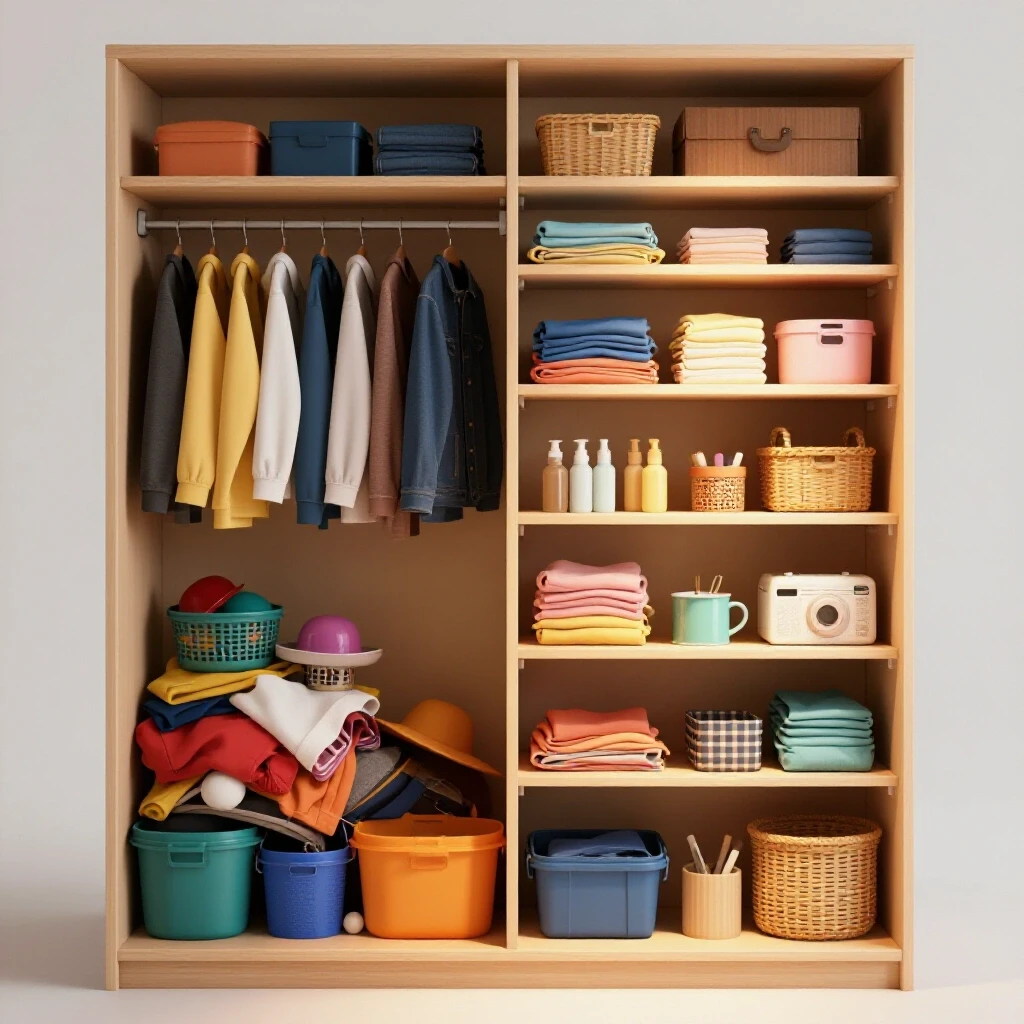
- Lower the Walls: Replace deep, dark bins with shallow, open ones. If you can see it and reach it with one hand, you are more likely to put it away.
- Map the Journey: Look at how an item enters your home. Does it have a place to land immediately? If not, create a “landing zone” near the entrance.
- Track Your Progress: Use a simple log to note which systems are working and which are failing. If a bin is always empty while the floor next to it is full, the bin is the problem, not the person.
The goal of a functional home is not to have a space that never gets messy. The goal is to have a space that is easy to fix. When you design for the habits of your family—especially the smallest members—you stop fighting against your home and start living in it. By reducing friction, managing flow, and setting realistic expectations, you can create a sustainable system that supports your life rather than draining your energy.
Frequently Asked Questions
Why do my storage bins keep overflowing even after I organize them? This usually happens because the “inflow” of items exceeds the “spatial capacity” of the bin. It can also occur if the bin is too small for the category or if multiple categories are being mixed together. Try the “80% rule”: never fill a container more than 80% full to allow for easy sorting and retrieval.
How can I get my kids to actually use the organization systems I build? The best way is to involve them in the design and reduce the number of steps required to put things away. If a child has to open a lid, they likely won’t. Use open baskets at their height and use picture labels so they don’t have to read to know where things go.
What is the ‘one-touch’ rule and does it really work for families? The one-touch rule means you only handle an item once before it reaches its final destination. For example, instead of putting mail on the counter and then moving it to the office later, you take it straight to the office. It works well for adults but requires low-friction storage to be successful for children.
Should I use clear or opaque bins for a tidier look? For frequently used items, clear bins are superior because they reduce “search friction.” You can see exactly what is inside without opening them. Use opaque bins only for long-term storage or items that are visually distracting but rarely used, like extra linens.
How often should I perform a ‘system reset’ in my home? A daily 10-to-20-minute evening sweep is usually enough to maintain order if your systems are functional. A larger “spatial audit” should be done seasonally (every 3-4 months) to account for changing needs, such as new school supplies or different clothing.
What is retrieval friction and why does it matter? Retrieval friction is the physical and mental effort required to get an item out or put it away. High friction (lids, locks, high shelves) leads to clutter because people will avoid the effort. Low friction (hooks, open bins) encourages people to maintain the system.
How do I handle paper clutter that seems to pile up on every flat surface? Create a “landing zone” for paper near the entrance. Use a vertical sorter with three categories: “Action Required,” “To File,” and “Recycle.” Process the “Action” folder once a week to prevent the pile from becoming overwhelming.
Why do my organization systems fail after just a week? Systems often fail because they were designed for how we wish we lived, rather than how we actually live. If a system requires too much discipline or too many steps, it will collapse when you are busy or tired. Focus on making the system “lazy-proof.”
Is color-coding worth the effort for family organization? Color-coding can be helpful for quick visual identification, such as giving each child a specific color for their towels or folders. However, if the color-coding becomes too complex (like sorting LEGOs by color), it increases sorting friction and usually fails over time.
How do I manage sentimental clutter without it taking over my functional space? Move sentimental items to Zone 3 (long-term storage) in clearly labeled, lidded bins. Limit yourself to a specific number of “memory boxes.” Once a box is full, you must remove something old before adding something new to maintain your home’s spatial balance.
(This article was written by one of our staff writers, Christopher Bennett. Visit our Meet the Team page to learn more about the author and their expertise.)