How to Declutter Decor with a 30-Day Box Challenge (Step-by-Step)

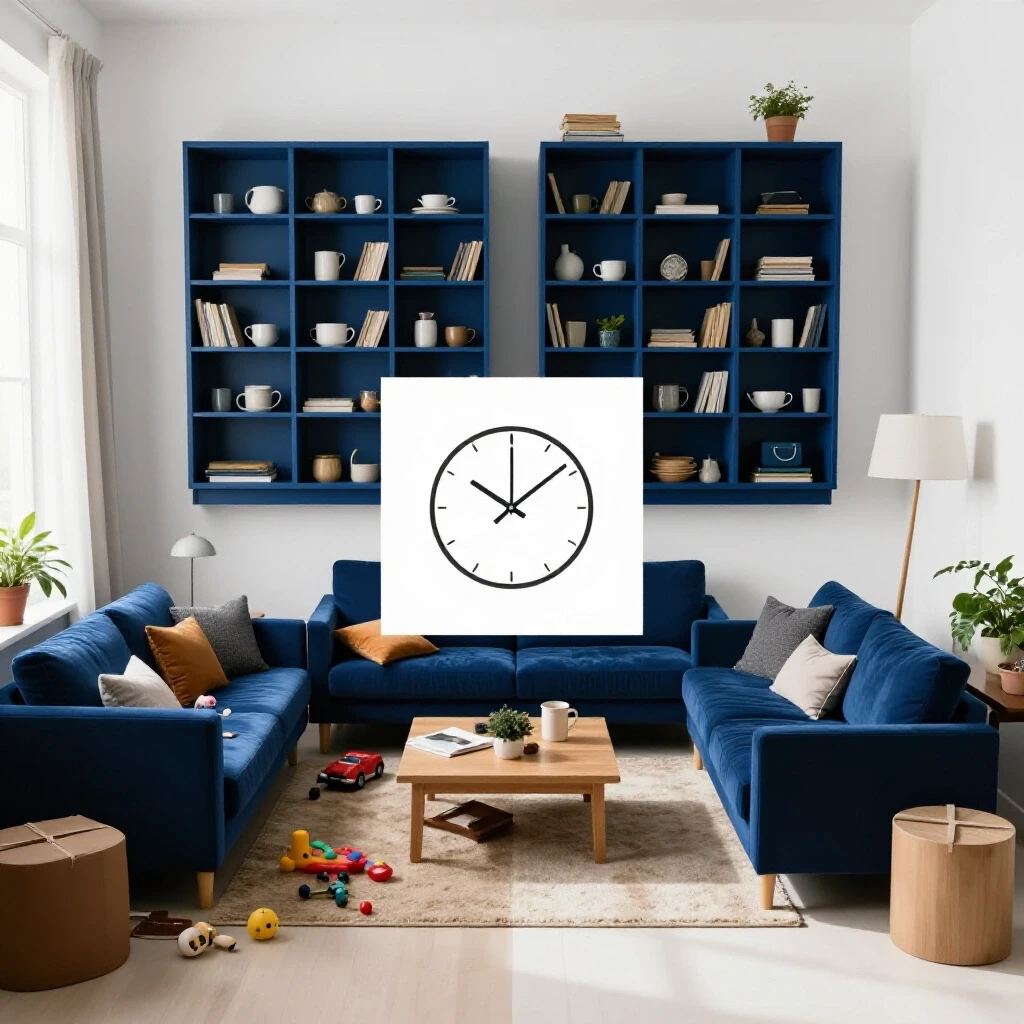
Have you ever walked into your living room, looked at the shelves filled with memories and accents, and felt an unexpected wave of exhaustion? We often assume that the items we choose to display reflect our personality and bring us joy. However, for a busy family, these objects can slowly transform into a logistical nightmare of dusting, moving, and rearranging. I challenged my family to a radical experiment: we cleared every non-essential decorative item from our main living spaces for four weeks to see what we actually missed.
Understanding Spatial Logistics and Visual Overload
Spatial logistics involves managing the flow and placement of items within a defined area to maximize efficiency and comfort. Visual overload occurs when our environment contains more information than our brains can easily process, leading to increased cortisol levels and a diminished ability to focus on daily tasks.
For over 11 years, I have managed complex supply chains and warehouse operations. In those environments, every square inch must earn its keep. If a pallet isn’t moving, it’s costing money. When I applied this logic to our home, I realized our “decor” was essentially stagnant inventory. It wasn’t serving a purpose; it was just taking up “shelf real estate.”
In environmental psychology, researchers often discuss “visual complexity.” A room with too many small objects requires the brain to constantly scan and categorize, even if we aren’t consciously looking at them. By clearing our surfaces, we weren’t just “cleaning”; we were reducing the cognitive load on every family member. This shift allowed us to see the “flow rate” of our home—how quickly we could move from one activity to the next without hitting physical or mental speed bumps.
The Cognitive Load of Decorative Clutter
Cognitive load refers to the total amount of mental effort being used in the working memory. When a home is filled with decorative items that serve no functional purpose, the brain must work harder to filter out distractions, which often leads to decision fatigue and irritability.
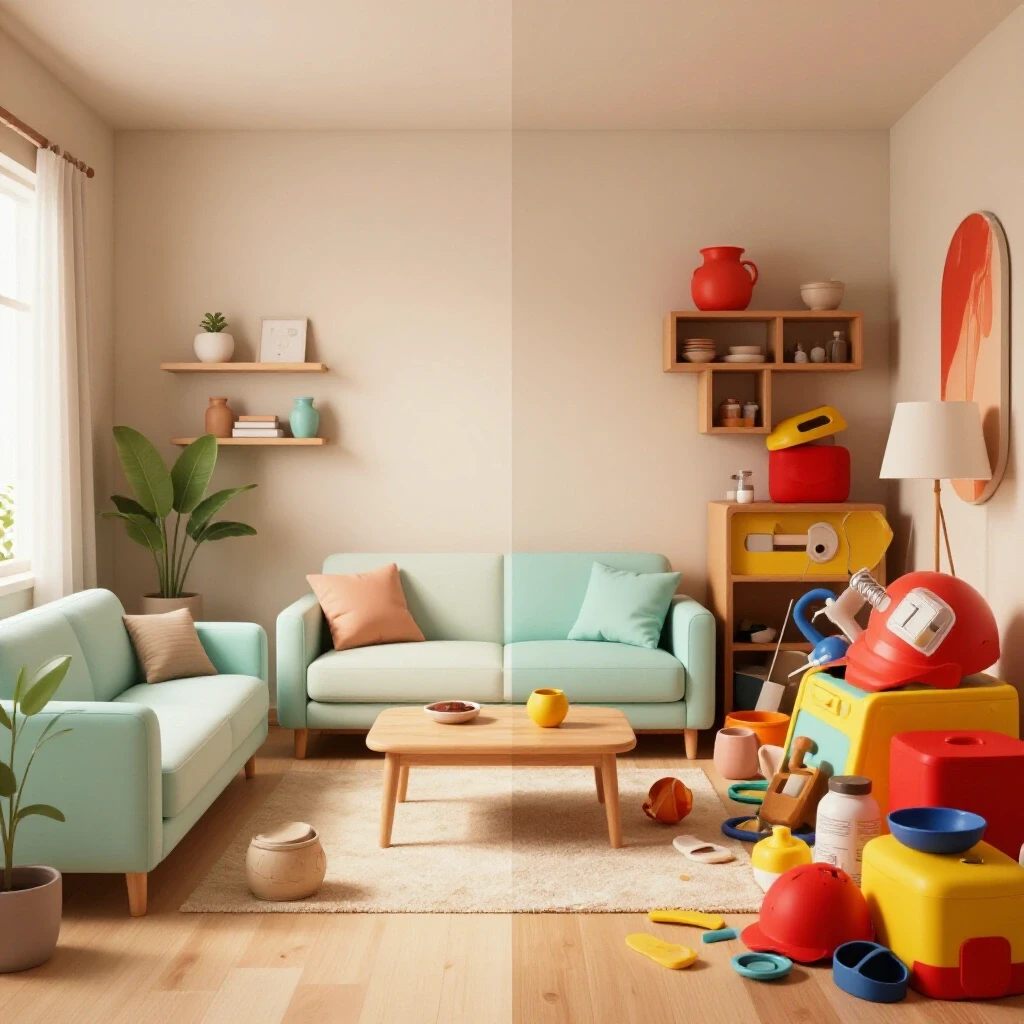
Interestingly, we found that our children were less likely to leave their toys out when the permanent surfaces were clear. When a coffee table is already 40% covered in candles and books, a stray Lego set doesn’t look out of place. But on a clear surface, that same Lego set represents a “system deviation.” It stands out, making it easier for a child to recognize that it needs to be returned to its designated zone.
The 30-Day Clearing Experiment: A Logistician’s Approach
A clearing experiment is a temporary removal of items to test their necessity and impact on a living environment. By boxing up non-functional objects for a set period, families can objectively evaluate which items contribute to their well-being and which ones simply contribute to household maintenance fatigue.
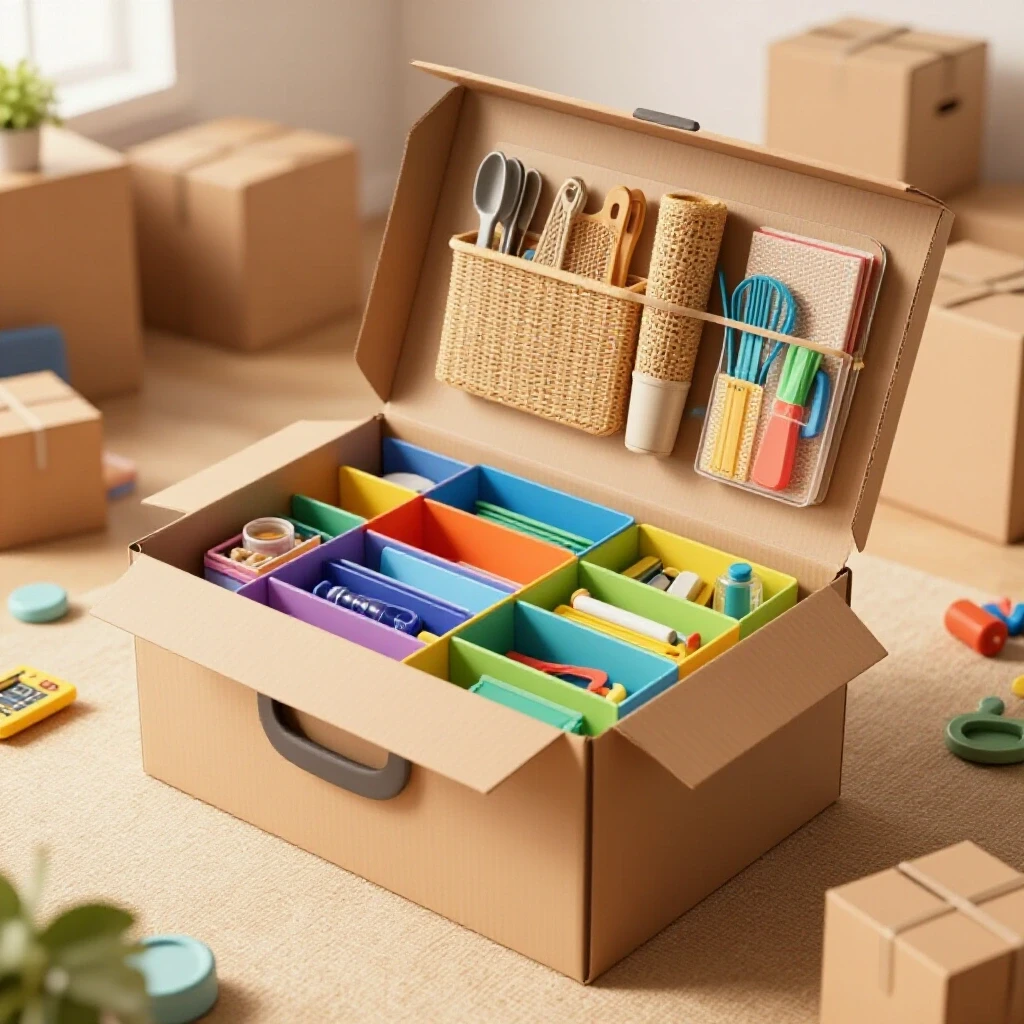
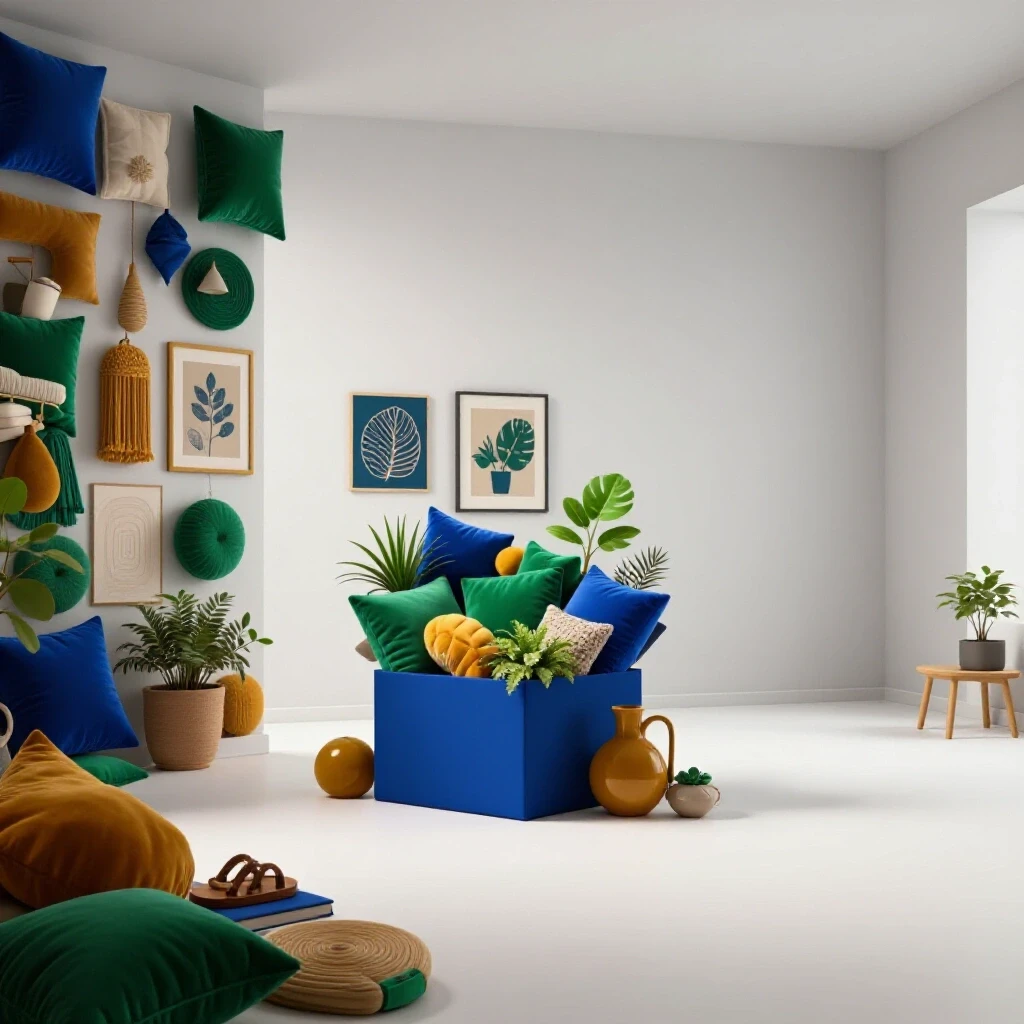
We started by categorizing every decorative item in our living and dining areas. We used a simple “Functional vs. Aesthetic” matrix. If it didn’t hold a light, provide a seat, or serve a direct daily purpose, it went into a numbered bin. We ended up with 14 bins of “personality.”
- Week 1: The house felt eerily quiet. We noticed the dust more, but cleaning took 70% less time.
- Week 2: We stopped looking for the items we removed. The “visual noise” was gone, and the rooms felt larger.
- Week 3: We began to miss specific items—not for their beauty, but for the “soul” they gave a room.
- Week 4: We evaluated the bins before bringing anything back.
Storage Friction Index by Bin Type
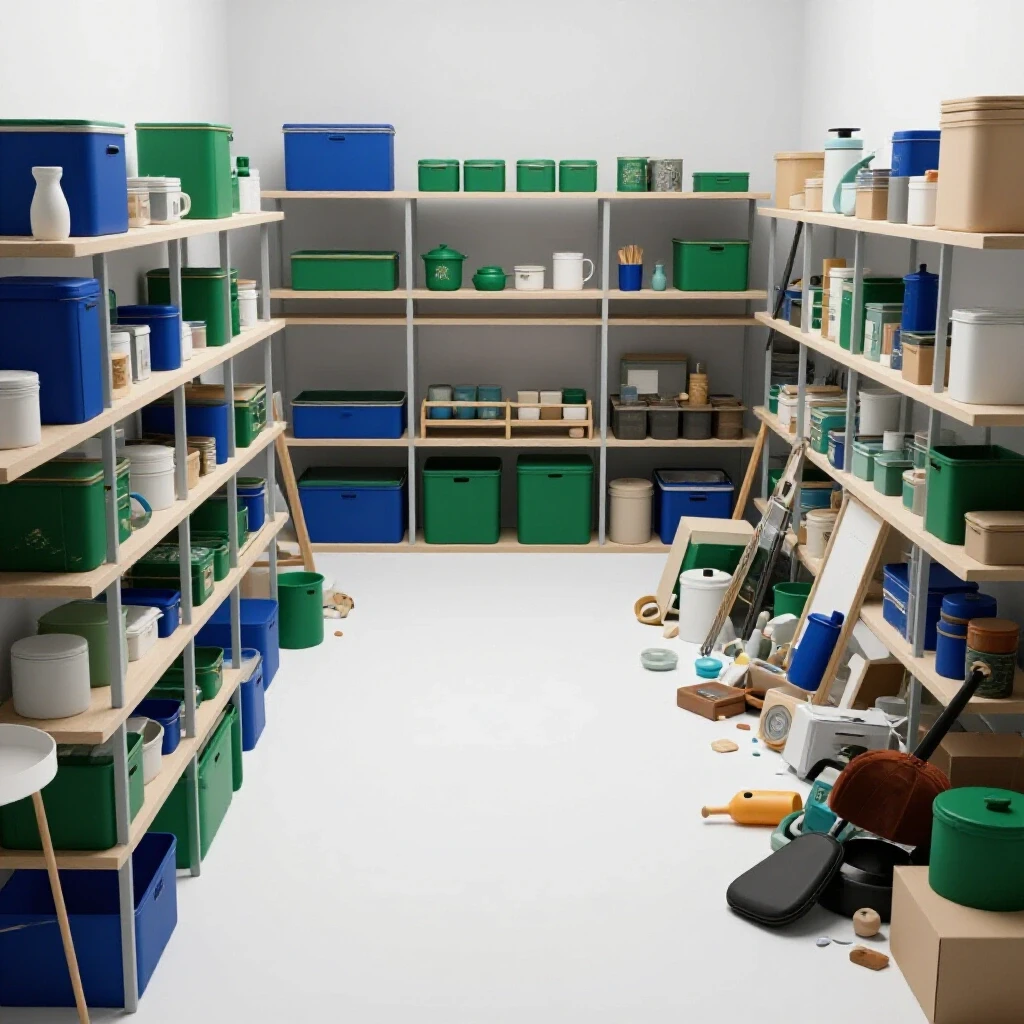
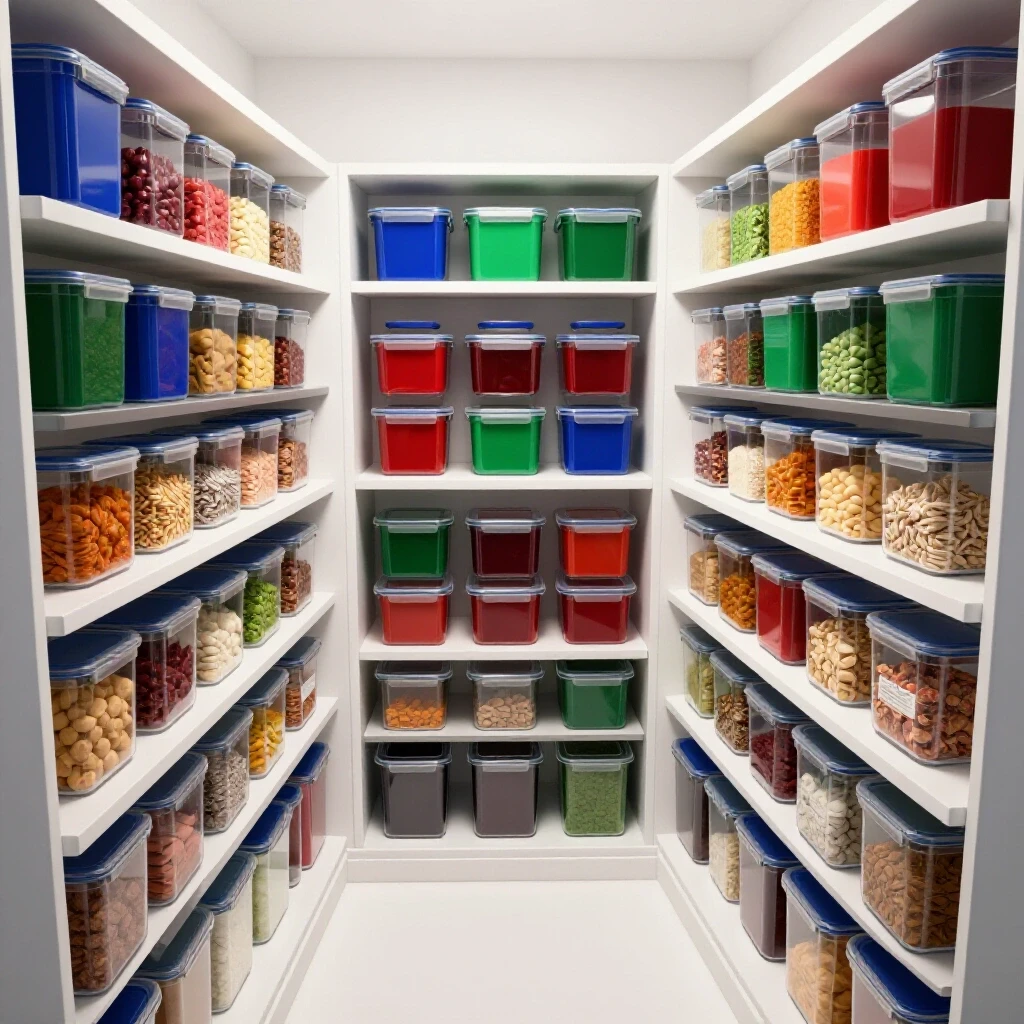
In logistics, “friction” is anything that slows down a process. In-home organization, friction is the number of steps it takes to put something away. If your storage solutions for families are too complex, the system will fail within days.
| Bin Type | Retrieval Steps | Sorting Speed | Friction Level | Sustainability Score |
|---|---|---|---|---|
| Open Top Basket | 1 Step | Fast | Very Low | 9/10 |
| Lidded Plastic Bin | 3 Steps | Moderate | Medium | 6/10 |
| Latched Heavy Duty Box | 5 Steps | Slow | High | 3/10 |
| Decorative Trunk | 4 Steps | Moderate | Medium | 5/10 |
As shown in the table, the more steps required to access or store an item, the higher the friction. For a busy parent, a 5-step retrieval process is a guaranteed way to ensure clutter ends up on the floor instead of in the box.
Why High-Friction Bins Lead to Rapid Clutter Reversion
High-friction storage refers to systems that require significant physical or mental effort to use, such as nested containers or hard-to-reach shelves. When the effort to maintain a system exceeds the perceived benefit, the family will naturally revert to the easiest path, which usually means leaving items on flat surfaces.
I’ve seen this in warehouses: if a picker has to move three boxes to get to one, they’ll eventually just leave the first three boxes in the aisle. Our homes work the same way. We often buy beautiful, complex home organization systems that look great on social media but fail in practice because they require too much “processing time” per item.
During our experiment, we realized that our previous decluttering journey failed because we were trying to organize the clutter rather than reducing the volume. By removing the decor, we reduced the total number of items we had to “manage.” This lowered the overall friction of the entire house.
Measuring Retrieval Step Counts
Retrieval step counts measure the physical actions needed to take an item out or put it away. For example, opening a cabinet (1), pulling out a bin (2), unlatching the lid (3), and grabbing the item (4). Keeping this count under two is vital for sustainable decluttering.
- Step 1: Identify the “Hot Zones” where clutter accumulates (usually entryways and kitchen counters).
- Step 2: Count the steps to put items away in those zones.
- Step 3: Redesign the storage to remove at least two steps.
- Step 4: Observe the “reversion rate” over 7 days.
What We Actually Missed: The Surprising Results
The items we missed weren’t the most expensive or the trendiest. They were the items that provided sensory comfort or marked the passage of time. We missed the heavy ceramic bowl that held our keys (function) and the specific framed photo of our wedding (emotional anchor). We did not miss the 12 assorted glass vases or the decorative “filler” beads.
This realization helped us build a more functional home storage model. We learned that a “minimalist” home isn’t the goal for a busy family; a “low-maintenance” home is. By only bringing back the items that truly mattered, we reduced our daily sorting duration from 25 minutes to just 8 minutes.
Daily Maintenance Timelines by Family Size
Maintenance time is the daily duration required to return a home to its “baseline” state of order. This metric is heavily influenced by the number of residents and the total volume of non-functional items present in the living space.
| Family Size | Items per Room (Avg) | Daily Cleanup (High Decor) | Daily Cleanup (Low Decor) | Time Saved Daily |
|---|---|---|---|---|
| 2 Adults | 40 | 15 mins | 5 mins | 10 mins |
| 2 Adults, 1 Child | 75 | 35 mins | 15 mins | 20 mins |
| 2 Adults, 2+ Children | 120+ | 60+ mins | 25 mins | 35 mins |
For a family of four, reducing decorative volume can save over four hours of labor per week. That is time that can be spent on rest, hobbies, or quality family interaction rather than moving knick-knacks to wipe a shelf.
Building Sustainable Home Organization Systems
A sustainable organization system is a framework designed to handle the natural inflow and outflow of household items with minimal effort. It focuses on “capacity limits”—the idea that a shelf or bin can only hold a certain amount before the system breaks down and clutter spills over.
In my professional life, we call this “inventory control.” If the warehouse is at 95% capacity, efficiency drops because there is no room to move. In a home, if your shelves are 95% full of decor, there is no “buffer space” for the things you actually use, like a half-finished book or a cup of coffee.
Establishing Inflow and Outflow Control
Inflow/outflow control is the practice of ensuring that for every new item entering the home, an equivalent volume of items exits. This prevents “spatial creep,” where the density of objects slowly increases over time until the living space becomes non-functional.
- The One-In, One-Out Rule: For every new decorative item bought, one must be donated or boxed.
- The Surface Mandate: Keep 50% of all flat surfaces (tables, counters) completely clear at all times.
- The Quarterly Audit: Every three months, revisit your stored “personality” bins and see if your tastes have shifted.
- Digital Inventory: Use a simple smartphone app to photo-document what is in your long-term storage bins so you don’t buy duplicates.
Custom Zoning Maps for Busy Households
Zoning is the process of assigning specific functions to different areas of a room and ensuring that all items within that zone support that function. High-efficiency zoning reduces the time spent searching for items and simplifies the cleanup process for children and adults alike.
When we put our decor back, we used a “Zoning Map.” We didn’t just put things where they “looked good.” We put them where they wouldn’t interfere with the “work” of the room. For example, the dining table remained 100% clear because its primary function is eating and homework. The “decor” was moved to high shelves where it could be seen but not touched or moved daily.
- Zone A (High Touch): Surfaces used daily. Zero decor allowed here.
- Zone B (Mid-Level): Shelves at eye level. Limited, meaningful items only.
- Zone C (High/Low): Out-of-reach areas. Best for seasonal or purely aesthetic items.
Visual vs. Functional Organization Systems
Visual systems prioritize how a space looks in a photograph, often using color-coding or identical containers. Functional systems prioritize how a space works, focusing on access speed, durability, and the logical grouping of tools and objects.
| Feature | Visual-Focused System | Functional-Focused System |
|---|---|---|
| Primary Goal | Aesthetic Appeal | Reduced Daily Stress |
| Maintenance Level | High (Requires constant “fixing”) | Low (Self-correcting) |
| Flexibility | Rigid (Items must look a certain way) | High (Items must be in the right zone) |
| Child-Friendly | Rarely | Usually |
| Success Metric | “Does it look perfect?” | “Can I find it in 5 seconds?” |
Implementing the “Reset” Routine
A reset routine is a short, timed period at the end of the day where the family returns the home to its “baseline” state. Because we reduced our total item count, our reset routine became a 5-minute “sweep” rather than an hour-long ordeal.
We found that the psychological benefits were immediate. Walking into a clear kitchen the next morning didn’t just feel good; it made making breakfast faster. We weren’t fighting for counter space. We weren’t moving a vase to plug in the toaster. We were living in a space designed for humans, not for objects.
- The 5-Minute Sweep: Set a timer. Everyone picks up items that are out of their zone.
- The Surface Wipe: Because surfaces are clear, a quick wipe takes seconds.
- The Bin Check: Ensure no “transient clutter” has been hidden in the wrong bins.
Final Logistics Check: Is Your System Working?
To know if your new storage solutions for families are effective, you need to track your “system failure rate.” If you find yourself cleaning for more than 15 minutes on a Tuesday night, your system has too much friction.
Our 30-day experiment taught us that we were over-valuing “stuff” and under-valuing “space.” Space is a resource. In logistics, empty space is called “buffer,” and it’s essential for handling unexpected surges in inventory. In a home, empty space is your “mental buffer.” It’s the breathing room you need after a long day at work.
Reducing household clutter isn’t about getting rid of everything you love. It’s about ensuring that the things you keep don’t get in the way of the life you want to lead. By temporarily clearing the decks, you give yourself the data you need to build a home that serves you, rather than a home that you serve.
Frequently Asked Questions
How do I start clearing my home without feeling overwhelmed?
Start with a single “micro-zone,” such as a coffee table or a mantle. Box up everything on that surface for one week. This low-stakes test allows you to experience the benefits of a clear space without the anxiety of a full-house purge. Once you see the reduction in cleaning time, you will feel more motivated to tackle larger areas.
What should I do if my spouse or children resist removing decor?
Frame it as a “science experiment” rather than a permanent change. Use a “30-day trial” approach. Explain that the goal is to see if a clearer space makes the morning routine faster or reduces stress. When the family sees that they can find their shoes faster or have more room to play, the resistance usually fades.
Won’t my house look cold and uninviting without decorations?
There is a difference between “empty” and “intentional.” During our experiment, we found that a few high-quality, meaningful items have more impact than dozens of small trinkets. You aren’t aiming for a hospital room; you are aiming for a gallery where every piece actually matters to you.
How do I decide what stays in the box after the 30 days are up?
Ask yourself: “Did I notice this was gone?” and “Does this item make my daily life easier or harder?” If you didn’t think about the item once during the month, it likely doesn’t need to return to your primary living space. You can keep it in long-term storage or donate it.
What is the best way to store the items I decide to keep?
Use clear, stackable bins with simple labels. Avoid “nesting” bins (putting bins inside bins) as this increases retrieval friction. Store items by “frequency of use.” If you only use it once a year, it goes in the highest or lowest spot. If you use it monthly, it stays at waist height.
How do I prevent clutter from creeping back in?
Implement a “One-In, One-Out” policy and conduct a “Spatial Audit” every three months. If you notice that you are spending more time moving objects to clean a surface, it’s a signal that your item density has become too high again.
Is this experiment suitable for families with very young children?
Yes, it is actually more beneficial for them. Young children can become overstimulated by too many visual choices. A simplified environment helps them focus on one toy at a time and makes the “cleanup song” much more effective because there are fewer places for things to get lost.
Can I do this if I live in a small apartment with limited storage?
In small spaces, spatial capacity is even more critical. You may not have room for 14 “personality bins,” so you might need to be more selective. Try boxing just 50% of your decor. The goal is to reclaim the “functional volume” of your home, regardless of its total square footage.
What if I miss an item immediately?
If you miss an item within the first 24 hours, take it out of the box! The point of the experiment is to identify what truly adds value. If a specific photo or lamp makes you feel better the moment you see it, it has earned its place in your home.
How does this help with mental fatigue?
Visual clutter is “unfinished business” for your brain. Every object represents a task (dusting it, moving it, remembering where you got it). By removing these micro-tasks, you free up mental energy for more important decisions, which directly reduces the feeling of being overwhelmed at the end of the day.
(This article was written by one of our staff writers, Christopher Bennett. Visit our Meet the Team page to learn more about the author and their expertise.)