How to Purge Bookshelves Without Regret (Decluttering Guide)

A cluttered bookshelf often feels like a heavy weight in a living room. For many busy parents, these shelves become a catch-all for old textbooks, unread novels, and random knick-knacks. While we often feel the urge to clear everything away in a weekend burst of energy, I have found that aggressive thinning can lead to unexpected frustration.
In my eleven years managing household logistics, I have learned that a home is not a warehouse. It is a living space where items need to be accessible but not overwhelming. I once cleared a large section of our family library, only to realize weeks later that I had removed the exact reference books my children needed for their school projects. This taught me that sustainable decluttering is not about having the fewest items possible. It is about creating a functional home storage system that respects the way your family actually lives.
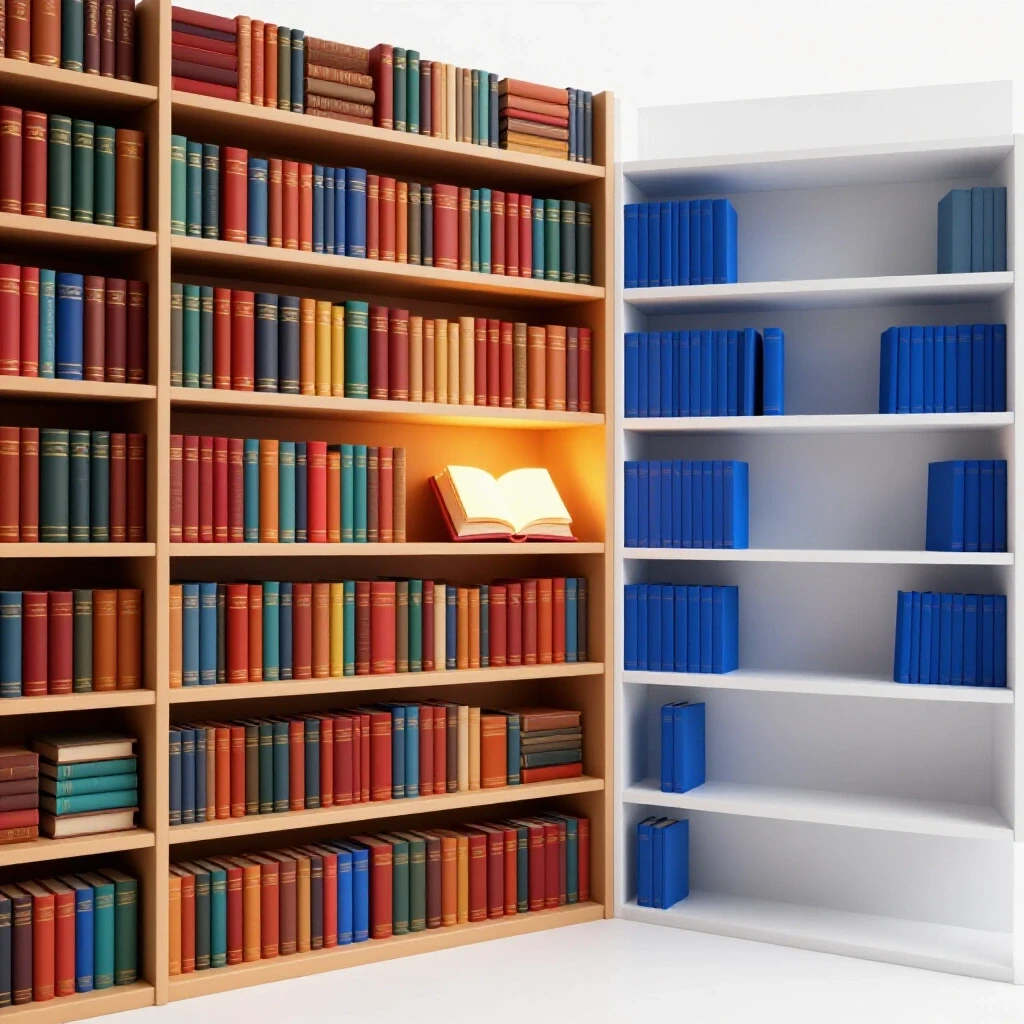
Understanding the Spatial Logistics of Your Home Library
Spatial logistics refers to how we manage the physical volume of items within a set area to improve flow and reduce effort. In a home, this means looking at your shelves as a high-traffic zone where items are frequently “picked” and “stowed.”
When we ignore these principles, we end up with shelves that look tidy for two days and then revert to chaos. This happens because the system requires too much effort to maintain. If a book is hard to put back, it will end up on the coffee table instead. By applying industrial sorting logic to our homes, we can create sustainable storage systems that work for everyone, from toddlers to busy professionals.
The Hidden Costs of Visual Processing Overload
Visual processing overload occurs when our brains struggle to make sense of a crowded or disorganized environment. Research in environmental psychology suggests that high levels of visual clutter can increase cortisol levels, leading to higher stress and mental fatigue.
For a parent coming home after a long day, a messy bookshelf is not just a chore; it is a source of cognitive drain. When every spine is a different color and items are shoved in horizontally, your brain has to work harder to scan the room. Designing a low-maintenance organization system helps lower this mental load, allowing the home to become a place of rest rather than another set of tasks.
Lessons from a Failed Library Streamlining Project
A few years ago, I decided to clear out 50% of our family books to make the room look more “minimalist.” I focused purely on aesthetics and ignored the functional value of the items I was removing.
The result was a beautiful shelf that failed our daily needs. I had removed sentimental gifts and niche hobby books that my spouse valued, leading to “decluttering regret.” This taught me that a successful decluttering journey must balance visual appeal with the emotional and functional utility of the objects. We now use a “friction-based” approach where we only remove items that truly hinder our daily movement or provide no value to any family member.
Why Removing Sentimental Books Increases Mental Fatigue
It might seem counterintuitive, but getting rid of everything sentimental can actually make your home feel colder and less supportive. When we remove items that spark positive memories or represent our interests, the space loses its personality.
The frustration comes when we realize we cannot easily replace a specific edition or a book with a handwritten note. In my household, we now categorize items by their “retrieval frequency.” If it is a sentimental item we rarely touch, it moves to a higher or lower shelf. If it is a book we use weekly, it stays in the “prime “zone.” This reduces the daily stress of searching for things while keeping the items that make us feel at home.
| Storage Metric | High Friction System | Low Friction System |
|---|---|---|
| Retrieval Steps | 5+ (Moving bins, reaching behind) | 1-2 (Direct access) |
| Visual Density | 100% (No empty space) | 80% (Room for growth) |
| Sorting Time | 30+ minutes | 5 minutes |
| Maintenance Frequency | Daily | Weekly |
Designing a Functional Sorting Framework for Busy Families
A sorting framework is a set of rules used to decide where an item belongs based on its use and value. Instead of just “keeping” or “tossing,” we look at how an item flows through the house.
To start, I recommend a “sorting log” to track what your family actually touches over a two-week period. You might be surprised to find that 20% of your books account for 80% of your family’s reading time. This data allows you to build home organization systems based on reality rather than an idealized version of your life.
Measuring Retrieval Friction in Daily Living
Retrieval friction is the amount of physical and mental effort required to get an item out and put it back. For a busy parent, every extra step is a point of failure for a storage system.
If you have to move a decorative bowl to reach a book, that is high friction. If a child has to climb a chair to reach their favorite story, they will likely leave the book on the floor when they are done. We aim for a “two-motion” rule: you should be able to retrieve or stow any frequent-use item in two motions or fewer.
- Step 1: Reach for the item.
- Step 2: Pull it out.
If you have to move three other things first, the system is too complex and will eventually fail.
High-Efficiency Zoning Maps for Shared Shelves
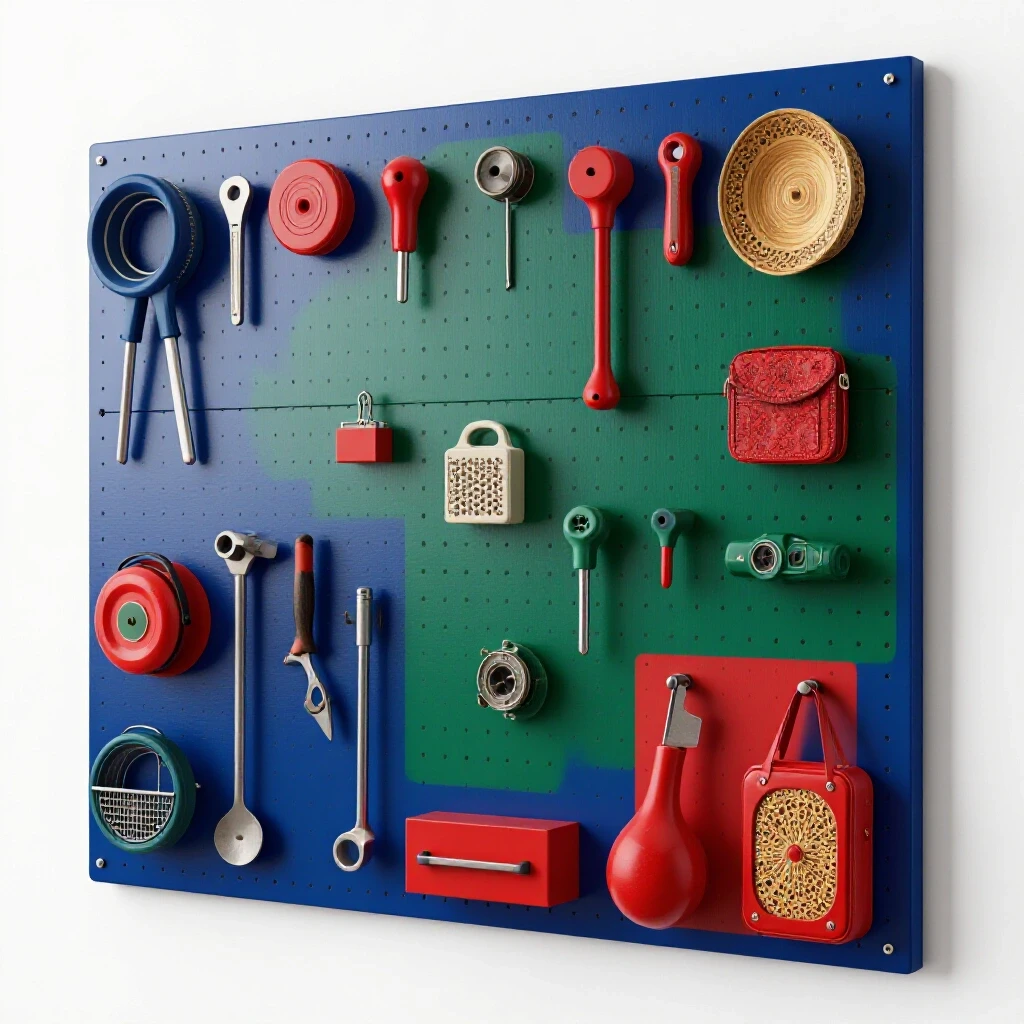
Zoning is the practice of dividing a storage area into specific sections based on the user and the activity. In a family home, this means mapping out your shelves so that the most accessible areas serve the most active members of the household.
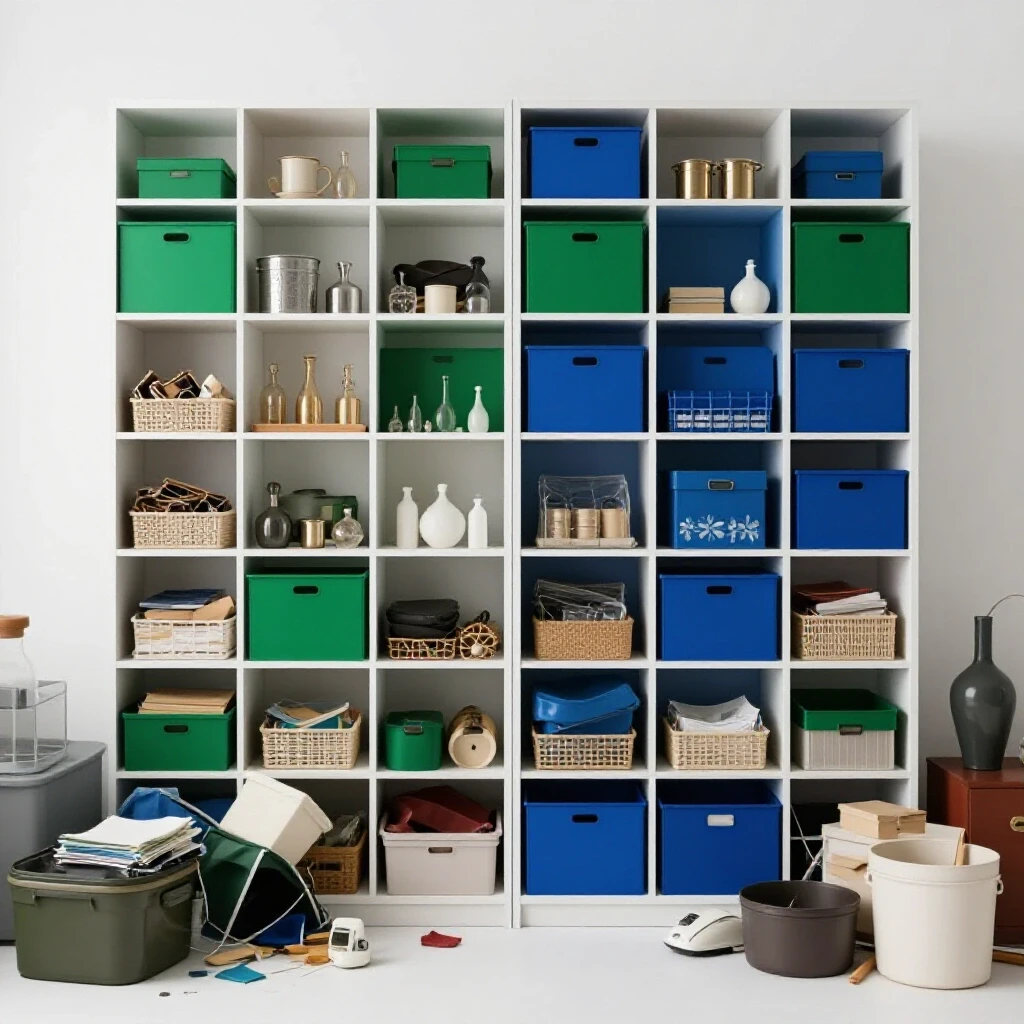
In our home, we use a “Vertical Zoning Map.” The bottom shelves are for children’s books and sturdy toys. The middle shelves (eye level) are for adult favorites and current reads. The top shelves are reserved for fragile decor or books we want to keep but rarely need to touch. This layout reduces household clutter because everyone knows exactly where their items belong.
Creating Child-Friendly Access Points
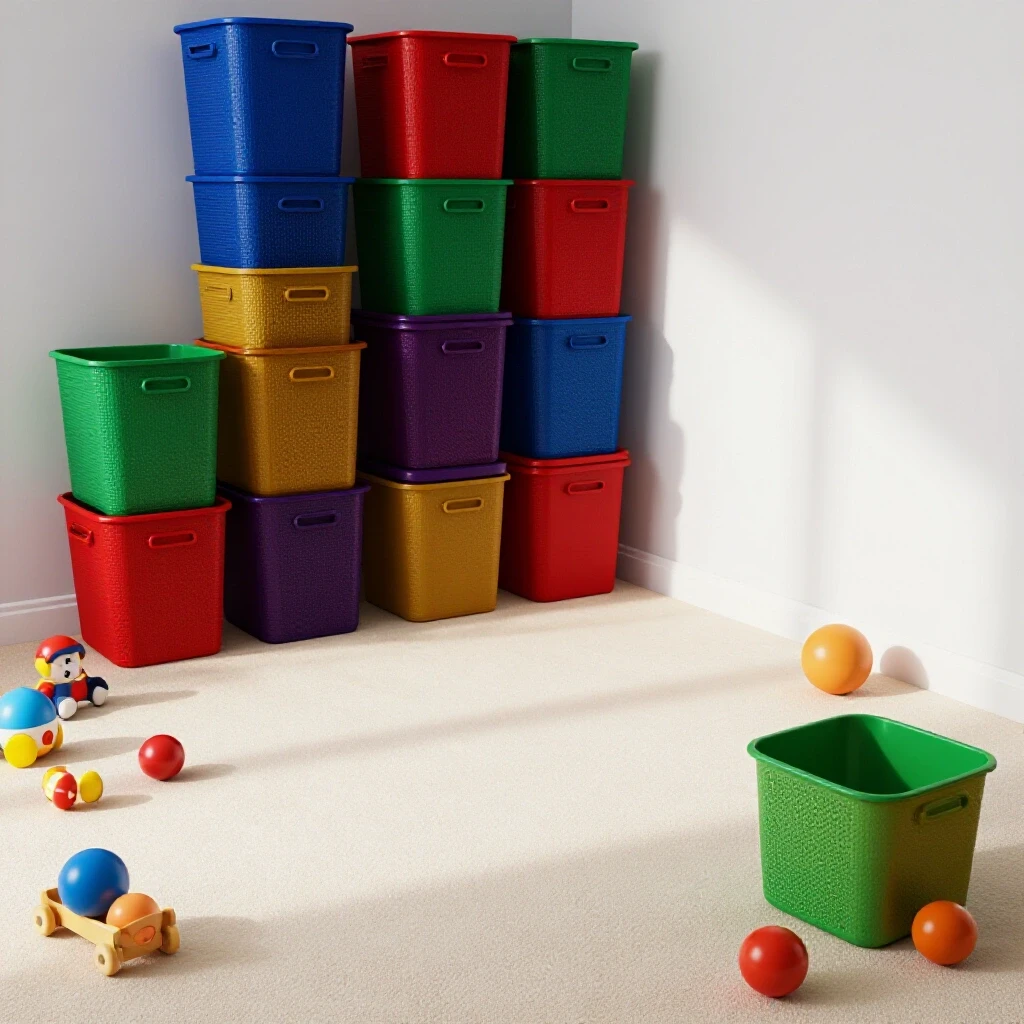
Children are more likely to participate in tidying up when the system is designed for their height and strength. Using open-front bins or forward-facing book displays can significantly reduce sorting friction for kids.
When we switched to forward-facing shelves for our youngest, the time spent cleaning the playroom dropped by nearly 10 minutes a day. They could see the covers clearly, which meant they didn’t have to pull every book off the shelf to find the one they wanted. This is a prime example of how functional home storage can change family behavior.
Selecting Low-Maintenance Storage Gear
Not all bins and shelves are created equal. Many people buy storage solutions based on how they look in a store, but these often fail in a lived-in home.
I prefer modular storage units that can be adjusted as the family grows. Avoid deep, dark bins where items go to disappear. Instead, look for shallow containers or clear dividers that keep items upright and visible. When you can see what you have, you are less likely to buy duplicates, which helps in reducing household clutter over the long term.
Why High-Friction Bins Lead to Rapid Clutter Reversion
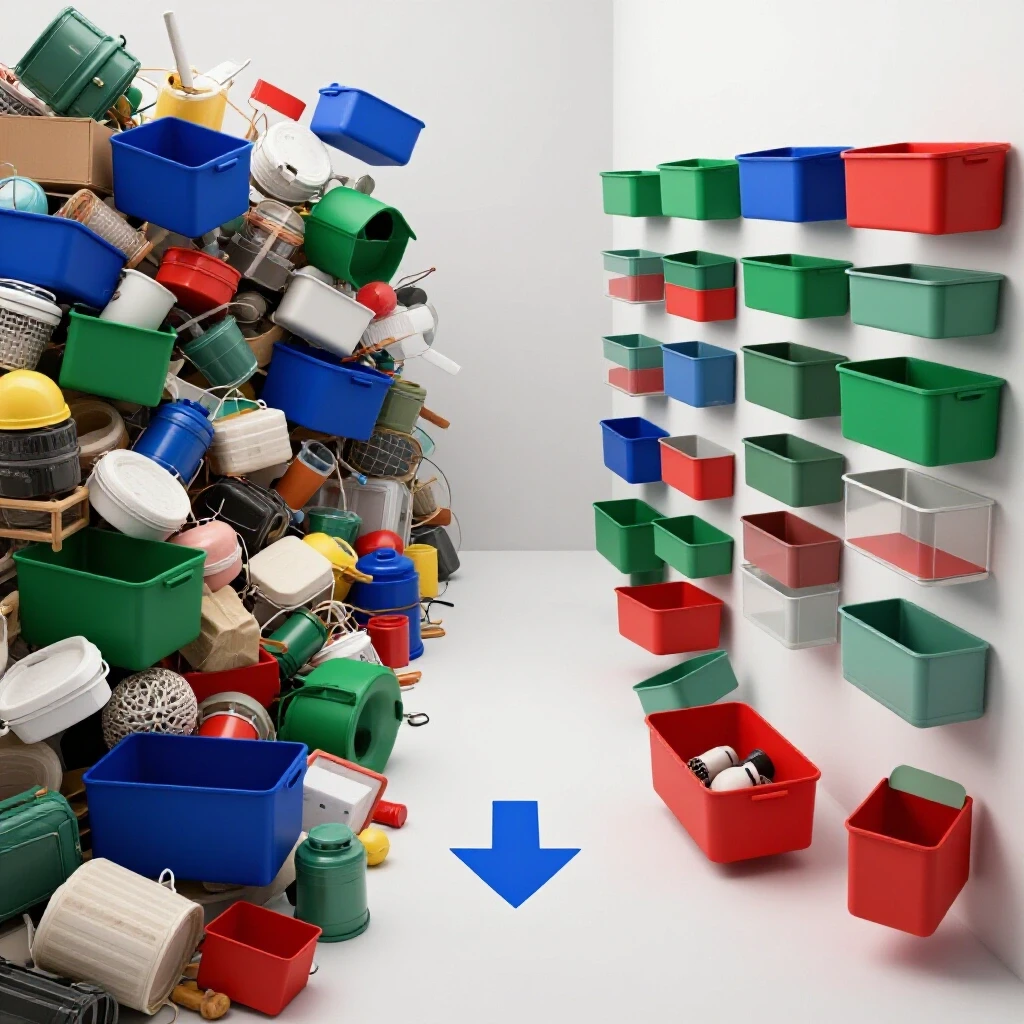
A high-friction bin is one that requires a lid to be removed, a latch to be unhooked, or a stack of other bins to be moved. While these are great for long-term attic storage, they are the enemy of daily organization.
In our living room, we removed all lidded boxes from the bookshelves. We replaced them with open felt baskets. This simple change meant that “cleaning up” became a simple act of dropping items into the correct basket rather than a multi-step process. The less effort a system requires, the more likely your family is to stick with it.
- Assess Volume: Measure your total shelf inches.
- Apply the 80% Rule: Never fill a shelf more than 80% to allow for easy retrieval.
- Group by Size: Taller books on the ends, shorter in the middle to create a visual “valley.”
- Label Zones: Use small, discreet labels on the shelf edge so family members know where categories start and end.
Building Sustainable Habit Loops
A habit loop is a three-part process: a cue, a routine, and a reward. In the context of home organization, the cue might be finishing a book, the routine is putting it back in its zone, and the reward is a clear, stress-free environment.
Sustainable decluttering isn’t a one-time event; it’s a series of small, repeatable actions. I suggest a “one-in, one-out” rule for books. If you buy a new novel, one old one must be donated or passed to a friend. This keeps the inflow and outflow in balance, preventing the slow creep of clutter that leads to mental fatigue.
Daily Maintenance Timelines by Family Size
The time required to maintain a shelf system depends on the number of people using it. However, with a low-friction system, this time should be minimal.
- 1-2 People: 2 minutes of evening “reset.”
- 3-5 People: 5 minutes of evening “reset.”
- 6+ People: 8 minutes of evening “reset.”
By timing these tasks, you realize they are much shorter than they feel. This helps overcome the “procrastination hurdle” that often keeps us from tidying up. When you know a task takes only five minutes, it is much easier to start.
Key Takeaways for Long-Term Success
The goal of organizing your library is to create a space that supports your life, not one that demands your constant attention. Focus on reducing friction and respecting the emotional value of your collection.
- Prioritize Function: Keep frequently used books at eye level.
- Leave Breathing Room: Aim for 20% empty space on every shelf.
- Reduce Steps: Use open bins and avoid stacking items.
- Involve the Family: Design zones that work for children’s heights.
- Audit Regularly: Spend ten minutes once a month checking for items that no longer serve a purpose.
Frequently Asked Questions
How do I decide which books to keep if I’m feeling overwhelmed? Start by identifying the “essential” books—those you use for work, school, or frequent reference. Next, pick your top ten favorite “comfort” reads. For everything else, ask if you would buy it again today. If the answer is no, and it has no sentimental value, it is a candidate for removal.
What should I do with books that I regret getting rid of? If you find yourself missing a specific book, don’t be too hard on yourself. It is a sign that you value that specific topic or memory. You can often find used copies online or at local shops. Use this feeling as data for your next sorting session to ensure you keep similar items in the future.
How do I stop my kids from messing up the shelves immediately? Create a “landing zone” or a “to-be-sorted” basket. If they aren’t sure where a book goes, they can put it there. This keeps the shelves tidy while giving you a chance to teach them the zoning system over time.
What is the best way to organize books for a visual person? While many people like color-coding, it can be high-friction because it’s hard to find a specific title. Try grouping by height or genre first, then use decorative bookends to create “visual breaks.” This provides the neat look you want without sacrificing functionality.
How much space should I leave for new books? I recommend the “two-finger rule.” You should be able to easily slide two fingers between the last book and the side of the shelf. If you can’t, the shelf is too full, and retrieval friction will increase.
Is it okay to keep books just for decoration? Yes, as long as they serve a purpose in your home’s aesthetic and don’t create “visual noise” that stresses you out. Books are part of your home’s story. If a certain set of vintage covers makes you happy every time you see them, they have functional value for your mental well-being.
How do I handle “guilt books” given as gifts? Logistically, a gift has served its purpose once it has been given and acknowledged. If you don’t plan to read it and it doesn’t fit your home, it is okay to move it out. Your home is not a storage unit for other people’s expectations.
What are the best labels for home bookshelves? I suggest using small, clear adhesive label holders on the shelf lip. You can slide in printed tags for categories like “History,” “Kids’ Fiction,” or “Reference.” This makes it easy to change the zones as your family’s interests evolve.
How often should I do a “deep” declutter? If your daily and weekly maintenance systems are working, you should only need a deep audit once or twice a year. Usually, the change of seasons or the start of a new school year is a great time to check if your current zones still match your family’s needs.
What if my spouse and I have different ideas about clutter? Focus on “Common Zones” vs. “Personal Zones.” Agree on a standard of order for the living room shelves, but allow each person to have a shelf or a nook where they can manage their own items according to their own comfort level. This reduces friction and conflict.
(This article was written by one of our staff writers, Christopher Bennett. Visit our Meet the Team page to learn more about the author and their expertise.)