How to Build a Hallway Console With Storage (DIY Guide)

Talking about waterproof options for a high-traffic entry area is essential because hallway furniture often encounters wet umbrellas, damp keys, and spilled beverages. While most people focus on aesthetics, choosing a finish that resists moisture ensures your handmade furniture survives the daily grind. In my twelve years of managing facilities and upgrading my own homes, I have learned that the entryway is the most demanding environment for wood projects.
One of my early mistakes involved a slim foyer table I built for my second home. I used a simple wax finish because I liked the matte look, but within two months, white rings from water droplets ruined the top surface. I had to strip the entire piece back to bare wood during a busy work week, which was a frustrating waste of time. Now, I advocate for polyurethane or specialized film-forming finishes that provide a robust barrier against the elements.

Balancing a professional career with weekend DIY home improvement requires a disciplined approach to time management. You cannot simply wing a project that sits in a primary egress path like a hallway. If the dimensions are off or the piece is unstable, it becomes a safety hazard rather than a functional upgrade. This guide focuses on creating a narrow, storage-focused furniture piece that meets residential safety standards while maximizing your home’s square footage.
Understanding the Scope of a Narrow Entryway Project
A narrow entryway project involves designing and assembling a slim-profile table or shelving unit tailored to fit tight corridor spaces. This type of furniture prioritizes vertical storage and a minimal footprint to ensure unobstructed foot traffic through the home.
When you start a project like this, the first thing to consider is the “path of travel.” In facility management, we look at egress codes to ensure people can move safely. For a residential hallway, you generally want to maintain at least 36 inches of clear width. If your hallway is 42 inches wide, your furniture should not exceed 6 inches in depth. This constraint defines the entire build process, from the joinery methods to the weight distribution of the base.
Why Clearance and Egress Matter in Hallway Design
Clearance refers to the open space required for people to move comfortably and safely through a corridor without hitting furniture. Egress is the legal term for a continuous and unobstructed path of exit from any point in a building to a public way.
If you build a unit that is too deep, you create a bottleneck. In an emergency, such as a fire or power outage, a protruding corner can cause injury or delay. I always suggest marking the footprint of your planned unit on the floor with painter’s tape for a full week before cutting any wood. This “living test” helps you determine if the piece will interfere with your daily movement or the swing of nearby doors.
Essential Inventory for Weekend DIY Projects
A DIY tool list is a categorized collection of manual and power tools required to complete a specific home upgrade efficiently and safely. Having the right inventory prevents mid-project trips to the hardware store that eat into your limited weekend time.
For a slim storage unit, you need tools that ensure precision and stability. Because the furniture is narrow, it has a higher center of gravity, making accuracy in your cuts and joinery vital for balance.
- Measuring and Marking Tools: A 16-foot tape measure, a speed square for checking 90-degree angles, and a mechanical pencil for fine lines.
- Cutting Tools: A miter saw for cross-cuts and a circular saw with a straight-edge guide for ripping wider boards.
- Joinery Equipment: A pocket-hole jig system, which allows for strong, hidden joints without complex woodshop machinery.
- Assembly Tools: At least four 12-inch bar clamps and a cordless drill/driver with a clutch setting to avoid stripping screws.
- Finishing Tools: A random orbital sander with 80, 120, and 220 grit sandpaper, and high-quality synthetic bristle brushes.
- Safety Gear: ANSI-approved safety glasses, N95 dust mask, and hearing protection.
| Tool Category | Essential Tool | Purpose in Hallway Project | Difficulty to Master |
|---|---|---|---|
| Cutting | Miter Saw | Precise angled cuts for legs and frames | Moderate |
| Joinery | Pocket-Hole Jig | Creating strong, hidden internal joints | Low |
| Alignment | Speed Square | Ensuring the unit is not “racked” or tilted | Low |
| Finishing | Orbital Sander | Removing mill marks and prepping for sealer | Low |
Selecting Materials for Durability and Aesthetics
Material selection is the process of choosing wood species and hardware that meet the structural requirements and visual goals of a project. For hallway furniture, the choice often balances weight, cost, and the ability to take a finish well.
I prefer using kiln-dried hardwoods like poplar or oak for the frame. Softwoods like pine are cheaper but can “bleed” sap through paint and are prone to denting in high-traffic areas. If you are using reclaimed materials, ensure they are planed flat and free of old nails. Using warped wood on a narrow console will result in a wobbly unit that is difficult to anchor to the wall.
Calculating Material Load and Tolerances
Load tolerance is the maximum weight a shelf or tabletop can support without bowing or breaking. This is calculated based on the wood species, the thickness of the board, and the distance between supports.
For a slim table, the “span rating” is critical. If your table is 48 inches long but only 10 inches deep, a thin 1/2-inch top will likely sag in the middle under the weight of books or heavy decor. I recommend a minimum thickness of 3/4-inch for the top and shelves. Building code-compliant DIY projects should always over-engineer for weight to prevent structural failure over time.
Step-by-Step Execution: Building the Frame
Building the frame is the phase where you assemble the primary load-bearing structure of the furniture. This stage requires dry-fitting components to ensure all pieces fit together before applying any permanent adhesive.
Start by cutting your four legs to the desired height. A standard height for an entryway surface is 30 to 34 inches. Once the legs are cut, cut the “aprons,” which are the horizontal pieces that connect the legs and support the top.
The Importance of Dry-Fitting
Dry-fitting is the process of assembling a project without glue or permanent fasteners to check the fit and alignment of all parts. It is a critical quality control step that reveals errors in measurements or cuts before they become permanent.
During a project last year, I skipped dry-fitting the lower shelf of a foyer unit. I had already applied wood glue to the pocket holes. When I tried to slide the shelf in, I realized it was 1/8-inch too long. The glue started setting, and I had to frantically sand the ends while the frame was partially assembled. It was a mess. Now, I always dry-fit the entire skeleton of the piece first.
- Align the Legs: Lay two legs on a flat work surface.
- Position the Aprons: Place the side aprons between the legs, ensuring they are flush with the top.
- Drill Pocket Holes: Use your jig to drill holes on the inside faces of the aprons.
- Assemble with Screws: Drive 1-1/4 inch pocket screws through the aprons into the legs.
- Check for Square: Measure diagonally from corner to corner. If the measurements are equal, the frame is square.
Incorporating Functional Storage Solutions
Functional storage solutions refer to the addition of shelves, drawers, or hooks that increase the utility of a furniture piece. In a hallway, these features help manage “clutter creep”—the tendency for mail and keys to pile up in transition zones.
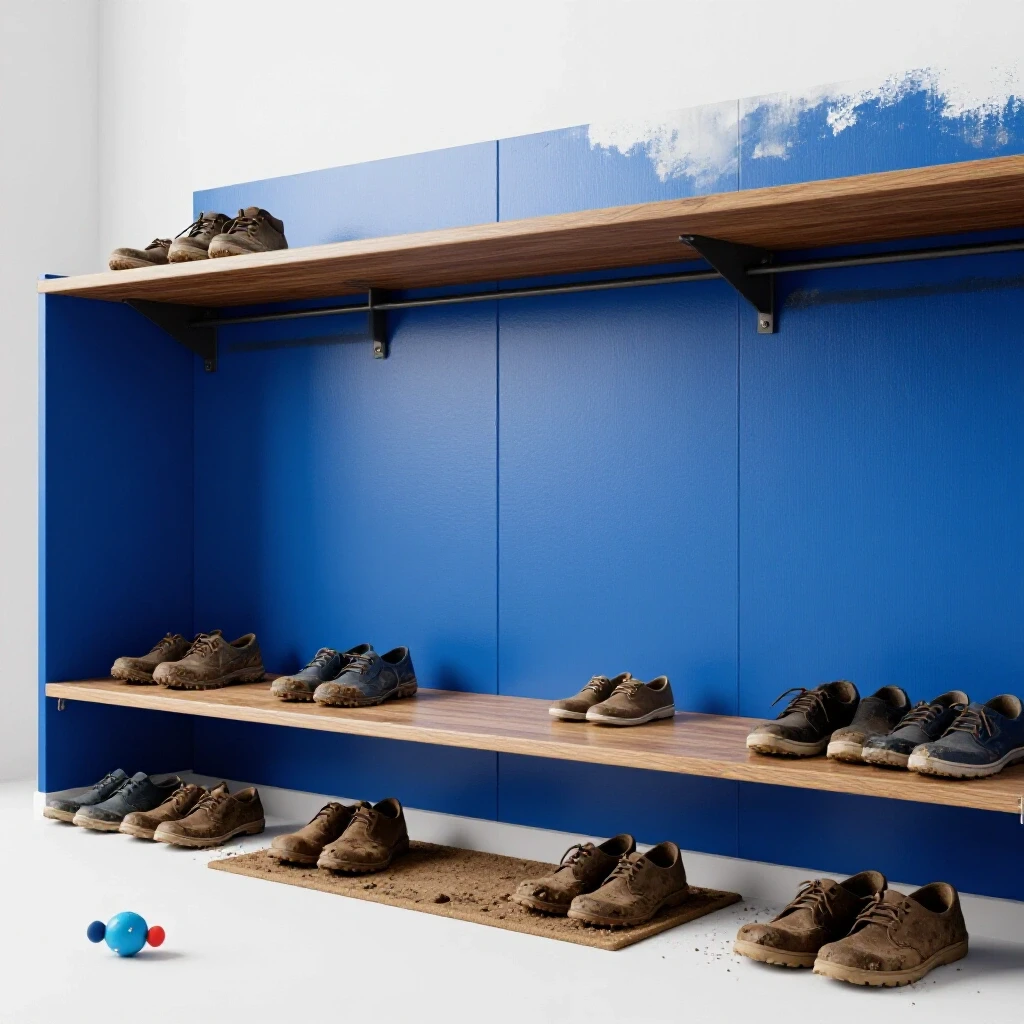
Adding a lower shelf provides a place for shoes or baskets, which keeps the floor clear and reduces tripping hazards. If you decide to add a drawer, keep in mind that drawer slides require precise spacing. For a first-time builder, a simple “cubby” or an open shelf is often more manageable than a sliding drawer.
Managing Stability in Narrow Designs
Stability is the ability of a furniture piece to resist tipping or wobbling during use. Because narrow furniture has a small base-to-height ratio, it is inherently less stable than a standard desk or dining table.
To improve stability, I always suggest a “weighted bottom” approach. Use a slightly heavier material for the lower shelf than for the top. Additionally, you must plan for wall anchoring. Most building safety guidelines suggest anchoring any furniture over 30 inches tall that is less than 15 inches deep. This is especially important if you have children or pets who might bump into the unit.
Finishing and Protecting the Wood Surface
Finishing is the final stage of a project where you apply stains, paints, or clear coats to protect the wood and enhance its appearance. Proper substrate preparation, such as sanding, is the most important part of this phase.
Before applying any finish, sand the wood through the grits: 80, then 120, then 220. This removes the “crush” marks from the planers at the lumber yard and ensures the stain absorbs evenly. If you skip a grit, the scratches from the coarser paper will show up vividly once the finish is applied.
Understanding Cure Times vs. Drying Times
Drying time is the period it takes for a finish to feel dry to the touch, while cure time is the duration required for the finish to reach its maximum hardness and chemical resistance.
- Water-based Polyurethane: Dries in 2 hours; cures in 7 to 21 days.
- Oil-based Stain: Dries in 8 hours; must be top-coated after 24 hours.
- Paste Wax: Dries in 15 minutes; cures almost immediately but offers low protection.
For a hallway surface, wait at least 72 hours before placing heavy objects like keys or vases on a newly polyurethane-finished top. Placing items too early can cause “blocking,” where the object sticks to the finish and leaves a permanent mark.
Troubleshooting Common Assembly Errors
Troubleshooting is the systematic process of identifying and fixing mistakes that occur during the construction or finishing of a project. Even experienced builders encounter issues like wood splitting or uneven legs.
One common failure is wood splitting when driving screws. This usually happens because the builder didn’t drill a pilot hole or used a screw that was too large for the material. If a split occurs, back the screw out, fill the crack with wood glue, clamp it tight for two hours, and then redrill a proper pilot hole.
| Problem | Likely Cause | Fix |
|---|---|---|
| Table wobbles | Uneven leg lengths or warped floor | Add adjustable leveling feet to the bottom of the legs |
| Rough finish | Dust settled in the wet topcoat | Lightly sand with 320 grit and apply one final thin coat |
| Joints are gapping | Pieces were not clamped tightly during assembly | Use wood filler mixed with sawdust from the project |
| Stain is blotchy | Wood was not sanded evenly or no pre-stain was used | Use a pre-stain wood conditioner on softwoods like pine |
Project Timeline and Effort Estimates
Estimating time accurately is one of the biggest challenges for busy professionals. A project like this is best broken down into two weekends. This allows for adequate drying times and prevents the “rushed mistake” phase that often happens late on a Sunday evening.
Weekend 1: Planning and Rough Construction (6-8 Hours) * Friday Evening: Finalize measurements and buy materials (2 hours). * Saturday Morning: Cut all wood components and dry-fit (3 hours). * Saturday Afternoon: Final assembly of the frame and shelves (3 hours). * Sunday: Sanding and first coat of stain (2 hours).
Weekend 2: Finishing and Installation (4-6 Hours) * Saturday Morning: Light sanding and first coat of polyurethane (2 hours). * Saturday Afternoon: Second coat of polyurethane (1 hour). * Sunday: Final assembly of hardware and wall anchoring (2 hours).
Safe Home Repairs and Final Installation
Final installation involves moving the completed piece into its permanent location and securing it to ensure it functions safely within the home’s environment. This includes checking for level and ensuring the piece does not interfere with electrical outlets or baseboard heaters.
When you move the unit into the hallway, check if it sits flush against the wall. Most homes have baseboard molding that prevents furniture from touching the wall. You can either notch the back of the legs to fit over the baseboard or use a “spacer” block at the top when anchoring to the wall.
Wall Anchoring for Safety
To anchor the unit, locate a wall stud using a stud finder. Use a “L-bracket” or a furniture safety strap. Attach one end to the underside of the table top and the other into the center of the wall stud with a 2-inch wood screw. This prevents the unit from tipping forward if someone leans on it or if a drawer is pulled out too far.
Knowing When to Call a Professional
While building a slim table is a manageable weekend DIY project, some situations require professional expertise. If your project involves moving a radiator, relocating a light switch, or structural changes to the hallway walls, consult a licensed contractor.
I once worked on a project where a homeowner tried to “recess” a cabinet into a hallway wall. They accidentally cut through a load-bearing stud and a plumbing vent pipe. What started as a $100 DIY upgrade turned into a $3,000 structural repair. If you aren’t sure what is behind the drywall, keep your furniture “freestanding” and only use small fasteners for anti-tip protection.
Conclusion and Next Steps
Completing a functional, safe home upgrade like a custom hallway organizer provides a significant sense of accomplishment. By following a structured plan, respecting material tolerances, and allowing for proper cure times, you create a piece that adds value to your home without the “DIY look.”
Your next step is to measure your hallway and determine your maximum depth. Once you have that number, sketch your design and create a cut list. Remember to prioritize safety by anchoring the finished piece and maintaining clear egress paths. With a patient approach, you can transform a cluttered corridor into a streamlined, organized space in just two weekends.
Frequently Asked Questions
What is the best wood for a narrow hallway table?
Poplar is an excellent choice for beginners because it is affordable, easy to work with, and takes paint very well. If you prefer a stained look, oak or maple are more durable but require sharper tools and more patience during the sanding process.
How do I stop the table from wobbling on an uneven floor?
Instead of trimming the legs, which can lead to more errors, install adjustable nylon leveling glides on the bottom of each leg. These allow you to screw the feet in or out to compensate for dips in the flooring.
Is wood glue really necessary if I use screws?
Yes. Screws act as internal clamps, but wood glue creates a chemical bond that is often stronger than the wood itself. A joint held only by screws will eventually loosen and “rack” as the wood expands and contracts with the seasons.
How deep should a hallway console be?
For most standard hallways, a depth of 8 to 12 inches is ideal. This provides enough surface area for a lamp or mail tray while leaving at least 30 to 36 inches of walking space, which is consistent with residential safety standards.
Can I build this without a pocket-hole jig?
You can use “butt joints” with finish screws and wood plugs, or even dowels. However, for a slim piece of furniture, pocket-hole joinery provides the best balance of strength and ease of assembly for someone with a limited tool kit.
Do I need to sand between coats of polyurethane?
Yes. Use a high-grit sandpaper (320 or 400) or a fine scuff pad between coats. This removes “nibs” (tiny dust particles) and provides a mechanical bond for the next layer, resulting in a much smoother final surface.
How do I anchor the table if there is no stud where I want it?
If a stud is not available, use a heavy-duty toggle bolt or a “snaptoggle” anchor. These are rated for much higher loads than standard plastic drywall plugs and will provide the lateral support needed to prevent tipping.
What is the most common mistake in this type of build?
The most frequent error is failing to account for the thickness of the wood when making cuts. For example, if you want a 10-inch deep table and you are using 3/4-inch boards, your internal supports must be calculated based on the actual, not nominal, dimensions of the lumber.
How can I make a narrow table more stable without anchoring it?
You can increase the “footprint” by making the base slightly wider than the top, though this may create a tripping hazard. A better option is to add a heavy lower shelf near the floor to lower the center of gravity.
What finish is best for a table that will hold wet items?
A wipe-on or brush-on polyurethane is the most practical choice. It creates a plastic-like film that is highly resistant to water rings. For a more natural look with decent protection, look for a “hard-wax oil” finish.
(This article was written by one of our staff writers, Robert Callahan. Visit our Meet the Team page to learn more about the author and their expertise.)